Nakwakto Goose-neck Barnacles
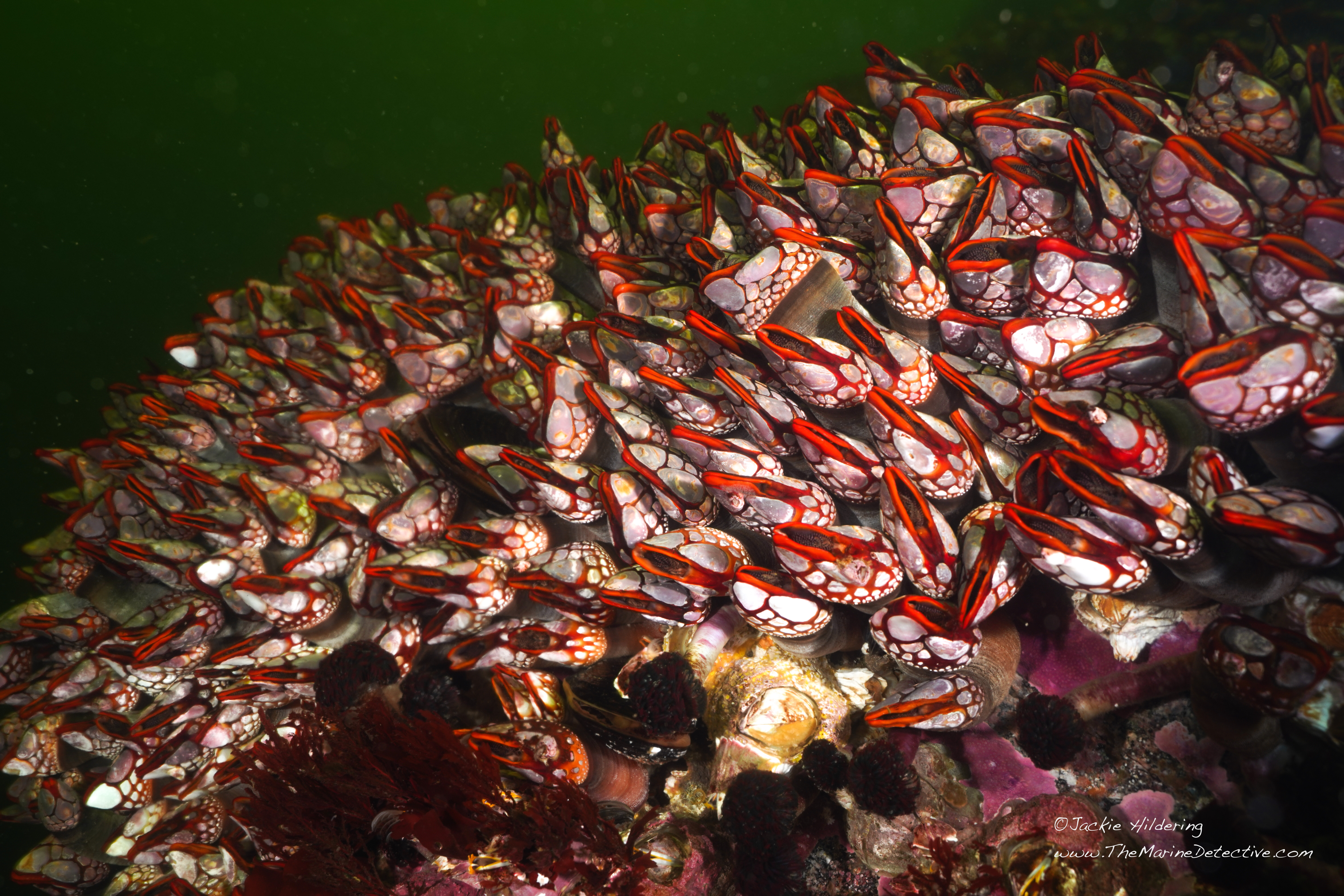
Please tell me these made you gasp?
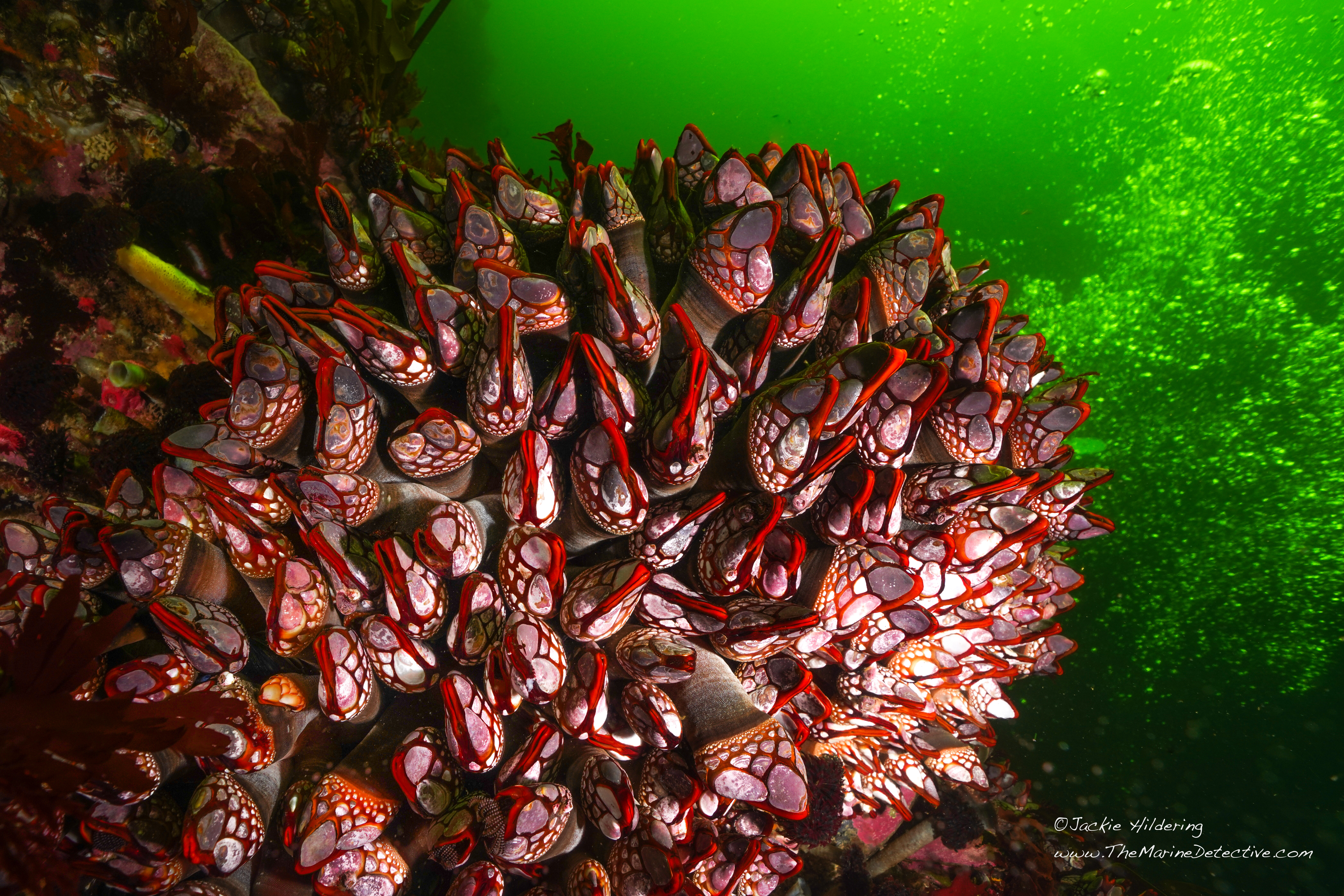
These are barnacles that live in only a very few places on the planet. The most are at Nakwakto Rapids, north of Port Hardy. The red is hemoglobin!
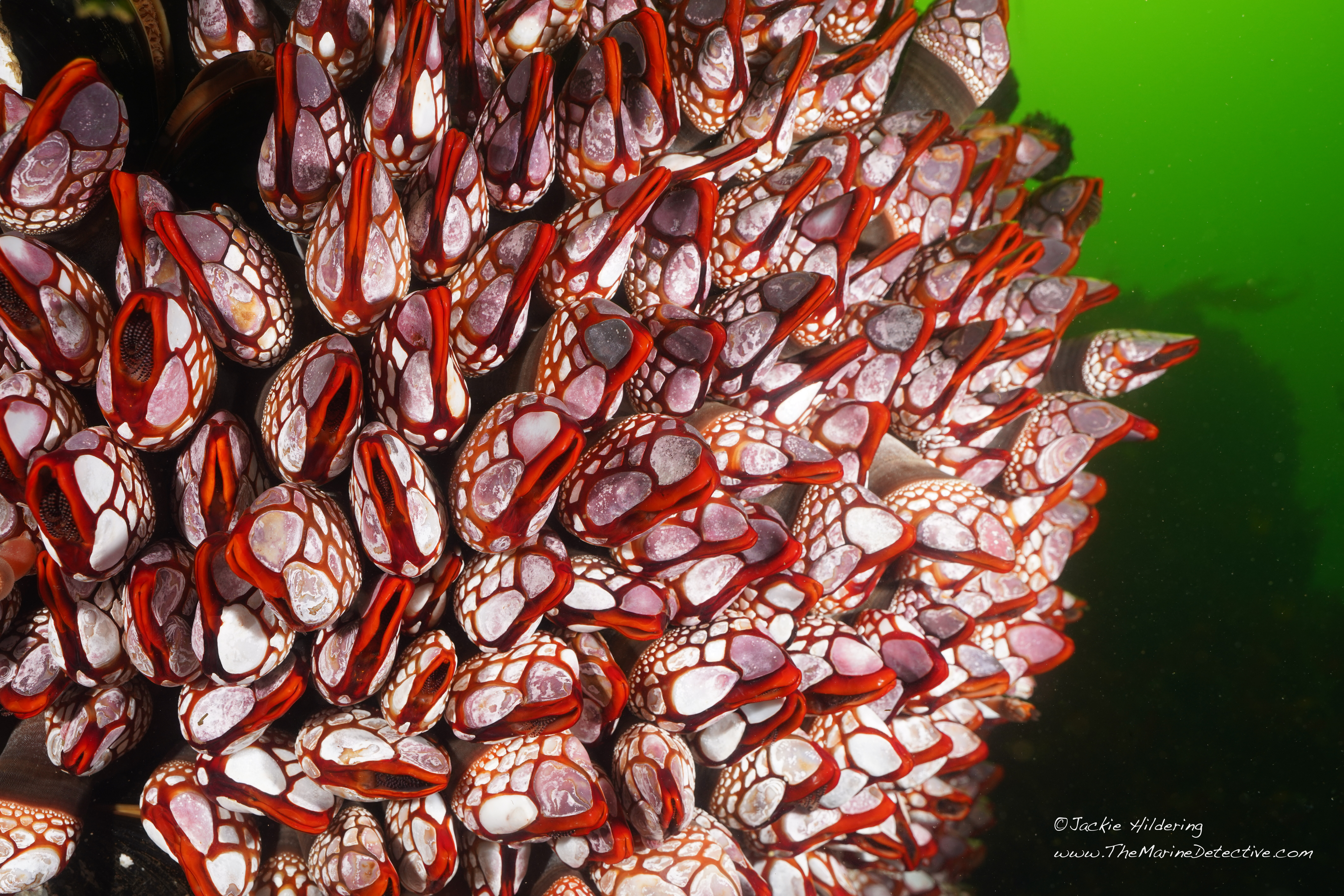
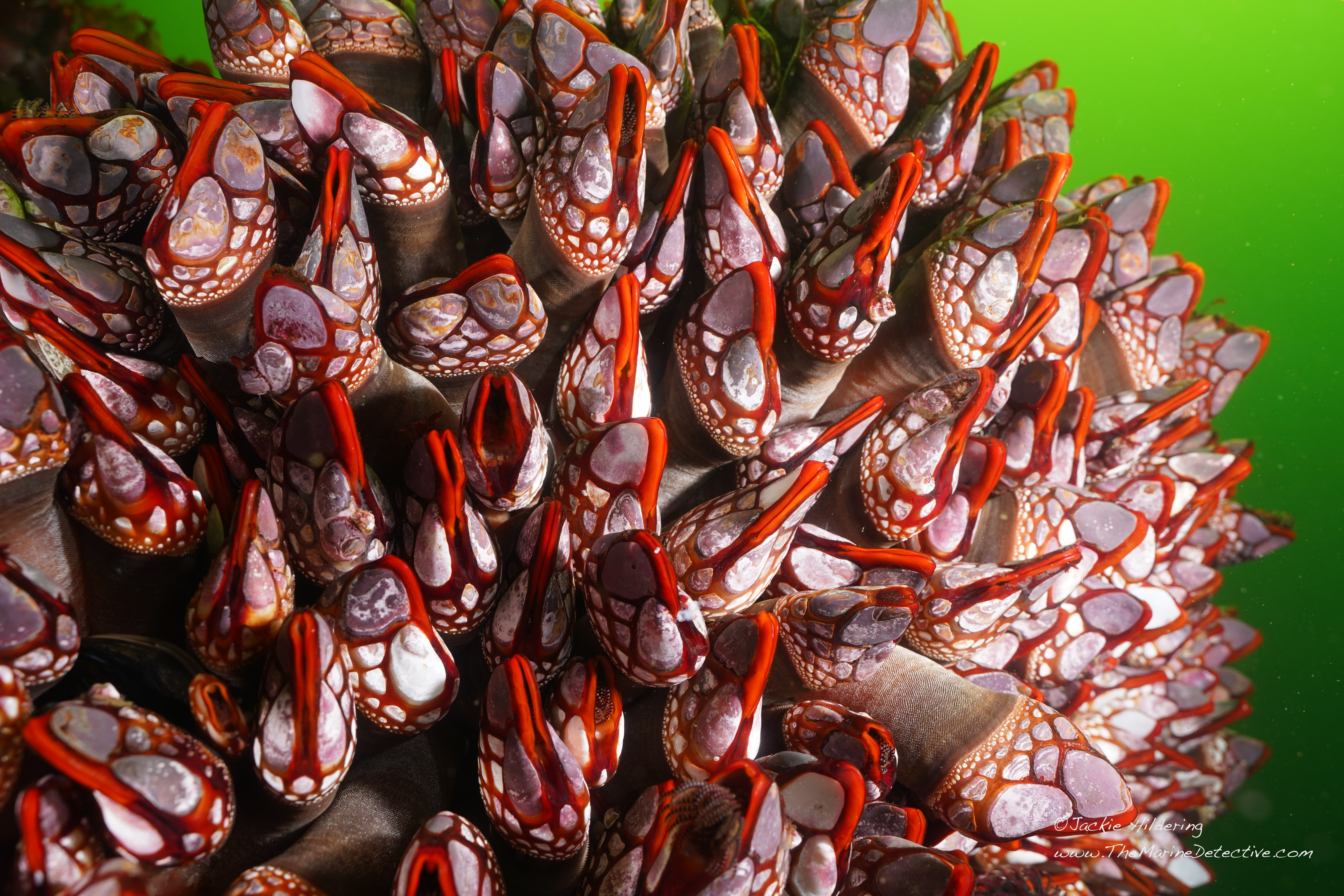
I think these are one of the most achingly and extraordinarily beautiful animals I have ever seen.
They are Nakwakto Barnacles. They need really strong current and that was very clear during the dive where I photographed these, even on a small tidal exchange). The dive site was Turret Rock, also known as Tremble Island because of the appearance that the island shakes in the tidal exchange (apparently up 39 kilometers per hour during its largest tidal exchanges).
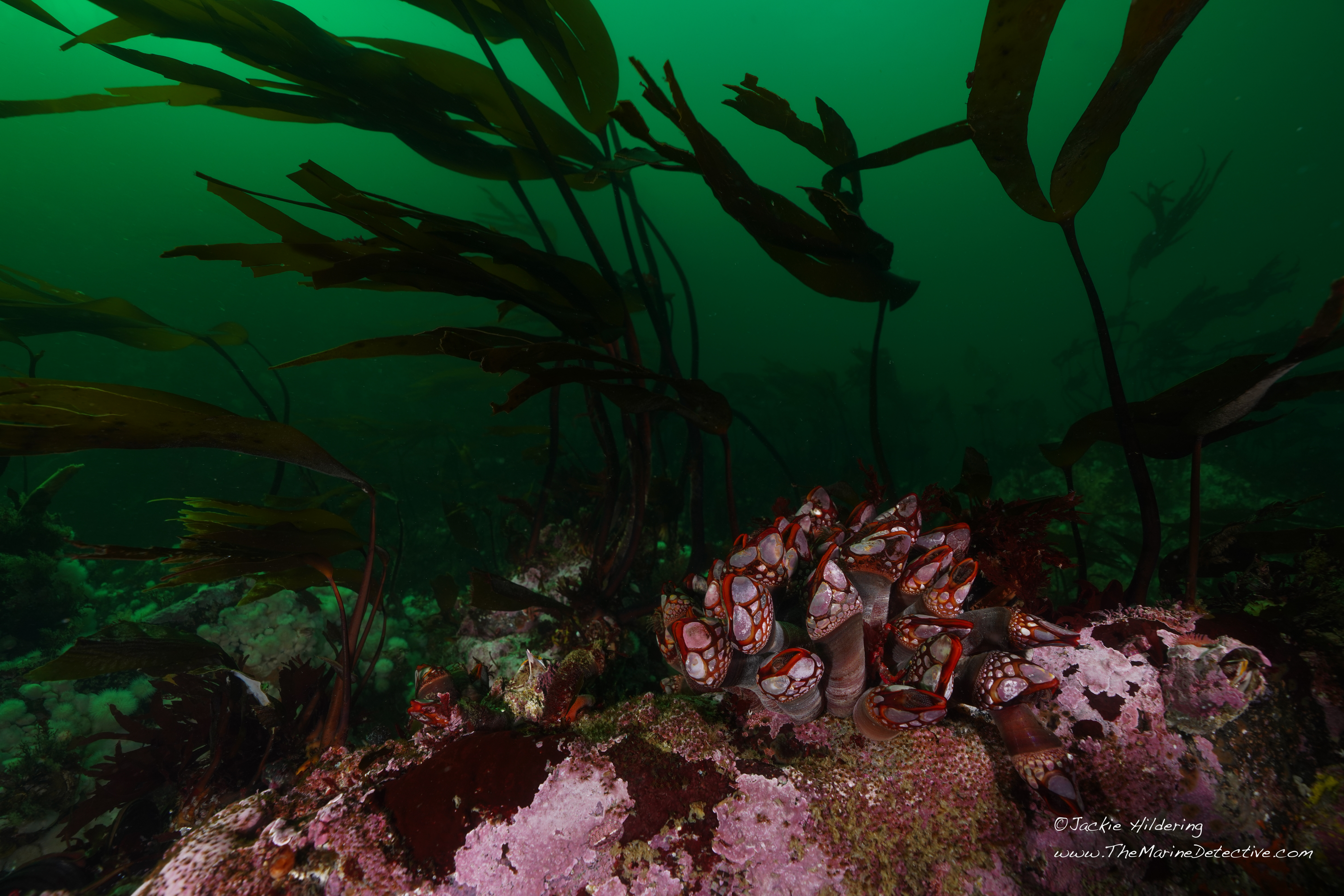
The next photo shows you the SAME species but in shallow water where you can’t see the hemoglobin because, near the surface, the gooseneck barnacles need a protective black pigment against sun exposure. How’s that as a metaphor for how your environment influences your beauty?

These barnacles are perceived to be a variant of Gooseneck Barnacles with the same species name, which is Pollicipes polymerus.
The barnacles’ stalk can be 15 cm long and body to 4.5 cm long.


From Hanby and Lamb’s Marine Life of the Pacific Northwest: ” . . . the spectacular formations of the Nakwakto goose-neck barnacle, a large and colourful variation of the goose-neck barnacle – found in Nakwakto Rapids, Slingsby Channel, c. BC. The glorious red colour is actually the hemoglobin in the barnacle’s blood. The blood is obvious in subtidal specimens like these, which do not have the black pigment that protects the sun-exposed populations inhabiting shallow or intertidal zones . . . this unique and isolated population must be preserved via a No-Take Marine Protected Area.“
From Rubidge et al 2020; “A unique subtidal variety of the Gooseneck Barnacle, Pollicipes polymerus, forms large aggregations at Nakwakto Rapids (Lamb and Hanby 2005). The “Nakwakto variety” of P. polymerus, is bright red as the hemoglobin in the barnacles’ blood is visible. Subtidal populations do not need the black pigment found in the sun-exposed intertidal populations (Lamb and Hanby 2005). The red “Nakwakto variety” of P. polymerus has been recently reported in other subtidal areas including a sea cave on Calvert Island on the central coast and Race Rocks near Victoria. Because of its slow recovery rate after perturbations and its ecological role as a habitat-forming species, P. polymerus was identified as an Ecologically Significant Species and conservation priority for the Marine Protected Area network planning process in the Northern Shelf Bioregion (DFO 2017).“
Information provided by Greg Jensen (pers. comm. 2024-02-01) about gooseneck barnacles’ being in high current areas: “[they are in] high current and wave-exposed areas because they are passive filter feeders relying on water movement (as opposed to active filterers like acorn barnacles). Goosenecks likely survive subtidally in these ultra-high current areas because predators like red rock crabs can’t withstand the current.”
Descriptor in the calendar:
Photos: September 17 and 18, 2022, near the Nakwakto Rapids in Gwa’sala-‘Nakwaxda’xw Territory ©Jackie Hildering.
Sources:
Handby and Lamb. 2005. Marine Life of the Pacific Northwest: A Photographic Encyclopedia of Invertebrates, Seaweeds and Selected Fishes
Rubidge, E., Jeffery, S., Gregr, E.J., Gale, K.S.P., and Frid, A. 2020. Assessment of nearshore
features in the Northern Shelf Bioregion against criteria for determining Ecologically and
Biologically Significant Areas (EBSAs). DFO Can. Sci. Advis. Sec. Res. Doc. 2020/023. vii +
63 p
 The Marine Detective
8 Responses to “Nakwakto Goose-neck Barnacles”
Truly remarkable how they can appear so vibrant or so mundane.
How many marine species use hemoglobin as their O2 carrier I wonder ?
Our cousins don’t look so strange anymore !
Great shots Jackie and yes I gasped !
Yes Jackie, these are very beautiful creatures! This particular blog caught my attention as I have just returned from Portugal, where many restaurants had “Gooseneck Barnacles” on their menus. I am assuming these are a different variety?
Always enjoy your posts – Thank you!
Gary
Good morning,
When will you be taking order for calendars?
Mike
Hello Mike, Anytime you like! Thank you so much for the further interest. You can email directly to jackiehildering@gmail.com.
Hello Mike – Calendars are on their way. I have sent you an email. 🙂
I love the lighting on the photos Jackie, the red simple POPS against that bright green background. Any on why almost none of them are feeding? Is it that they don’t bother when the current stops?
Thanks for another great article. Paul
Thank you so much Paul.