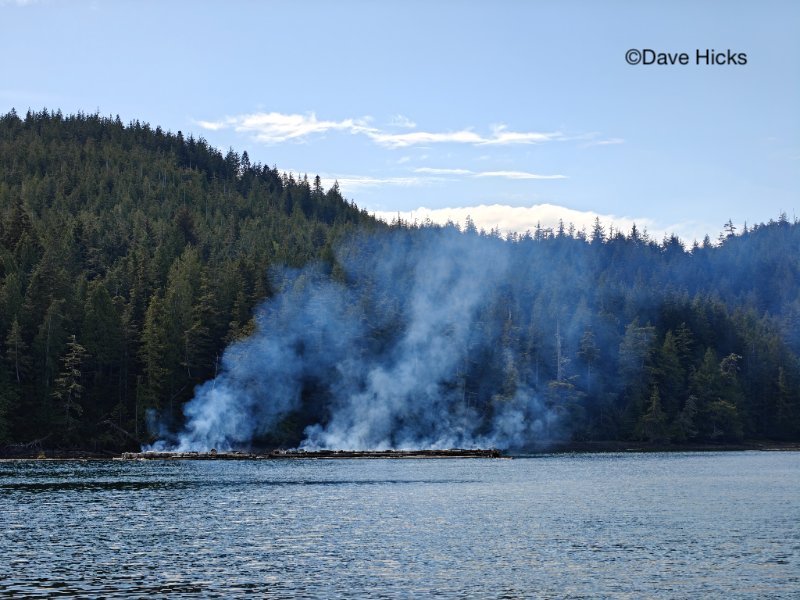
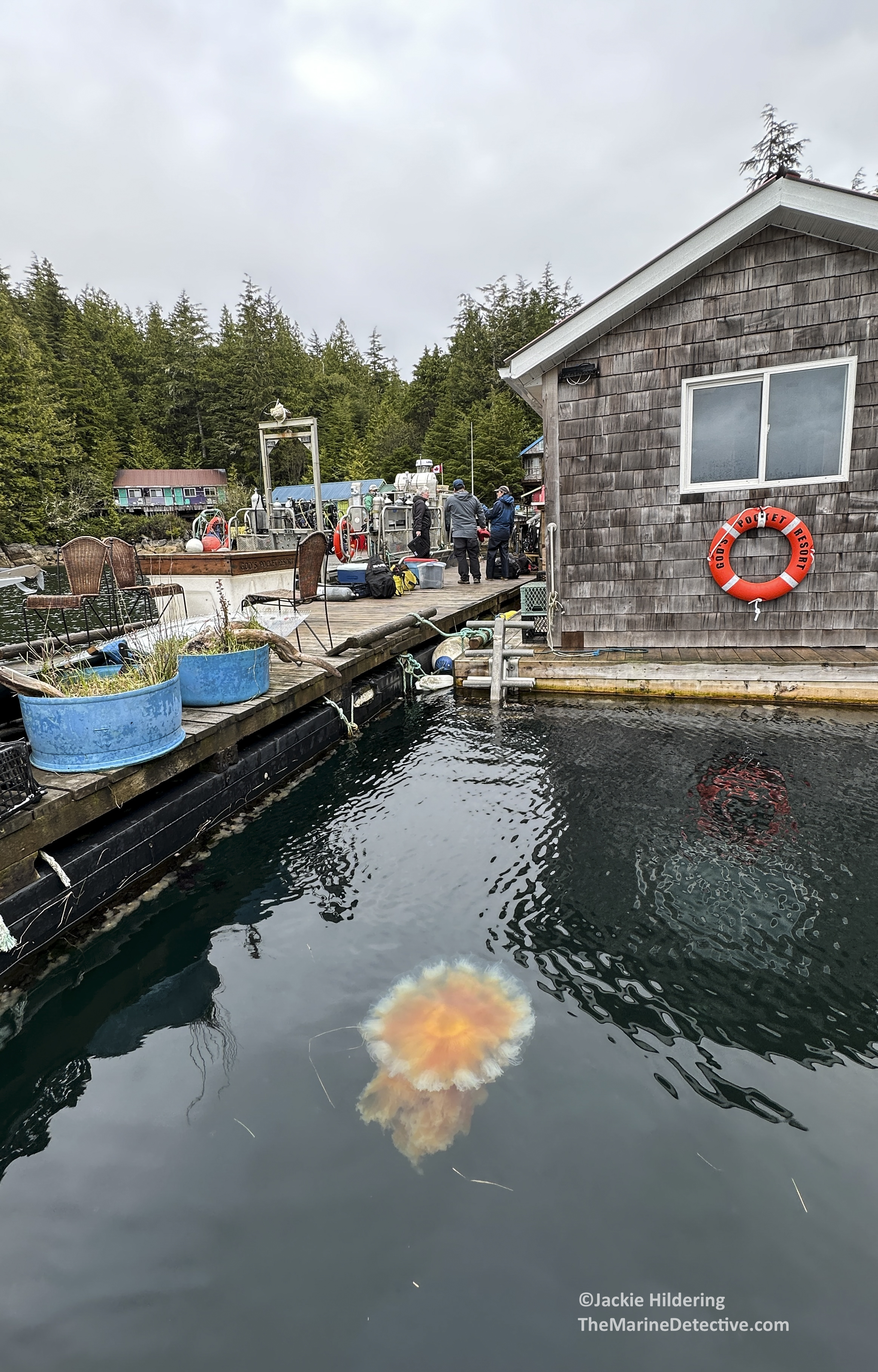
The Browning Pass Hideaway in Clam Cove burned today.
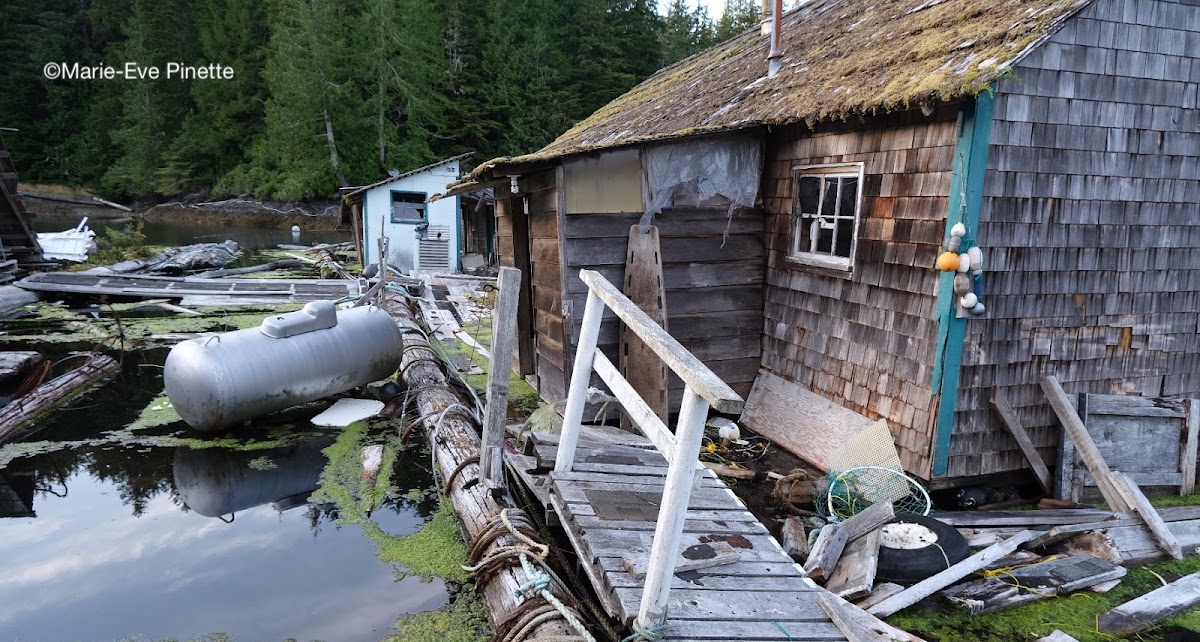
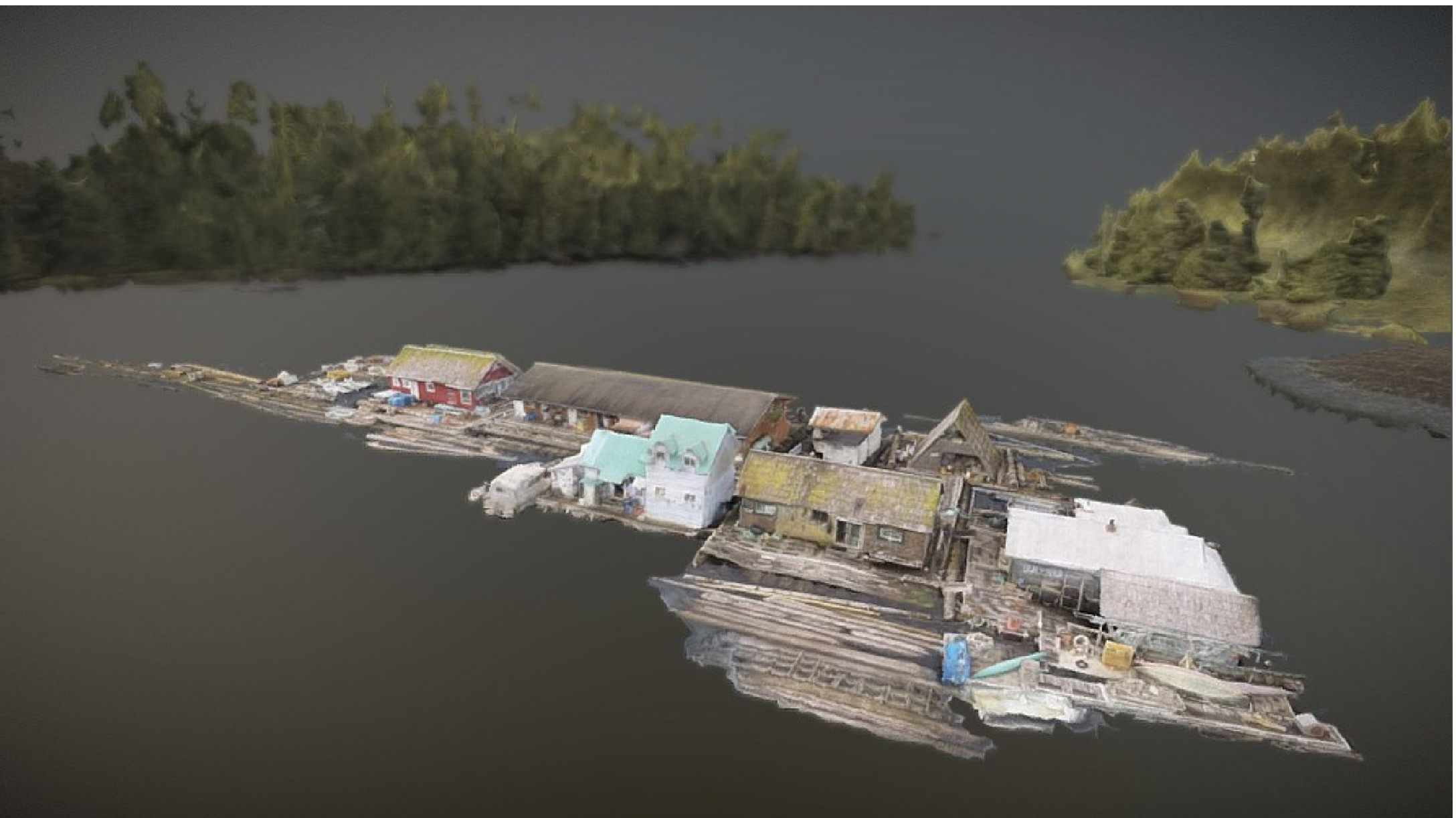
There has been a file from the BC Ministry of Forests regarding the tenure of this dive lodge dating back to 2016 (see notice below). There were very significant concerns about long-term neglect (see photos below) and resulting environmental impacts.
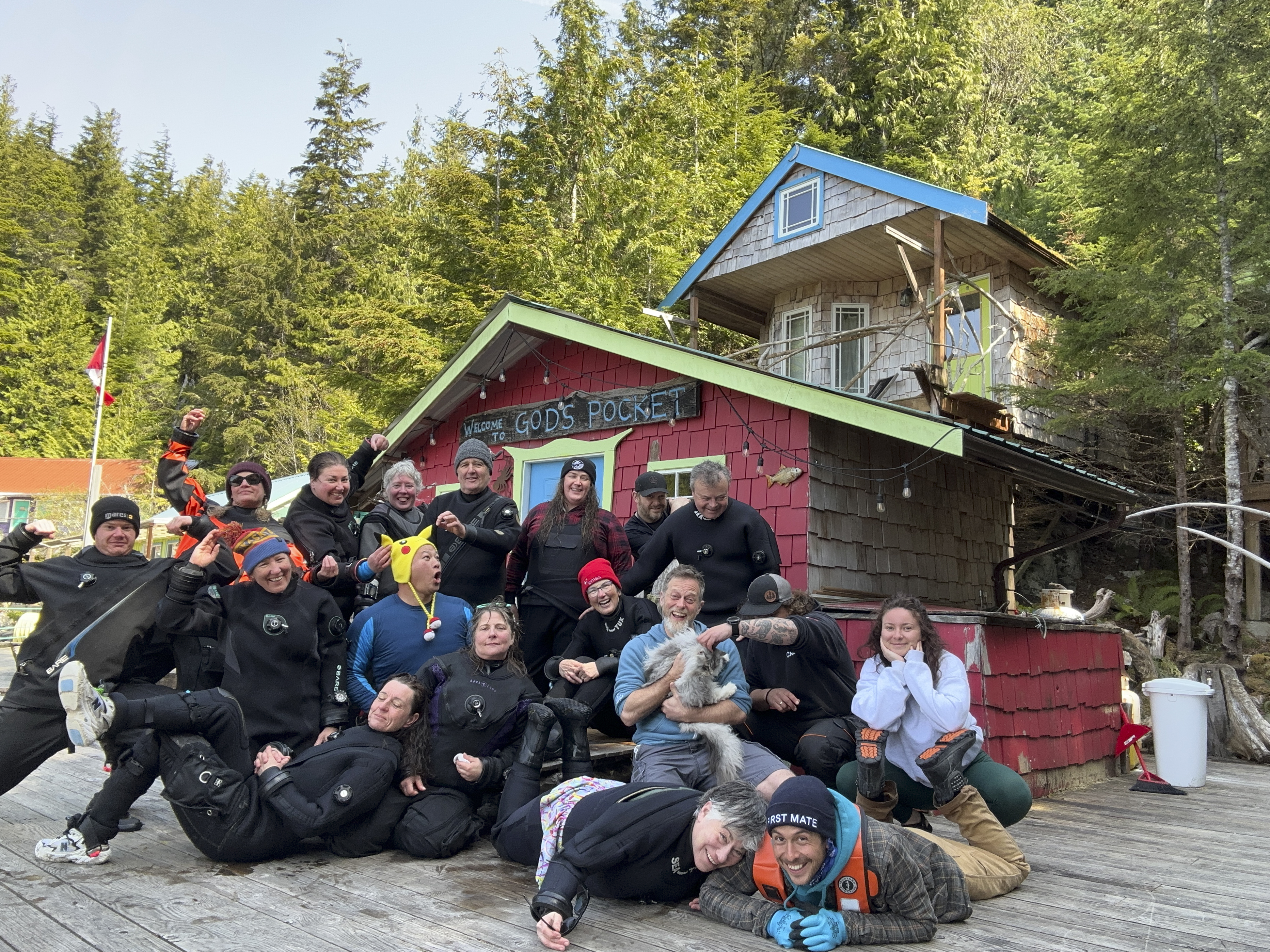
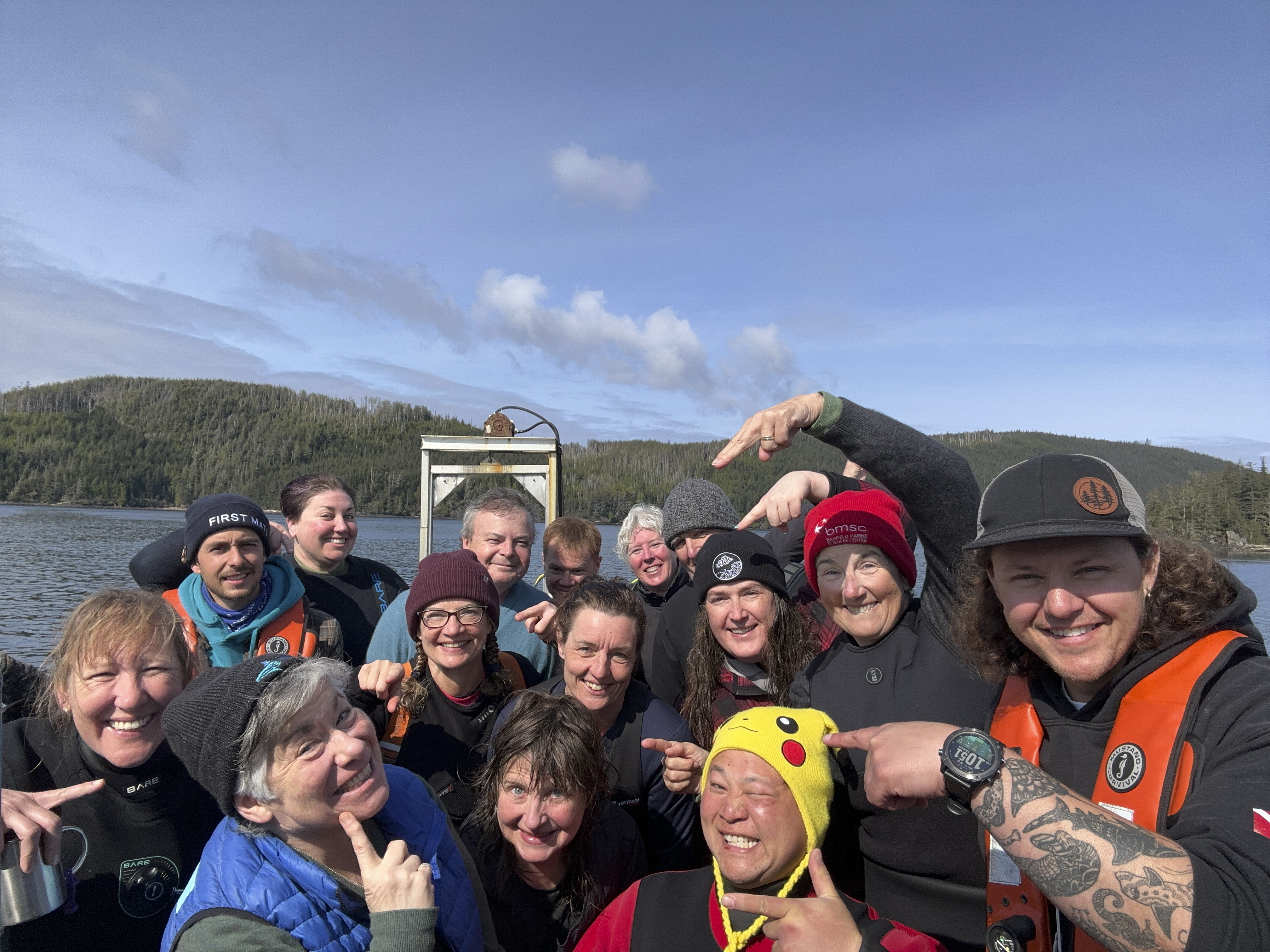
The fire was discovered and reported by a dive group from God’s Pocket Resort. No one was injured. Documentation is by Bryan Hillyer.
“At approximately 11:15am, our group of divers noticed smoke billowing out of Clam Cove, located on the north end of Browning Passage. We took the boat into the cove to check for danger and found The Hideaway, a scuba dive lodge, burning. We notified Coast Guard and stayed to monitor the flames to ensure the surrounding forest did not catch on fire. Once the flames receded and the majority of the floating structure had burned, we notified Coast Guard of the status of the fire and took our leave.”
There is no information currently about the cause of the fire, and speculation is not welcome.
Why am I sharing this information?
Because many of us in the BC dive community have a connection to this site be it because of concerns about the neglect and/or because of knowing the owner. Also, it provides insight into how there can be these realities of long-term neglect from those who lease sites, all the way up and down our coast. Who pays? The environment in astoundingly beautiful and important places that, of course, are connected to millennia of First Nations culture.
Tomorrow, as so many of you know and feel, is Canada’s federal election. And, I’m tariffied. That’s not a typo.
The Canadian election has been dominated by the results of the election on the other side of the border. So many of us are left thinking HOW and WHY did our neighbours ever make that choice?
We feel the global shock waves that are the result – from finance, to human decency, to national security, to consideration of the environment that sustains us.
How and why? Dear Canadian neighbours, now we are there ourselves.
Tomorrow will mirror back to us who we are and what we value (acknowledging and deeply feeling the realities of our non-proportional voting system).
The ugly in the world is not in the shadows.
This is how it began on the other side of the border. He who “says it like it is” – an invitation for more of the ugly to creep out from the dark.
I sense in myself the want to disengage; that I feel disoriented, wounded and even targeted. The leader on the other side of the border is the embodiment of what I have stood against since, as a child, I stepped between a bully and his target.
The gag-inducing hairball, the recoil, the violations of attempted autocracy come together with technology that creates further vertigo about reality, truth, and even who we are.
What to do?
To swing far to the right, is wrong. To create a party that invites and fosters violations of humanity/equality and the environment is wrong.
Feel what you feel and identify your response to it – fading, disengaging, hurting, despairing, scrolling away?
And then say, hell no.
Hell no to the bullying, the attempts to overwhelm, violate, disorient, disempower.
Hell no to handing over our power, identity, values, and the further resources that sustain life (which is exactly the attempted strategy of using the blunt tools of fear and lies).
Tomorrow we vote.
And then we live with the reality, in all cases putting good into the world, having empathy for those who are being sucked under in this vortex of ugly and their inability to see clearly.
Stay afloat, know the way forward, guided by the values that will serve future generations.
I have struggled with whether I will share who I am voting for.
We in the riding of North Island-Powell River have the following reality:
A candidate that has attracted and emboldened the far right.
The alternative choices of three other candidates.
Having to consider strategic voting because the vote for those who do not want the Conservative candidate, will be split three ways.
This has led to the decision to vote for the NDP candidate despite the Liberal candidate being someone I know.
Background on the quote I present here from Rita Leon, Sts’ailes, Nation.
It was provided as a comment on a social media post I made by Wendy Burton: “A dear friend, who is an Indigenous elder, told me many years ago, when knowledge of the Residential school system began to seep into my world: Despair is a position of the privileged. I have no time for despair. It stops me from doing my part to heal this magnificent world. Do I sit in the dark and weep sometimes? Yes. Do I rise up? Always.”
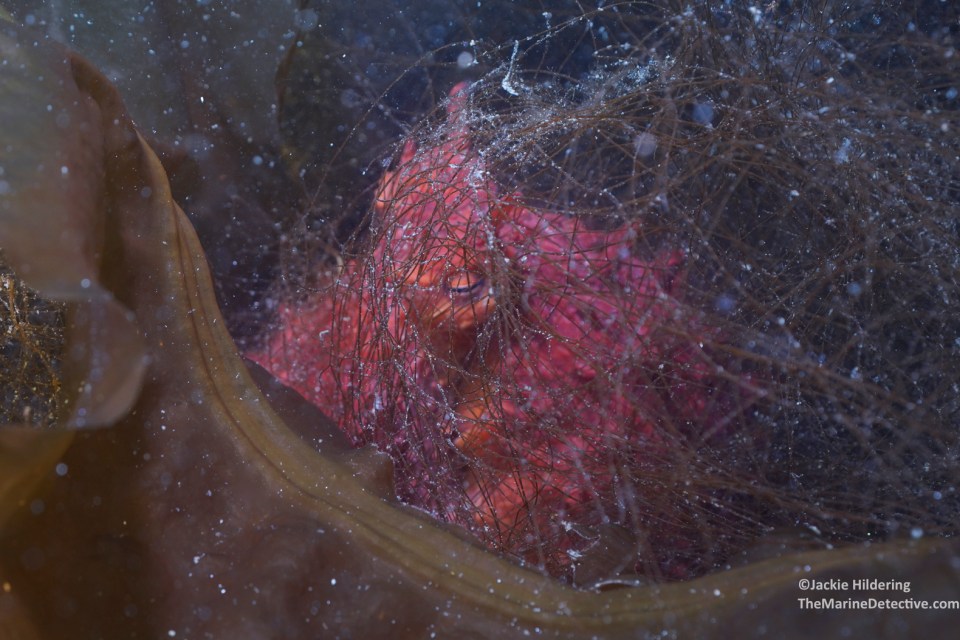
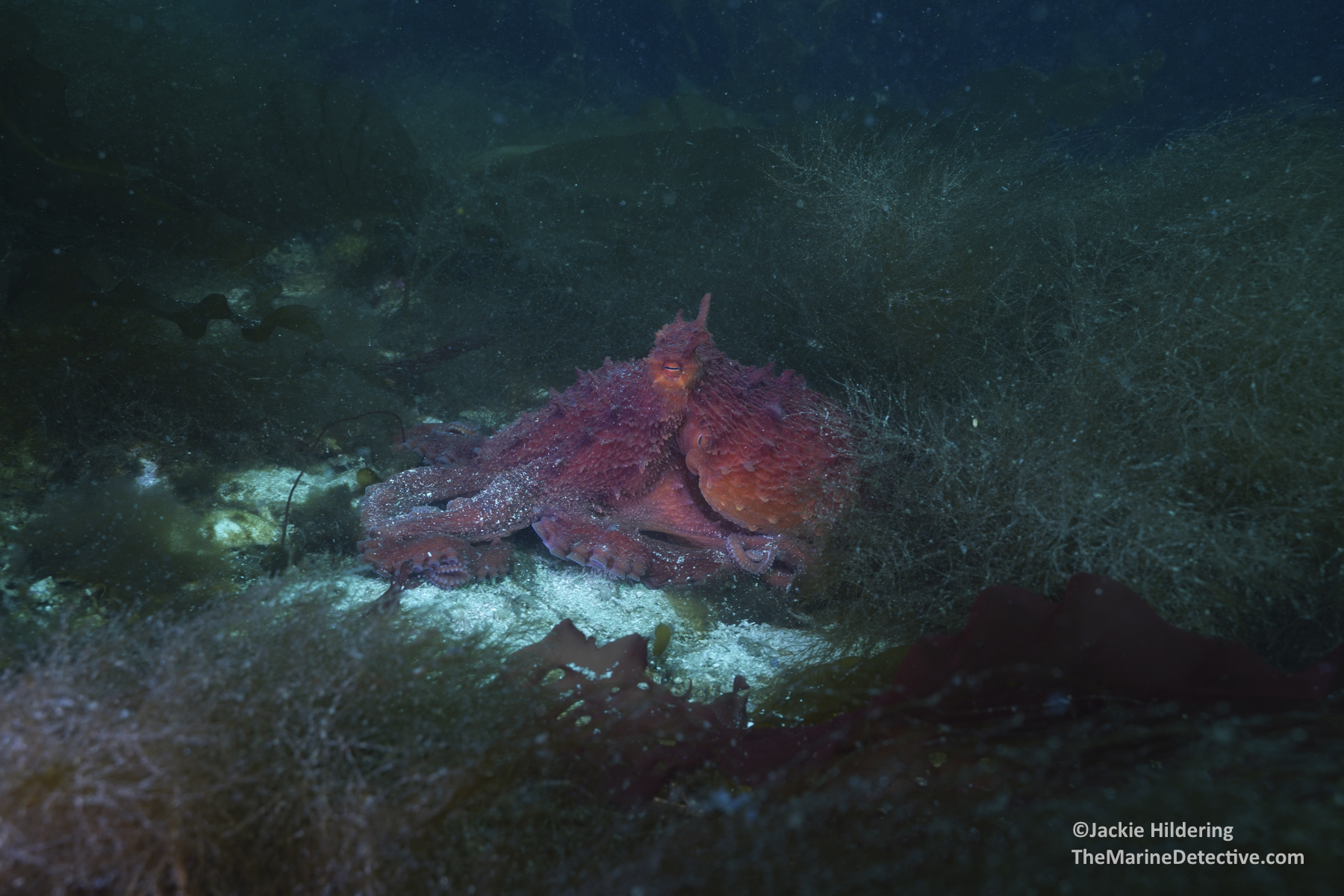
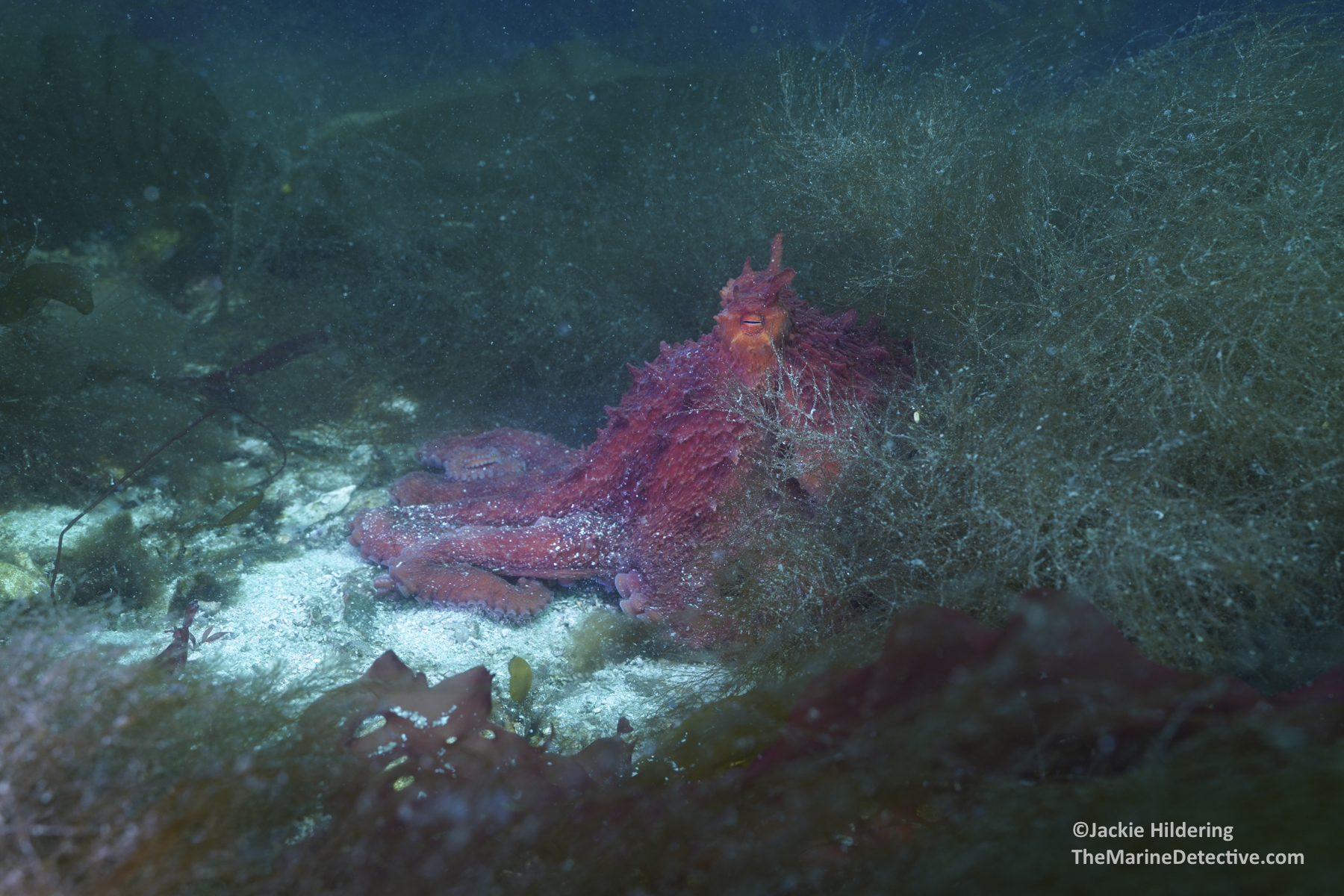
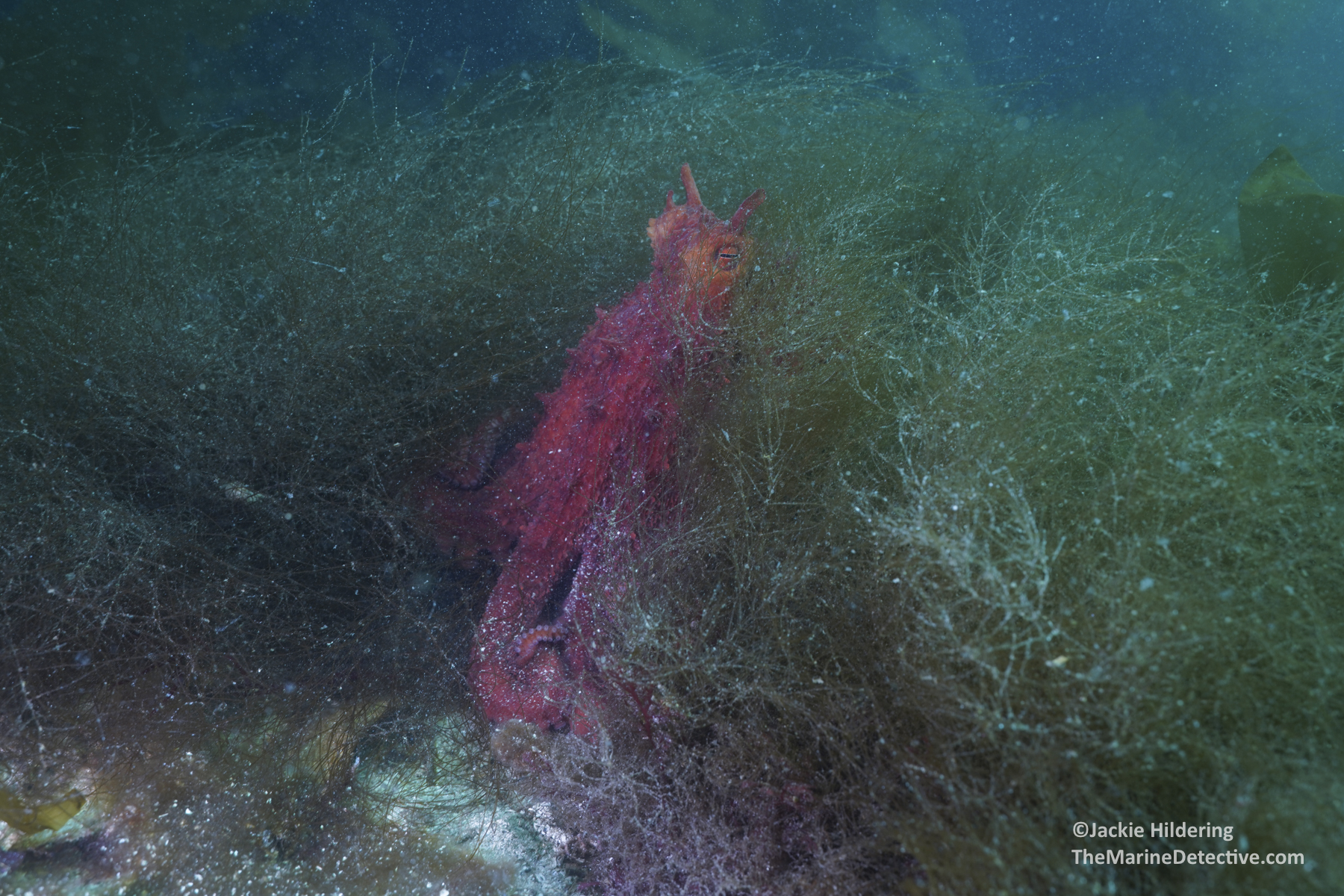
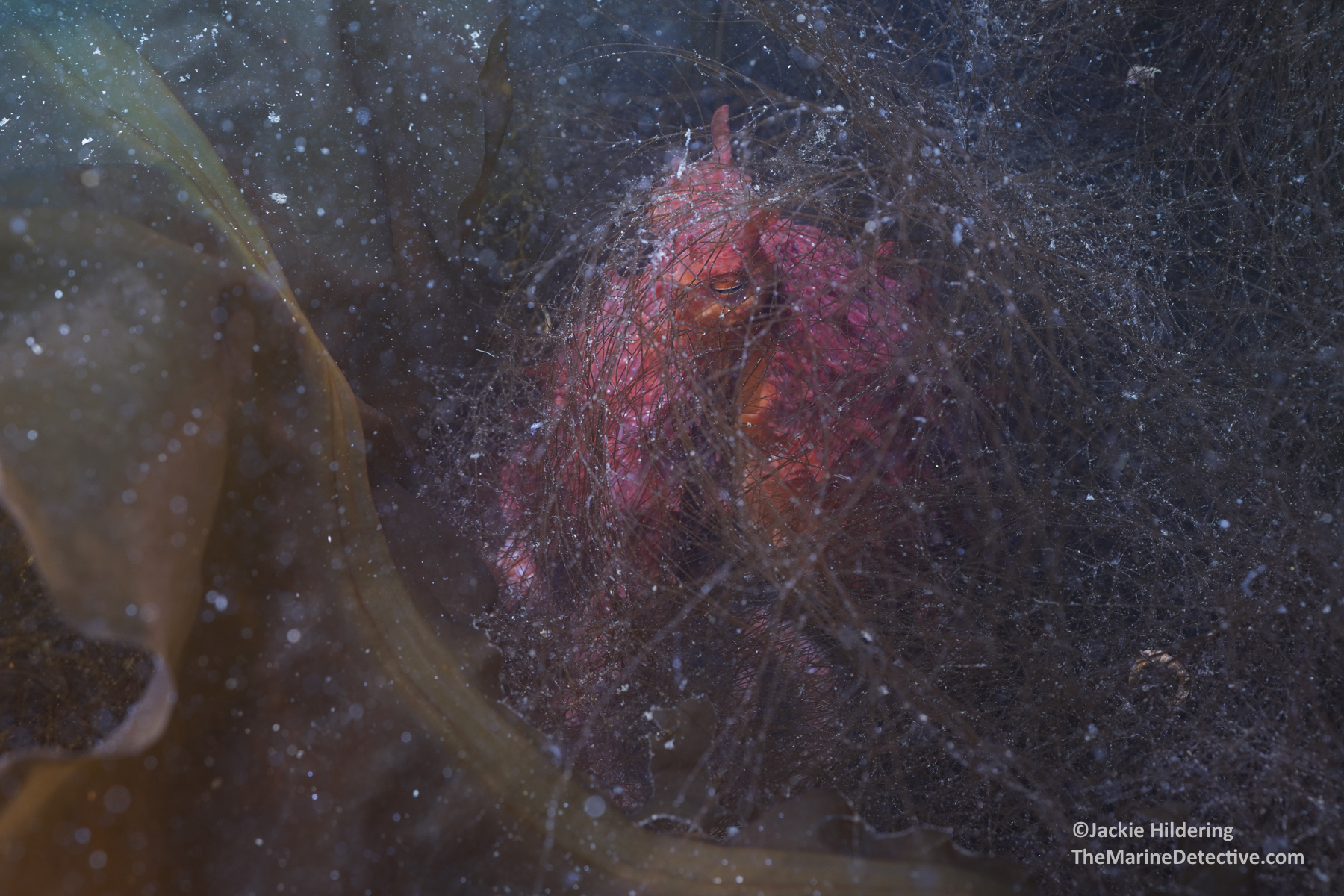
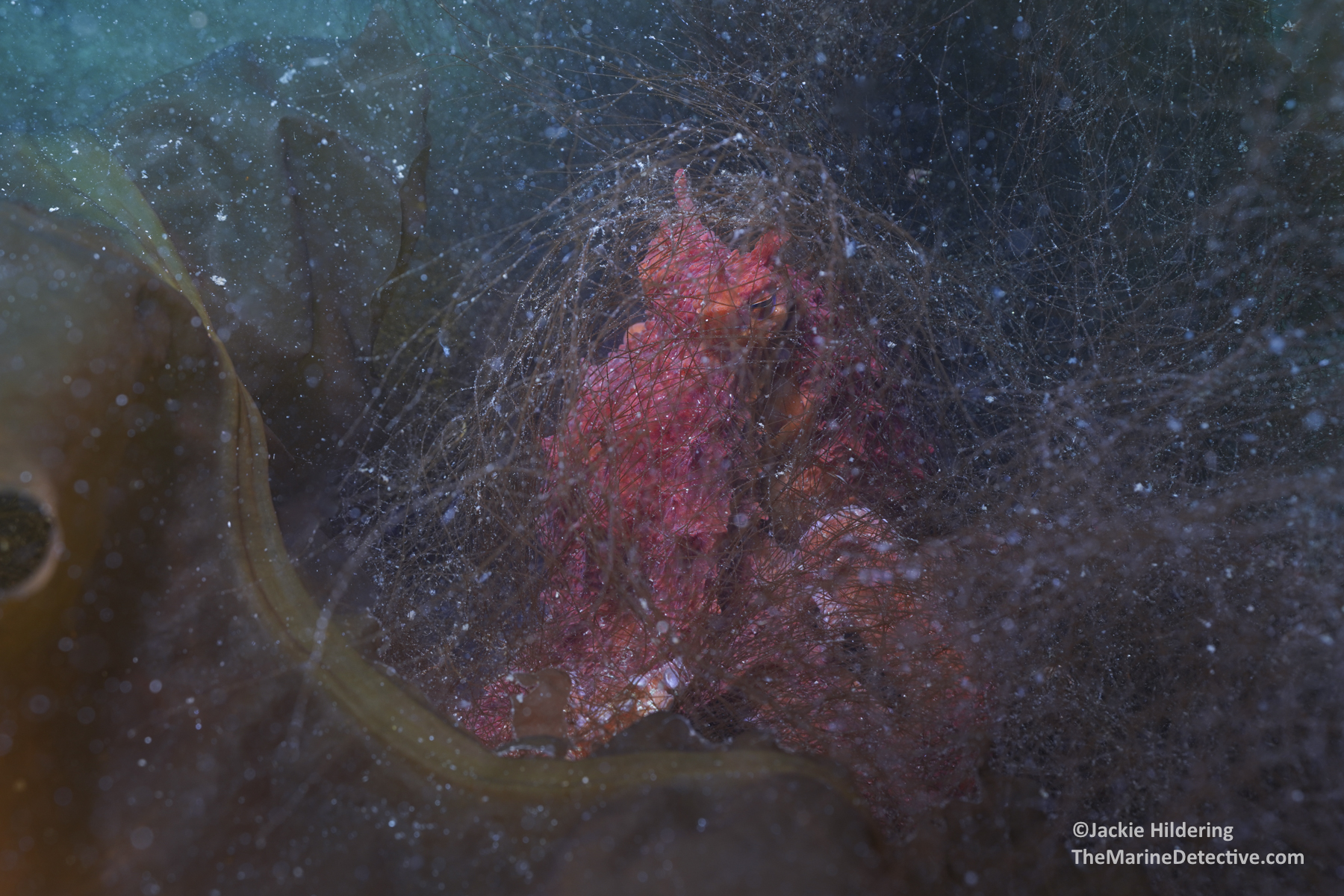
I now carry this with me. I want you to carry it too – the knowledge of this Giant Pacific Octopus. I want you to feel at least some of what I felt. So here is a series of photos for you, with the backstory.
I had my head down, slowly moving along in awe of a little species of sea cucumber that was spawning. I looked up from my focus on the small, and there, looking in my direction, was this Giant Pacific Octopus.
I backed off. The octopus backed up, into the filamentous brown algae. And then, for some 5 minutes, we looked at one another. The octopus veiled in the algae. Me, wrapped in wonder.
One of us a brief, and light-flashing visitor. The other, royalty among the invertebrates.
Octopus evolution goes back some 330 million years (before dinosaurs). That’s 1,000+ times longer than we two-legged weirdos have been on Earth (homo sapiens).
May the photos communicate some of the emotion and connect you all the more deeply to your care for this coast and our extraordinary neighbours – in how/what we buy, in our energy use, and . . . in how we vote.
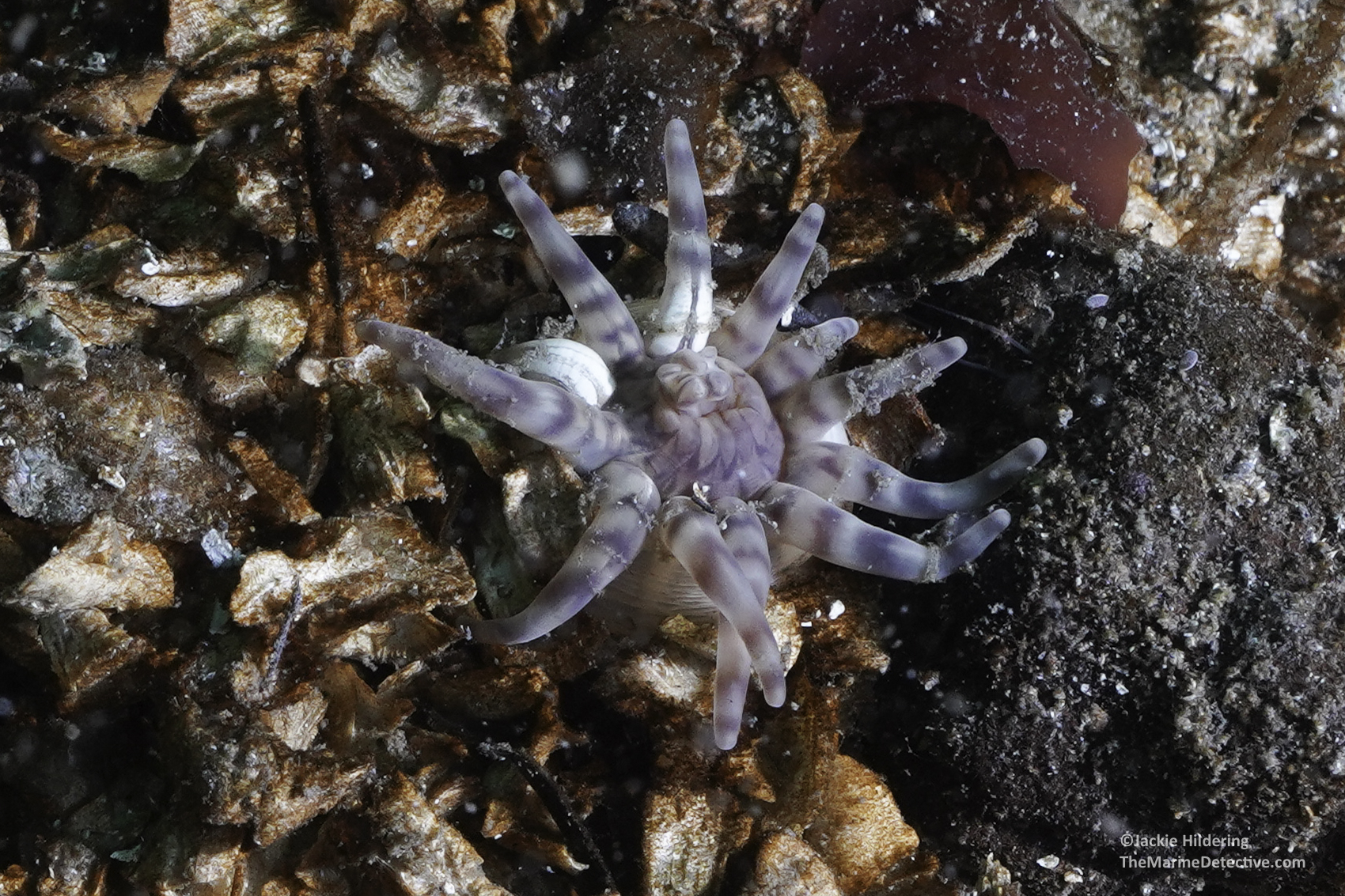
An anemone species that parasitizes the jellyfish that eat them?! Then they move out, drop off and live on the ocean bottom?! And they can also move Spiderman-like from one jelly host to another?!
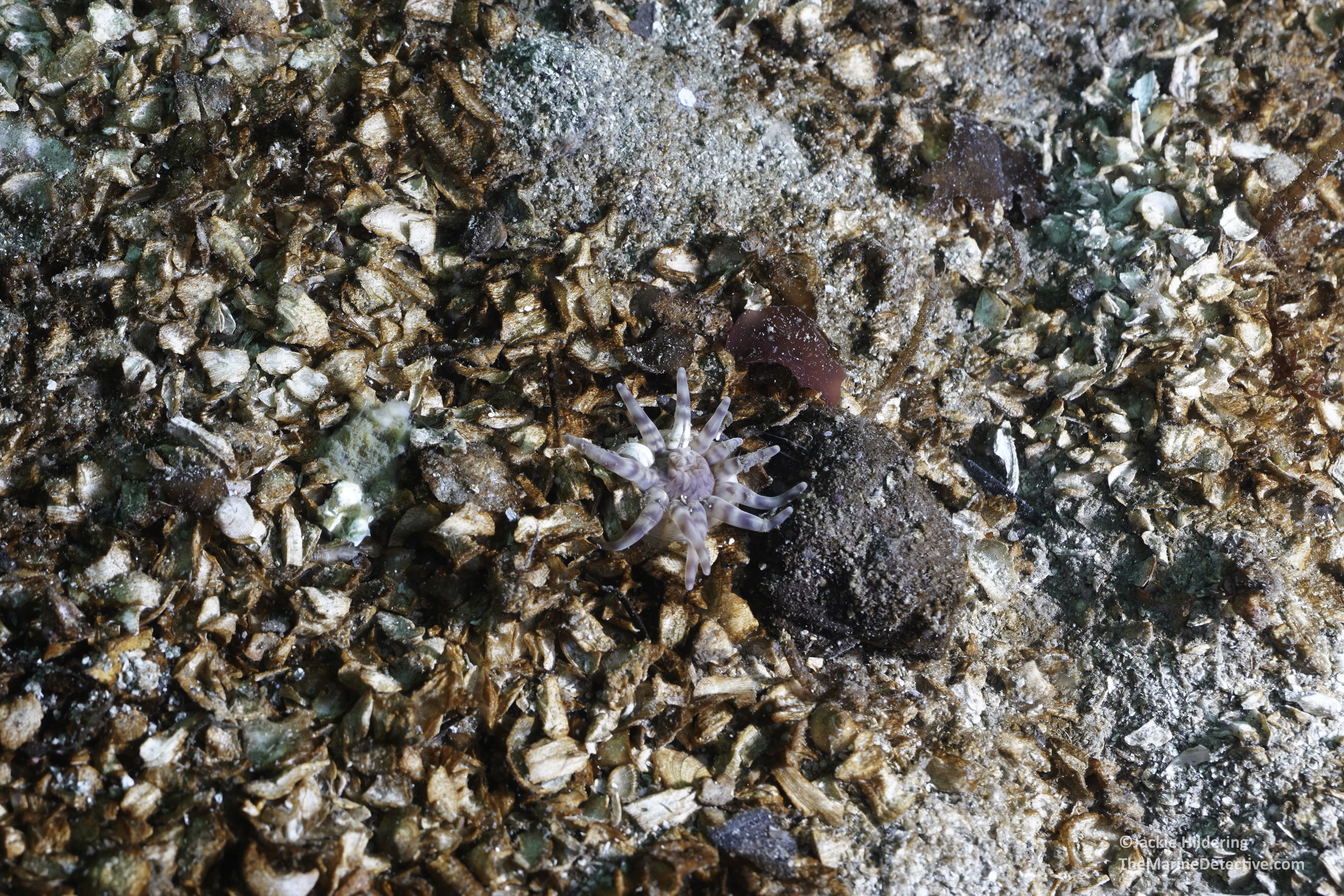
Yes! And in all these years this is the first time I THINK I MAY have photographed a Jelly-dwelling Anemone. They are also known as the Twelve-tentacled Parasitic Anemones and are only up to 2 cm across (Peachia quinquecapitata).
Oh Nature you are so wildly varied and fabulous! Somehow seeing this remarkable little animal with a wicked lifecycle makes me feel better fortified to cope with the human-inflicted wickedness in the world. I hope it does the same for you. 💙
About Jelly-dwelling Anemones from Hanby and Lamb, Marine Life of the Pacific Northwest:
“After the larva of this anemone is ingested by a jelly, the tables are turned as it begins to feed on the host’s internal organs. Eventually, it transforms into an almost transparent anemone that hangs inside the jelly . . . Ultimately the anemone drops off and assumes a bottom-dwelling existence in a mud/sand habitat . . . “
Research by Spaulding published in 1972, reports that in laboratory tests, the larval anemones of this species were endoparasitic for an average of 11 days – feeding on what was in the intestines of the jelly. Then they became ectoparasitic, feeding on the gonads (sex organs) of their host. After an average of 31 days of being ectoparasites they then “had acquired their adult characteristics and dropped off the host medusa to become free-living“.
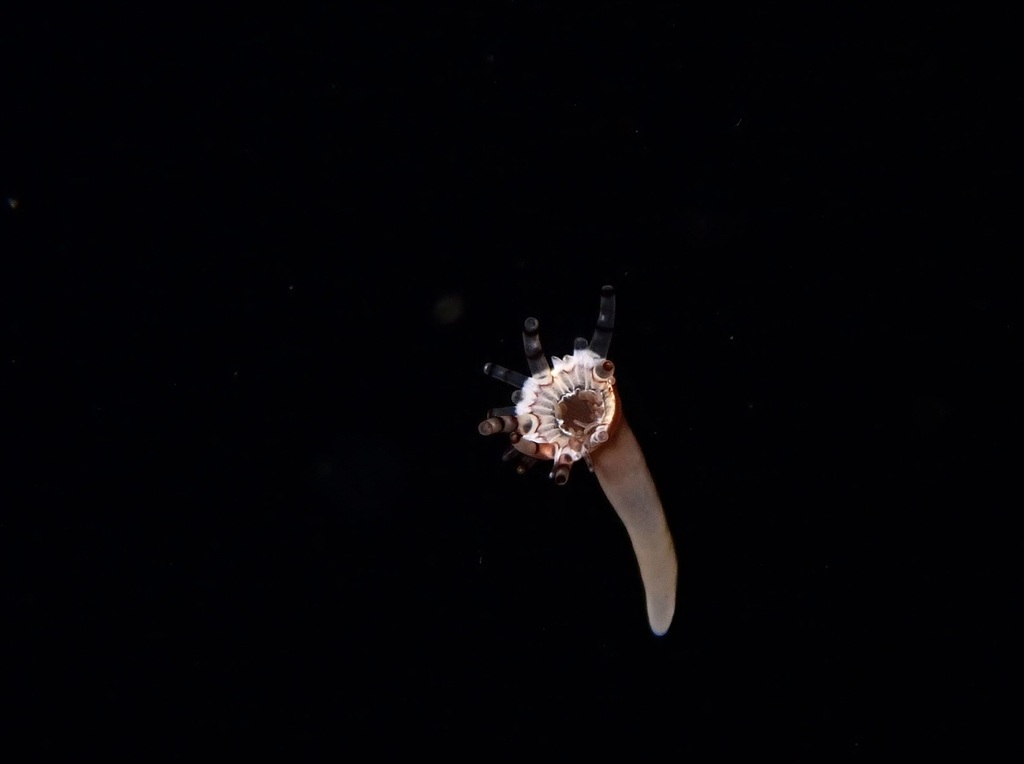
Jelly-dwelling Anemone on its way between jellyfish host and ocean bottom? KJ Reed @Leftcoaster via iNaturalist.ca and conditions of the Creative Commons License.
Not that I would never say this species, or any other, is a monster 👹. There is nothing for humans to beware when it comes to Jelly-dwelling Anemones. Unless maybe you are living your life on a trajectory where you may get reincarnated as a jellyfish that will have its gonads eaten by this anemone species. If it is possible to sign some humans up for that fate, I currently have a list. You may have the same list.
Beware of cute little monsters: The jelly-dwelling anemone has a spooky secret . . . by Dany Burgess
Step aside, Alien. [the northeast Pacific Ocean] has its very own version of this famous parasitic predator, but without the terrifying claws or fangs. Like an eerily adorable child in a horror movie, an innocent-looking exterior hides the sinister intent of this squishy little monster.
Skeletons in the closet Peachiaquinquecapitata sounds like an unassuming name — even charming! But these innocuous anemones have a sordid past, and the road to adulthood is paved with the bodies of those who stood in their way.
Shortly after hatching into the water column, larval Peachia, called planula, are eaten by jellyfish. You’d think this would be the end of the line, but it’s exactly what the baby anemones were hoping for. Instead of getting digested, the planula get comfortable in their hosts’ gastrovascular cavities and help themselves to food particles. Hey, who doesn’t like a safe place to hide, free transportation and a free meal?
Body snatchers Unfortunately for the hosts, that free meal is just an appetizer. After a few days, the freeloading anemones begin to hunger for the main course — wait for it — the jellyfish’s internal organs. Duhn-duhn-duuuuuuuh! These pint-size parasites start with the reproductive tissue (a single baby Peachia can consume an entire jelly gonad in two days), then move on to other organs for dessert. Yum!
Weird science This fascinating research on the Peachia life cycle was conducted at Puget Sound’s own Friday Harbor Laboratories, where scientists determined that up to 62% of one host jelly population (Clytia gregaria) was infected with these little leeches each spring. Although the planula may be able to live freely without hosts, when scientists replicated this process in laboratory culture, only the ones that were eaten by jellies survived. An amazing host-swapping behavior was also observed: the anemones were able to fire their stinging cells into new host jellies and make very slow, sticky Spiderman-esque leaps from one bell to the next.
Beg, steal or burrow After about a month of eating the unlucky jellies from their insides out, the anemones have had their fill. Remember the scene in Alien where the thing bursts out of the guy’s chest? Well, picture something like that, only way less disgusting. Like swollen ticks, the now fat and happy anemones drop off and go on their merry way, settling down on the sea floor and burrowing the long columns of their bodies into the mud.
Not much is known about the fate of the host jellies, but I am guessing that having your organs munched is probably harmful to your health.
Beg, steal or burrow After about a month of eating the unlucky jellies from their insides out, the anemones have had their fill. Remember the scene in Alien where the thing bursts out of the guy’s chest? Well, picture something like that, only way less disgusting. Like swollen ticks, the now fat and happy anemones drop off and go on their merry way, settling down on the sea floor and burrowing the long columns of their bodies into the mud.
Not much is known about the fate of the host jellies, but I am guessing that having your organs munched is probably harmful to your health.
Homebodies After spending their childhoods wreaking youthful havoc on other living creatures, Peachia adults assume new peaceful identities as model citizens. Occurring in the shallow subtidal zone of the Pacific Northwest, they spend their time with their 12 tentacles splayed out on the surface, passively waiting for food to drift by. A closer look reveals that their striped pattern is made up of delicate chevrons — very on-trend with the interior decorating crowd.
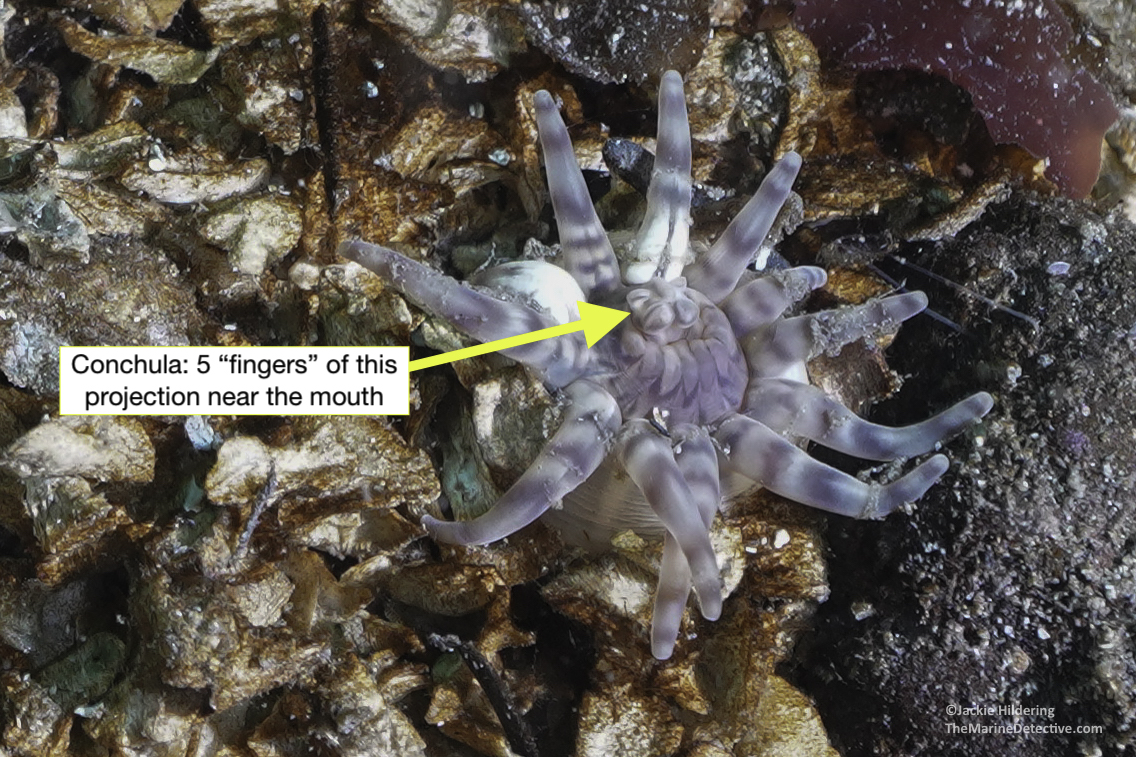
Living hand to mouth The taxonomy crowd might appreciate Peachia for a different stand-out feature, called the conchula: a projection near the mouth that functions in feeding, and is unique to this genus. In Peachia quinquecapitata, the conchula is divided into five distinct finger-like lobes, almost like a miniature hand. And I have to hand it to these mini moochers…they definitely get away with biting the hand that feeds them!”
My photos included in this blog are from April 6, 2025 near Port Hardy in the Traditional Territories of the Kwakwa̱ka̱’wakw (the Kwak̕wala-speaking Peoples).
Dear Community, This is a follow-up to my January blog (included below) in which I shared the news about the King Charles III Coronation Medal, which ” . . . recognizes Canadians who exemplify service to others, protection of the environment, youth empowerment, and diversity. Across Canada, 30,000 medals will be handed out to deserving individuals.”
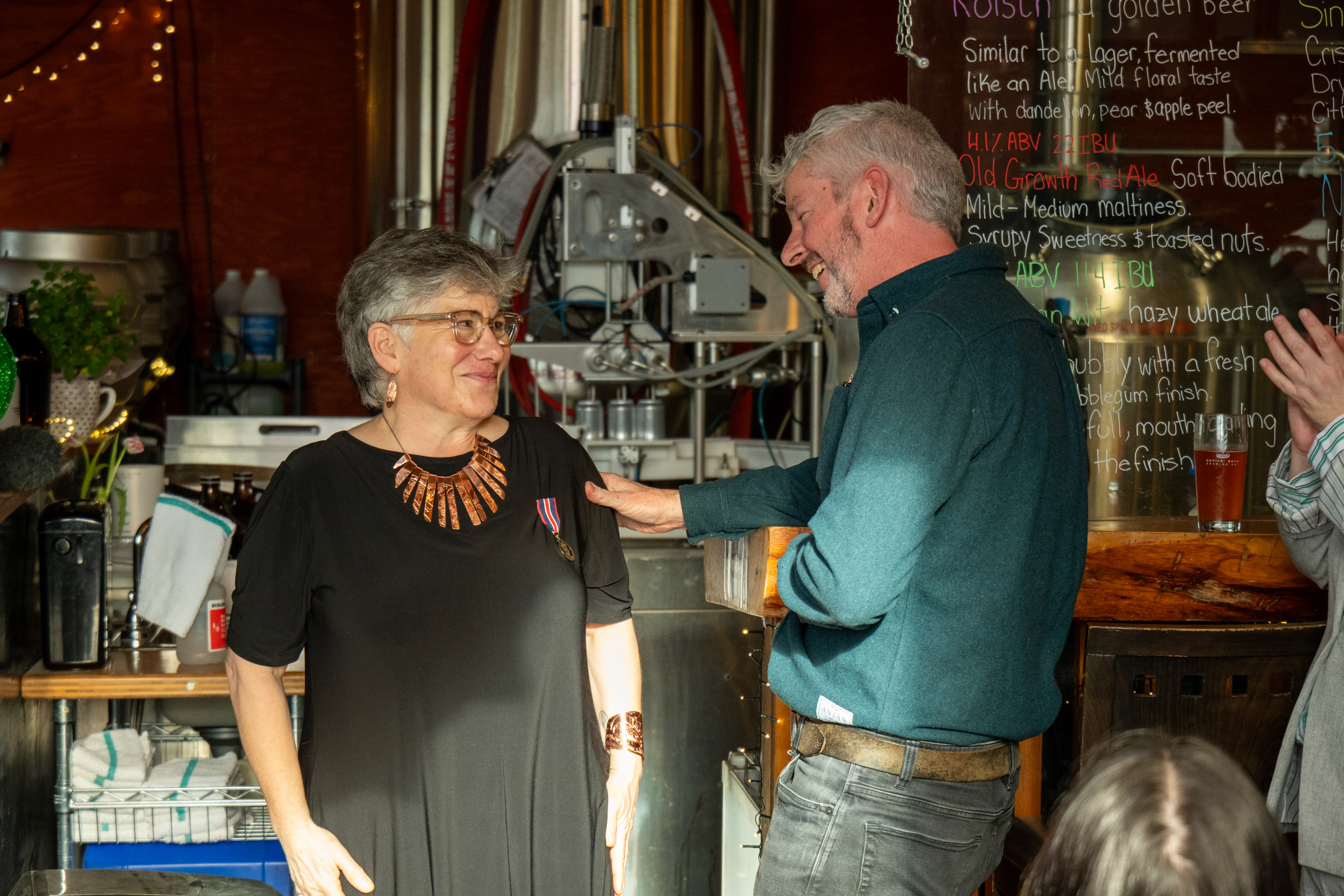
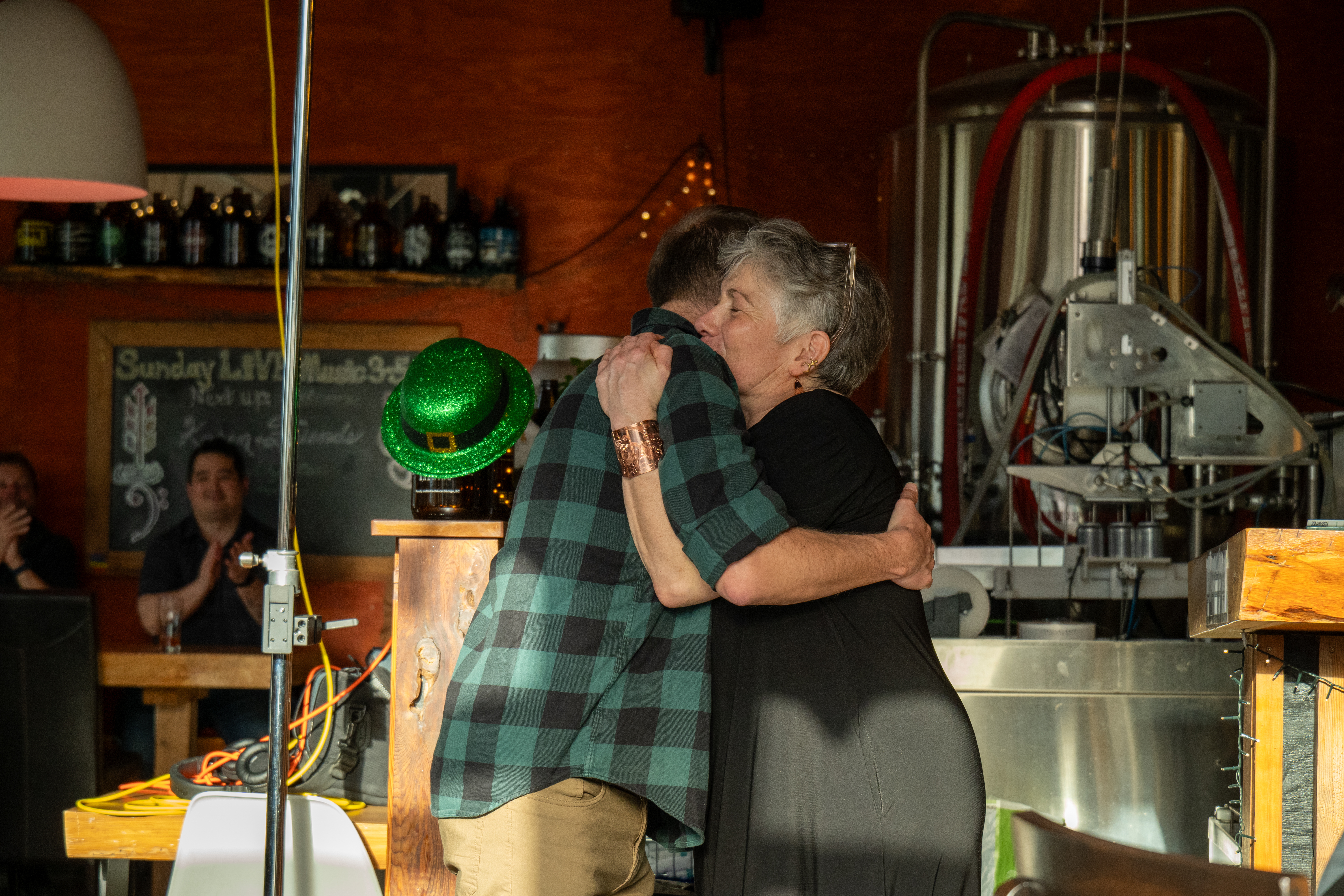
The moment – thanks to MP Rachel Blaney.
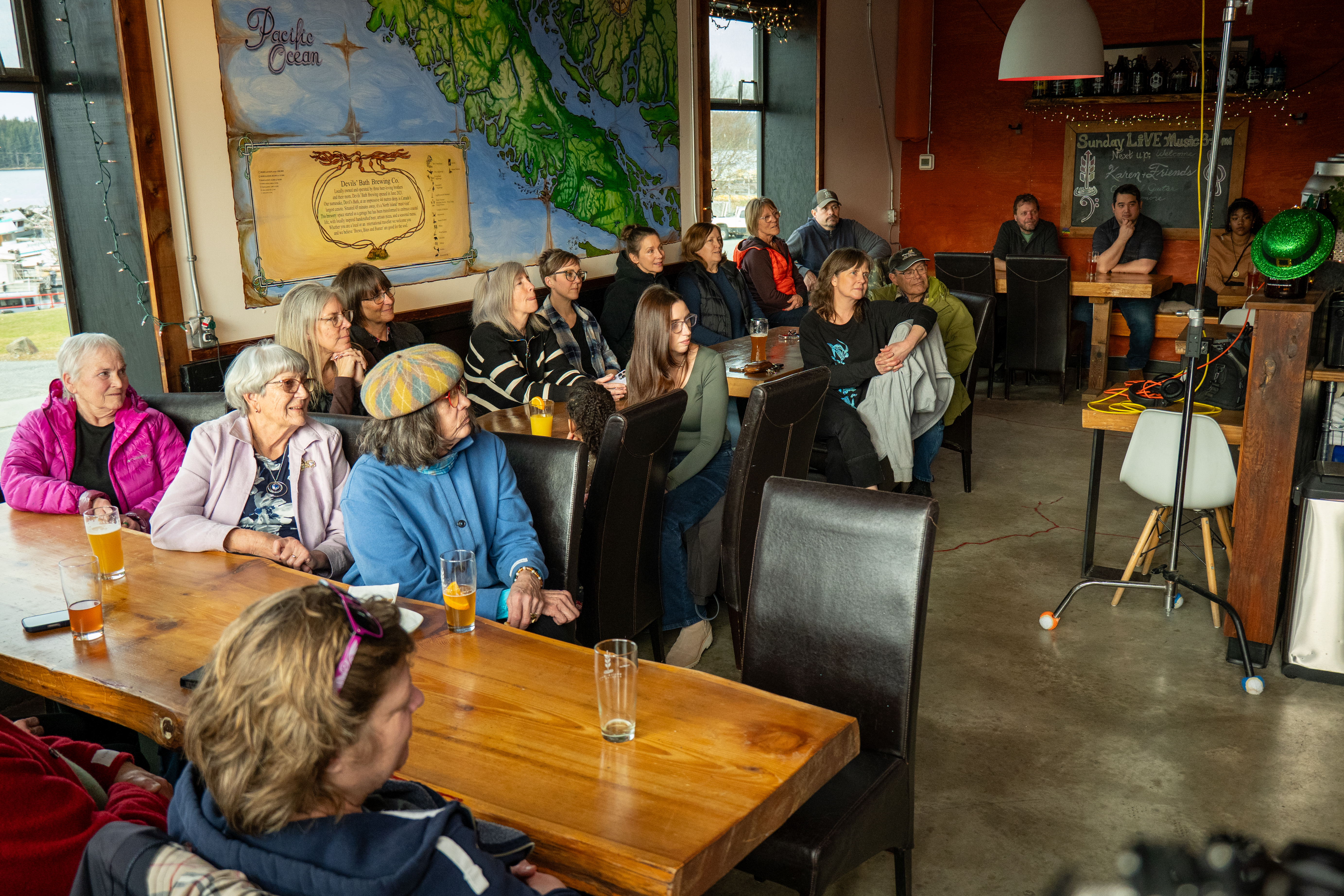
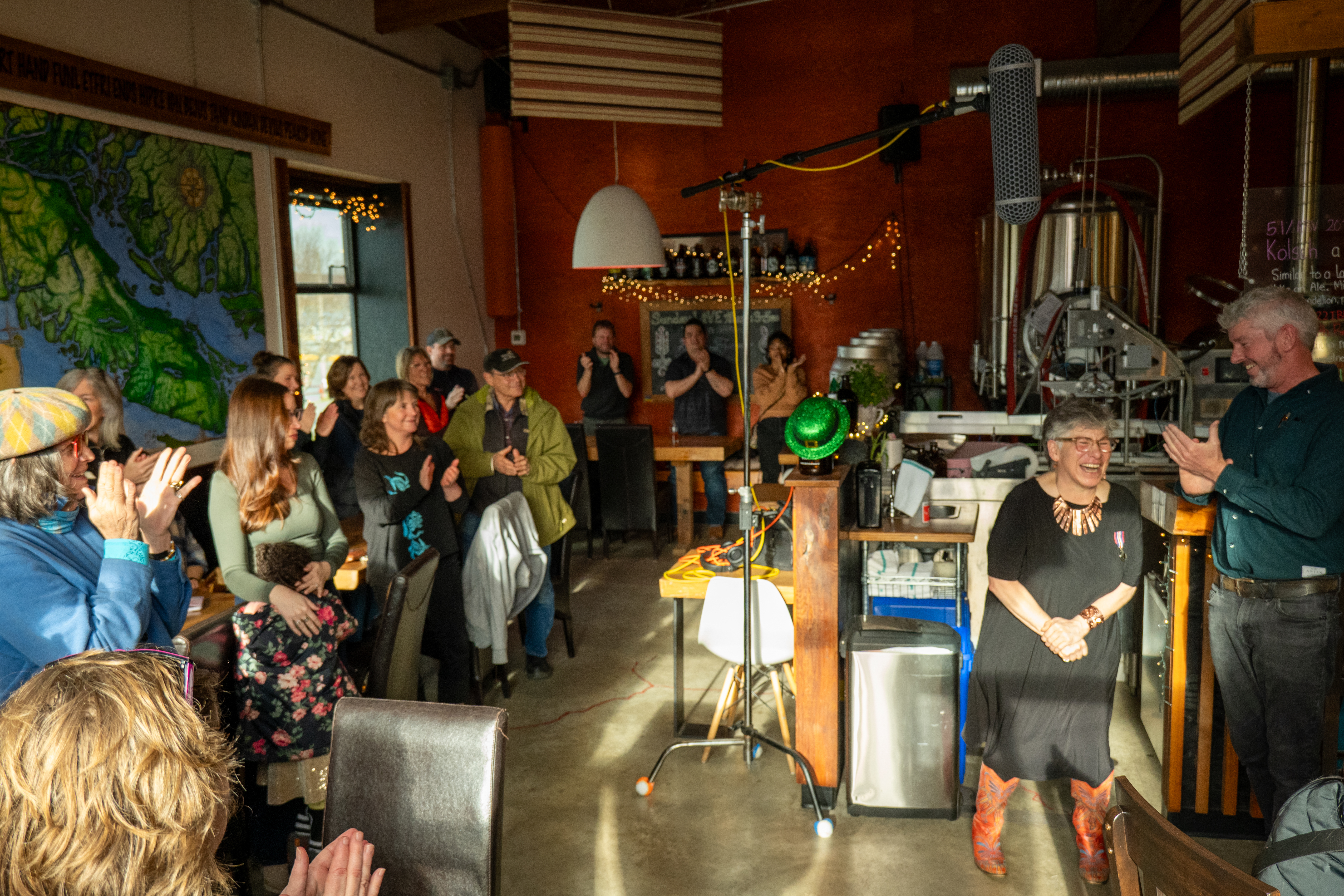
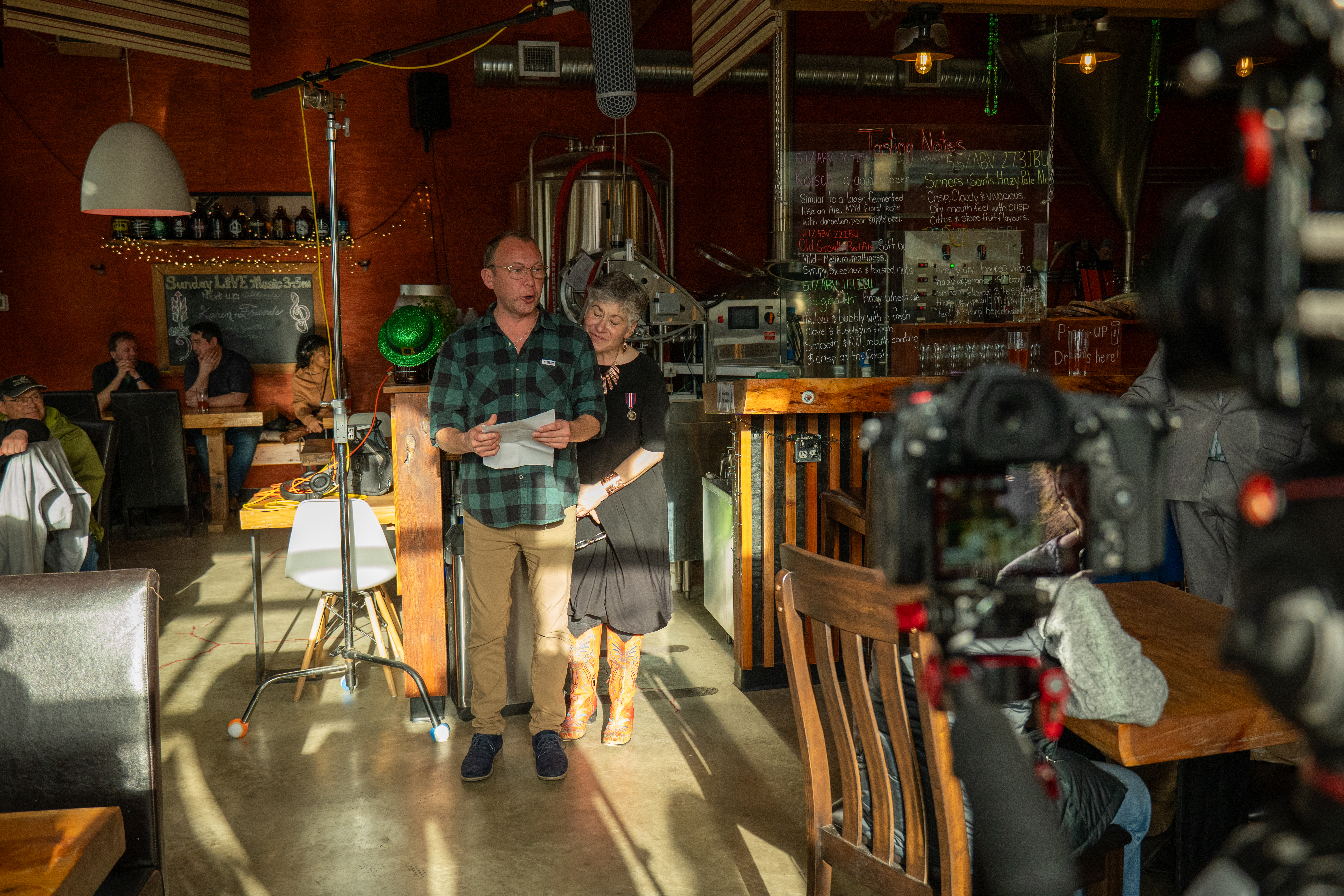
I am very honoured and grateful to all who have been part of the journey. The celebration in which I received the medal happened on February 28, 2025 in Port McNeill. Below I include photos, video, and text from the speeches at the celebration. I have made this blog largely for those who were not there – family and beloved friends – some who go back decades and some who are an ocean away. But maybe, it’s of interest to you too.
As someone who cares enough to read these blogs, you’ve been part of the journey.
As I shared at the celebration: “I don’t think there’s been a time in my life, where this recognition could have meant more to me. You are my people. You feel it. It’s a “complicated world”. There are forces riled against facts, science, equality, other beings on the planet, and a healthy future.
This honour puts wind in my sails. You being here lifts me up. And how I hope it does the same for you to reflect upon the good you put into the world. To stand for truth and critical thinking. To know what matters. To love. And to know why there are those who do not want us to have this knowledge, these values, this drive, and the joy that comes from it all.”
Full video of the ceremony is near the end of this blog.
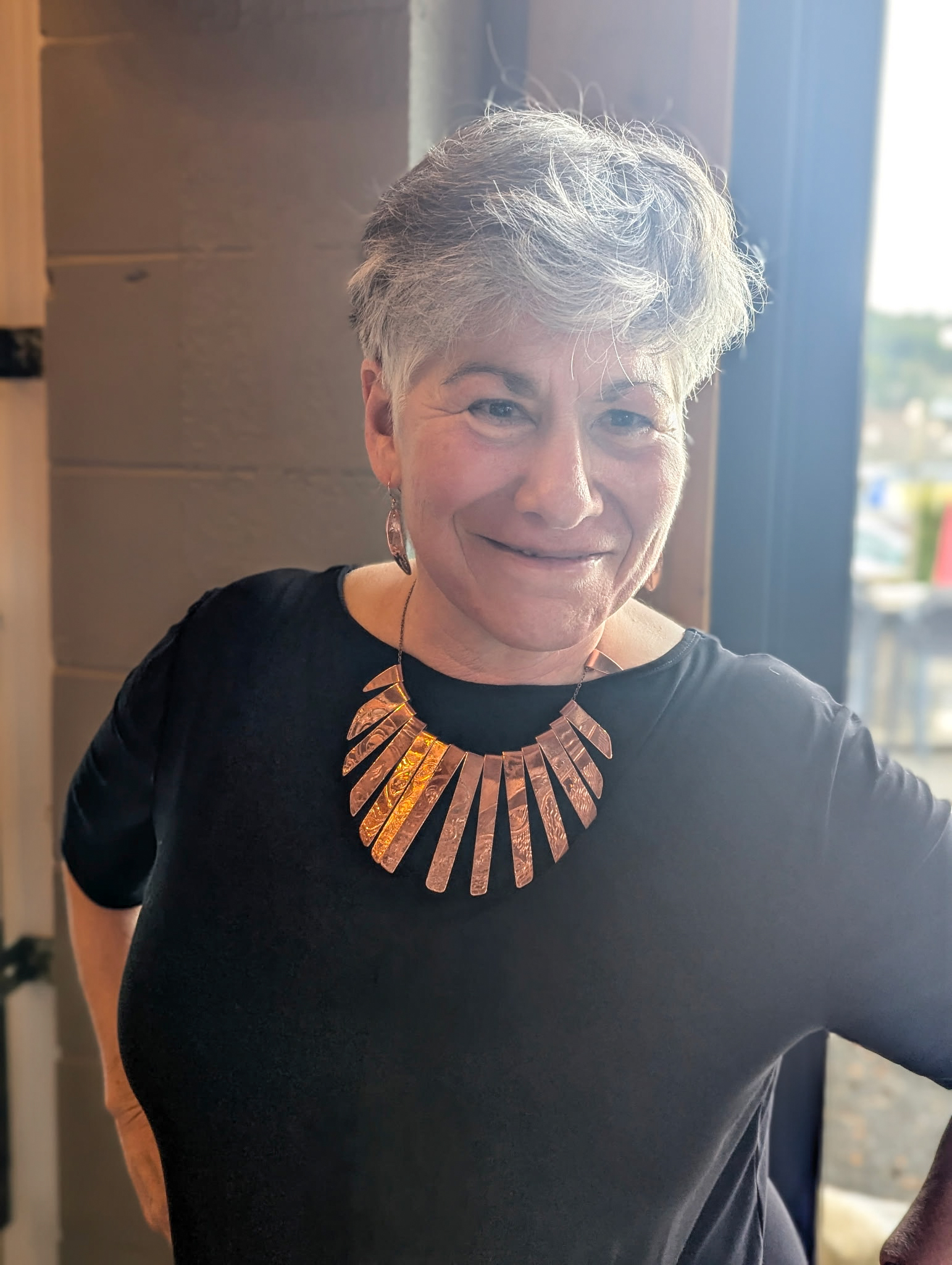
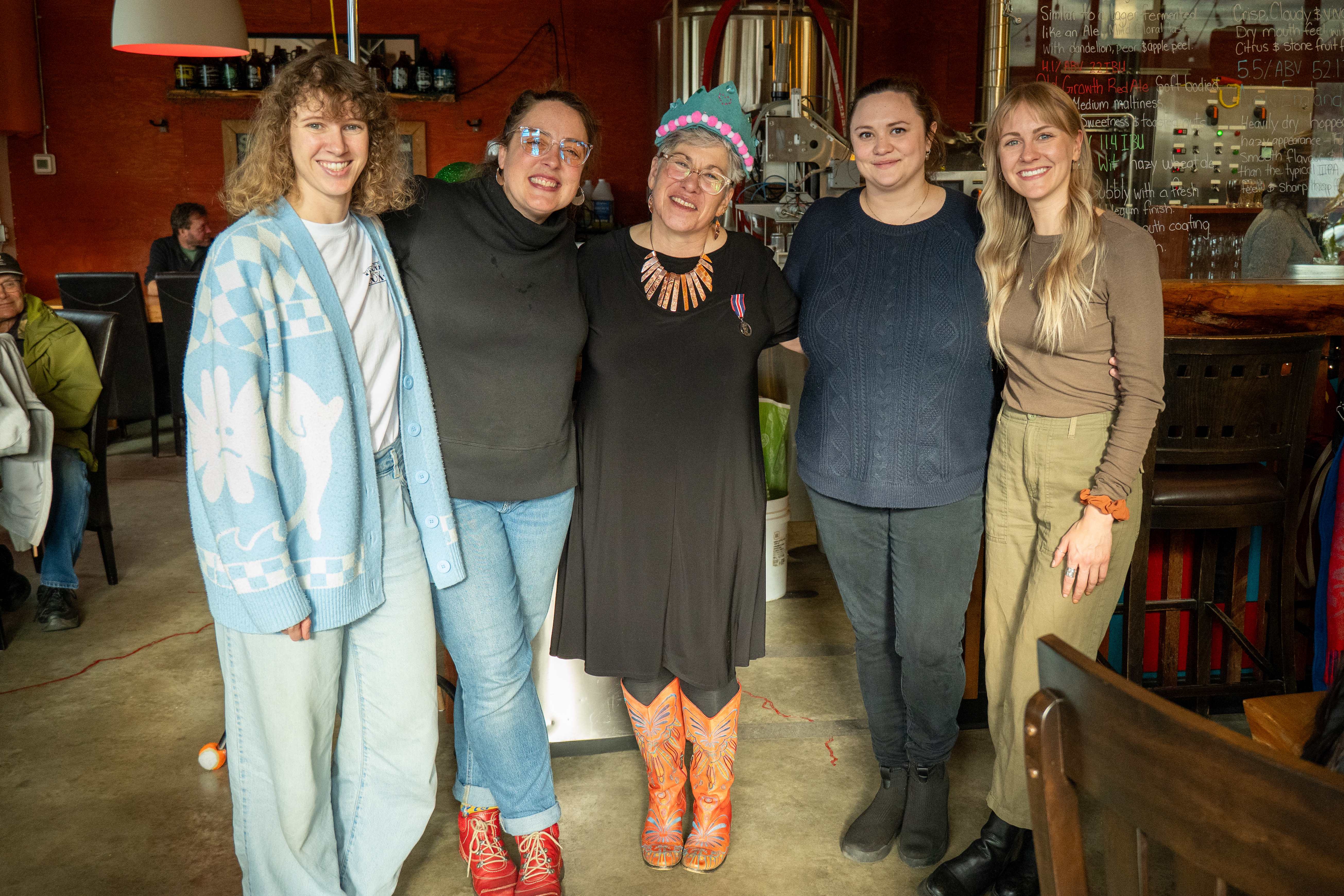
Because I know you will want to know right away. Who made the stunning jewelry? It was essential to me to have symbolism / recognition for the area in which I have learned. This art is from łlilawikw / Sea Wisdom Design. Photo by her sister, who is our MERS Board Member, Emily Wisden-Seaweed. After the placing of the heavy medal. Thank you dear James / Mayor Furney. Friends, dive buddies, neighbours. 💙So much meaning was given to the celebration thanks to Ernest Alfred – K’wak’wabala. The Marine Education & Research Society extended family with MP Rachel Blaney. Team MERS made me a crown to match my medal. 😉
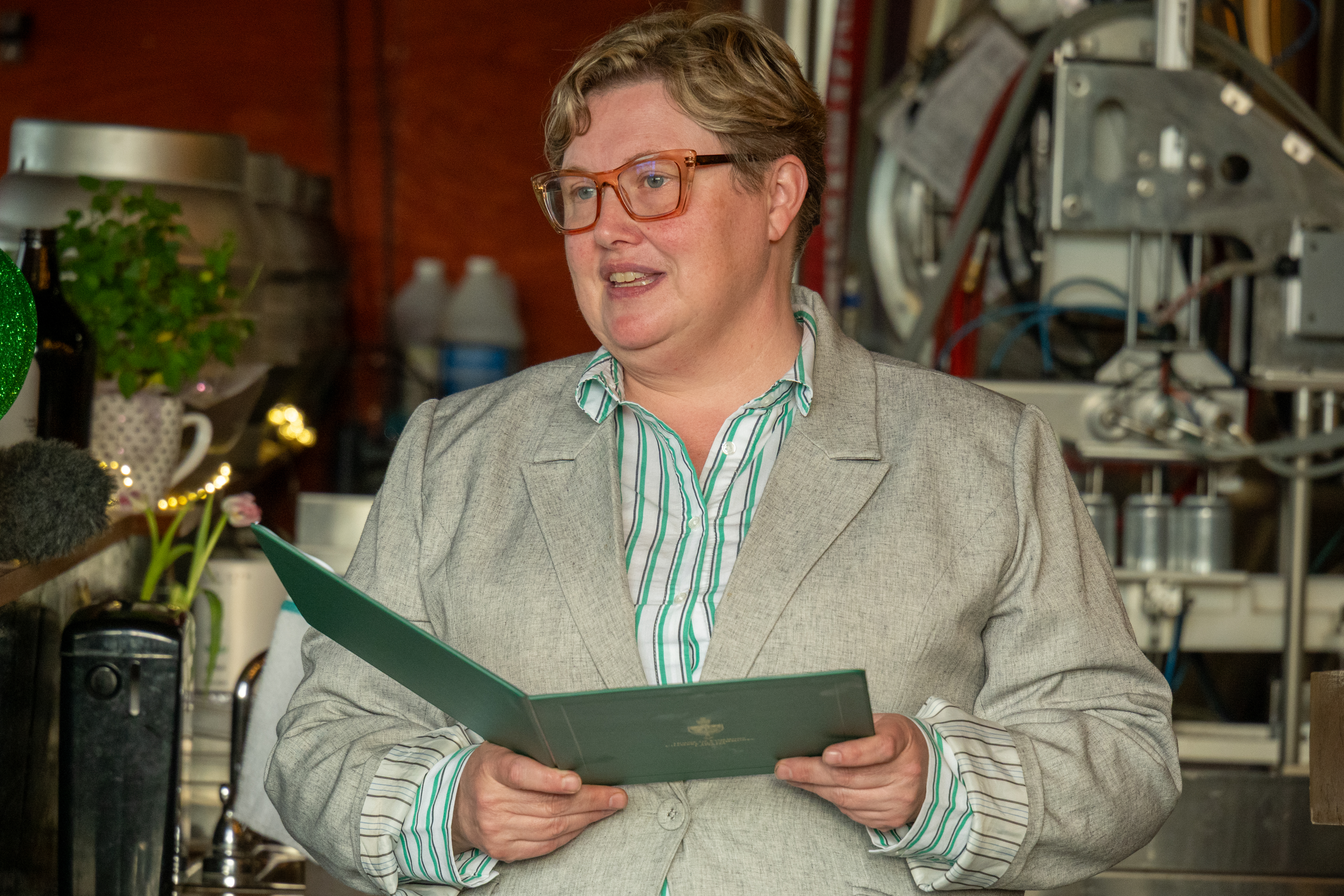
Words from Rachel Blaney (Member of Parliament for North Island–Powell River) included:
“Jackie is based out of Port McNeill, living and learning in the Territories of the Kwakwala-speaking Peoples. She has served as an exemplary and inspiring ambassador for the importance the ocean and undertaking action for the good of future generations.
She returned to British Columbia after teaching in the Netherlands, wanting to find a more effective way to enable people to know their connection to the ocean.
Her greatest aim is to educate about the importance of the life hidden in the plankton-rich waters off our coast – that it is in the cold ocean that there is greater biodiversity and productivity than in the warm ocean.
She does this as “The Marine Detective” – educator, cold-water diver, underwater photographer – and as a cofounder of the Marine Education and Research Society, known as MERS.
She is a Humpback Whale Researcher with MERS and their Education and Communications Director. She and the team embody the dedication of applying what they learn as scientists, to education to speak for the importance of the ocean and how to reduce threats to marine life.
Jackie’s work has been prominently highlighted in various publications and documentaries produced by reputable outlets such as the BBC and PBS.“
My words from the celebration:
“I’m overwhelmed. And really grateful.
Grateful for this opportunity live here, have you as neighbours, colleagues, friends, dive buddies, and to have the opportunity and privilege to learn where the Kwakawala-speaking People have lived for millennia.
I am really grateful Rachel [MP Rachel Blaney] that you came here for this. Knowing the value it would have to shine a light on northern Vancouver Island, Port McNeill, and the people who have been part of this journey, especially those in the Marine Education & Research Society.
Thank you James [Mayor James Furney] and others who knew the value too and my dilemma about where, and what this celebration should be. Thank you Rob [Rob Hilts] for being behind the cameras so I can share this with my parents (who definitely had something to do with me being me) and loves ones far away AND that I can stare right into the camera and say, from depths of my heart, thank you Whitney Melan for nominating me.
I don’t think there’s been a time in my life, where this recognition could have meant more to me. You are my people. You feel it. It’s a “complicated world”. There are forces riled against facts, science, equality, other beings on the planet, and a healthy future.
This honour puts wind in my sails. You being here lifts me up. And how I hope it does the same for you to reflect upon the good you put into the world. To stand for truth and critical thinking. To know what matters. To love. And to know why there are those who do not want us to have this knowledge, these values, this drive, and the joy that comes from it all.
I deliberated saying that I could never have imagined that life would take me here. But, while that’s definitely true that I could never have envisioned this particular heavy medal event, the eight-year-old in me is resistant and believes that some of this was pretty damn predictable. Even the part about being a 61-year-old who goes underwater, with a camera, wearing a tutu.
The eight-year-old in me – she’s strong. She knows things. She has always known it was about Nature, never felt separate from it, and doesn’t understand there are people who do very separate. She’s always wanted to learn, especially about animals, and then run to others, especially children, and say (probably very loudly) . . . LOOK! LISTEN! CARE!
Thank you for listening.
Thank you for caring. Thank you for being part of my life, my community, and maybe even my purpose. Thank you.”
Video and many of the photos are due to the kindness and skill of Rob Hilts of Either Way Productions. Such great thanks to those who were part of the celebration: MP Rachel Blaney and Jorgina Little, Mayor James Furney, Ernest Alfred – K’wak’wabala (meant so much to me Ernest), my dive buddies, my colleagues from the Marine Education and Research Society, Helena Symonds and Dr. Paul Spong for their words read by Ernest, and many other beloved friends and neighbours. 💙
Please note I will be adding more photos to this blog in the next few days, when I have a bit more breathing space 😉. I just wanted to get this into the world sooner rather than later for friends and family.
Royal Recognition – Part 1 Posted on January 25th.
Er . . . I won a medal.
I am deeply grateful for this recognition that shines light on, and amplifies, the values that connect many of us here. This at a time when there are many challenges to equality, truth, critical thinking, human dignity, and the health of the planet and future generations.
It also shines light on our Marine Education & Research Society and on the place where I have learned – northern Vancouver Island, Territory of the Kwak̕wala-speaking Peoples.
This medal also requires acknowledgement and reflection on the history of the monarchy, colonization, and the need to work for the values this award represents.
Many of you have been part of what has led to this recognition – opening doors, joining along the way, encouraging, and supporting. Thank you.
I have learned that Whitney Melan is the one who took the time and effort with the nomination, which means the world to me. It also means so much that the medal will be awarded by MP Rachel Blaney.
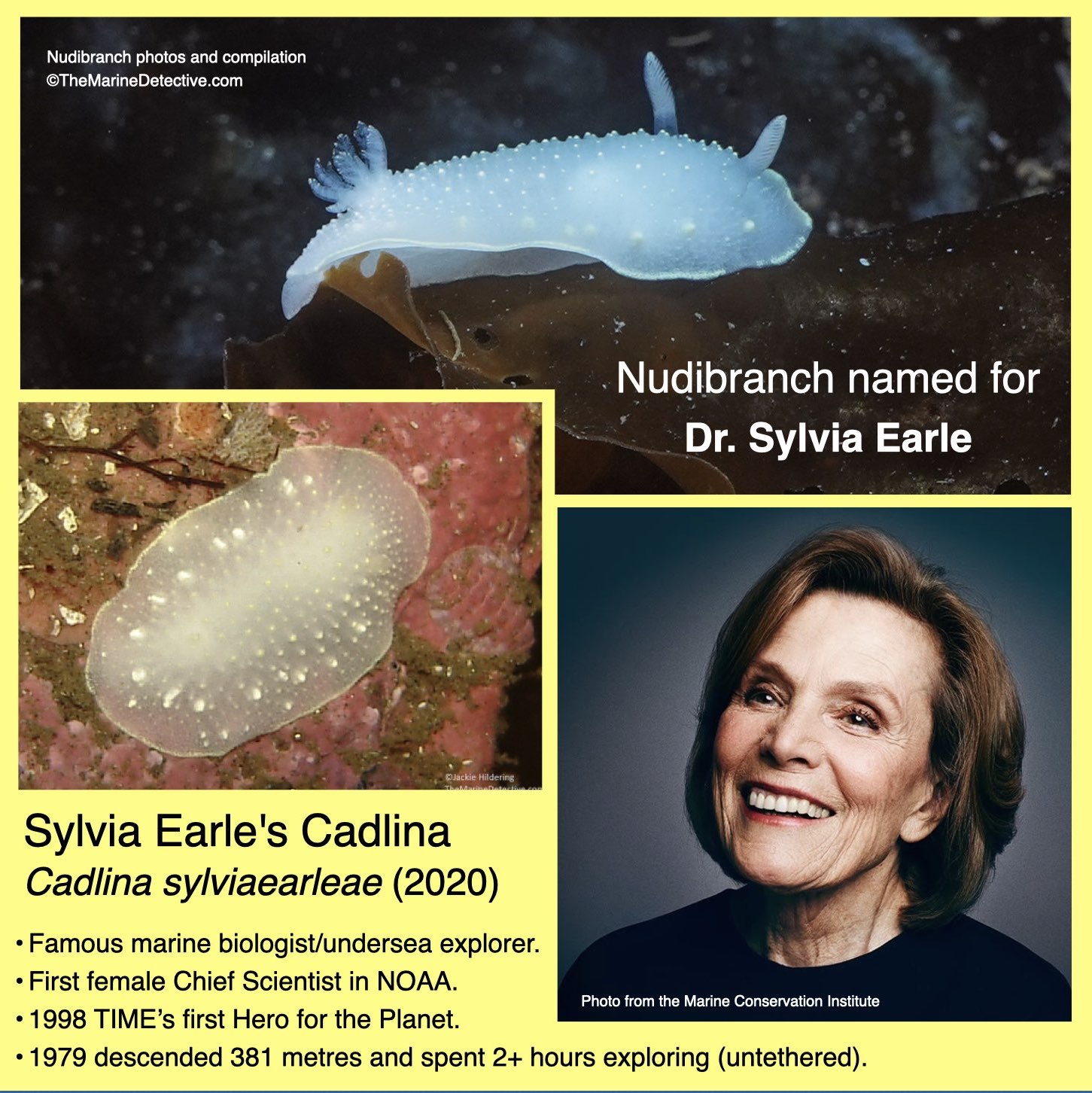
I am very late to this party. Back in 2020, a nudibranch was named in honour of Dr. Sylvia Earle when there was reclassification of the Yellow-margin Dorid and the research was published by Korshunova et al.
There is now Sylvia Earle’s Cadlina (Cadlina sylviaearleae).
Despite my great admiration for Dr. Earle and for sea slugs, I did not realize these two had come together until I recently posted one of the photos you see below. Karolle Wall very kindly let me know that this was no longer a Yellow-margin Dorid (Cadlina luteomarginata).
What follows is focused on the reclassification and how difficult it is to discern these species from external characteristics. If you have an electron microscope, it will be easier. 😉 You would be able to see the differences in the radula (tooth-like structures).
What was historically Cadlina luteomarginata is now at least four described “yellow-margin dorid” species. Sylvia Earle’s Cadalina is described as a sister species to Cadlina luteomarginata. What Karolle pointed out as a helpful discerning characteristic is the space between those distinctive tubercles on the nudibranch’s side.
From Korshunova et al., 2020 “Until recently, C. luteomarginata has been considered a single species with a whitish notum and yellow marginal line with a broad range in the north-eastern Pacific from Alaska to California (e.g. MacFarland, 1966; Behrens, 1991; Behrens & Hermosillo, 2005). Present integrative morphological and molecular analysis reveals that there is considerable hidden diversity among Cadlina from the north-eastern Pacific.”
Sylvia Earle’s Cadalina (Cadlina sylviaearleae) “Opaque whitish, with some small dorsal tubercles tipped with yellow. Rhinophores with slight yellow tint. Gills are semitransparent white, similar to ground colour . . . differs both molecularly and in a number of morphological features from all other described Cadlina species.” (Korshunova et al., 2020).
Size to at least 2,5 cm. “Known from British Columbia to Oregon”. (Behrens et al., 2022)
Differences with the Yellow-margin Dorid (Cadlina luteomarginata) as originally described by MacFarland (1905, 1966) “Considerably less tuberculated notum [upper surface of the body], more weakly developed yellow line around notum and by patterns of the radula”. (Korshunova et al., 2020).
Size up to 8.3 cm. “Species confirmed from British Columbia to Mendocino, California, possibly to Punta Eugenia, Baja California” (Behrens et al., 2022).
More from Nudibranchs and Sea Slugs of the Eastern Pacific, 2022: “Recent molecular analysis work has revealed a number of cryptic species with the genus Cadlina. At least four species have been previously lumped under the name Cadlina luteomarginata and it is unclear at present whether these species can be reliably identified by their external characteristics . . . All are sponge predators.”
Personal note: Reading about these species and writing this blog took me over 3 hours. Why do this? Time evaporates and I get lost for a while in science and the sea. I suppose that’s enough reason. A great bonus would be if this is of use to others too.
I am deeply grateful for this recognition that shines light on, and amplifies, the values that connect many of us here. This at a time when there are many challenges to equality, truth, critical thinking, human dignity, and the health of the planet and future generations.
It also shines light on our Marine Education & Research Society and on the place where I have learned – northern Vancouver Island, Territory of the Kwak̕wala-speaking Peoples.
This medal also requires acknowledgement and reflection on the history of the monarchy, colonization, and the need to work for the values this award represents.
Many of you have been part of what has led to this recognition – opening doors, joining along the way, encouraging, and supporting. Thank you.
I have learned that Whitney Melan is the one who took the time and effort with the nomination, which means the world to me. It also means so much that the medal will be awarded by MP Rachel Blaney. I do not yet know when or where.
Onward.
“The King Charles III Coronation Medal Program recognizes Canadians who exemplify service to others, protection of the environment, youth empowerment, and diversity. Across Canada, 30,000 medals will be handed out to deserving individuals.”
If you see a Sea Otter going up and down in the same location without coming up with prey the first time (and breaking it open on their belly), this is likely what is happening.
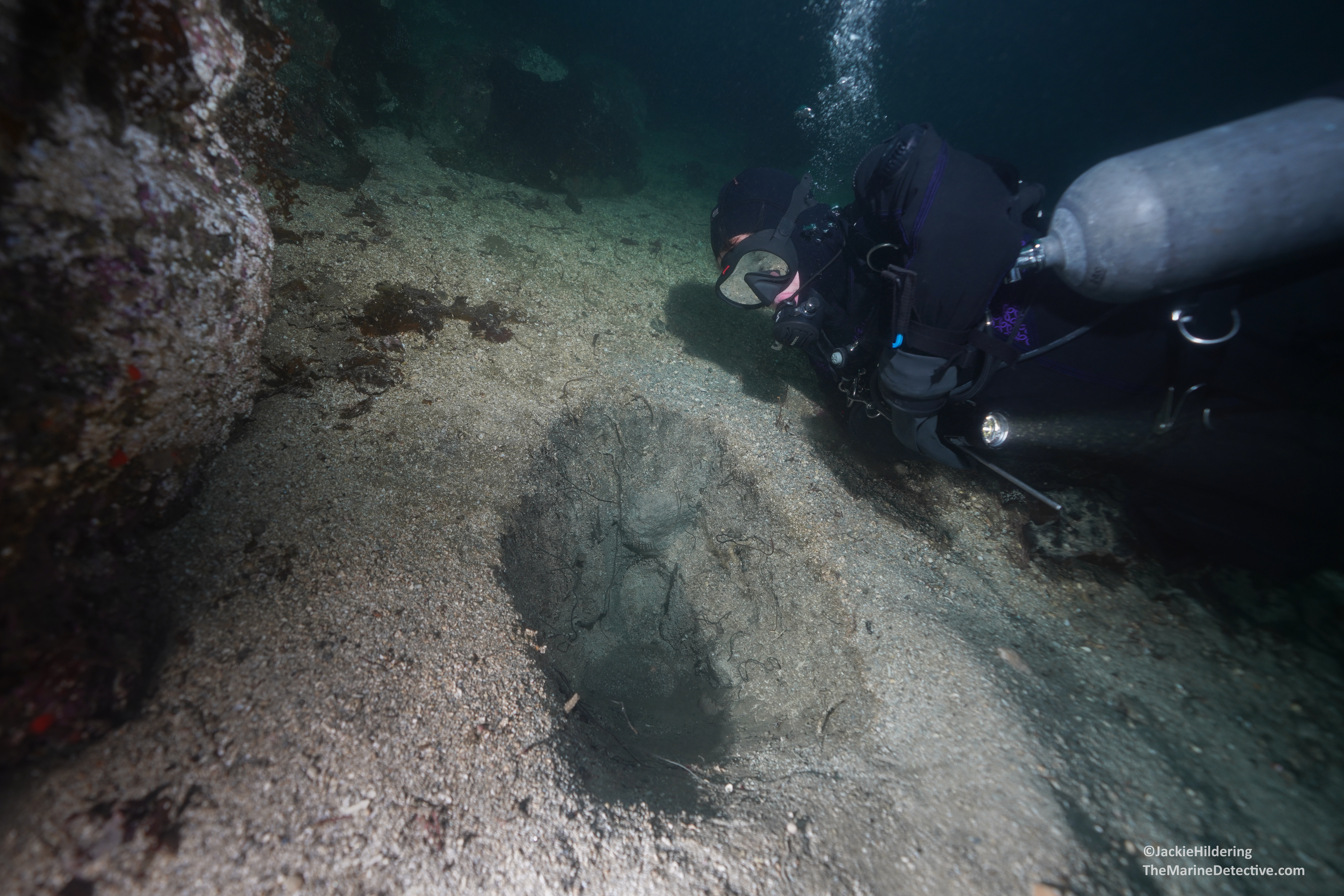
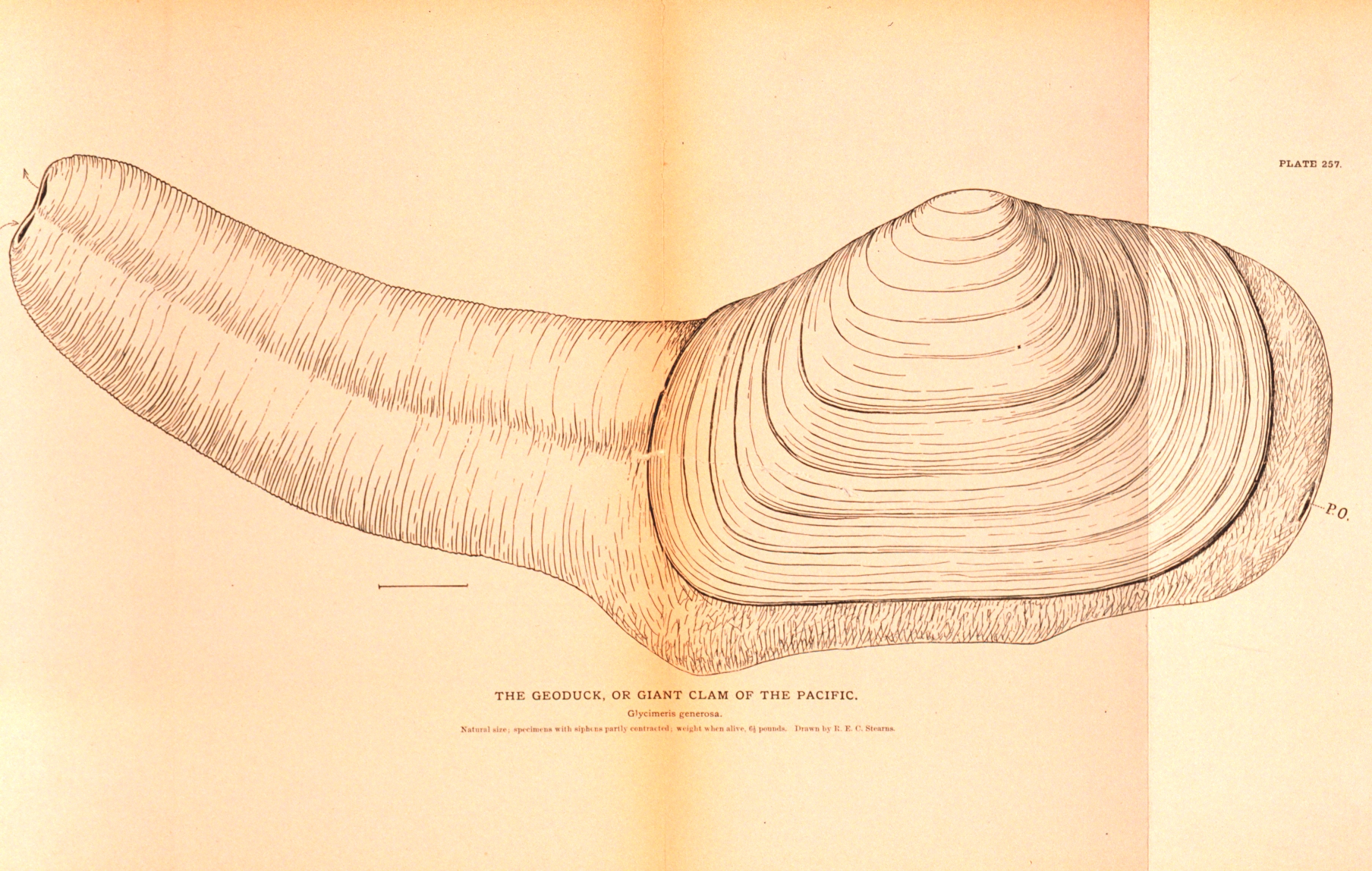
Geoducks have very long siphons (neck or shaft) and can be buried 1 metre below the surface. So it’s quite the endeavour when Sea Otters excavate Geoducks. My photo of the deep pit should aid in understanding why this is the case!
Sea Otters were completely wiped out (extirpated) with the last verified Sea Otter in Canada having been shot in 1929 near Kyuquot (NW Vancouver Island).
There are now over 8,100 Sea Otters off the coast of BC (Nichol et al. 2020). How did that happen? Around 89 Sea Otters were translocated to the outer coast of Vancouver Island from 1969 to 1972 (as a mitigation measure for nuclear testing in Alaska).
The population grew (and spread out) from there. And yes, they eat a lot. Even with their incredibly dense fur (which made them so “desirable” in the fur trade), they need to fuel their furnace by eating up to 1/4 of their body mass daily to survive in the cold ocean.
More Sea Otters = more kelp forests (since they eat the urchins that eat the kelp) = more habitat, more oxygen, more food, and more carbon sequestration.
Sea Otters are recognized as a species of Special Concern in Canada.
Hello dear Community, I recently sat down with the wonderful team from Whale Tales to have a chat for their podcast. There was laughter and a few tears in reflecting on our Marine Education and Research Society work for the whales, and what I strive for with The Marine Detective.
To have a listen, see the links below. Let me know if this was of interest, and maybe even uplifting for you? 💙 This helps give me direction about future efforts, and where to use my voice.
Let me start by saying . . . no one looks good when they are this dead.
Also, Halloween is nigh so that may have sparked some “spooky” speculations.
These photos of a dried up little fish created a lot of interest on the Field Naturalists of Vancouver Island Facebook page recently. Kendra Lukow found the fish at Race Rocks.
I think what led to confusion, misinterpretation, and maybe a few nightmares is that people may not realize that bony fish species have teeth in their throats. And, with this fish being so dried out, and thereby contorted, these teeth appear to be the main teeth in the “oral jaw”. But many of the teeth you see in these images are the “pharyngeal teeth”.
You may have noticed that fish do not have hands so how to hold onto your prey, chew it into smaller parts, and move it into your stomach? Evolution’s solution: the teeth you are more familiar with (in the oral jaw) hold onto the prey, while the secondary set of teeth in the throat (the pharyngeal jaw) chew and/or pull on the prey.
Even the fish species you are really familiar with, like salmon, have this second set of teeth. These teeth just look far more prominent in this dried up individual.
So which fish species did Kendra find? Even in having consulted some super fish experts, there is no certain ID. Some experts have put forward that the teeth and head shape look more like a large sculpin species e.g. Cabezon or Great Sculpin. Other experts reference that some photos show scales on the dry skin. Sculpins don’t have scales so that would make the ID of a greenling species more likely e.g. Lingcod or Rock Greenling.
Please note that motivation to make this blog is not to ID the very dry and dead fish. It’s to add to the awareness about this adaption in so many fish – the pharyngeal teeth. It’s to shift the “ew” to awe.
With great thanks to Andy Lamb, Dr. Milton Love and Gavin Hanke for their insights into the fish ID.
See below for a great TedEd animation explaining fish pharyngeal jaws.























 so how to hold onto your prey, chew it into smaller parts, and move it into your stomach? Evolution’s solution: the teeth you are more familiar with (in the oral jaw) hold onto the prey, while the secondary set of teeth in the throat (the pharyngeal jaw) chew and/or pull on the prey.


 The Marine Detective