Join me in the cold, dark, life-sustaining NE Pacific Ocean to discover the great beauty, mystery and fragility hidden there.

Might As Well Jump

When serving as a marine naturalist, one of the questions I am most often asked about whales is “Why do they jump?”

When whales jump it is called “breaching” and the answer to why they do it is not a simple one. Why whales do something depends on context; there is not just one trigger for breaching. This is no different than interpreting human behaviour. For example, if someone is tapping their foot, it could indicate irritation, having an itch, impatience or hearing a good tune!

The breaching of whales can be related to socializing, feeding, mating, communication and/or defence. Of course, when whale calves breach, it  is often related to “play” behaviour which leads to good brain development and coordination. Ultimately,  I believe that the high energy behaviour of breaching must somehow lead to a gain in food and/or increased success in passing on DNA.

Let me share two very specific and recent “cases” of breaching with you; one of which was witnessed by many residents of Alert Bay.

While out in our area with Orcella Expeditions last week, we saw an adult humpback whale breach some 30 times and also witnessed a mature male mammal-eating killer whale (“transient” or “Biggs killer whale”) breach within 30 meters of Alert Bay’s shoreline.

I have never seen anything quite like these two awe-inspiring events.

Humpback whale, ‘KC” on August 30th, 2011. One of the some 30 times he breached in less than 2 hours. Photo: Hildering

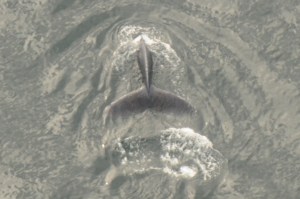
The humpback that breached so often was “KC” (BCY0291) who was born in 2002. Initially, I believe the breaching was triggered by the presence of highly vocal fish-eating killer whales (“residents”). Humpbacks do not have teeth with which to defend themselves  but they do have whale barnacle studded fins and a whole helluva lot of heft to throw around so even the mammal-eating type of killer whales very rarely interact with adult humpbacks.

My interpretation is that KC was not habituated to the killer whale dialect he heard that day (I15 and I31 calls) and was making sure he made clear “do NOT mess with me!”. He was posturing to the killer whales. After his killer whale encounter,  he turned around and came upon another humpback whale and again started breaching and making very forceful exhalations called “trumpeting”. Was this communication to the other whale about the presence of the killer whales?  Was it related to a dominance display that may have to do with mating?  I may never know for sure but it is very interesting that KC’s incredible bout of breaching seemed to lead to other humpbacks breaching as well.

Mature male mammal-eating killer whale “Siwash” breaching in front of Alert Bay on August 31, 2011. Photo: Hildering.

And then . .  there was the mind-blowing, highly witnessed breaching of the 27 year-old killer whale “Siwash” (aka T10B ) in front of Alert Bay. Siwash was travelling with a group of 20+ other mammal-eating killer whales. As mammal-eaters, this type of killer whale has to be stealthy and unpredictable and therefore, they are most often far less vocal and surface active than the fish-eating killer whales. This certainly wasn’t the case as they bounded past Alert Bay last Wednesday evening! They were swimming on their backs; fin slapping and travelling right past the shore; calves were “cat and mousing” small diving birds – whacking them around; and there were even male sex organs to be seen at the surface!

What was going on?  Let me state the obvious – they were socializing. Their bellies must have been full enough to allow them to throw stealth to the wind. These particular whales would most often not travel together so the socializing might even be related to mating.

But ultimately . . . in trying to understand the behaviour of these sentient beings, we have to have the humility to accept that we  may only ever have hypotheses for why they do what they do. It is the stuff of awe and wonder that the mighty Max̱’inux̱ were so visible to the very people that have such a strong cultural connection to them, as they swam by Alert Bay  . . . . “Home of the Killer Whale.” 

Basking in History – The Story of B.C.’s Basking Sharks

Last updated: August 5, 2024
If you ever see a Basking Shark in British Columbia: call 1-877-50-SHARK (1-877-507-4275), or email sharks@dfo-mpo.gc.ca, or fill in the reporting form at this link. Please see info below about how to identify a Basking Shark.  

Photo by Chris Gotschalk
(Wikimedia Commons)

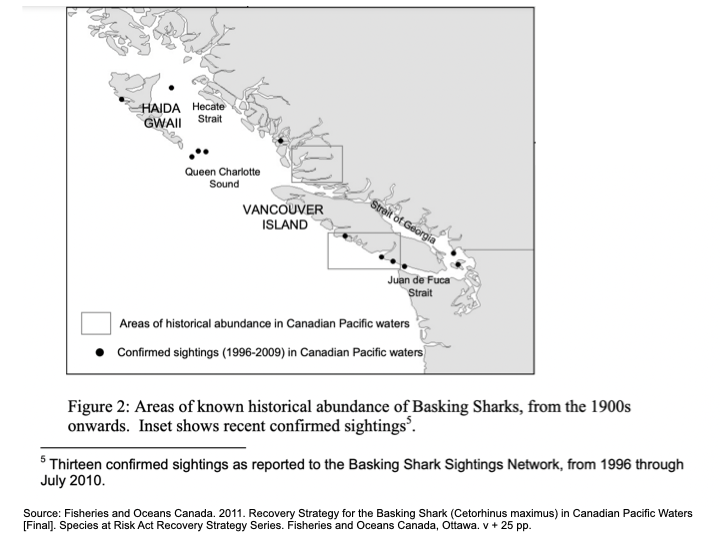
It’s a first. Canada has now (2011) acknowledged the endangerment of a marine fish species – the Basking Shark (Cetorhinus maxiumus). 

Basking Sharks used to be common in the coastal waters of British Columbia.  As the second largest fish species in the world, they could be half the size of a city bus (12 m and 4 tonnes) and could be seen at the surface of the ocean, “basking” there to feed on plankton. It’s a long-lived species too, believed to be able to reach 50 years of age.

However, even the most seafaring fisher is now unlikely to ever see one off the B.C. coast. There have been less than 25 sightings of Basking Sharks since 1996. So what happened?

We slaughtered them.

These sharks were put on the Canadian fisheries “Destructive Pests” list in 1949, and from 1955 to 1969 there was a federal eradication program directed at these benign, plankton-eating giants. In these years, the federal fisheries patrol vessel, the Comox Post, even had a blade mounted on its bow, designed specifically to slice Basking Sharks in half.

This species of shark has only the tiniest of teeth and does not compete for a commercial fishery like the sea lions, seals and Killer Whales that were also culled in that time period. The motivation for the “pest control” of these gentle giants was that they got trapped in gill nets, causing damage to fishing gear.

Who we used to be. Blade on the front of the Comox Post. Source: Popular Mechanics 1956.

As an indicator of how far we have come since then, imagine the social outrage today if a magazine celebrated the ingenuity of the Comox Post’s blade, illustrating how the executioner’s tool was used accompanied by the text “Huge 30-foot basking shark is almost cut in two by sharp-edged ram. The sharks, floating lazily near the surface of the water, are no match for this skillfully handled vessel, which heads directly into a school and catches an individual shark before it is aware of its plight”.  November 1956’s edition of Popular Mechanics featured just that and the June 22,1955 front page of the Victoria Times included a photo with the text “This is a basking shark, basking and leering. But the smirk will soon be wiped off its ugly face by the fisheries department, which is cutting numerous sharks down to size” (from The Slaughter of B.C.’s Gentle Giants by Scott Wallace and Brian Gisborne).

Further: “After the initial flurry of press commentary on the shark blade in 1955 and 1956, the Comox Post went about its daily job, firing bullets into the occasional sea lion, seal, or merganser and slicing sharks when seasonally abundant. At the end of each fishing season an annual report was written, and over the years the entries for basking sharks appear to diminish. The blade was used over a period of 14 years in the Barkley Sound region, during which time 413 kills were recorded.” In 1956 alone, 105 Basking Sharks were reported to have been killed.”

Basking Sharks survived as a species for at least 30 million years but have been pushed to the brink extinction in B.C. by just a couple of decades of human intolerance, misunderstanding and mismanagement.

But as a testament to how quickly human social evolution can occur, we have gone from being executioners to acknowledging the species’ endangerment in just over 40 years.  In February 2010, the Pacific population received legal protection by being listed as “endangered” under Canada’s Species at Risk Act. The Recovery Strategy was finalized at the end of July, 2011. 

Only history will tell if our evolved enlightenment is enough or if it came too late for the Basking Shark and many other marine species. The fact that you care enough to read this blog item is every reason for hope.

Above: Basking Shark sighting July 17, 2024 near East Sooke by Island Magic Experiences.


Above: Basking Shark sighting July 17,2017 in Caamano Sound, BC. Video by Archie Dundas of the GitGa’at Guardians via Fisheries and Oceans Canada.


Presentation about Basking Sharks by yours truly and Romney McPhie of Fisheries and Oceans Canada for Ocean Day 2022.

Click here for this annotated Basking Shark colouring sheet by Romney McPhie who is not only a shark scientist but clearly also an artist (and very skilled educator)!

Sources:

Fisheries and Oceans Canada. 2011. Recovery Strategy for the Basking Shark (Cetorhinus maximus) in Canadian Pacific Waters [Final]. Species at Risk Act Recovery Strategy Series. Fisheries and Oceans Canada, Ottawa. v + 25 pp.

Fisheries and Oceans Canada. 2019. Action Plan for the Basking Shark (Cetorhinus maximus) in Canadian Pacific waters [Proposed]. Species at Risk Act Action Plan Series. Fisheries and Oceans Canada, Ottawa. iii + 16 pp.

Species at Risk Act (SARA) Species Profile 

The Tyee, December 7, 2016, How BC Killed All the Sharks – Hysteria and a knifelik ram helped us slaughter the benign basking giants by Scott Wallace and Brian Gisborne

Wallace, Scott, and Brian Gisborne. 2006. Basking sharks: the slaughter of BC’s gentle giants. Vancouver: New Star Books.


Basking distribution.001

Bottomless Biodiversity

It is understandable that the human psyche has trouble being mindful of what cannot easily be seen.  However, when it comes to marine conservation, this “out of sight, out of mind” perception carries a particularly high cost. 

The waters of the northeast Pacific are dark, making it very difficult to see into the depths.  This means many people are inclined to believe that more life is found in tropical waters, where you can peer right down to the ocean bottom and see colourful fish swimming about.

However, the exact opposite is true.

White-and-orange-tipped Nudibranch. Photo: Hildering.


Puget Sound King Crab. Photo: Hildering.


It is plankton – the fuel of the food chain – that creates the dark, emerald waters of the northeast Pacific. The plant-like plankton, known as “phytoplankton”, need light, oxygen and nutrients to grow.

While our area does not have more light than the tropics, cold water dissolves more oxygen and nutrients are better circulated due to the current caused by large tidal exchanges.

Basket Star. Photo: Hildering.


In fact, here, we’re so fortunate to have the potential of maintaining the formula for the greatest abundance and diversity of marine life: cold, clean, high-current waters that are dark with a thick, rich soup of plankton.

What motivates me to descend into these cold waters with my camera, is to collect the photographic evidence of just how rich and colourful our marine neighbours are . . . bringing the life into sight and, very hopefully, creating mindfulness of the great need for marine conservation. 

Hooded Nudibranch. Photo: Hildering.


Juvenile decorated warbonnet inside a boot sponge. Photo: Hildering.


Humpback whales BCX0022 (aka Houdini) and BCZ0004 (aka Stripe). Photo: Hildering.


To learn more about zooplankton, see the fantastic BioMEDIA site. Shows images of zooplankton and the adult organism it will turn into.

Extraordinary Privilege – From on high to down deep.

Humpback whale BCY0768 viewed lunge feeding from 700+ feet above the whale. Telephoto and cropped. Photo: Hildering

Do you have 2.5 minutes?

I’ve compressed the highlights of my marine adventures of  that last 24+ hours into a little slide show. What an extraordinary privilege it has been.

Yesterday, while in a helicopter some 1,000 feet above them, I watched humpback whales lunge feed. 

Today, on the way to our weekly dive, there was a bit of a diversion . . . 3 matrilines (family groups) of fish-eating killer whales needed to pass before we could proceed.

While getting into our dive gear, in the sunshine, a few Pacific white-sided dolphins swam by. 

Then . . . there was the dive with so much more beauty and bounty.

Sometimes, I feel like I might explode with the wonder and privilege of it all. 

Thankfully, I have avenues like this to share and to feel like I might be able to make these adventures count; to enhance understanding and conservation for all this beauty and biodiversity.

Please share in the wonder with me.

Click this link to go from high above the northeast Pacific, into her depths.

(Last video in the gallery at this link). 

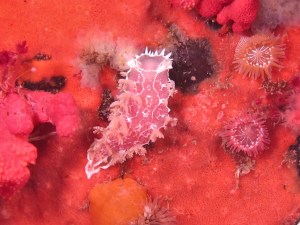
Diamondback nudibranch (sea slug) among red soft coral, sponge and brooding anemones. This specimen only about 5 cm long. Photo: Hildering


Beethoven the Humpback Whale! What’s in a Name?

Da-da-da-dum!  

We now have a Humpback that we’ll refer to as “Beethoven” thanks to the great creativity of Maureen and Dave Towers of Seasmoke Whale Watching.

Let me explain why we think this nickname is particularly clever.

The convention in assigning a British Columbian catalogue number to Humpback Whales is that it reflects the amount of black or white on the underside of the whale’s tail. 

The Humpbacks are determined to be an:

  • “X” if there is lots of black on the underside of the tail (less than 20% white)
  • “Y”  if there is an intermediate amount of white on the underside of the tail (20 to 80% white); or
  • “Z” if there is lots of white on the underside of the tail (more than 80% white)

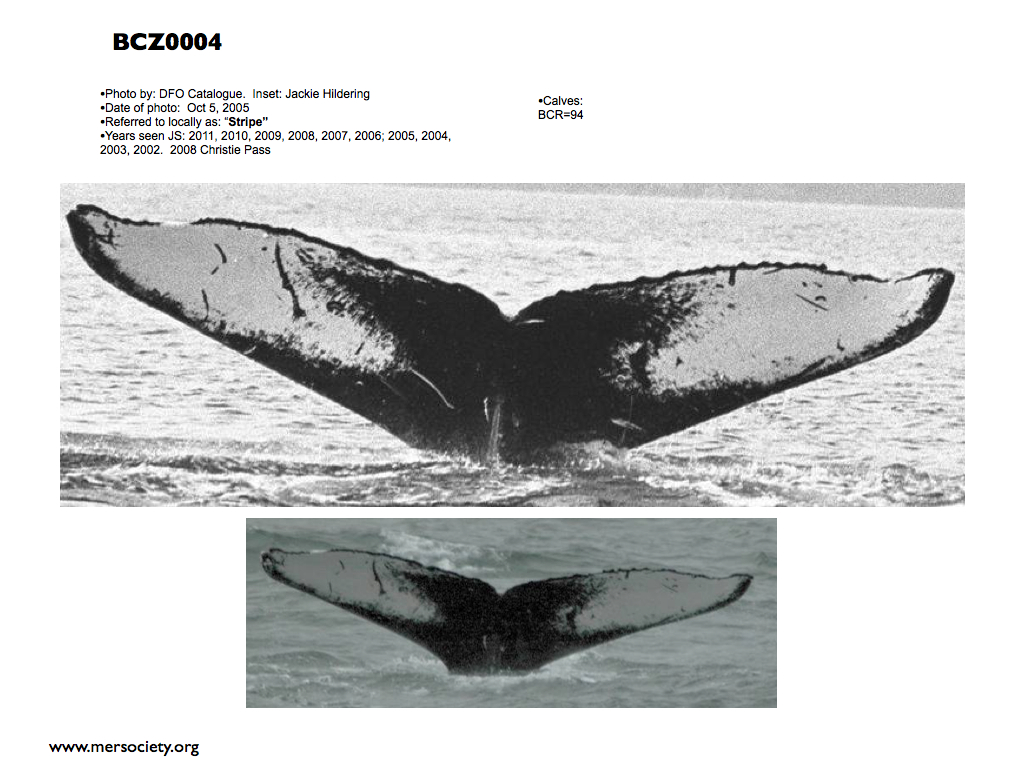
For example, BCZ0004 is the 4th Humpback with a lot of white on his/her tail to be photographed in BC and catalogued. 

(Note: Up to 2010, these catalogue numbers would be assigned by Fisheries and Oceans Canada (DFO), to which we at the Marine Education and Research Society (MERS) would contribute our ID photos. Since 2010, DFO has not catalogued Humpbacks whereby there are now also numbers such as BCZuk2012#3. Please see the end of this blog for an explanation of the “uk”).

BCZ0004?  It’s not such an easy name to remember is it?  So, years ago, we started assigning nicknames to the whales with the guideline that the name should somehow give a clue to the identification of the whale. The hope was that this would help people discern the whales as individuals. For example, I am responsible for giving BCZ004 the nickname “Stripe”.  See the ID page from our MERS Humpback catalogue below and determine if you think this name is fitting.
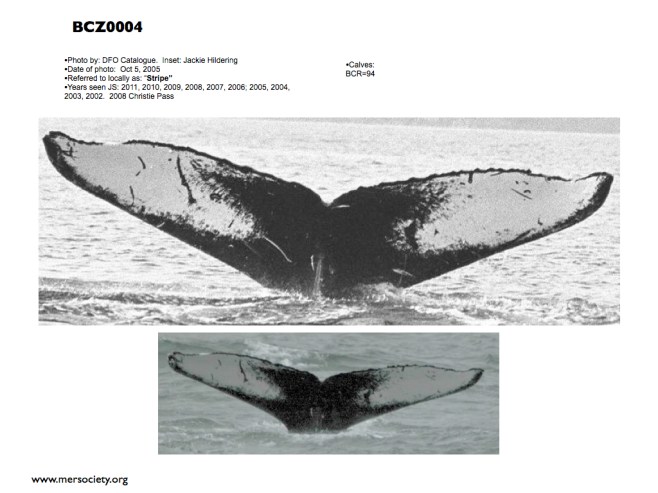
Click to enlarge. BCZ0004 aka “Stripe”. ID photos from DFO catalogue and Hildering.

Okay , so it’s not a creative name but – it worked!  People associated the stripe-like marking with the whale and could identify “Stripe” as an individual. 

Here you have the female “Chunky”, aka BCX0081.
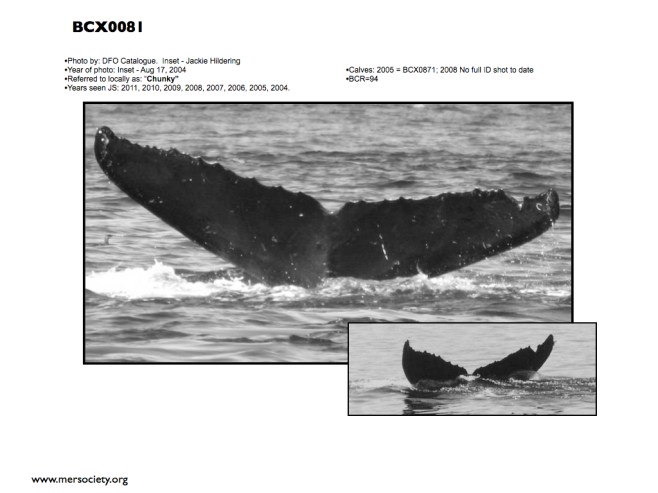
Click to enlarge. BCX0081 aka “Chunky”. ID photos from DFO catalogue and Hildering.

Not to be confused with “Vader”, aka BCX0989, who also has a distinct v-shaped marking (may the force be with you for this one). 

Click to enlarge. BCX0989 aka “Vader”. ID photo contributed to MERS by Jacqueline McGill.

And then there are the more creative names, like “Niagara” for BCY0057 whose tail has a white spot shaped like a waterfall. 

Click to enlarge. BCY0057 aka “Niagara”. ID photos from DFO catalogue and Dr. Alexandra Morton.

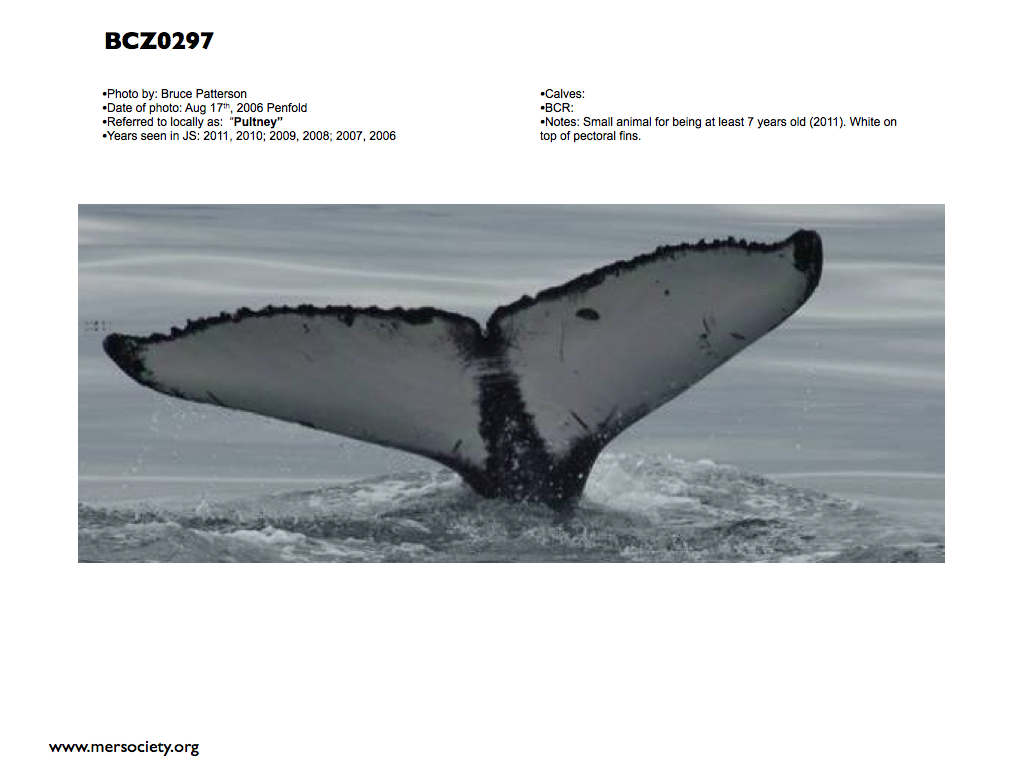
“Pulteney”, aka BCZ0297, has been named with the Pulteney lighthouse in mind. See the lighthouse on BCZ0297’s tail?

Click to enlarge. BCZ0297 aka “Pultney”. ID photo contributed to MERS by Bruce Paterson.

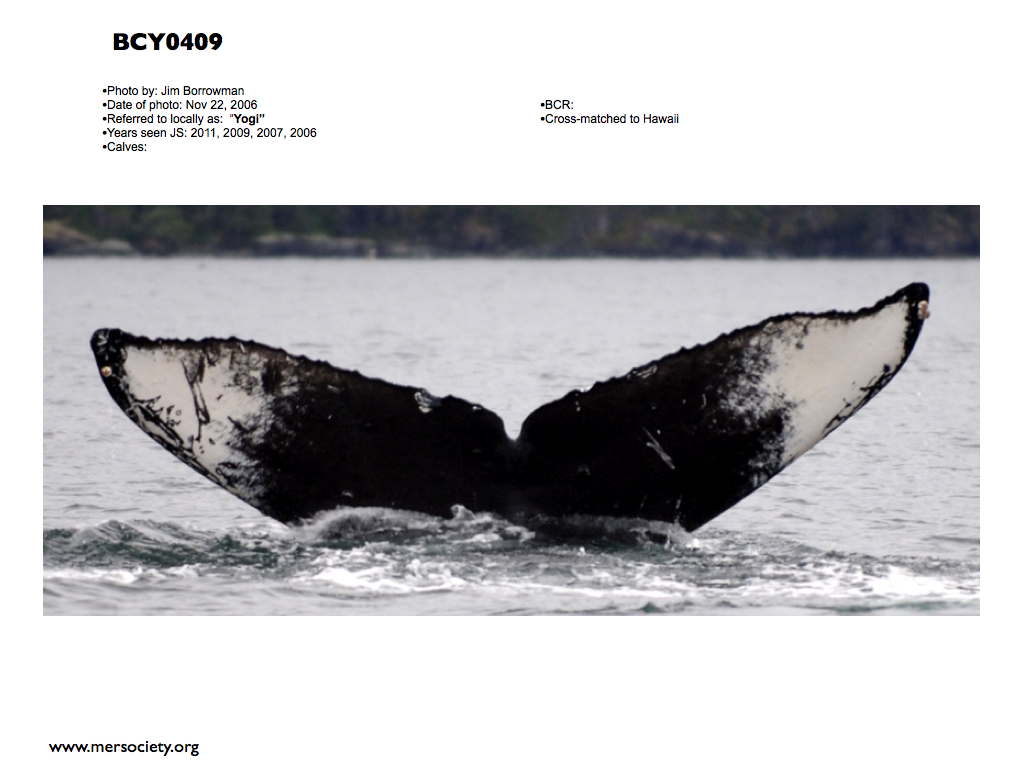
Sometimes, the name may seem even more like taking a Rorschach Test (ink blotch test). For example, see the shape of a bear’s head on the left part of “Yogi’s” tail (aka BCY0409)? 

Click to enlarge. BCY0409 aka “Yogi”. ID photo by Jim Borrowman, Stubbs Island Whale Watching.

For the greater good, we often get local children involved in the naming and as a result have Humpbacks with highly creative nicknames like “Rocket”, “Sprinter”, “Hunter”, “Shark Tooth”, “Barracuda” and “Ashes”.

Otherwise, it is the person who first shares the sighting of the whale with MERS that has the joy of suggesting a fitting nickname. 

Such was the case with Dave and Maureen. They were the first to photograph the whale below on July 19th and relay the sighting to MERS. It is a Humpback that we had not previously sighted in the area. 

Click to enlarge. Photo by Dave Towers, Seasmoke Whale Watching.

See the dot-dot-dot-stripe on the tail?  

While “Dot-Dot-Dot-Stripe” is a very literal name, in musical notation for conductors “dot-dot-dot-stripe” signifies . . . da-da-da-dum. 

Da-da-da-dum!  Like in Beethoven’s Fifth Symphony! 

Hence, there is now a Humpback whale nicknamed “Beethoven”.

Thank you Dave and Maureen – a gold star to you!

Note, regarding “uk” codes: Until 2010, Fisheries and Oceans Canada (DFO) ultimately assigned a catalogue number to Humpbacks in British Columbia. We at MERS contributed our data for this centralizing cataloguing and would assign a temporary “uk” (unknown) designation for whales not already in the DFO catalogue e.g. BCZuk2012#2 has a mostly black fluke, is not in the 2010 DFO catalogue, and was first documented by MERS in 2012. We are currently (2018) collaborating with colleagues to achieve an updated province-wide catalogue for Humpback Whales sighted off British Columbia’s coast.

The MERS Humpback catalogue can be downloaded via this link. 

You Otter Know!

If I had a dollar for every time I have had a conversation like the following:

Enthusiastic otter viewer: I saw a Sea Otter on the dock! 

Me: How wonderful but . . .  it wasn’t a Sea Otter. 

Otter viewer: Yes it was, it came out of the ocean and was running on the dock. 

Me: Isn’t that wonderful but  . . .  that was a River Otter NOT a Sea Otter. River Otters live in the sea too. It’s really unfortunate that their common name is “River Otter”. It confuses people. Sea Otters can’t run. They are adapted to be in the ocean so their hind limbs are like paddles and, since they so rarely are on land, their front paws are adapted to be really dexterous and use tools. 

Otter viewer: But it was in the sea!!!!

Ah yes, how I would like to find whoever was responsible for the common name “River Otter”. 

Click the image below to enlarge a table of some of the key differences between River Otters and Sea Otters. The otter illustrations are by Uko Gorter Natural History Illustrations. 

Sea Otter vs. River Otter

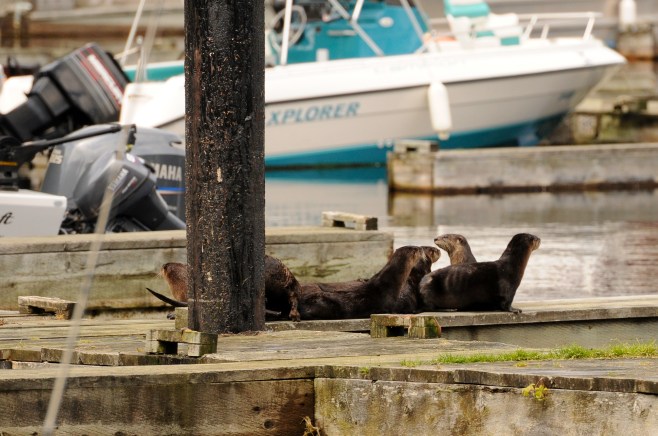
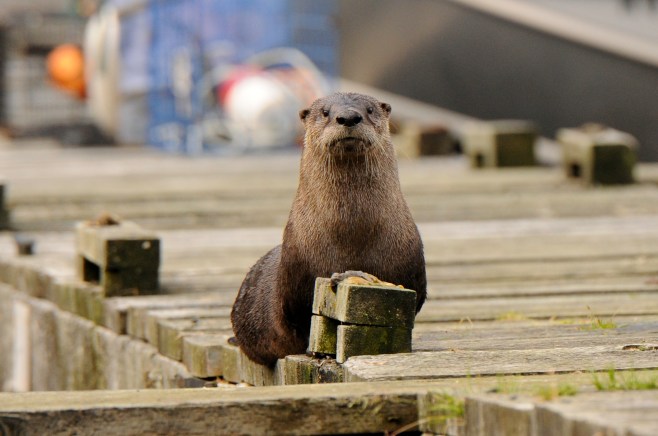
What has stimulated my sharing this with you is that, this year, we have the great privilege of having a mother River Otter and her six pups delighting us in Telegraph Cove, B.C. Today, I had the chance to get some photos of them.  Below, see some of these images, including a little slide show. 

Yes, they are otterly adorable even though they add colour and odour to my days by pooping on the lines of my boat and leaving bits of fish for me to slip on . . . as well as stimulating all those “I saw a Sea Otter” conversations!

Mama River Otter and most of her brood of six. Photo: Hildering.

Crazy cute I know. Also, note the deposit under the head of the River Otter. These gifts are abundant and usually on the lines of my boat 😉 . Photo:Hildering

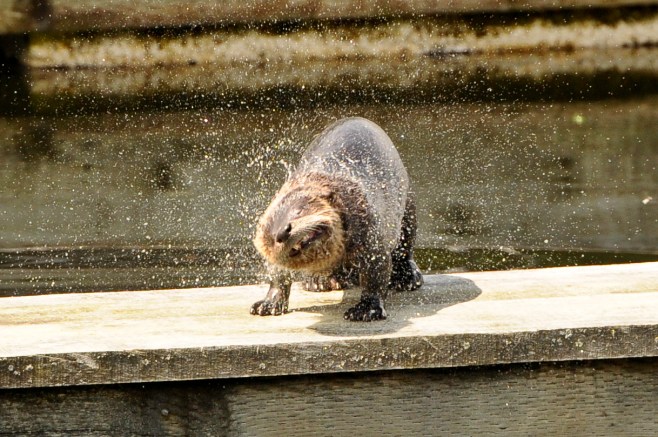
One of the River Otter pups shaking off some SEA water. Photo: Hildering

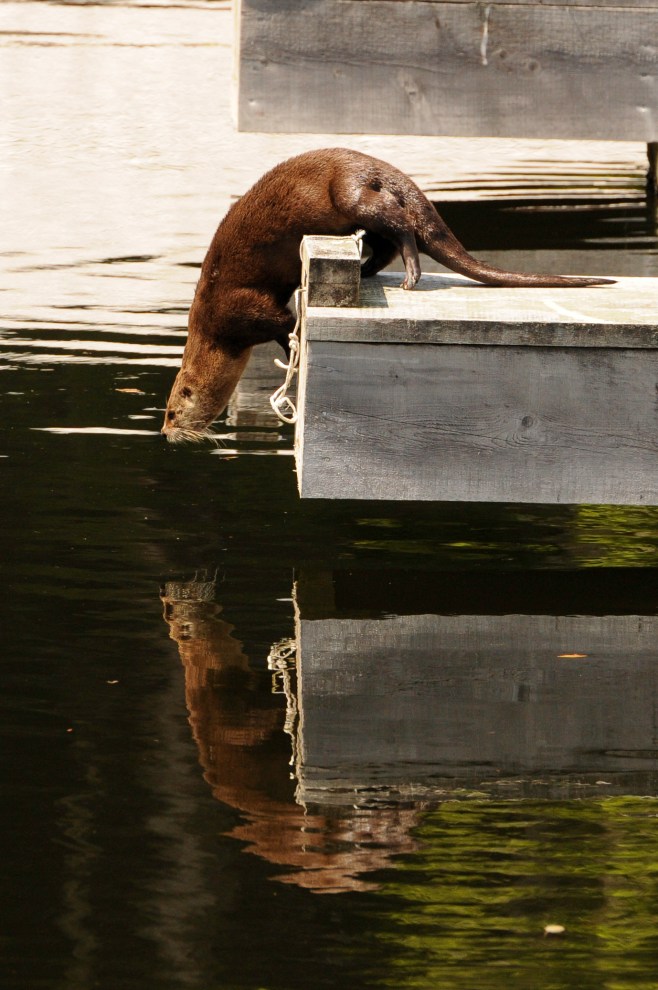
Mama River Otter jumping back into the ocean. Note her reflection in the water. Photo: Hildering.

This slideshow requires JavaScript.

Identifying Jumping Giants

This remarkable photo of a humpback whale breaching in front of Campbell River, B.C. was on the July 1st front-page of the Courier Islander newspaper. 

Humpback whale breaches in front of Campbell River on June 24th. Remarkable photo by Caylin Dubé - Oak Bay Marine Group.

As someone who has been working to ID the humpbacks around northern Vancouver Island, I almost jumped as high as that humpback when I saw the photo! I took up contact with the photographer, Caylin Dubé of the Oak Bay Marine Group, hoping she might have images from the June 24th encounter that would allow me to determine who the humpback was. Caylin was extremely generous with her photos, wanting to know who the whale was as much as we at the Marine Education and Research Society (MERS) did.

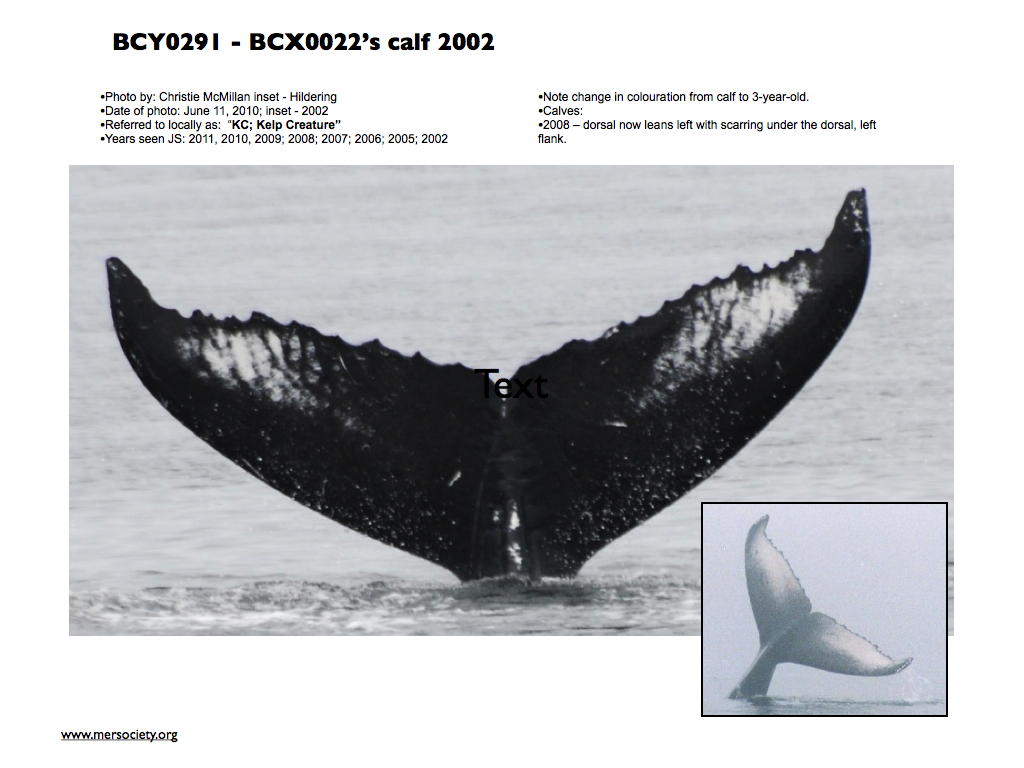
My hunch was quickly confirmed. The ID work of the last 8 years allowed us to conclude that the breaching whale is BCY0291 (DFO catalogue number) who we have nicknamed “KC”. KC is short for “Kelp Creature” but the origin of that name is too long a story to explain here!

We have known this whale since it was a first year calf off the waters of Telegraph Cove in 2002; an area for which this whale has extremely strong site fidelity. However, since last year, KC has also been sighted around Campbell River, only to quickly turn around and swim back to the waters around Telegraph Cove.  We have theories about why s/he might do this but generally – it’s an additional mystery. Although the humpbacks are long-studied and easy to identify as individuals, there is still so much we do not know about these giants that breath the very air we do. For example, KC likely belongs to the population of humpbacks that go to Hawaii to breed in the winter, yet no one knows how the whales navigate to the Hawaiian Islands. 

From the MERS humpback ID catalogue. Fluke ID for BCY0291 aka "KC". Click to enlarge.

From the MERS humpback ID catalogue. Flank IDs for BCY0291 aka "KC". Click to enlarge.

Caylin’s photos also revealed that there was a second humpback with KC. Even without a photo of the underside of the tail (the easy way to identify humpbacks as individuals since the markings and trailing edge of each whale is unique), MERS dedication to also cataloguing flank photographs of the humpbacks allowed us to determine the second humpback very likely was “Arial” (BCY0767) who we also have known since a first year calf in our area in 2007. Very interestingly, these two whales have the same mother but since humpback calves only stay with their moms for a year, to our human knowledge they would not know they were siblings. That these two humpbacks sometimes travel together could be coincidence or not – yet another whale of a mystery to try to solve.

That we at MERS were able to identify the whales from Caylin’s photographs (taken from well beyond the 100 m that boats must stay away from whales) is testament to the value of the great community effort to understand the return of humpback whales to our waters.  We have ID photographs dating back to the 1980s thanks to the relentless vigilance of Dr. Alexandra Morton to understand our marine ecosystem.  Many other ID photographs have been contributed by the whale watching community from Port Hardy to Campbell River (of course taken when following the Be Whale Wise guidelines). Of special note for the consistency and longevity of their contributions is Stubbs Island Whale Watching.

For the work of the Marine Education and Research Society, including our efforts to understand the threat of humpbacks becoming entangled in fishing gear, see www.mersociety.org.  

Below, I include a few more pictures of KC, including the most entertaining ID photo we have ever received – a photo of KC heading in the direction of Campbell River passing the Spirit of the West Adventures kayaking camp. Note the happy humans-in-a-hot-tub in the foreground! Photo by Rick Snowdon of Spirit of the West. 

KC feeding in the area around Telegraph Cove in 2007. Photo: Hildering

KC breaches near Telegraph Cove, July 2nd, 2011. Photo: Hildering

KC heading in the direction of Campbell River in 2010, passing the Spirit of the West Adventures kayaking camp. Photo by Rick Snowdon. Click to enlarge.


In the Eye of the Lord (the Red Irish Lord that is!)

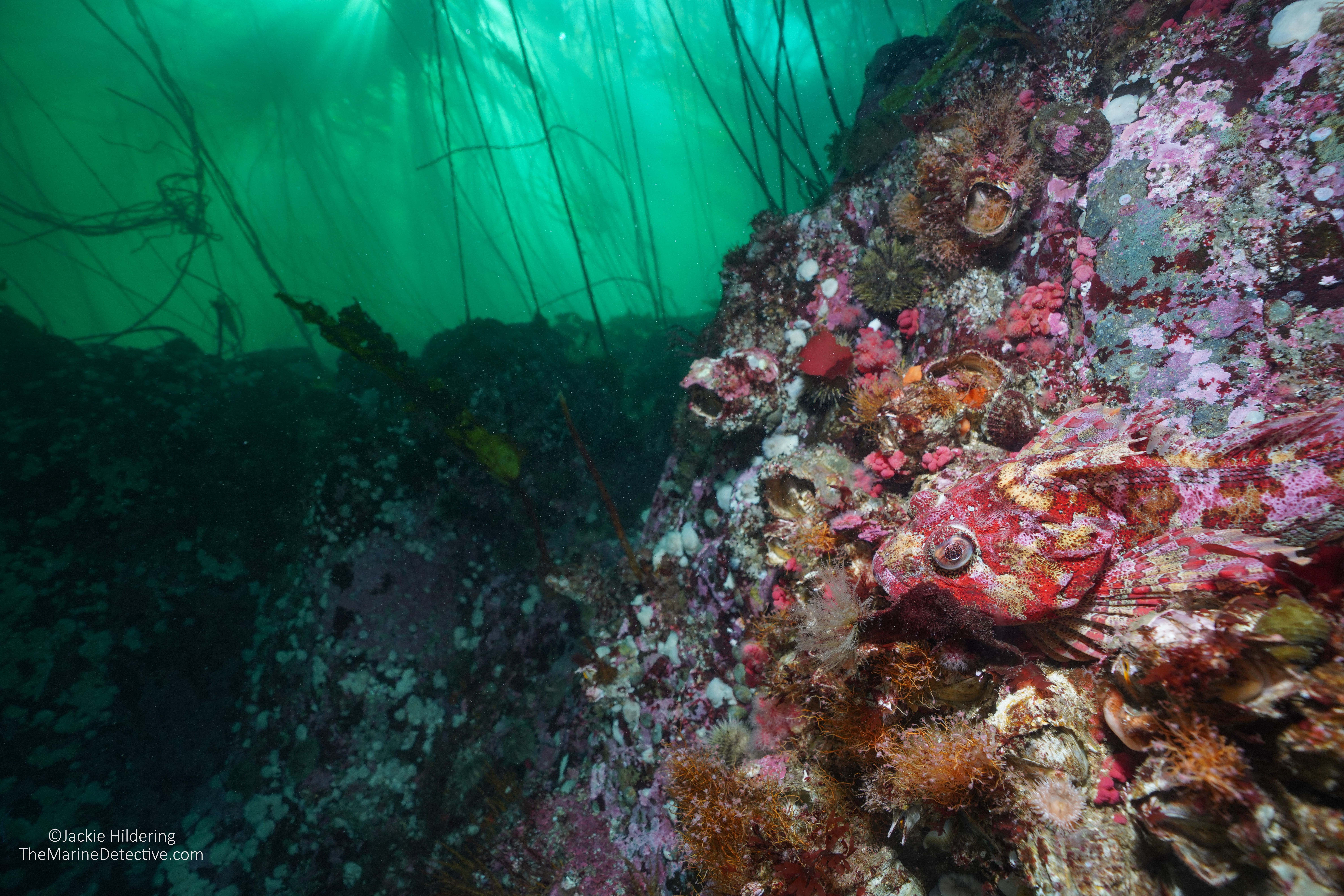
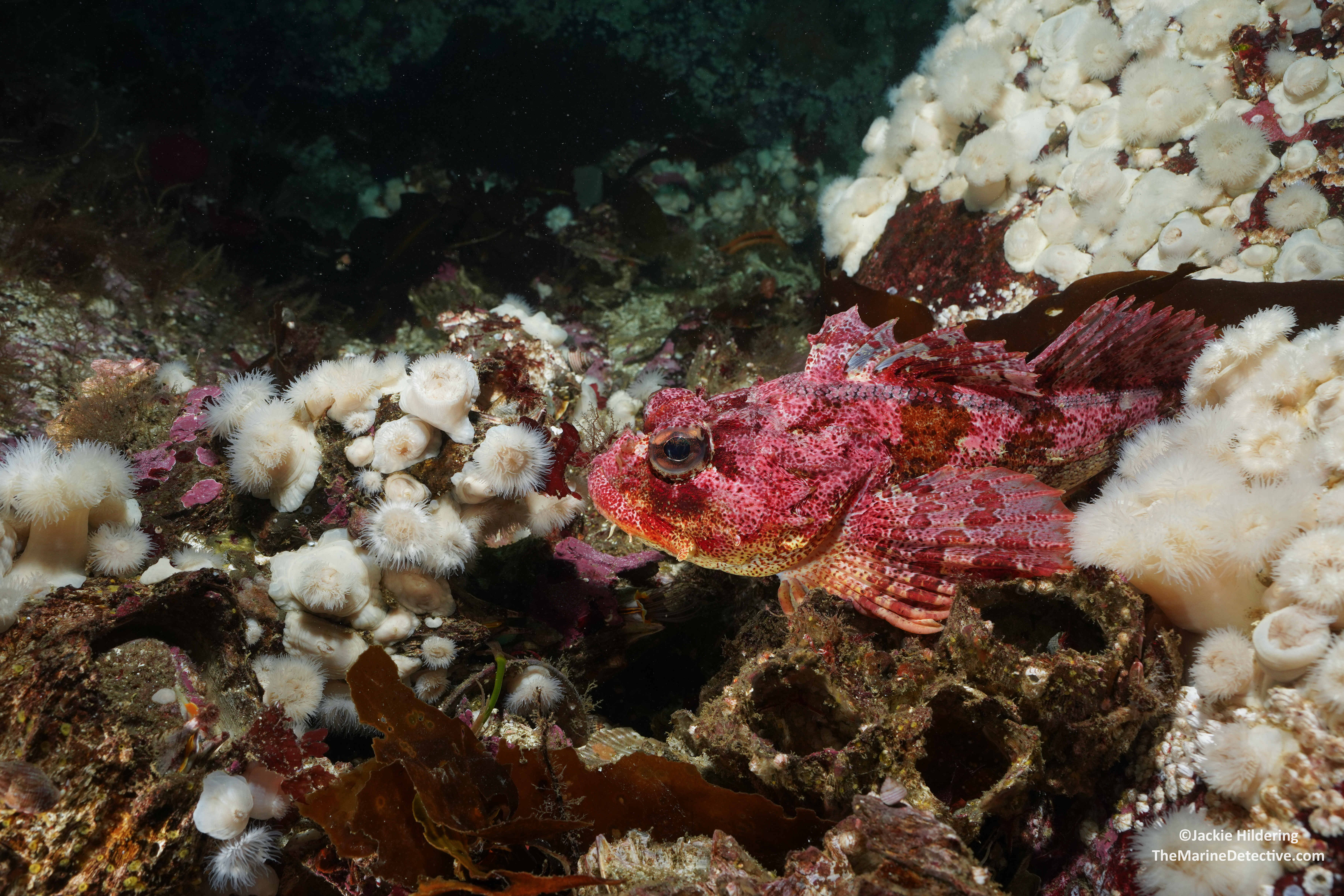
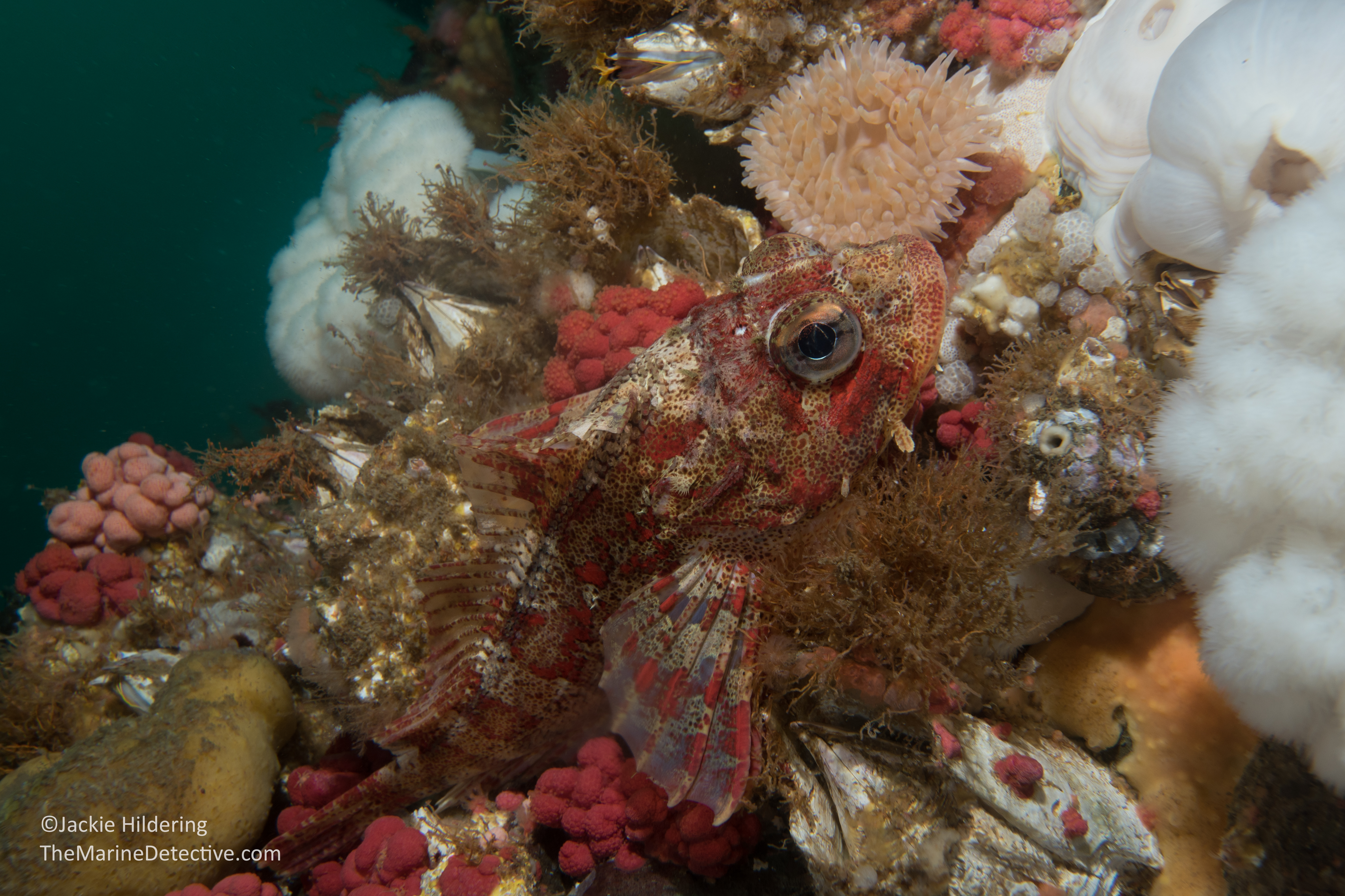
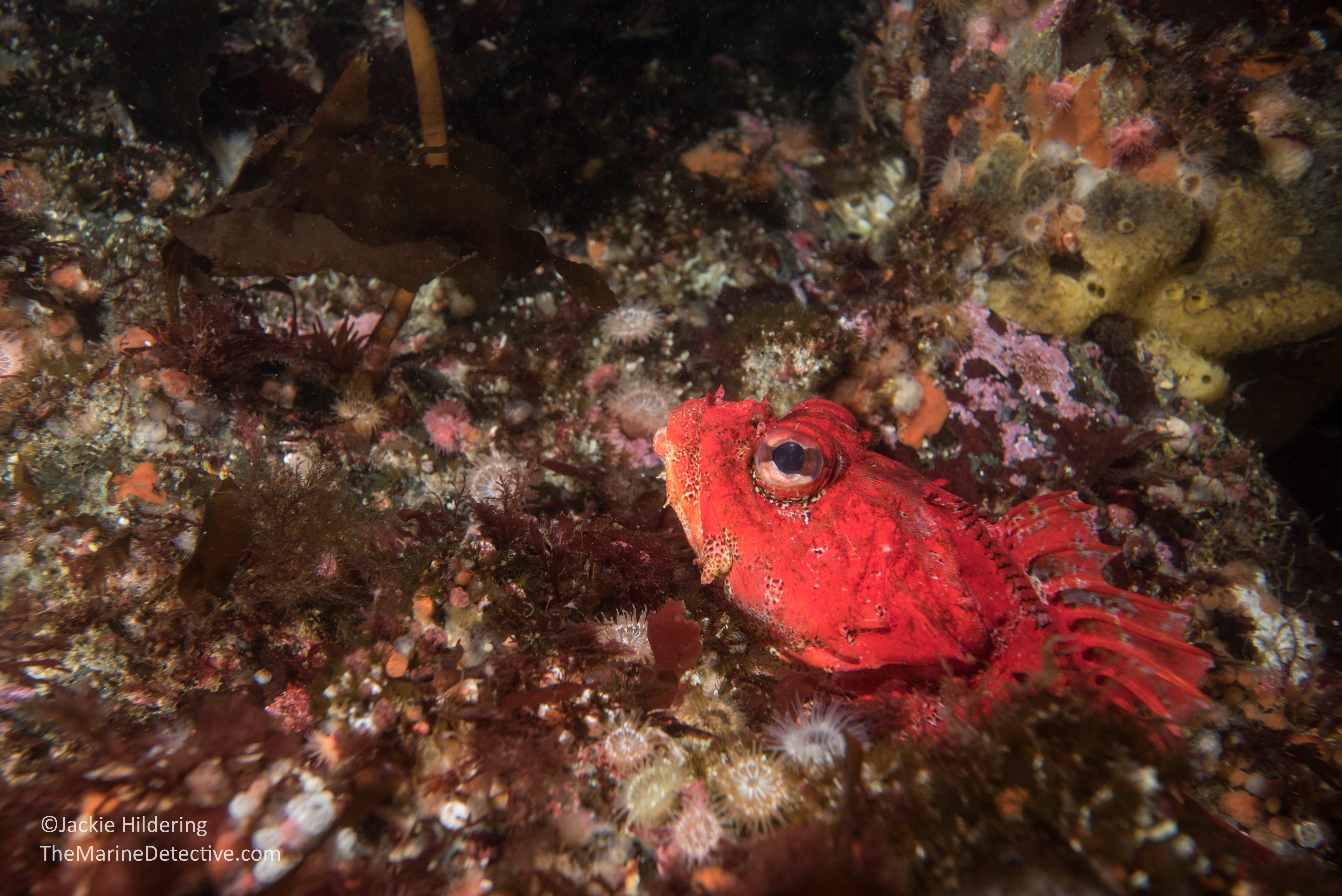
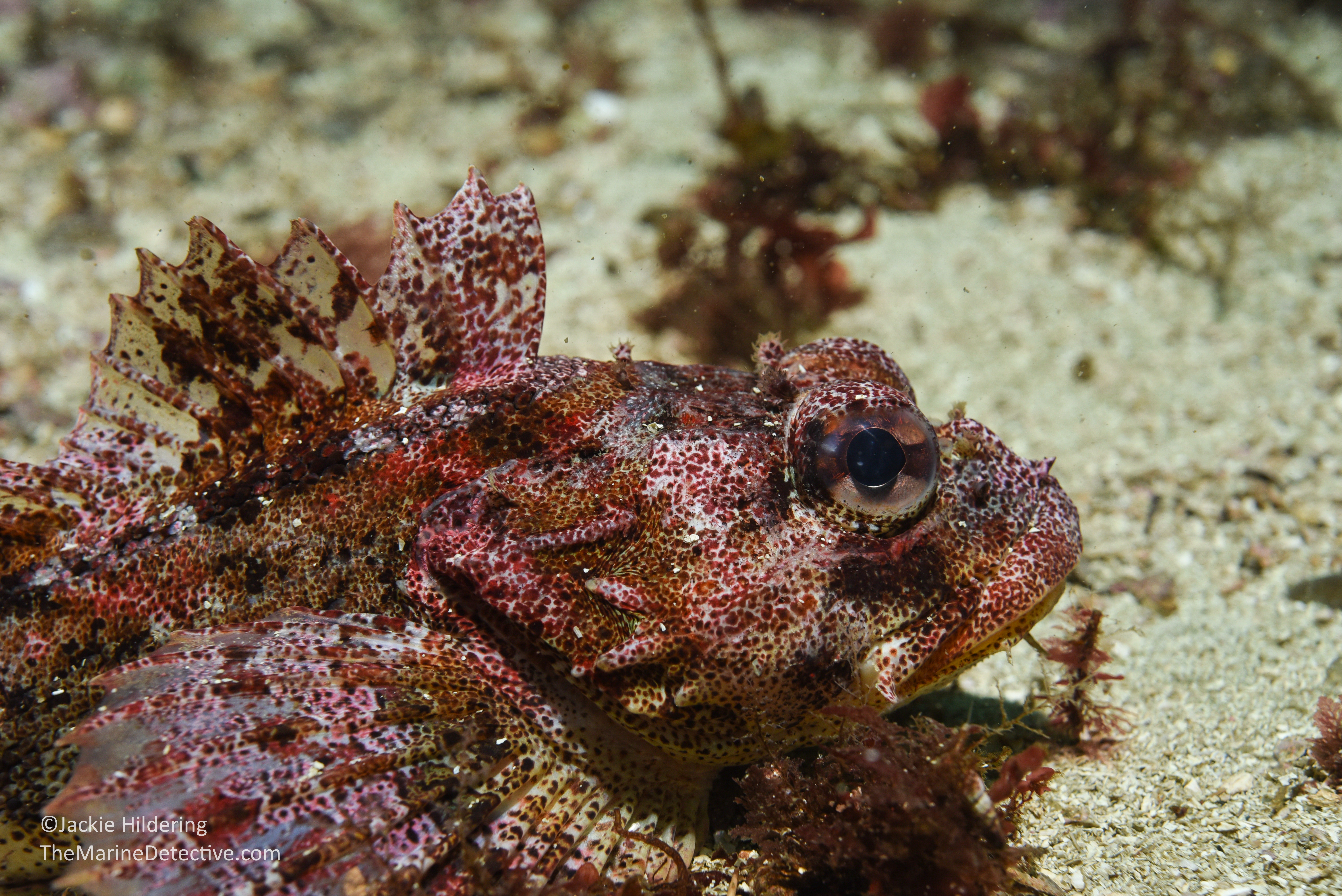
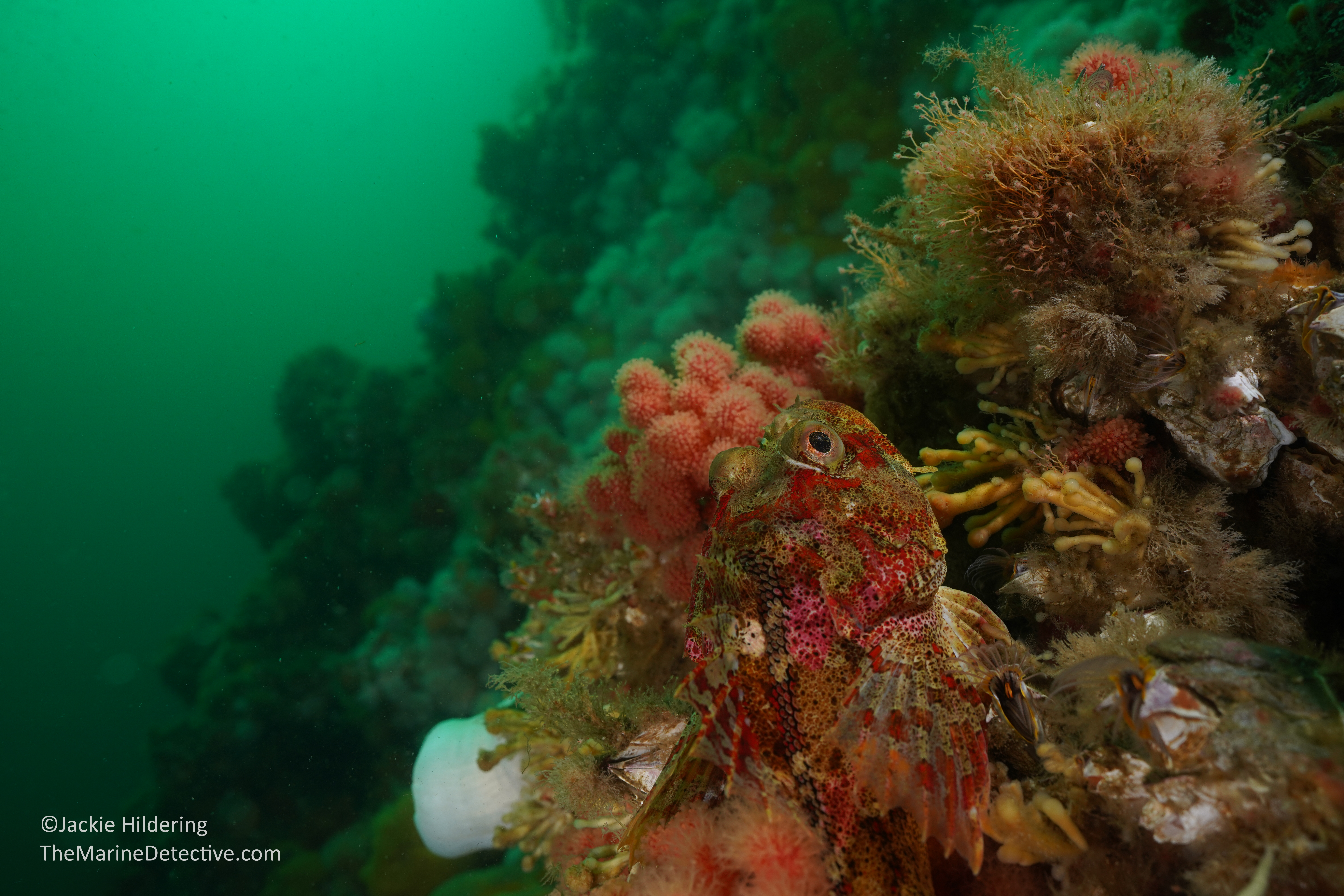
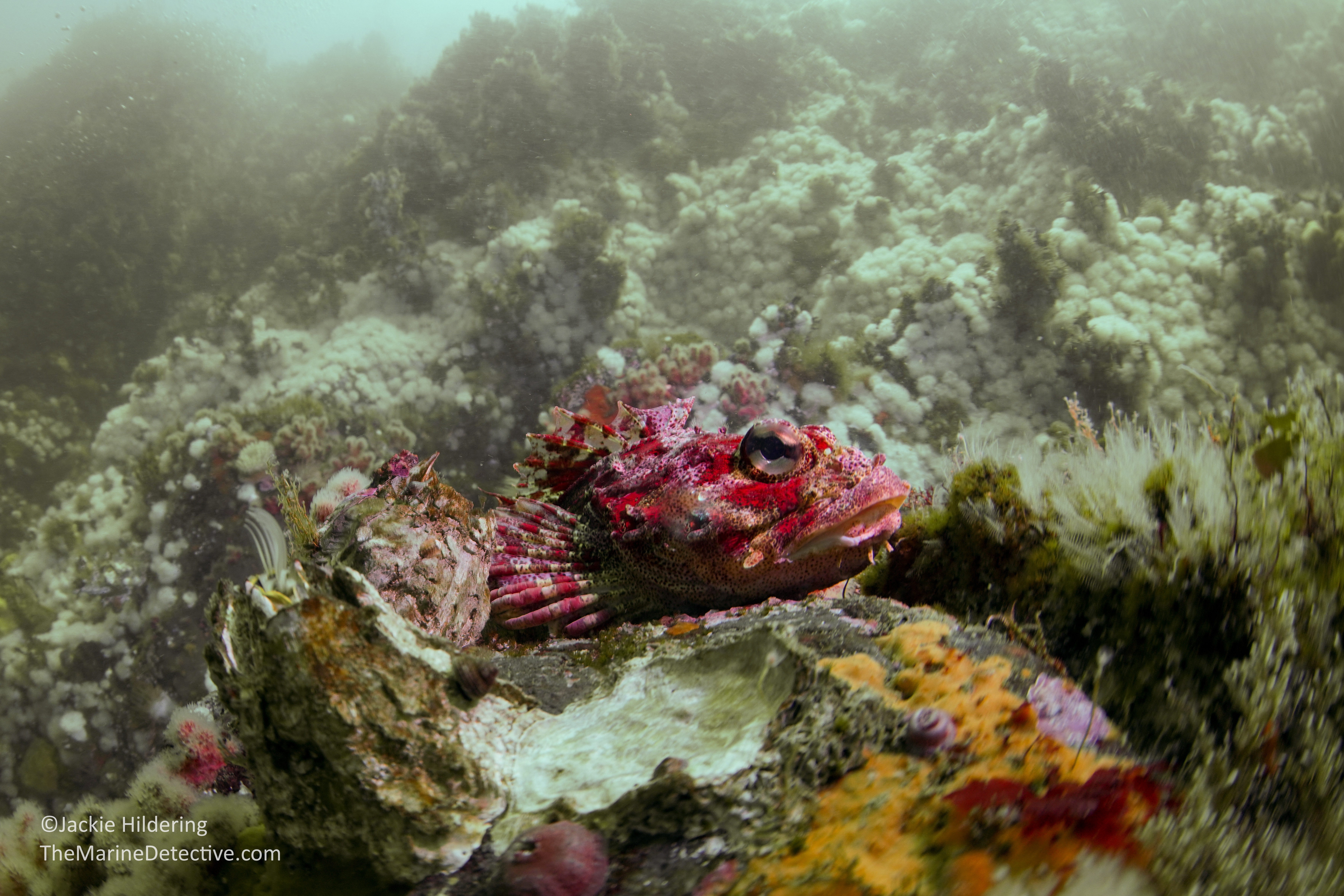
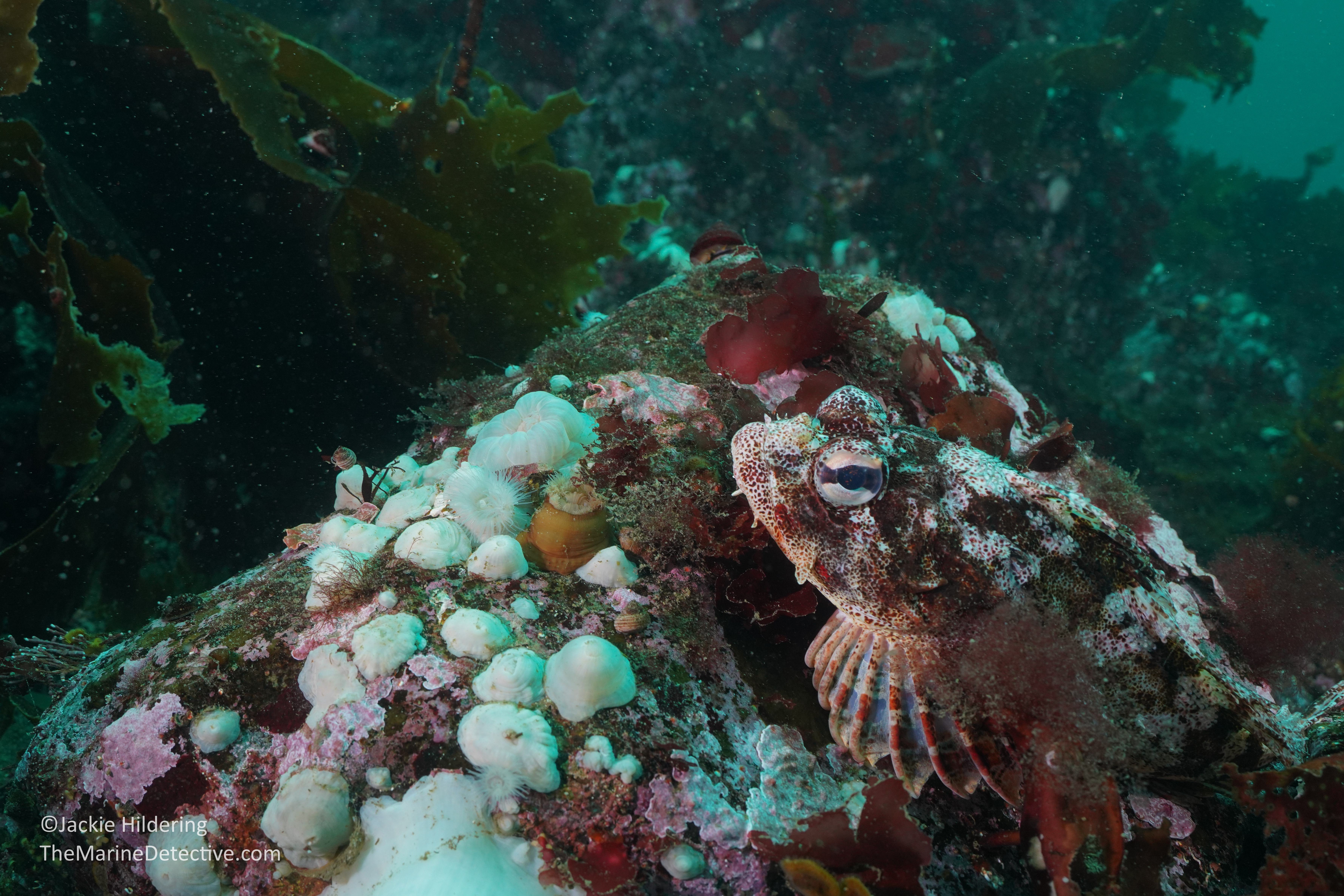
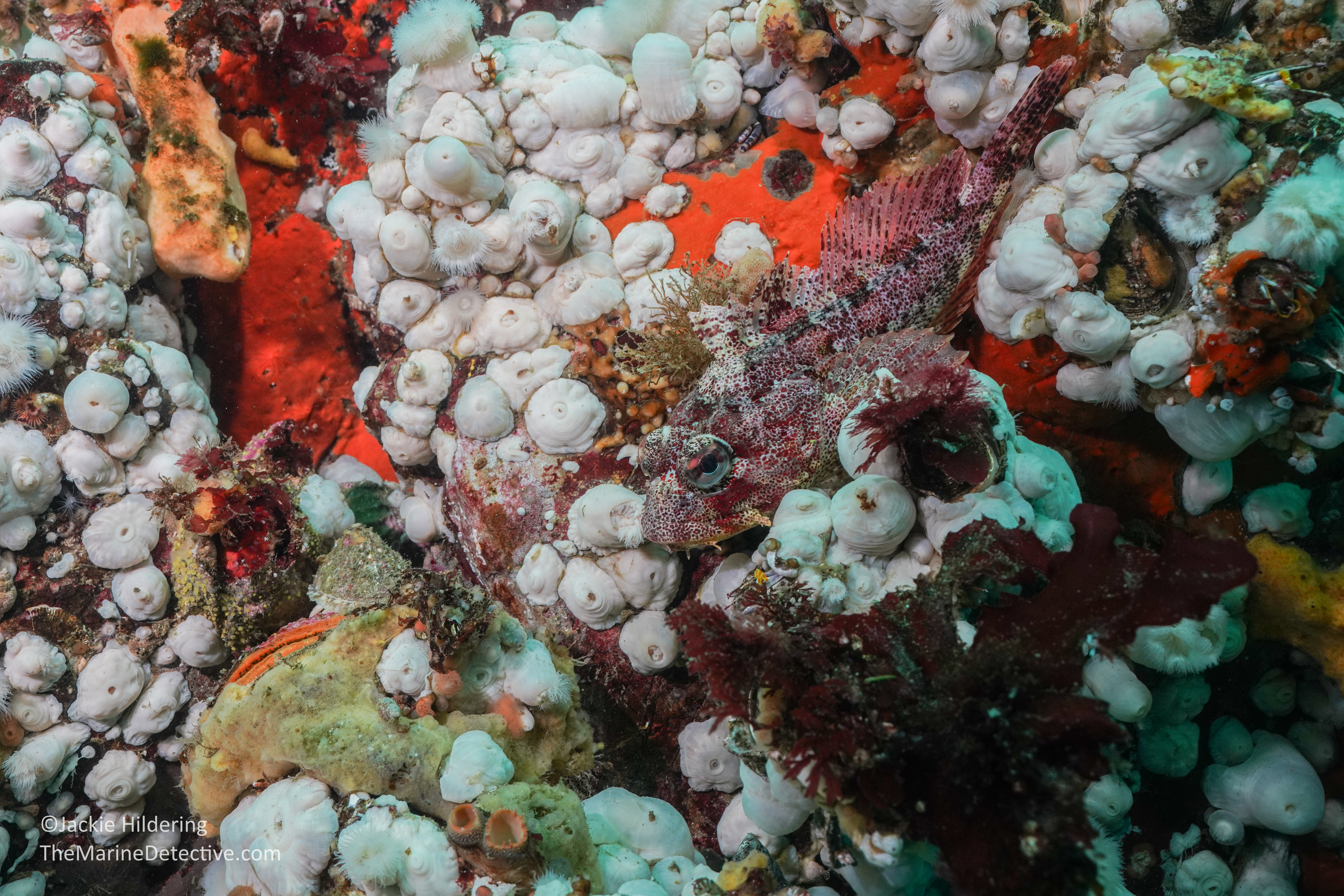
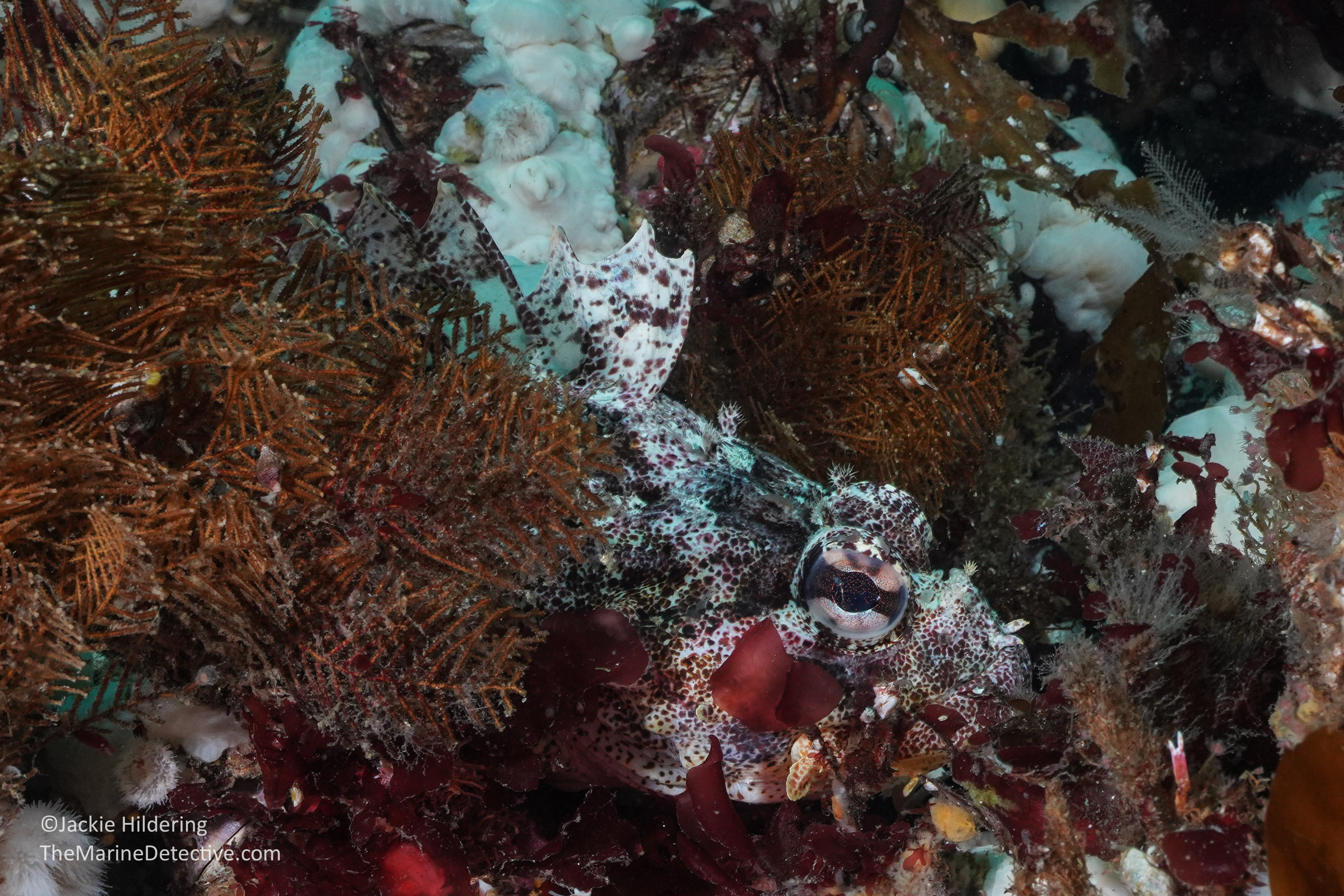
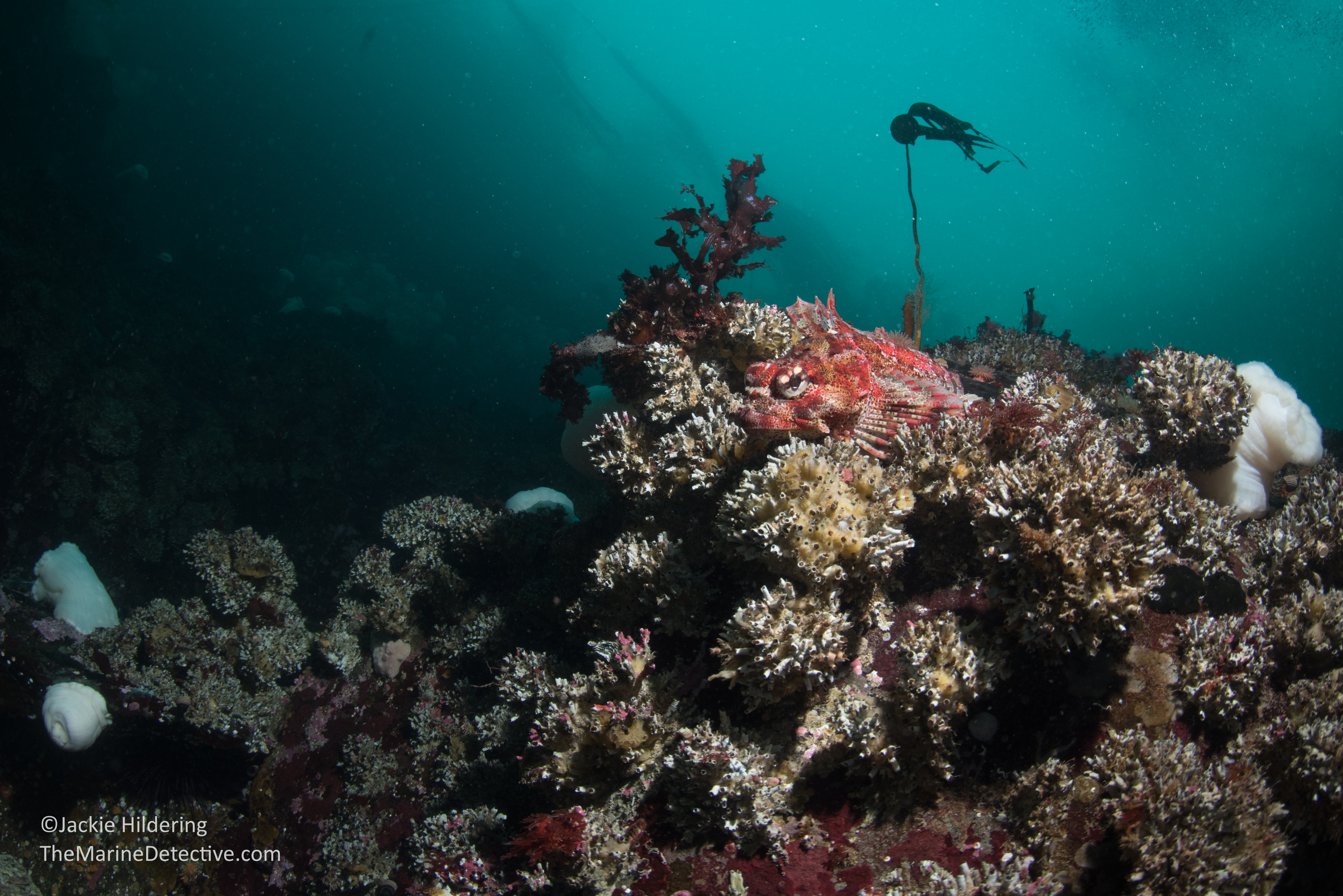
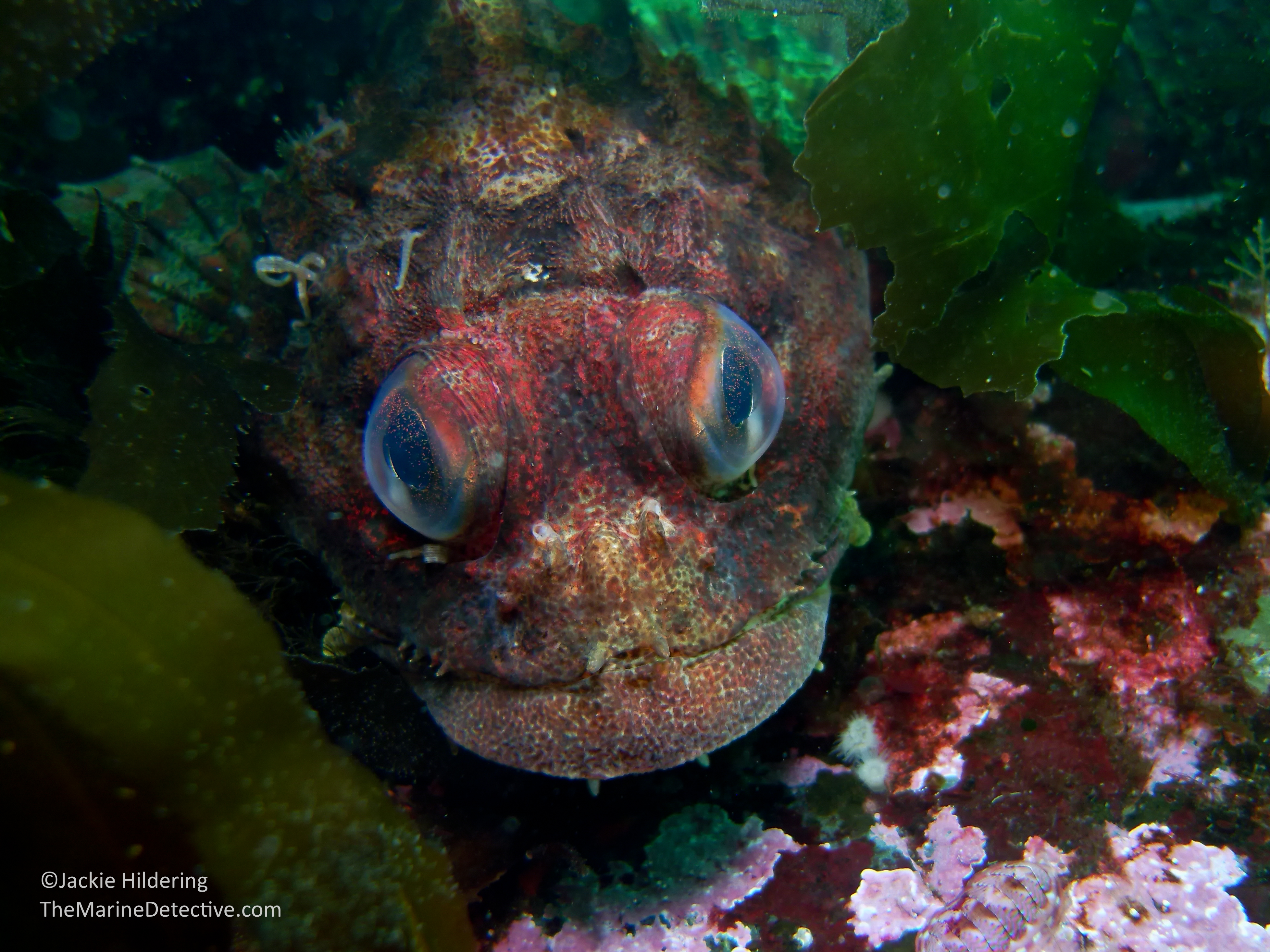
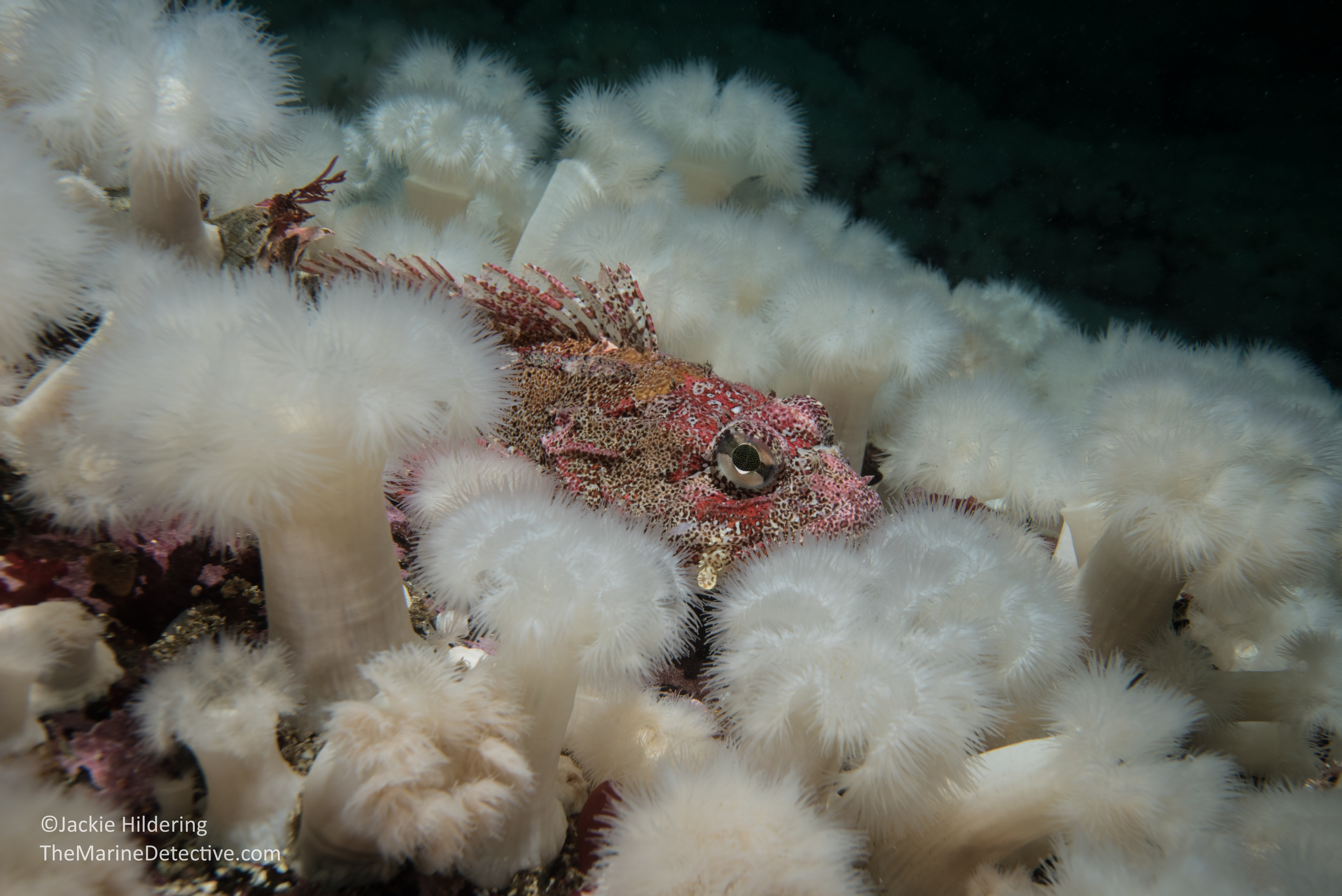
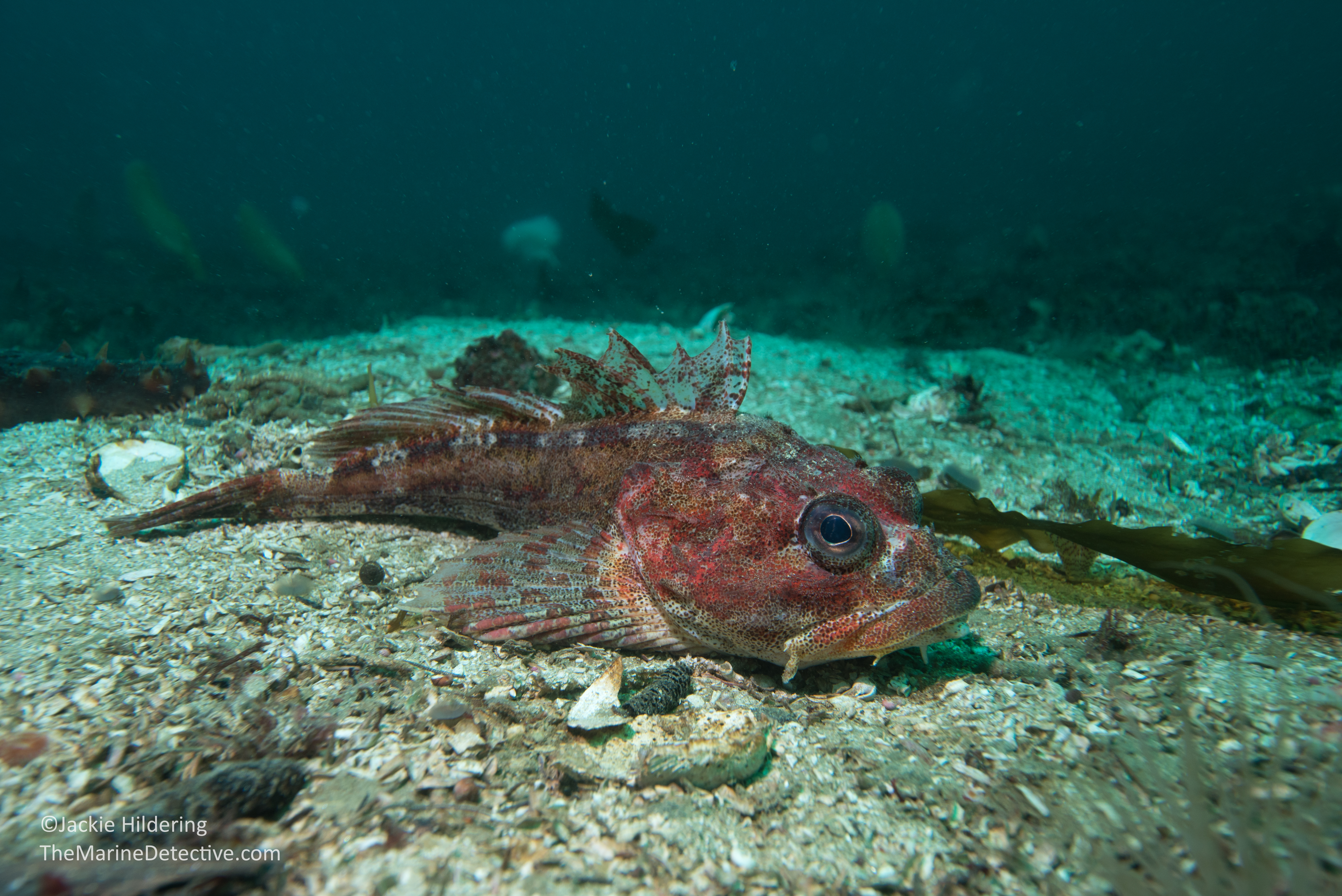
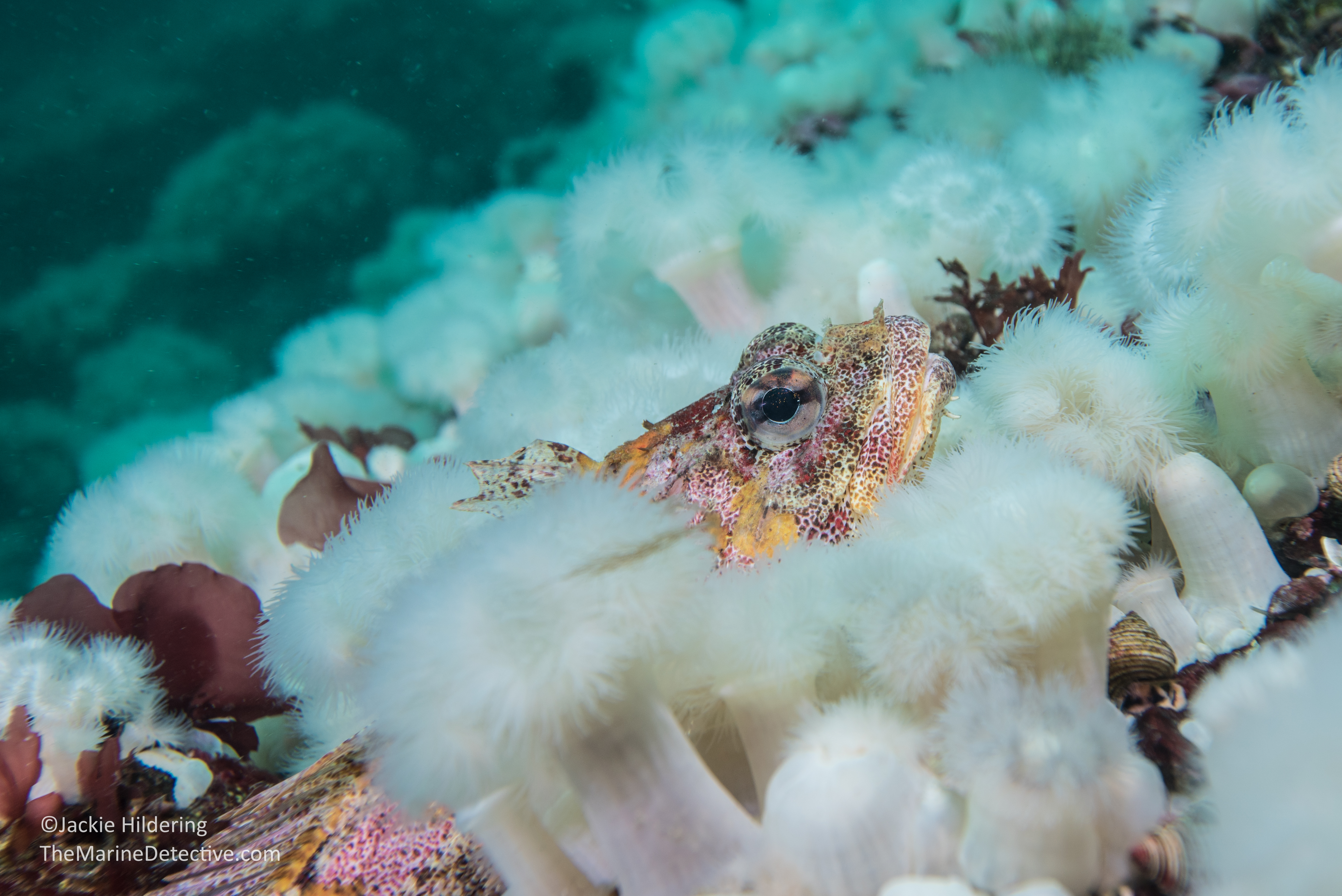
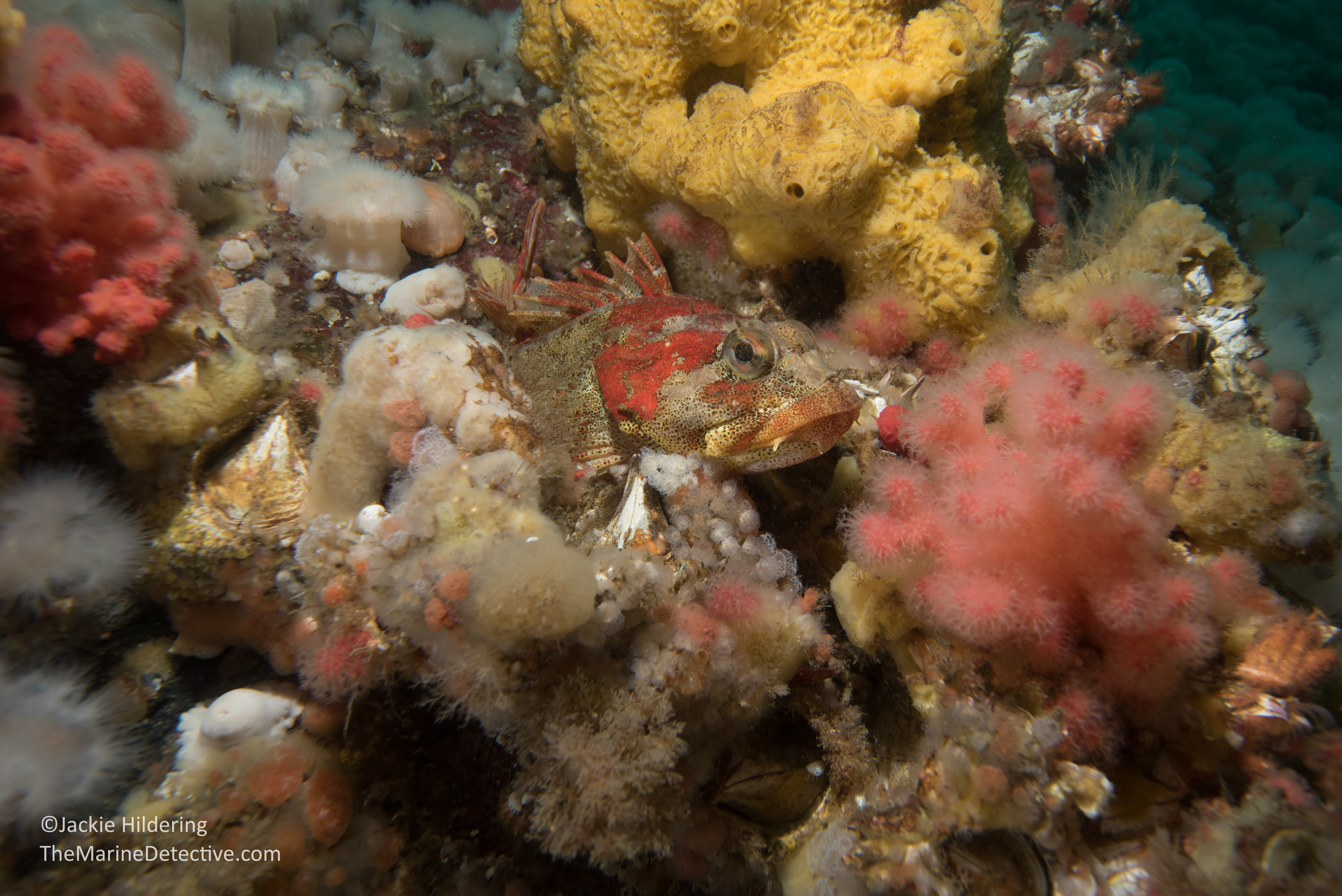
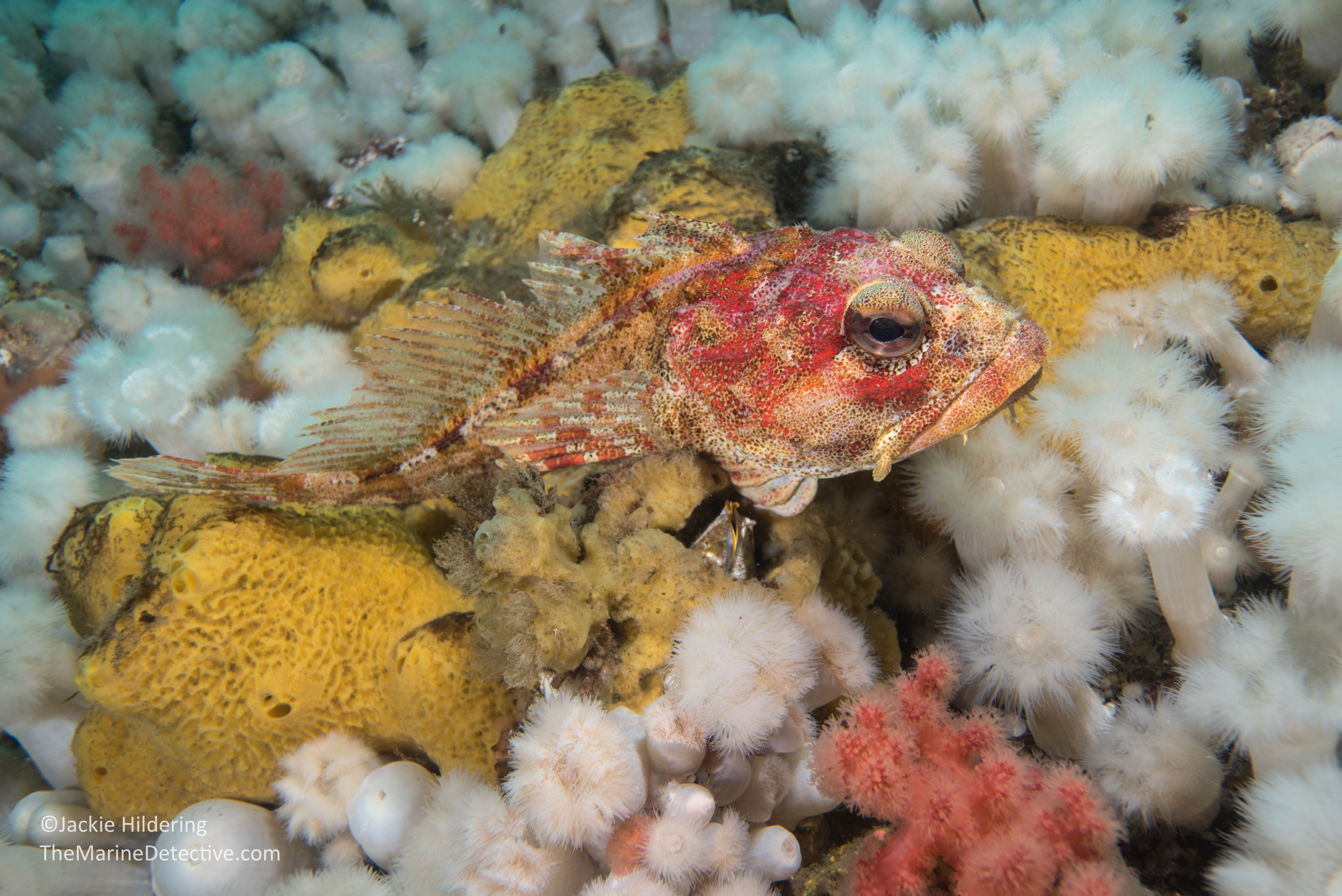
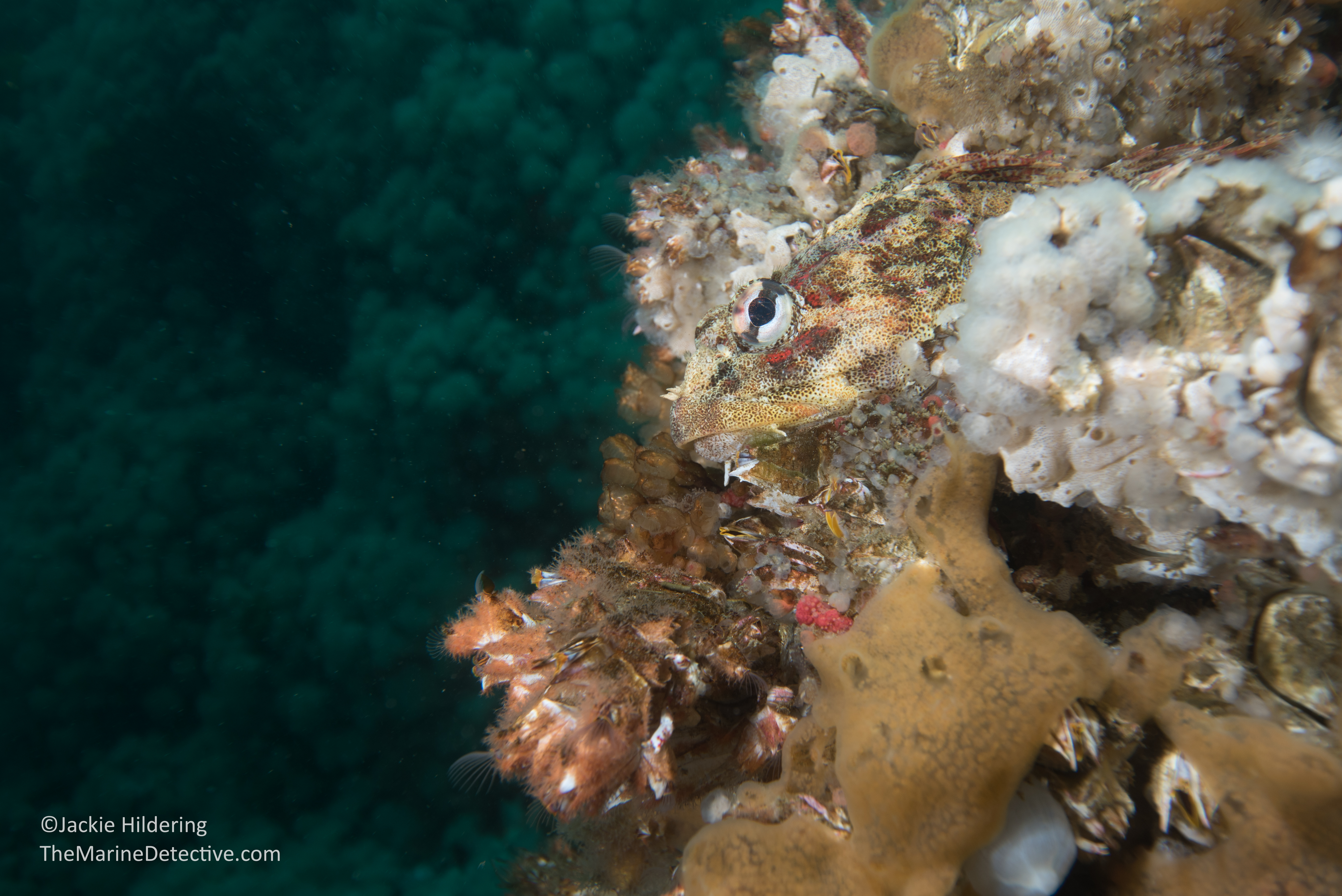
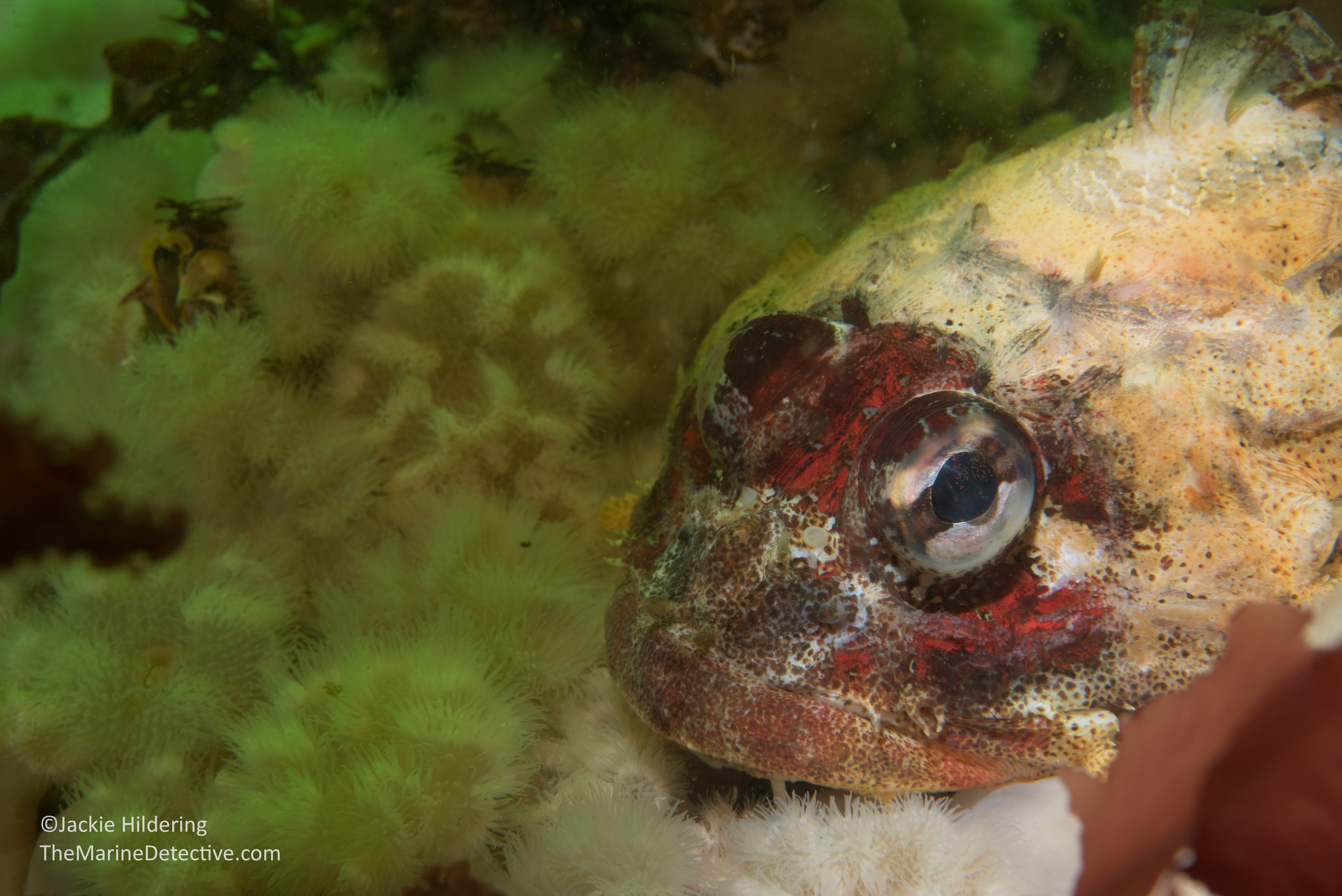
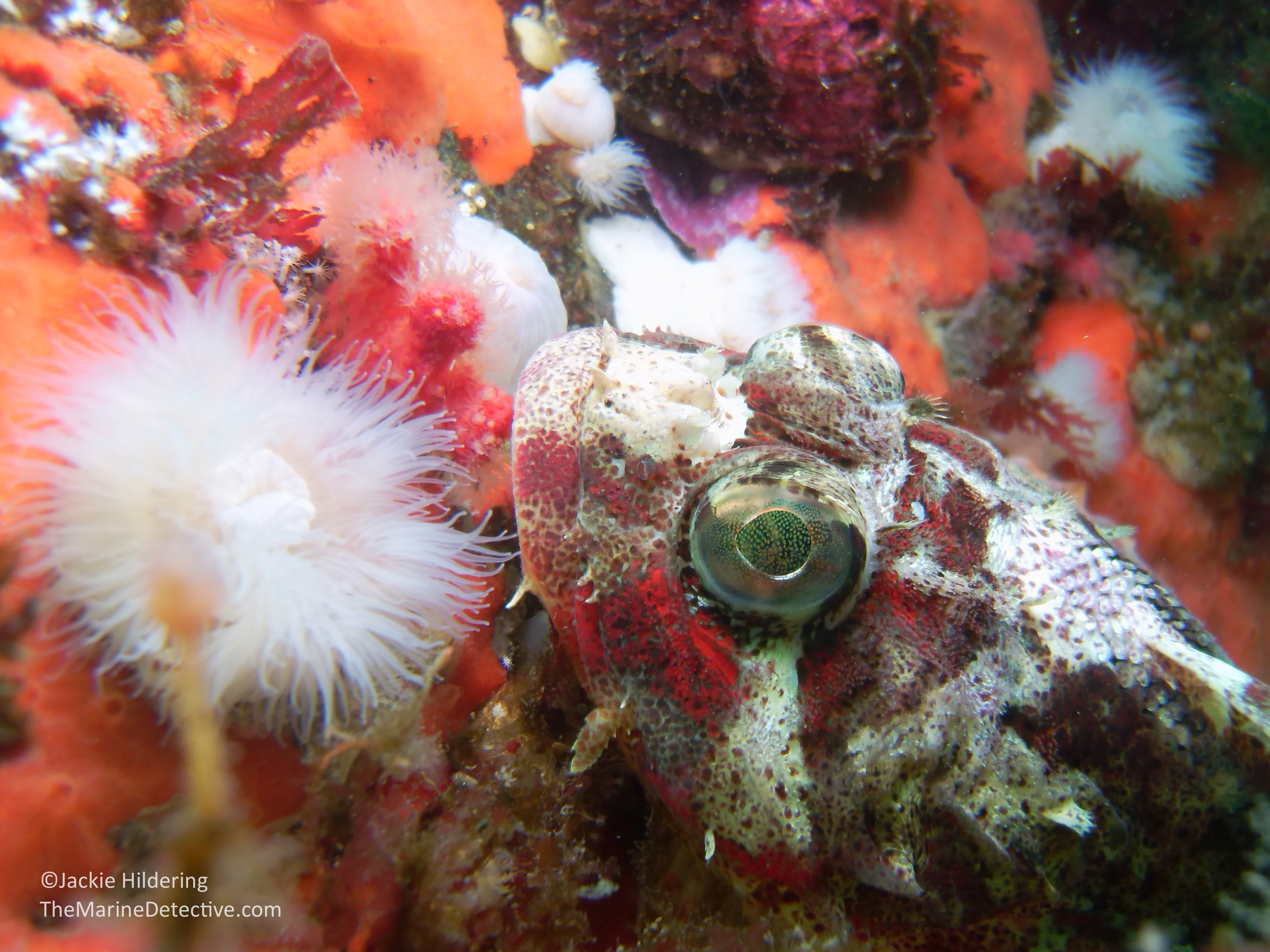
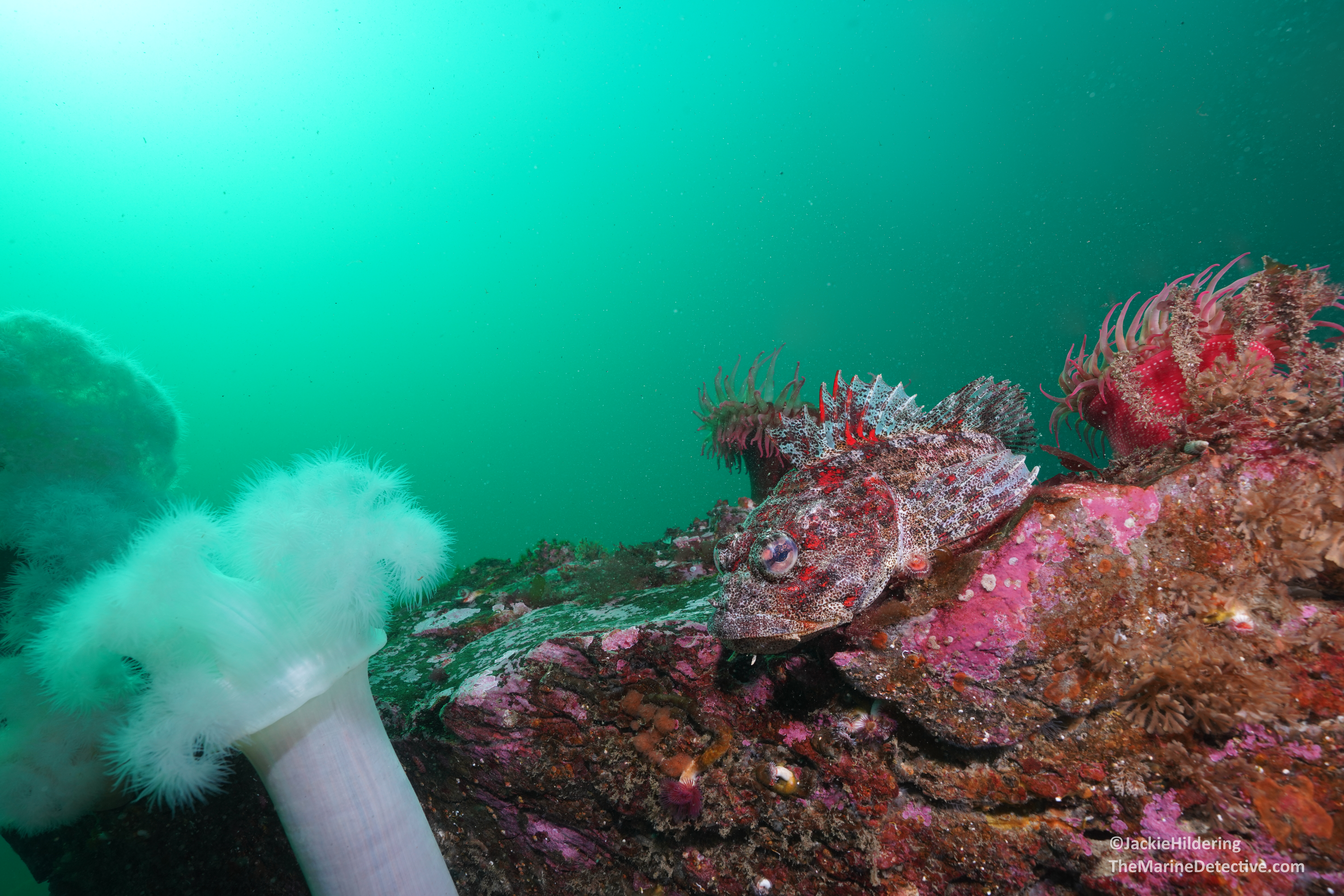
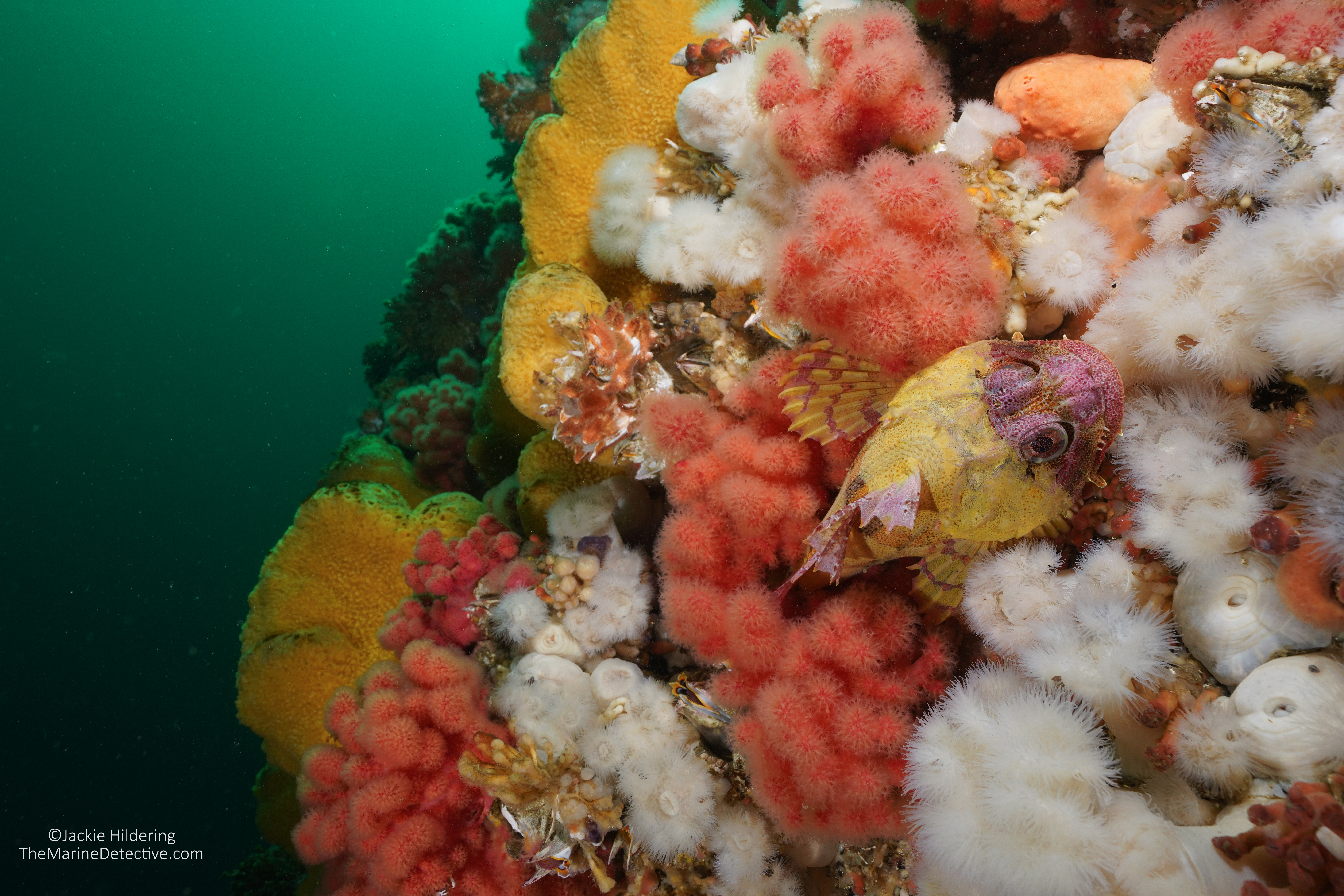
The Red Irish Lord (Hemilepidotus hemilepidotus; up to 51 cm) is a fish of incredibly stunning diversity of colour. Right down to its flecked, bulging eyes, this ambush predator is a master of camouflage. 

But how can you be camouflaged when you’re a fish of insane red and/or orange colouring? When you live in the rich, cold waters of the Northeast Pacific where Nature has doled out colour so liberally, you fade into the background even when so vibrantly coloured.  

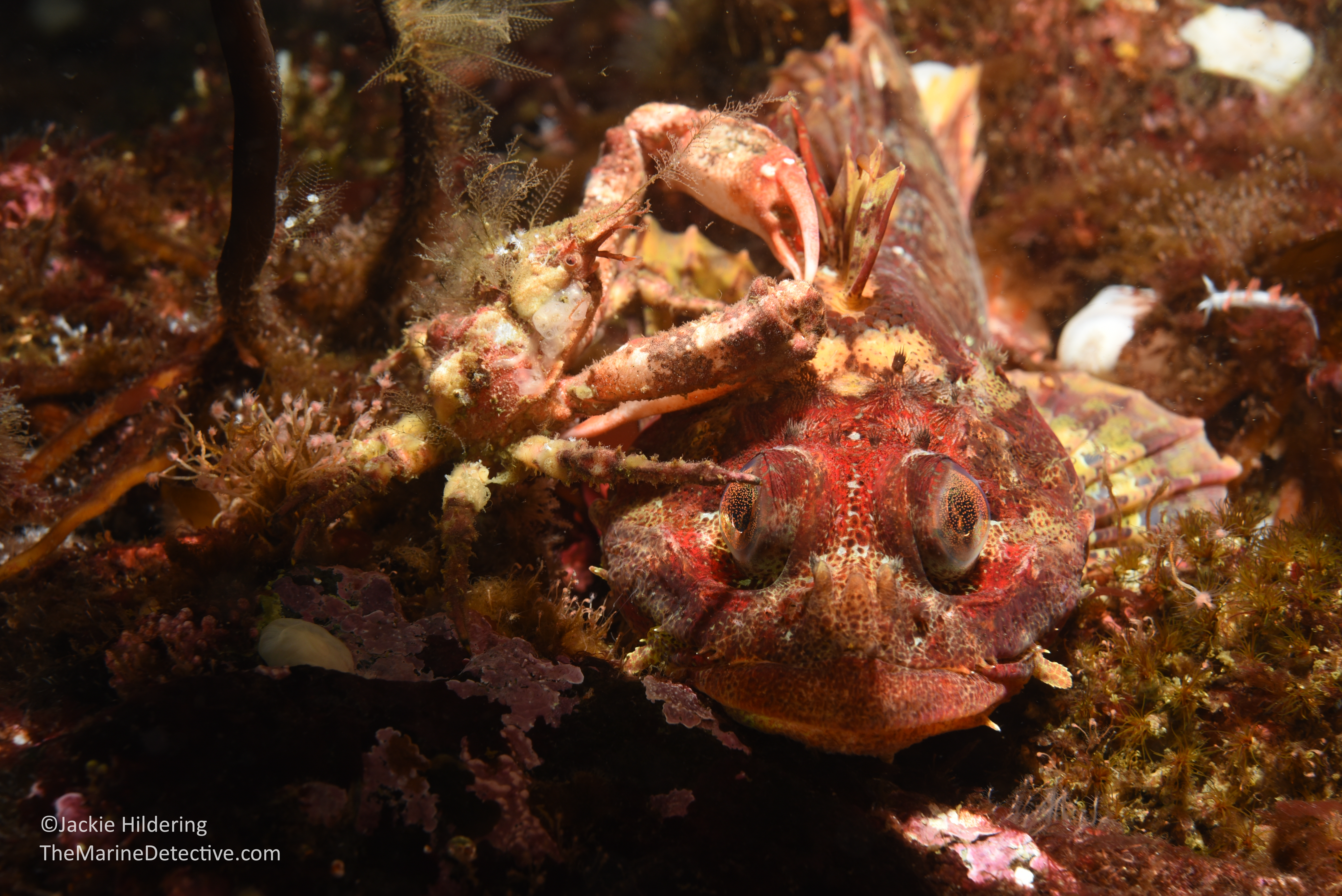
They are a favourite species for we underwater photographers since, as ambush hunters, they remain still even when annoying divers are flashing lights in their eyes or when a crab is sitting on their heads (see below).

The diversity of colour in this species is awe-inspiring. See below for examples of the diversity of colour and pattern and their ability to camouflage. You will even see that there are crabs that walk on their heads. I have a whole blog entitled “Crabs Making Bad Choices” dedicated to that at this link.

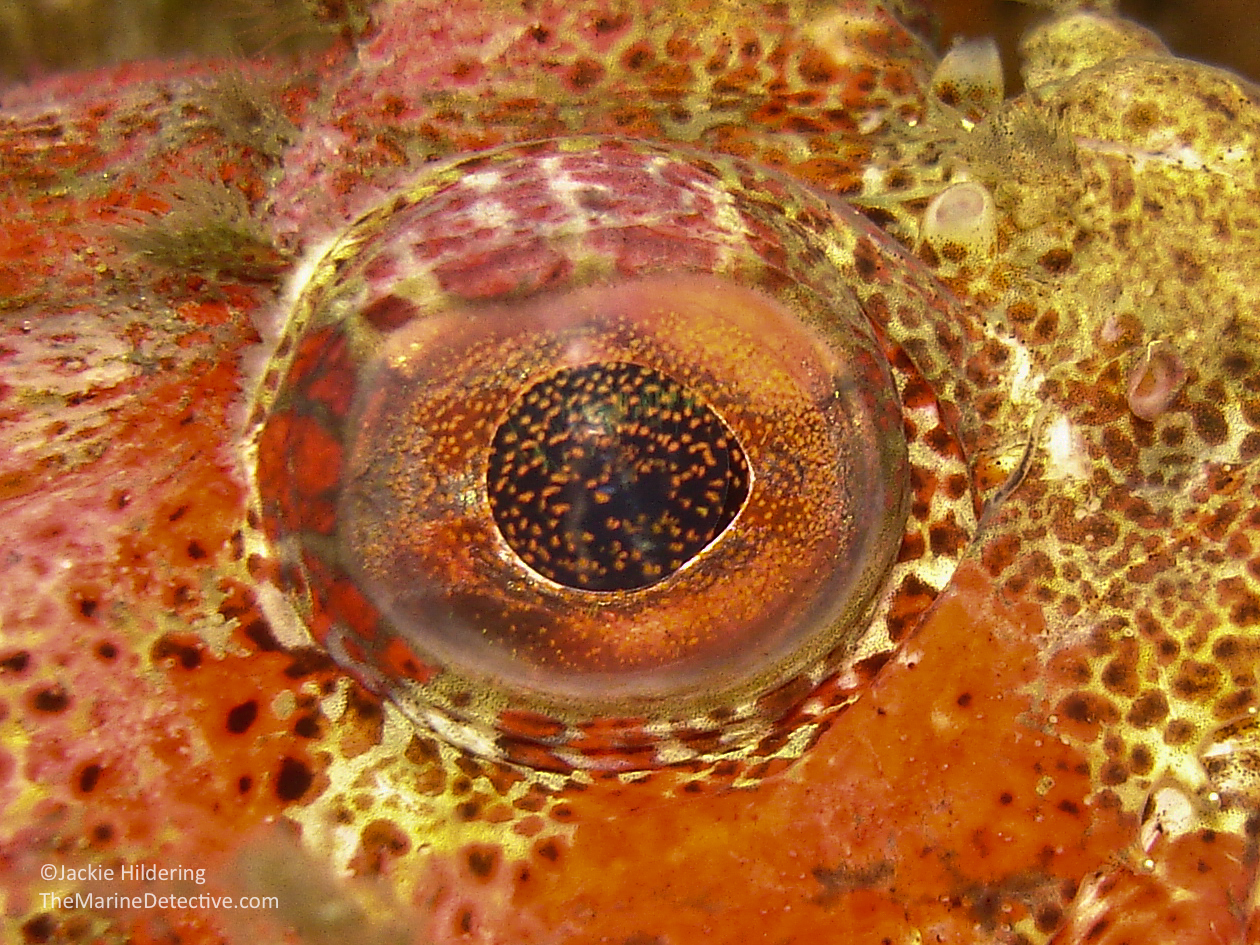
I hope that your sense of wonder is further stimulated in realizing that the Red Irish Lords are able to change even the colour of the flecks in their eyes to match their surroundings! 

The remarkable eyes of the Red Irish Lord. The flecks you see are corneal chromatophores which can change colour to add the to species’ ability to camouflage.

See too how Red Irish Lords are among the fish who guard their fertilized eggs.

Both male and female Red Irish Lords guard the eggs. More information in my blog at this link.
A Red Irish Lord who is hoping the Sharpnose Crab inches down just a bit further so that s/he can feed (and that the annoying photographer would go away!). See my blog “Crabs Making Bad Choices” for more photos of such interactions at this link.
Another Red Irish Lord and a mature male Sharpnose Crab making bad choices.

Slide show and gallery of photos below give a further sense of the diversity of colour and camouflage in this species. 

Whale Wonders – June 2011

ID photo of “Dusty” the grey whale by Christie McMillan. See the Marine Education and Research Society blog for many more photos and detail on Dusty (link below).

Two more unique whale events have been documented in the ocean corridor between Port McNeill, Sointula and Alert Bay (Northern Vancouver Island, B.C.,Canada).

Following the remarkable “visit” of offshore* killer whales at the end of March, on May 16th what is likely the largest group of marine mammal-eating** killer whales ever documented swam past our communities.

It is possible that there were up to 37 different animals in this group. These killer whales, as hunters of marine mammal prey, need to have a culture of stealth and unpredictability and therefore usually travel in small groups. It should be noted that the work of the Orca Lab documented this extraordinary encounter (both visually and acoustically) and that DFO expertise determined the IDs of the whales. (Click here for OrcaLab’s blog on the encounter). 

Then, this last week, we had frequent sightings of a little grey whale in front of our communities. Grey whales are already a rarity in our specific area but what makes this whale really unique is that s/he is potentially the first grey whale known to become a summer “resident” here.

Jared Towers and Christie McMillan (of the Marine Education and Research Society /MERS) confirmed that this is the same grey whale that they kept an eye on last year. From June to early October 2010, the whale was more often around Cormorant Island and the east end of Malcolm Island and became known as “Dusty” and “LGW” (Little Grey Whale). Dusty is relatively easy to identify as an individual because its tail bears the evidence of having survived an attack by mammal-eating killer whales and because there are distinct markings on its flanks including the larger white spot seen in the image above. 

This May 31st, Christie and Jared confirmed that Dusty had returned to the area and was the whale that many of us in Port McNeill, Sointula and Alert Bay had the great privilege of seeing while it fed near our shores. (Click here for Jared and Christie’s MERS blog with far more detail on Dusty and includes pictures). 

If we are indeed so lucky that Dusty is able to “make a living” by feeding here, we’ll be able to whale watch from land with some predictability.  We will also need to be good marine neighbours, since Dusty has been sighted very near the harbours of our communities and can surface very unexpectedly. 

* Offshore killer whales are most often near the continental shelf and their diet has been confirmed to include sharks. Click here for a previous “The Marine Detective” blog on the offshore killer whales sighted at the end of March, 2011. 

** The mammal-eating killer whales are known as “transients” and “Bigg’s killer whales”. The latter name is a recent move to honour the late Dr. Michael Bigg, father of killer whale research. Recent research has found these to be the most genetically divergent type of killer whale and they may be recognized as a different species.

Record of possible sightings of Dusty as of June 7th. 

  • June 7 – Port McNeill 
  • June 8 – Alert Bay (Source – MERS, confirmed as Dusty)
  • June 9 – Campbell River. (Source – Susan MacKay, confirmed ) 
  • June 11 – Campbell River seen heading north (Source – via Susan MacKay) 
  • June 12 – passing by the Orca Lab, Blackfish Sound (Source Orca Lab; ID photos to come)
  • June 15 – Port McNeill

Oceans Day – The Wisdom of James Cameron

June 8th is World Oceans Day (originating from the 1992 Rio de Janeiro Earth Summit and recognized by the United Nations since 2008). 

Mature male fish eating( (“resident”) killer whale – “Skeena” (A13; born 1978; missing 2010).
Photo – Hildering.

In reflecting on what I can best share with you to honour Oceans Day and make clear the human dependence and impact on the oceans, I have decided that no one has made these points more solidly and eloquently than fellow Canadian, James Cameron. He is a lifelong activist for marine conservation who, among many other achievements,  is the award-winning director of “Titanic” and  “Avatar”. 

Below, please read, and heed, the text from his 1998 acceptance speech for the SeaKeeper Award.  

The message is more important and urgent –  than ever.  

View towards Alert Bay, Northern Vancouver Island. Photo – Hildering

James Camerson:
“Every
living soul on earth, no matter how far inland they live or how much they may hate eating fish, is utterly dependent on the divine saltwater soup of the ocean. The ocean is the engine that drives our weather and moderates our climate. The phytoplankton in the seas create the majority of the oxygen we breathe. These microscopic plants also form the bottom of a vast food chain from which we harvest a large portion of our food.

As our population increases, and arable land remains finite, we will look to the oceans more and more for our survival. Thus, our destiny as a species is interlocked with the destiny of the sea. If the seas become sick, we become sick. If they die, we die. Subconsciously we think the sea will always be there for us. 
Sunset Port McNeill. Photo – Hildering.

Right now, all over the world, coral reefs are threatened, and 40-mile-long drift nets cut huge, sterile swaths through the open ocean. Biologists estimate that over one hundred million undiscovered species remain to be identified in the oceans. We will kill half of these before, we have even had a chance to give them names.

Life began in the sea over three billion years ago. Our first upright walking ancestors appeared a mere four million years ago, and human civilization is less than ten thousand years old. If the natural history of life on earth could be viewed as a single Great Year, all of human recorded history inhabits the last couple of seconds of the last minute before midnight at the end of that year. And yet, in those last seconds, that eyeblink, we have multiplied exponentially, and our impact on the natural world has increased logarithmically.

It took the entire history of humankind to produce a global population of a billion people by the year 1800. By 1930, in just over a century, it had doubled to two billion. In another fifty years, it had doubled again to four. Now, at close to 6 billion, we are likely to double again in less than thirty years. picture it, 12 billion human souls, human mouths, crying out for food, struggling to survive, competing for resources, choking in a poisoned and depleted world, and all within the lifetime of our children.

Sunset off the coast of Northern Vancouver Island. Photo – Hildering.

We are alive now, and doing those works for which we will be remembered, at the most critical instant in the history of the Earth. Millions of years of natural evolution are focusing down to a few decades during which the game will be won or lost. And like it or not, we are the players in that game.

This is both a great honor, and a terrifying responsibility- As leaders, as decision-makers, as influencer’s of public opinion, we must do our best to preserve and restore the oceans. Humankind has, unwittingly, assumed the role of executioner of our own planet’s life force. But we can also be saviors, if we choose, and if we are willing to make the sacrifices necessary . . .

Sunrise Port McNeill – looking toward Haddington Island and Sointula. Photo – Hildering.

There is no one here who would not do the very best for their children – the best schools, the best food, the best doctors. Think of the ocean as the ultimate trust fund for your children, a living and life-giving fund.  A healthy ocean is the best gift you can give them . . . l ask everyone. . . to assume a leadership role in guarding and restoring the oceans in all ways, and as a life philosophy.”

Please see my 2020 blog “How to Love the Ocean – Daily Actions for Future Generations”