Join me in the cold, dark, life-sustaining NE Pacific Ocean to discover the great beauty, mystery and fragility hidden there.

Posts tagged ‘Pacific Spiny Lumpsucker’

A Pacific Spiny Lumpsucker – and a Lump in My Throat

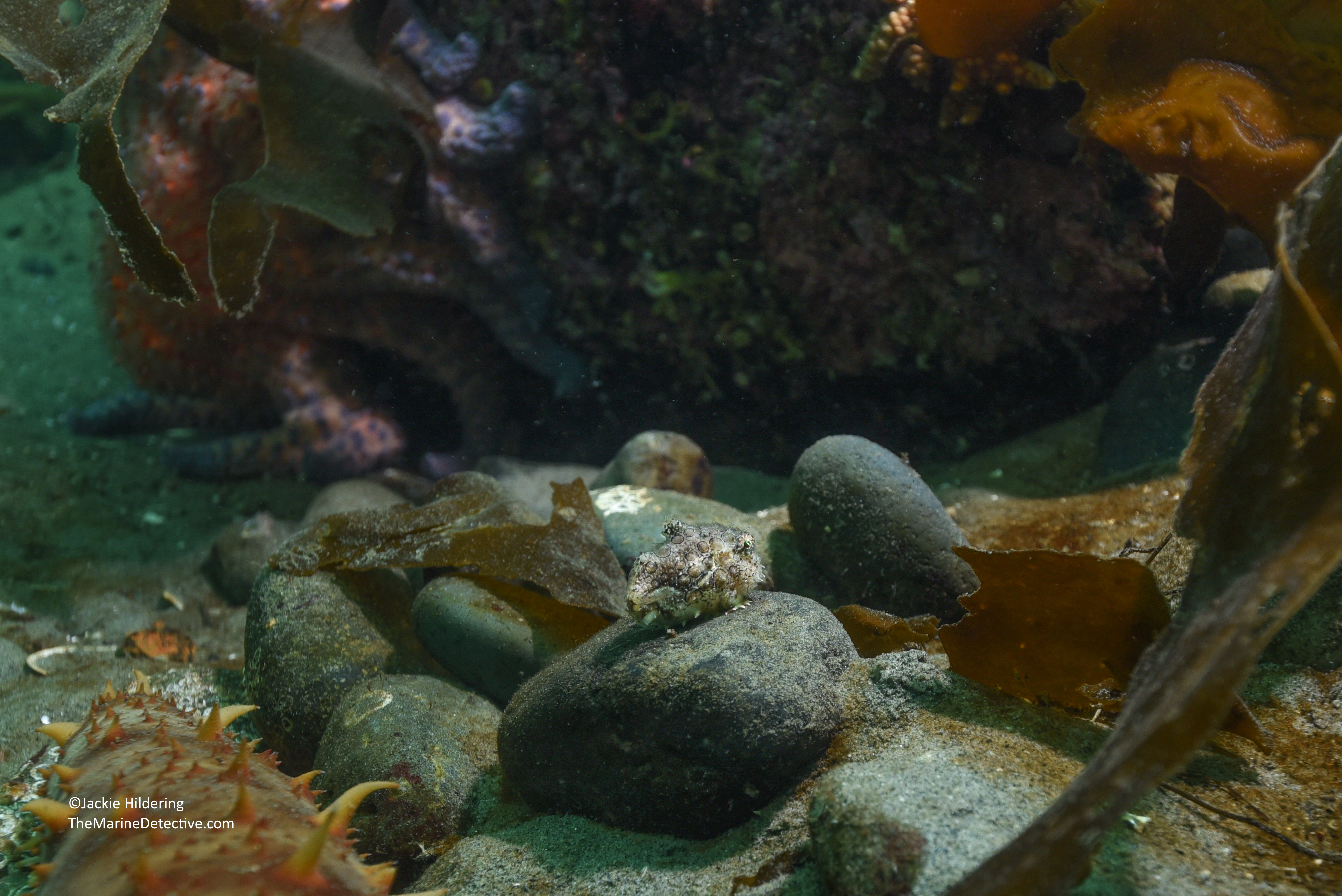
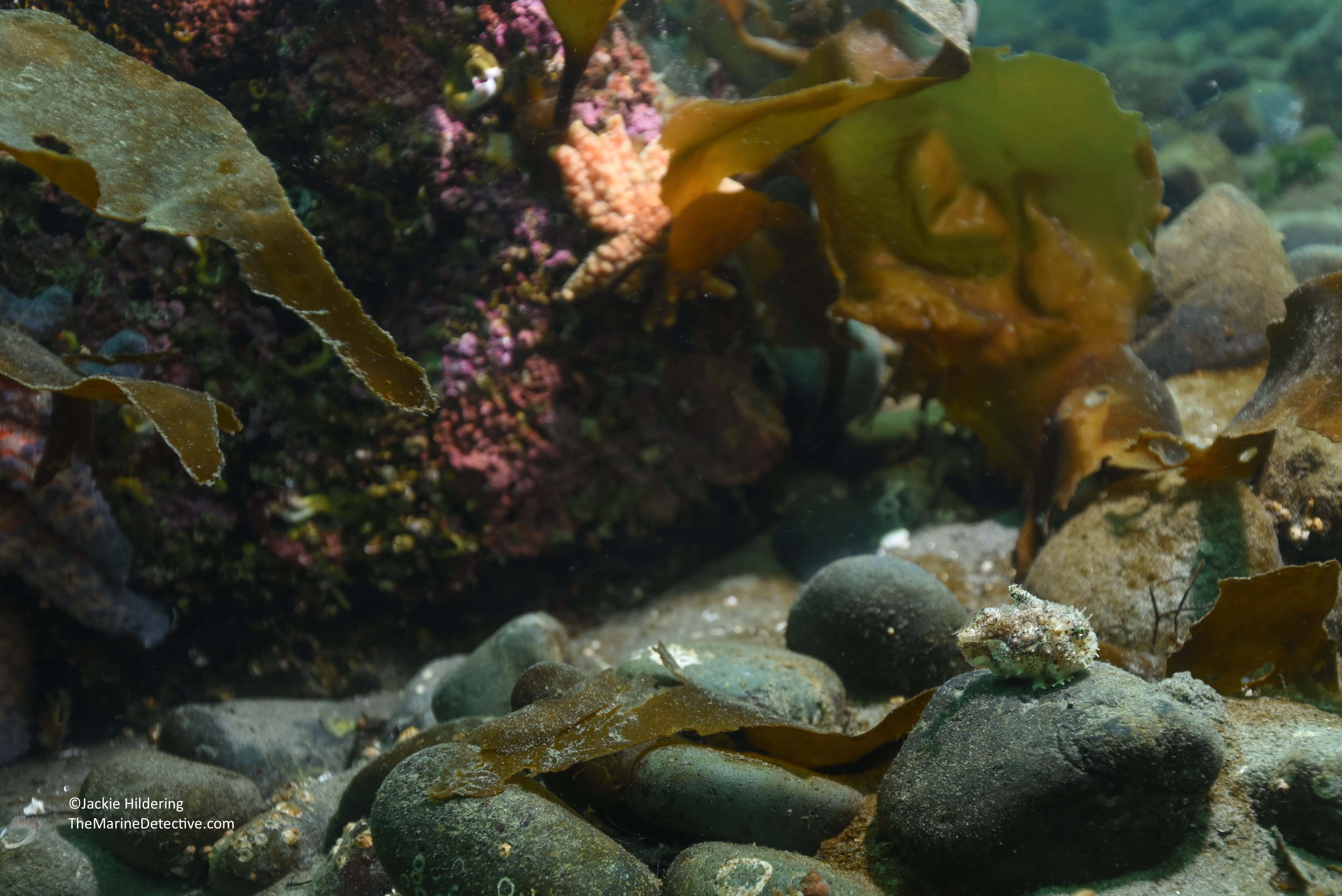
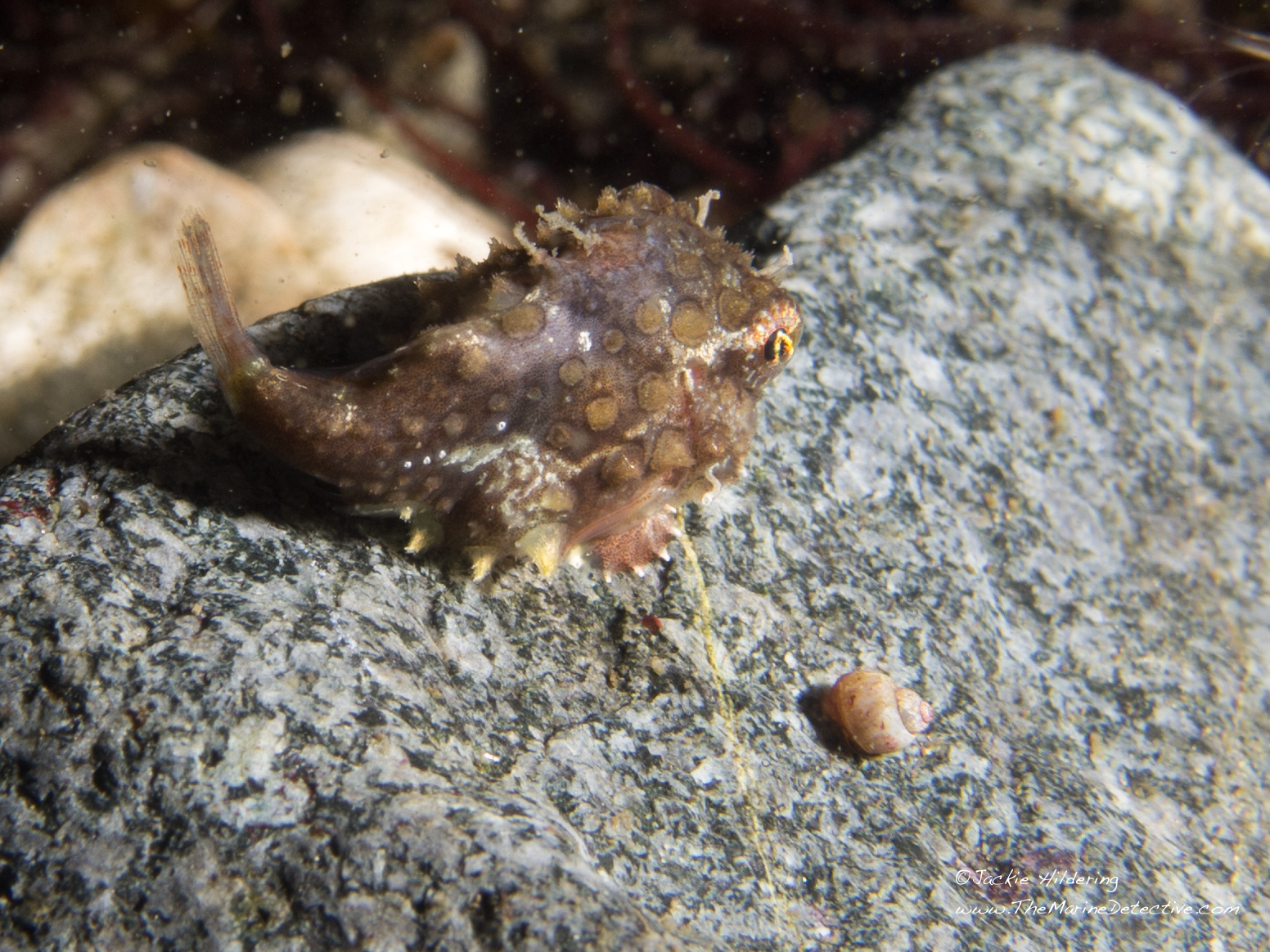
See him?
The Pacific Spiny Lumpsucker?
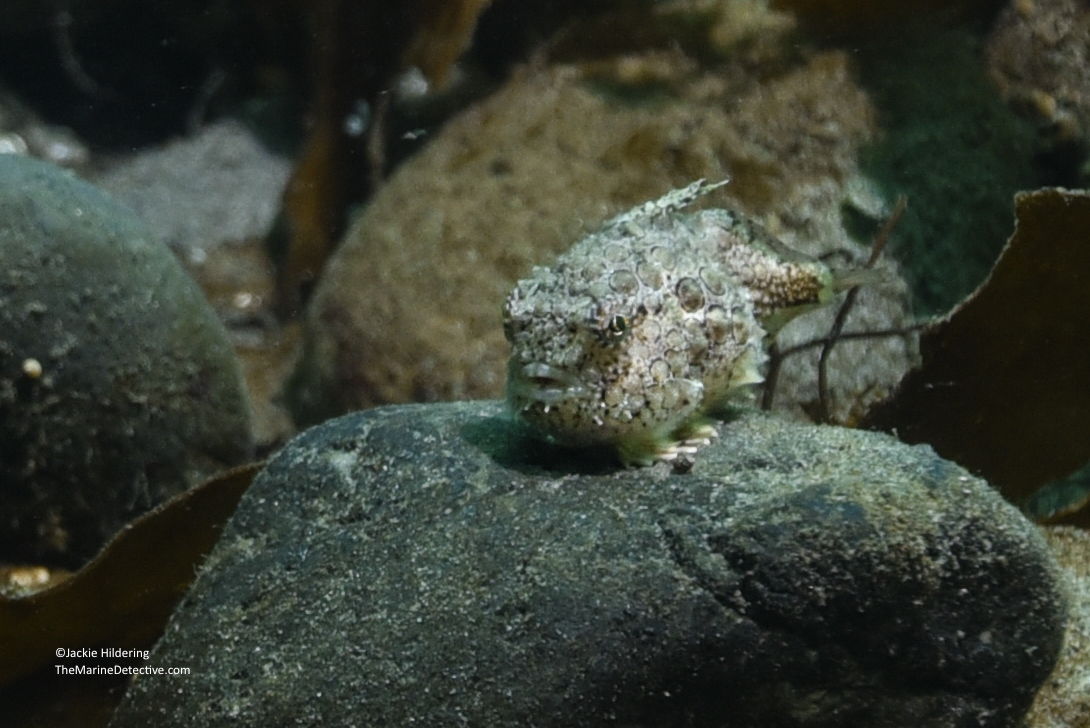
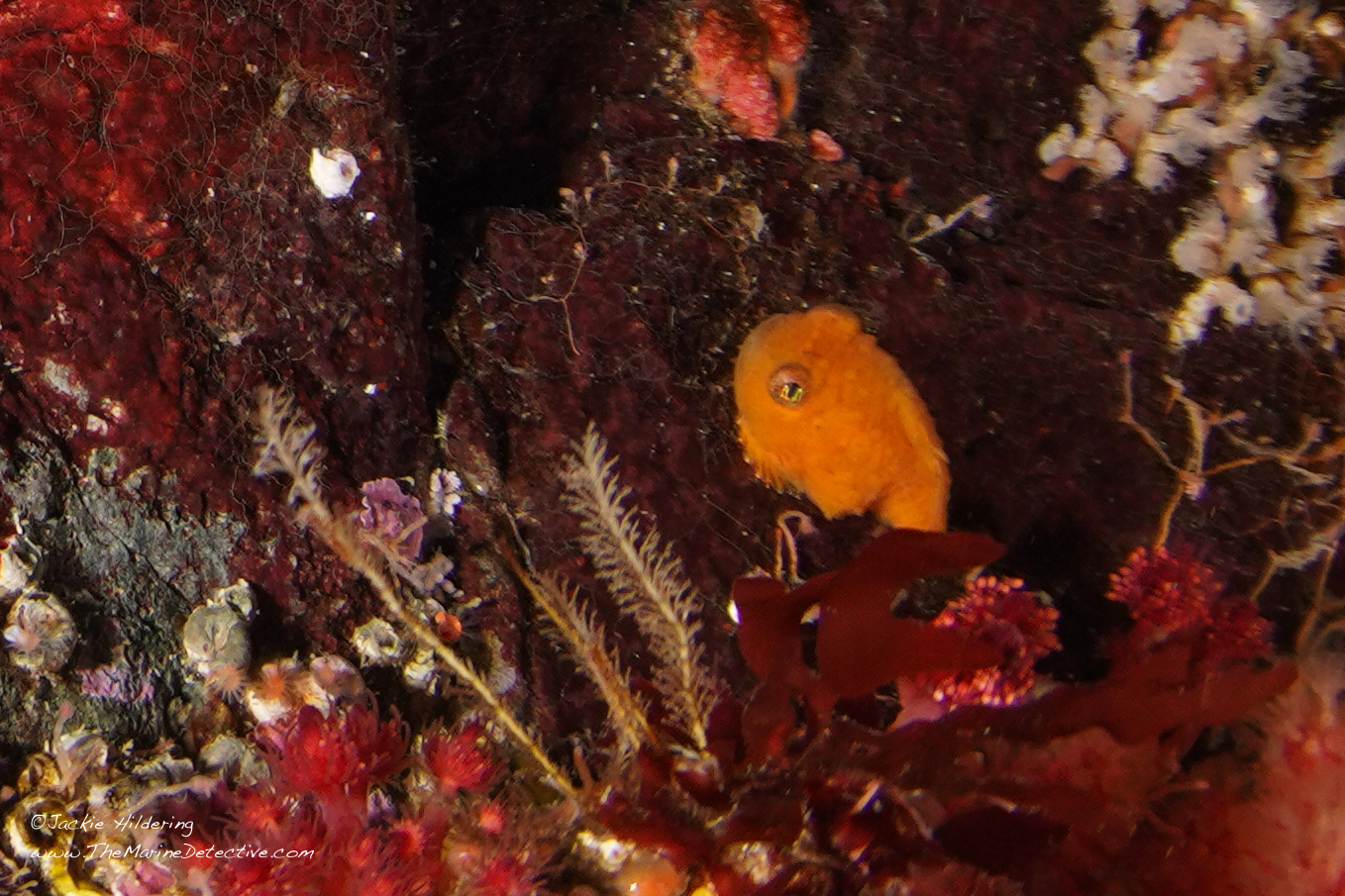
Male Pacific Spiny Lumpsucker ©Jackie Hildering.


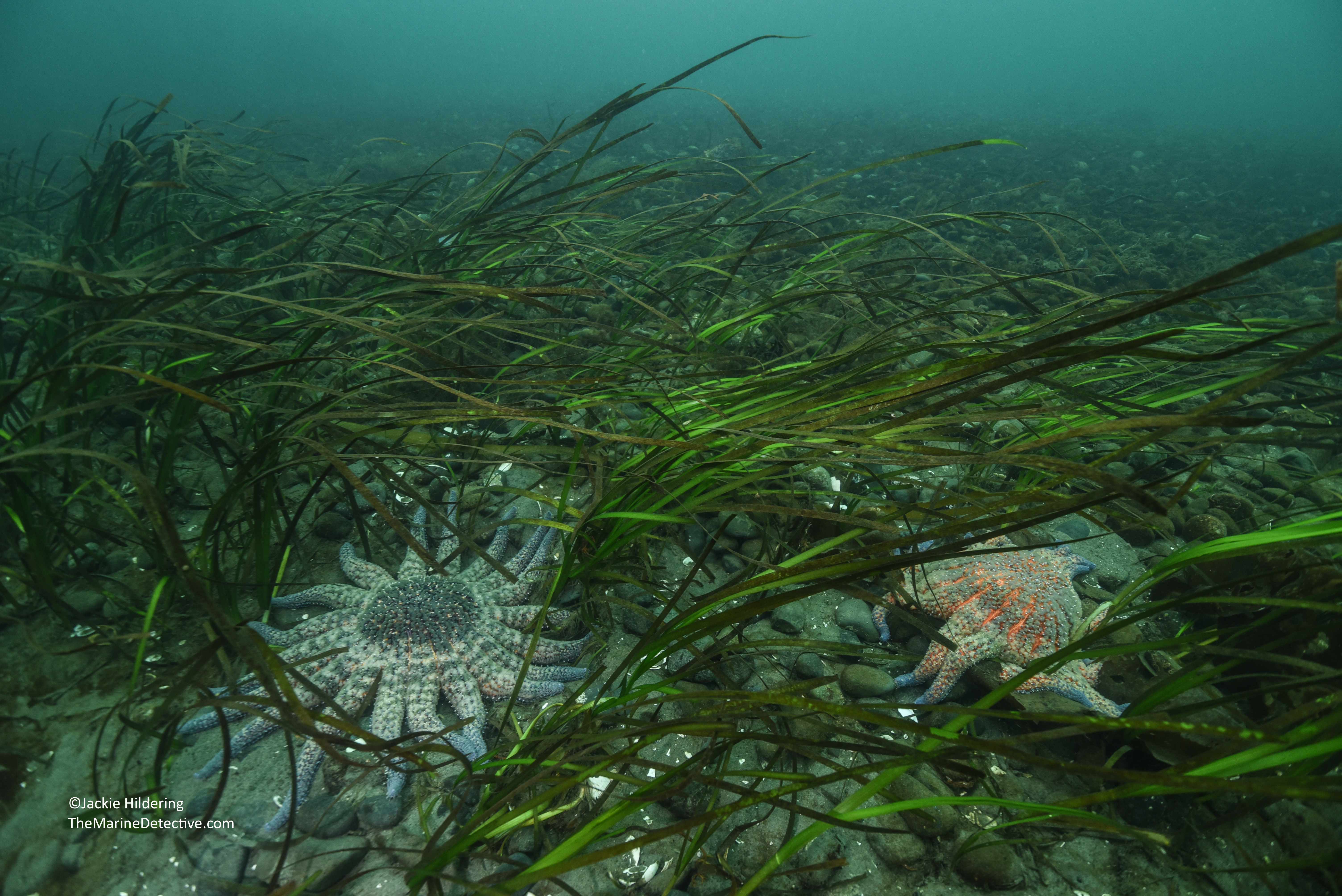
See them?
The Sunflower Stars AND the Pacific Spiny Lumpsucker?
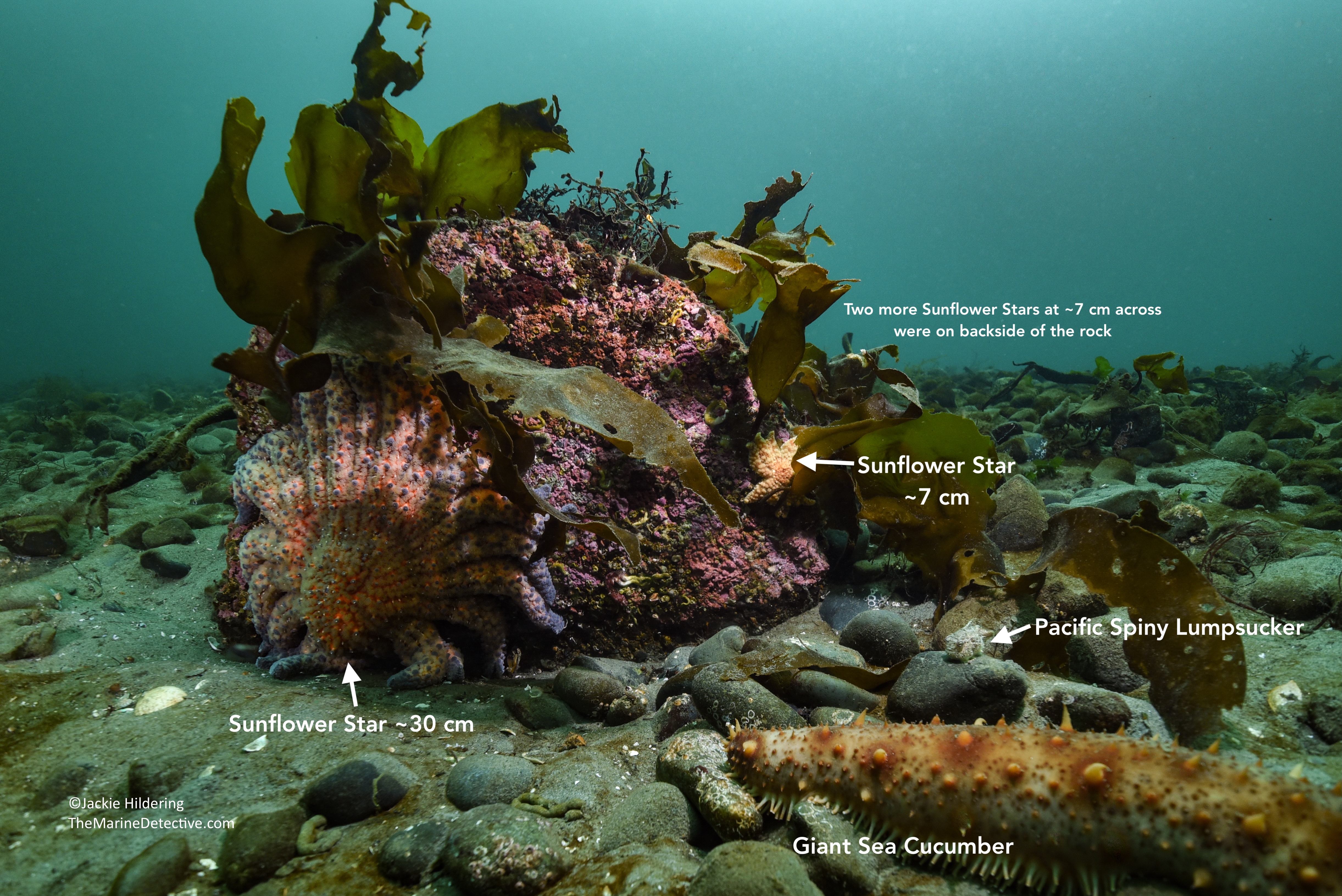
Above photos: the male Pacific Spiny Lumpsucker with Sunflower Stars in the background ©Jackie Hildering.

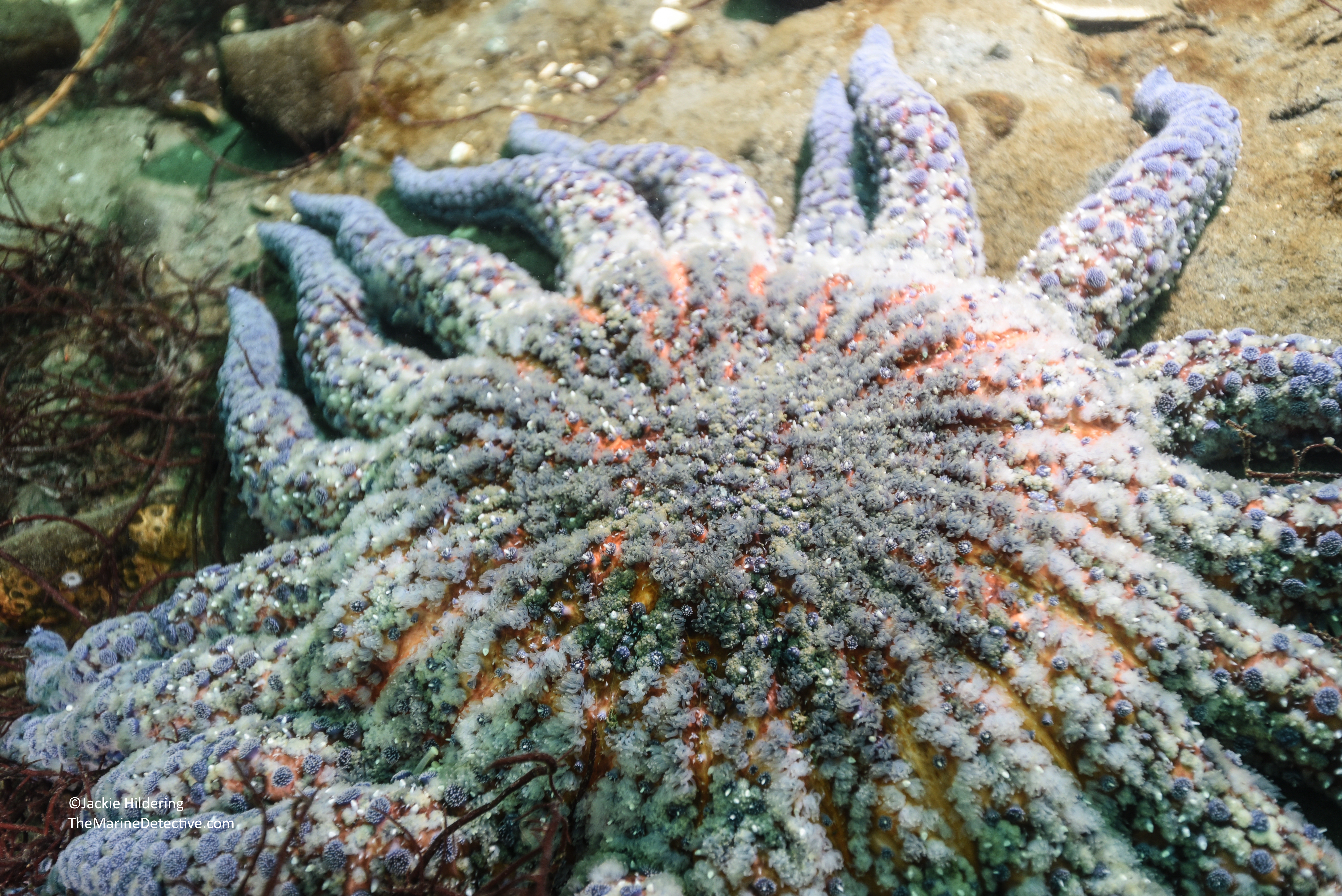
It brought a lump to my throat to see both these species at the same time. The Pacific Spiny Lumpsucker because this species is so cryptic and extraordinarily adapted (please read more about them in my blog “Pacific Spiny Lumpsucker – the fish, the disc, the marvel”). The Sunflower Stars because they are in such trouble due to Sea Star Wasting Disease. Sunflower Stars (Pycnopodia helianthoides) are the biggest sea star species in the world at up to 1 metre across.

But, somehow the conditions are such at this location that some adults appear to be surviving. I regularly document “waves” of juveniles but have seen so very few large ones since the onset of Sea Star Wasting Disease (SSWD) in 2013. I report all Sunflower Star sightings to researchers.

We would document thirteen Sunflower Stars during this dive – four at around seven cm across and nine at over 20 cm across.

And with that lump in my throat, I thought of sharing the photos of the Sunflower Stars with you and what the reaction might be. When I share photos of Sunflower Stars, some reactions suggest that I am diluting concern about them rather than educating about their plight and how this is believed to be related to a changing climate (which means there are common, and well known solutions that benefit life on earth).

Yes, there is hope. There certainly is. But, as I find myself stating and feeling so often, hope without action is paralysis. I recently came across the following quote which captures this so powerfully:

“People speak of hope as if it is this delicate, ephemeral thing made of whispers and spider’s webs. It’s not. Hope has dirt on her face, blood on her knuckles, the grit of the cobblestones in her hair, and just spat out a tooth as she rises for another go.” Source Matthew @CrowsFault on X

So here’s to the action that is Hope in all her power – for the stars, the lumpsuckers, and for all of us too.

The photos below show more Sunflower Stars documented on this dive, and how shallow some were. Please see the additional text below for details about the plight of Sunflower Stars.
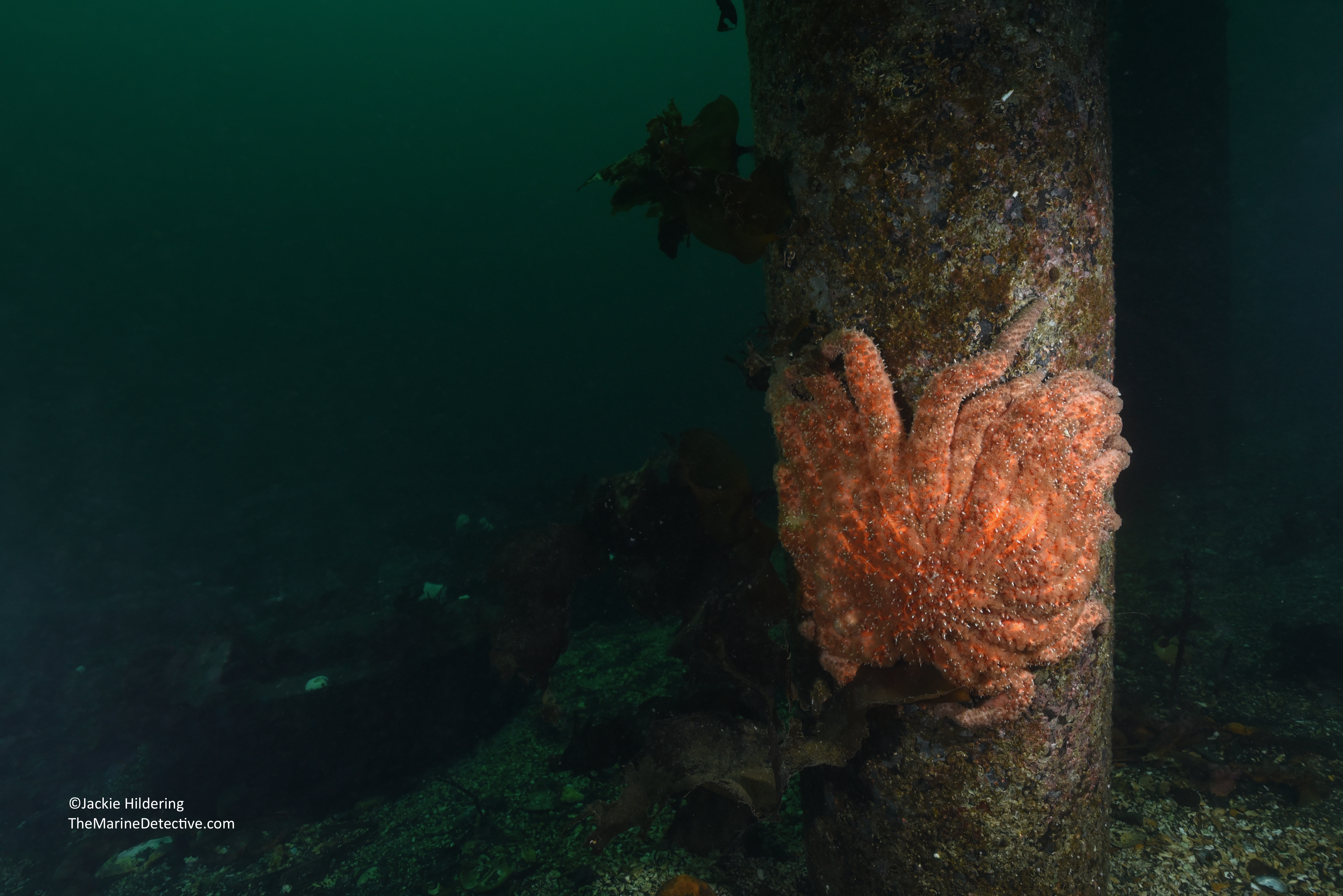
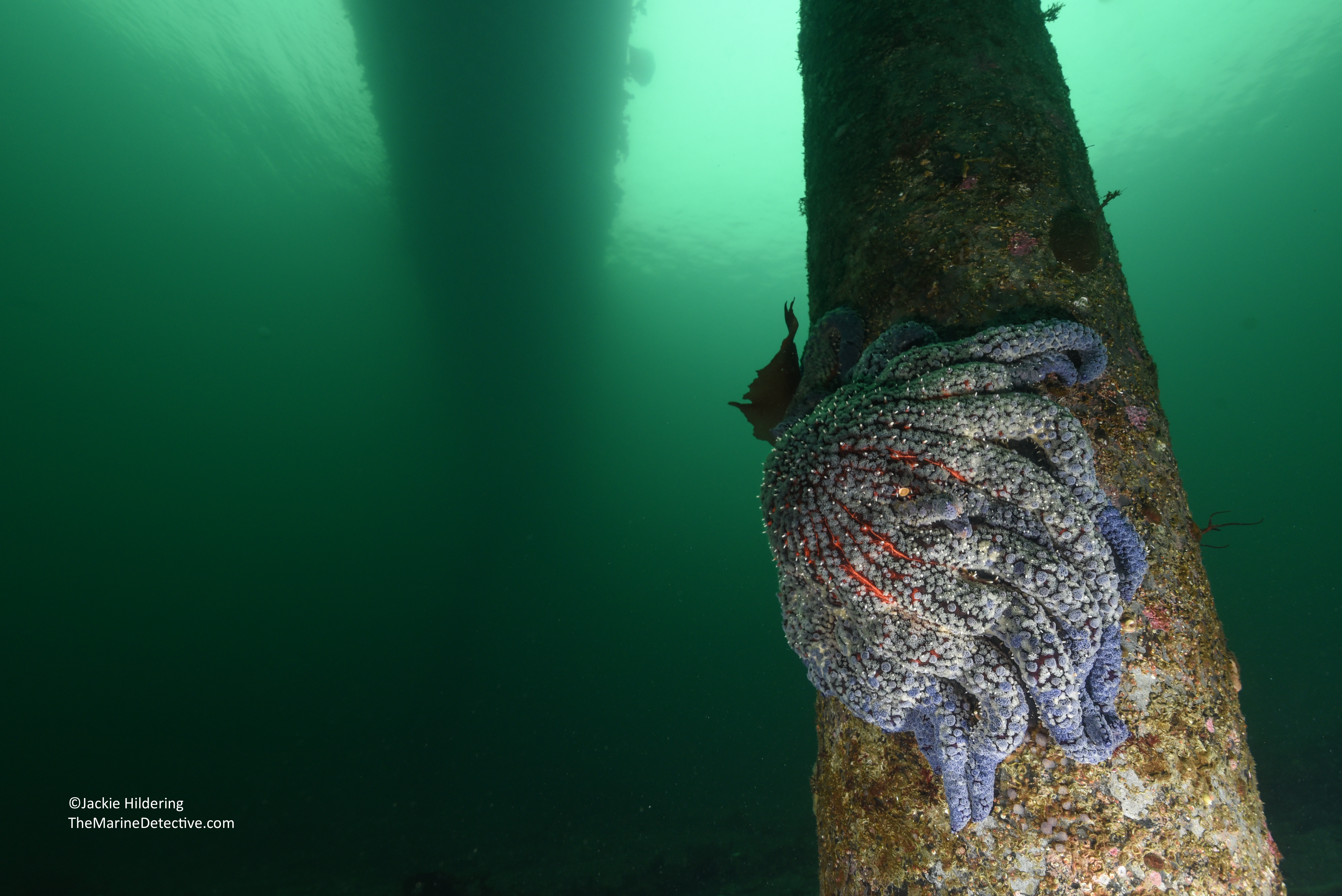
Sunflower Star on dock piling, February 16, 2026, ©Jackie Hildering.
Another Sunflower Star on a dock piling, February 16, 2026 ©Jackie Hildering.
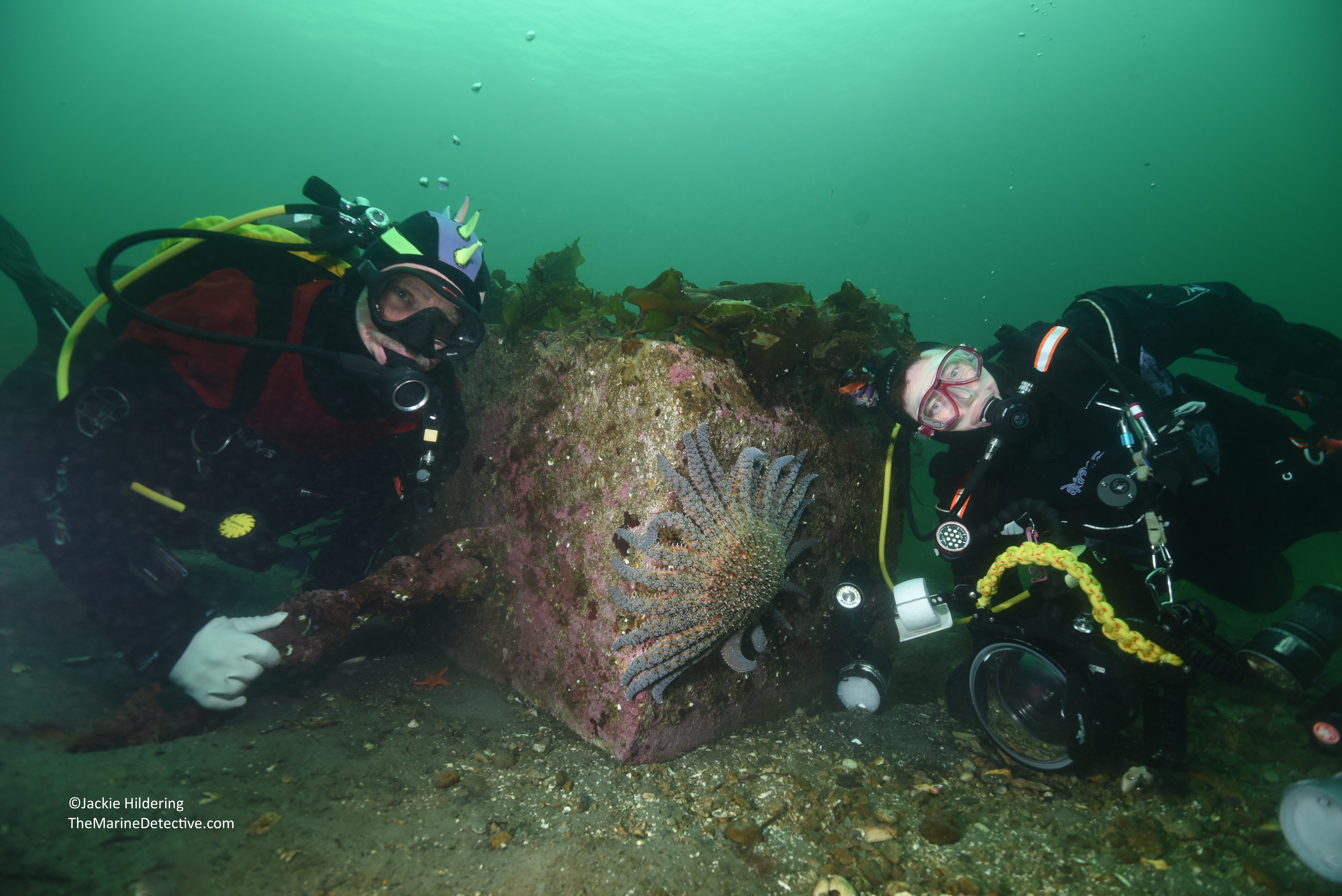
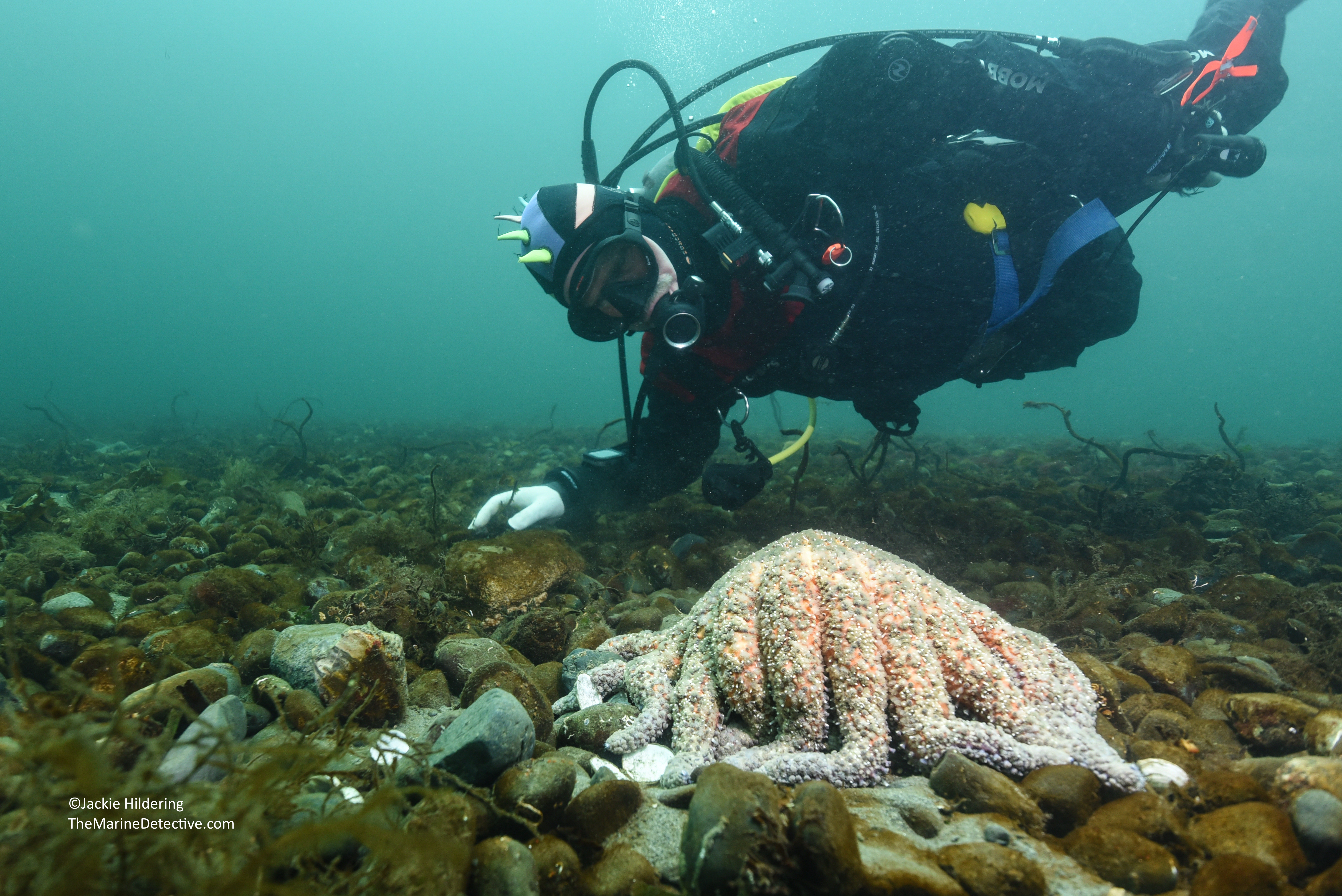
Dive buddies John Congden and Janice Crook posing to help give a sense of how large this Sunflower Star is.
February 16, 2026 ©Jackie Hildering.
Another large Sunflower Star, February 16, 2026, ©Jackie Hildering.
John Congden with another Sunflower Star (at about 6 metres depth), February 16, 2026, ©Jackie Hildering.
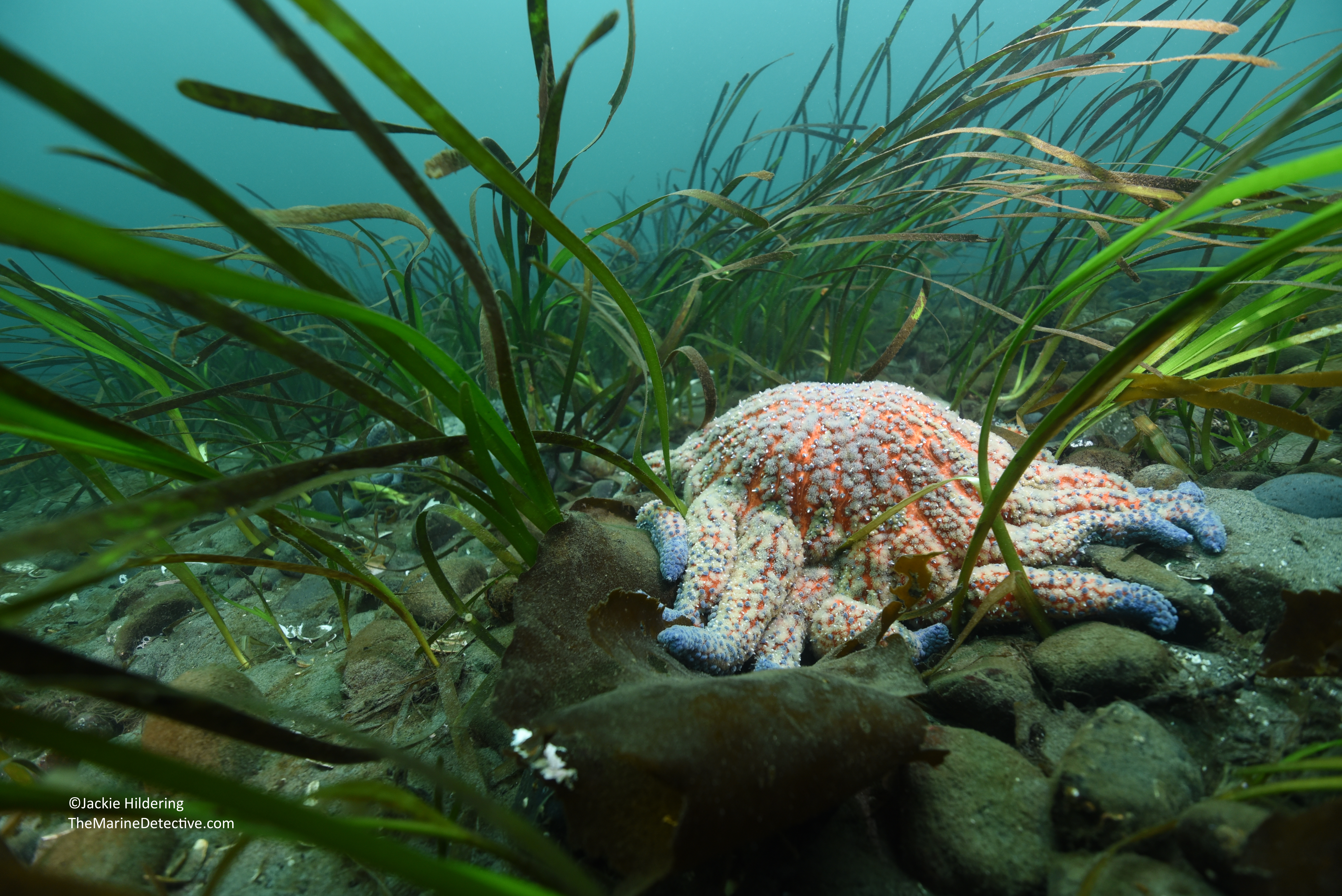
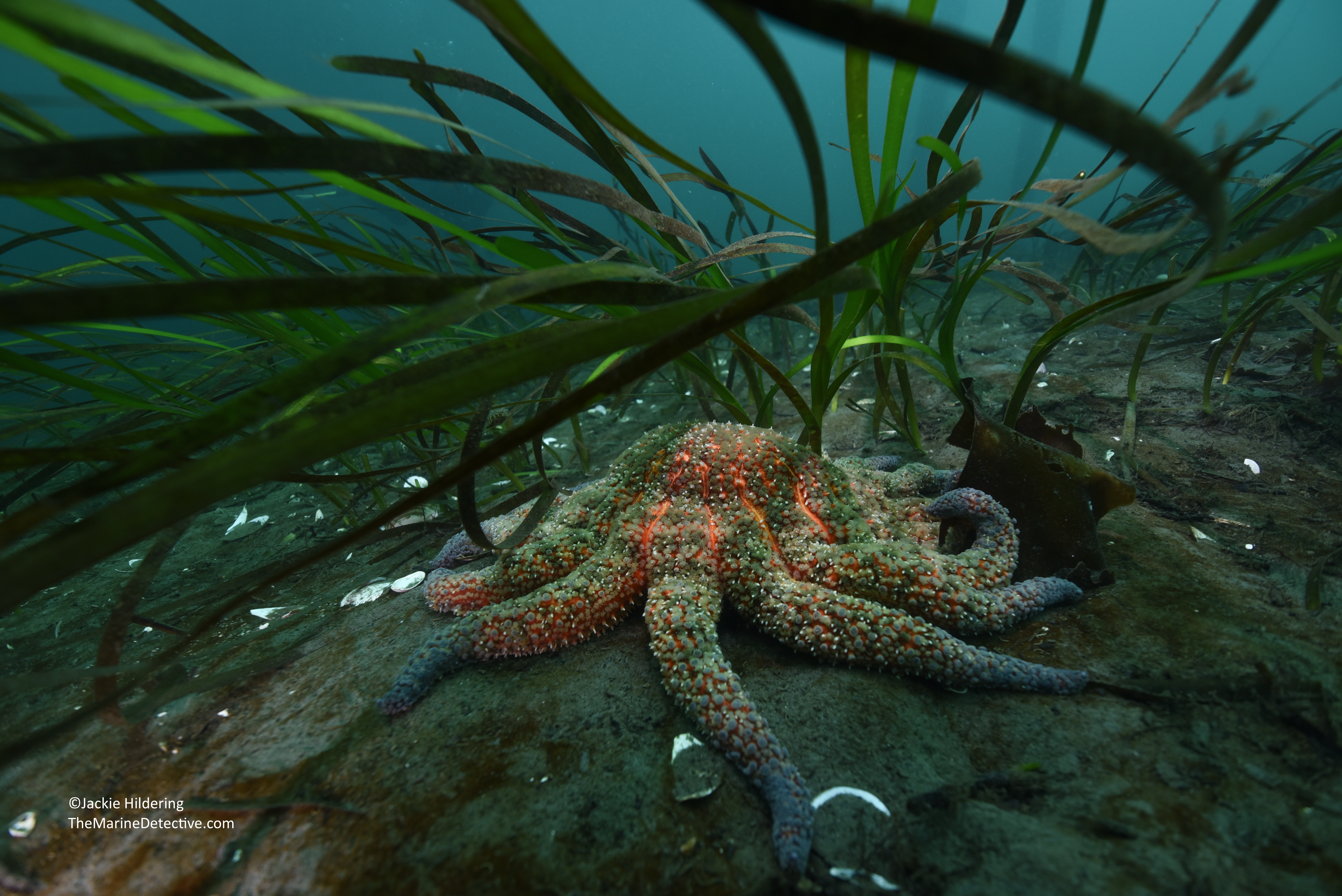
Large Sunflower Star in Eelgrass in the shallows, February 16, 2026, ©Jackie Hildering.
Two additional large Sunflower Stars in Eelgrass, February 16, 2026, ©Jackie Hildering.
And another one! February 16, 2026, ©Jackie Hildering.

Survivors

The text below is from my December 31, 2025 blog “Survivors” providing detail about the plight of Sunflower Stars and why, tragically, it is has become exceptional to see them (especially large individuals). The Sunflower Stars documented in the photos are from the same location as those in the above photos. Yes, some of them may be the same individuals. 💙
This Sunflower Star is ~1 metre across, December 30, 2025. Dive buddy is Janice Crook.
Believed to be the same Sunflower Star in the exact same spot on January 3rd, 2026.
Another two large Sunflower Stars on the same dive on December 30, 2025. There was a third on the other side of the cement block.

Why Does It Matter?

Sunflower Stars are the world’s largest sea star species at up to 1 metre across (Pycnopodia helianthoides). Before 2013, were you to look down from a dock in BC and Washington, you would likely see them . . . icons of our coast, common giants, and often what children would draw in seascapes.

That is no more.

What happened to 20 sea star species in the Northeast Pacific Ocean has been referenced as “the largest epidemic ever recorded in a wild marine species.” Sunflower Stars were the most impacted and there are far-reaching impacts due to their ecological role.

Still many people do not know about their plight despite over 12 years of disease (and a horrific progression of symptoms). You can bet that if a whole lot of Sea Otters (which have similar ecological roles) died there would have been almighty public outcry. But this happened below the surface, in the dark, to species without eyes and fur.

What Happened?

Sea Star Wasting Disease (SSWD) began in 2013 and yes, recently Canadian researchers concluded what the pathogen / causative agent is. It’s the bacterium Vibrio pectenicida. But of course this does not mean that Wasting Disease is “solved”.

Why would this bacterium be able to have the impact it has? What changed?

From the research by Prentice et al. (2025)Vibrio spp. have been coined ‘the microbial barometer of climate change’, because of the increasing prevalence of pathogenic species associated with warming water temperatures. Given that existing evidence indicates a relationship between increasing seawater temperature and SSWD incidence . . .

Where Are Things at Now?

In May 2025, the Committee on the Status of Endangered Wildlife in Canada (COSEWIC) recommended to the Government of Canada that Sunflower Stars be protected as an endangered species under Canada’s Species at Risk Act. It can be years before there is a decision.

This is not only important in Canada but the survivors in BC might be a reservoir for Washington State too where things appear to be even worse for the species.
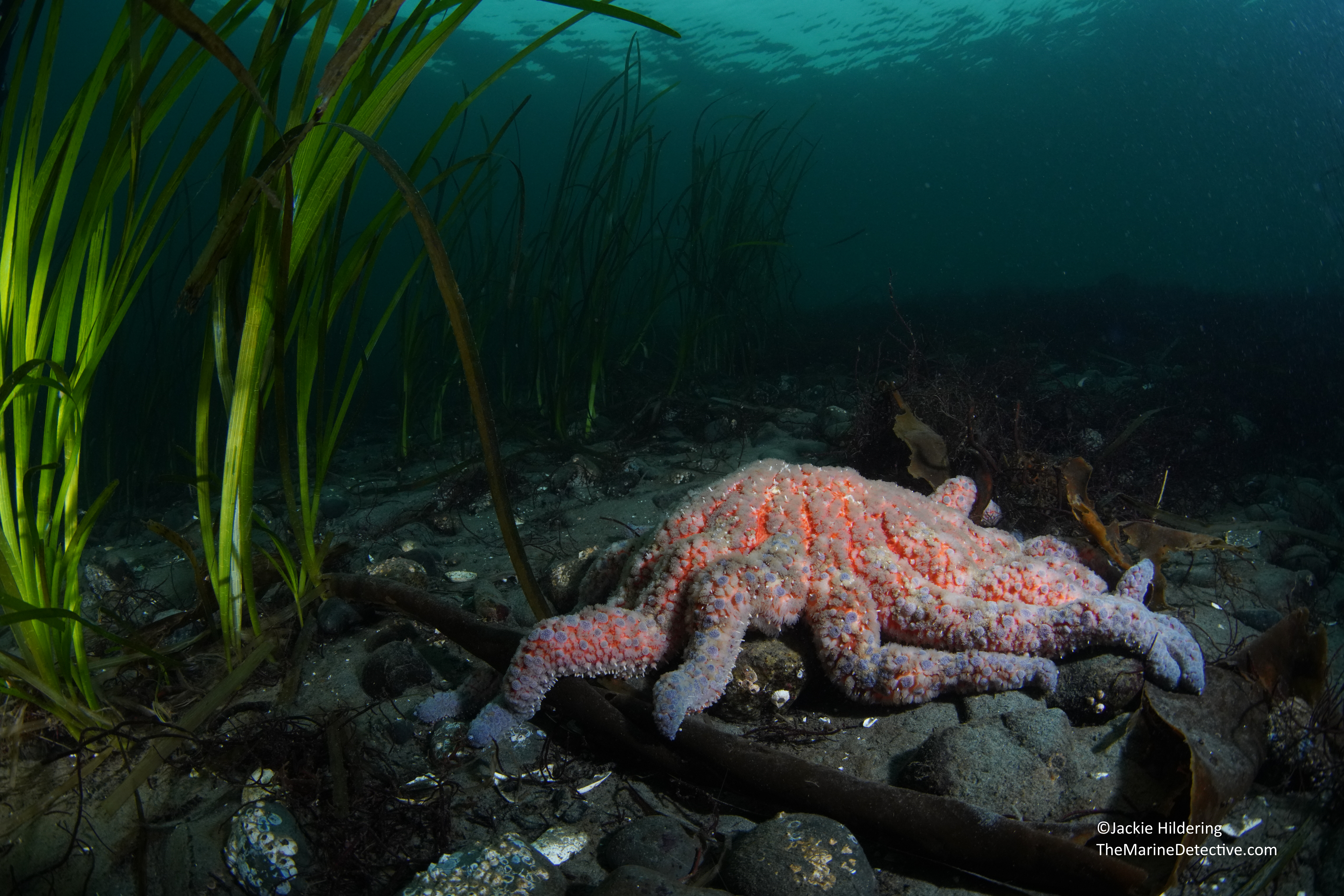
Another large Sunflower Star on December 30, 2025. You can see how shallow some of them were, indicated here by the presence of the Eelgrass and being able to see the surface of the water.

What To Do?

Celebrate survivors – yes. Know that the plight of Sunflower Stars is not an additional problem. SSWD is a symptom of the same changes that impact our own species which means, there are common solutions regarding energy use, how we vote, and consumerism generally.

If you have read to this point in the blog, you are particularly important. You clearly care about life below the surface, in the dark. Help others know the importance of this coast. Help work against “ocean blindness” where the cold, dark waters full of plankton are devalued because it is more difficult to see the life living there. (Warm, clear waters are often perceived to be “better” because you can see far more easily see below the surface. But, if you can see through the water, there is far, far less plankton – the fuel of the marine food web.)

Children should know Sunflower Stars and their place on this glorious coast.


Since the onset of SSWD in 2013, I have tracked research and developments at this link. Includes where to report sightings.


All photos near northeastern Vancouver Island in the traditional territories of the Kwakwakw’akw. ©Jackie Hildering @The Marine Detective. Dive buddies on the dives referenced here: Janice Crook, John Congden and Ruxton Pitt.
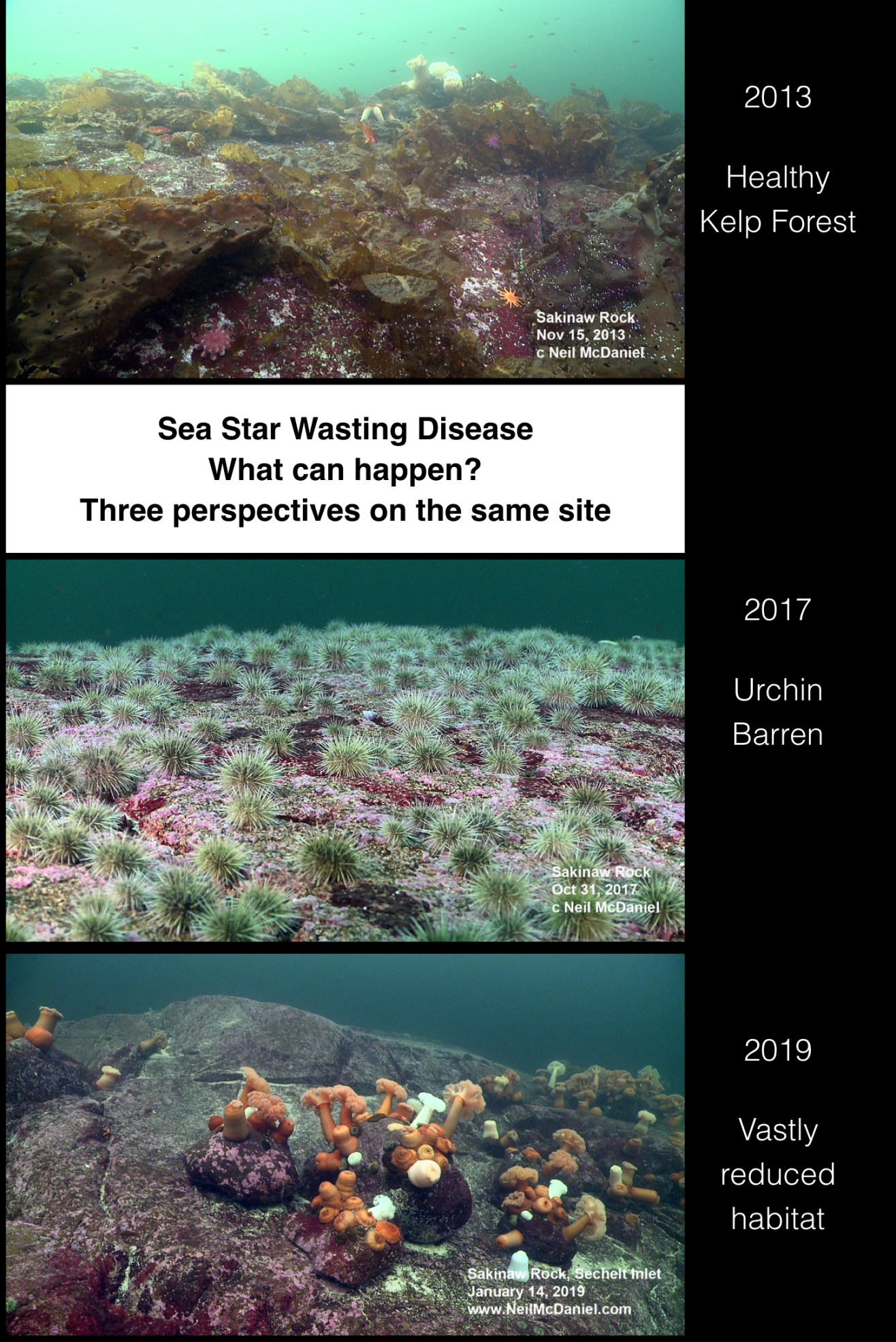
Sunflower Stars eat Green Urchins which graze on kelp. With fewer Sunflower Stars, there is more grazing on kelp by Green Urchins. Research suggests that Sunflower Stars can be 15 metres away and still help with deterring urchins (red urchins in the research by Mancuso et al., 2025).

Pacific Spiny Lumpsucker – the fish, the disc, the marvel

Last updated: January 11, 2026.
I have now righted a great wrong. Because how can it be I did not have a blog featuring the Pacific Spiny Lumpsucker? This is one of the most cryptic and astoundingly adapted fish in the north Pacific Ocean.

Yesterday, I chanced upon the individual in the photo below and he is what finally catalyzed this blog. Just look at him! He is only about 2 cm long. I noticed him because he was swimming / hovering around like a minuscule zeppelin. Then he alighted on a rock, securing with the pelvic disc this species relies upon.

Pacific Spiny Lumpsucker who lives in Kwakwaka’wakw Territory near Telegraph Cove.
Photographed November 6, 2021

To be a little, round fish like this, nature had to do something to make sure you don’t roll over. You need to be able to secure, not only to rock, but to seaweeds and Eelgrass. The “solution” is that Pacific Spiny Lumpsuckers are among the fish species in which the pelvic fins have evolved into a sucker on their bellies.

This species has very small pectoral fins (even relative to body size) and does not have a swim bladder to help with buoyancy. All the more need to have the disc to be able to hold on between short hovering swims.

My video of a Pacific Spiny Lumpsucker from 2015.

Pacific Spiny Lumpsuckers don’t have scales but rather have lumpy, bony plates known as “tubercles”. Maybe these are what the “lump” in their common name refers to.

There have been many creative attempts to describe the overall appearance of Pacific Spiny Lumpsuckers from simply “cute” to “pingpong ball with fins”, to “swimming strawberries”, “underwater bumble bees”, “gum balls with eyes”, and . . . “a fish that has quietly come to terms with looking idiotic”. Thanks Dr. Milton Love for that last descriptor. You can imagine the many jokes and allusions made about their name which “sounds like a Shakespearean insult” (comment made by Angela Flute on YouTube).

The species name Eumicrotremus orbis references their rotundity and size. Maximum known length is 12.7 cm but they are more often much smaller, around 2.5 cm.

I believe the Pacific Spiny Lumpsucker we saw yesterday was a male because mature males are reported to be dull orange to reddish brown. Mature females are pale green and have more and larger tubercles.

Another male and you can see part of the pelvic disc. ©Jackie Hildering


The one in Paul Wright’s video below is most definitely a male. See the egg-guarding? Male Pacific Spiny Lumpsuckers guard the eggs after fertilizing them, oxygenating them by wafting water over them and protecting them from predators. It’s reported that males die after the eggs hatch and that the females die after egg laying (average of 202 eggs, size of each egg is ~2.2 mm). Outside of when they are breeding, this is a solitary species. Appear to have a life expectancy of around 1 year in aquariums (Casey Cook, pers. com).

It is normal that Pacific Spiny Lumpsucker’s mouths are almost always open and that they appear to be panting (as you see in the video).

Video by W. Paul Wright from 2014with descriptor: “Video taken in Gibsons British Columbia. Male lumpsucker tending to newly laid eggs in discarded Ponds jar.”
Video by Ricky Belanger from 2018.
Video by Victoria High School from 2009 from their aquarium.

2025 compilation by “All Things Marine Life”


Further species information:

Range: Northern Washington to the Bering Sea, along the Aleutian Islands to Siberia and northern Japan. Intertidal to 575 m. Source: Lamb and Edgell, 2010.

Diet: “Small crustaceans such as gammarid andy hyperiid amphipods, along with caprellid amphipods, isopods, and cumaceans” [hooded shrimp species]. Source: Love, 2011.

He’s not smiling. YOU’RE smiling.
©Jackie Hildering

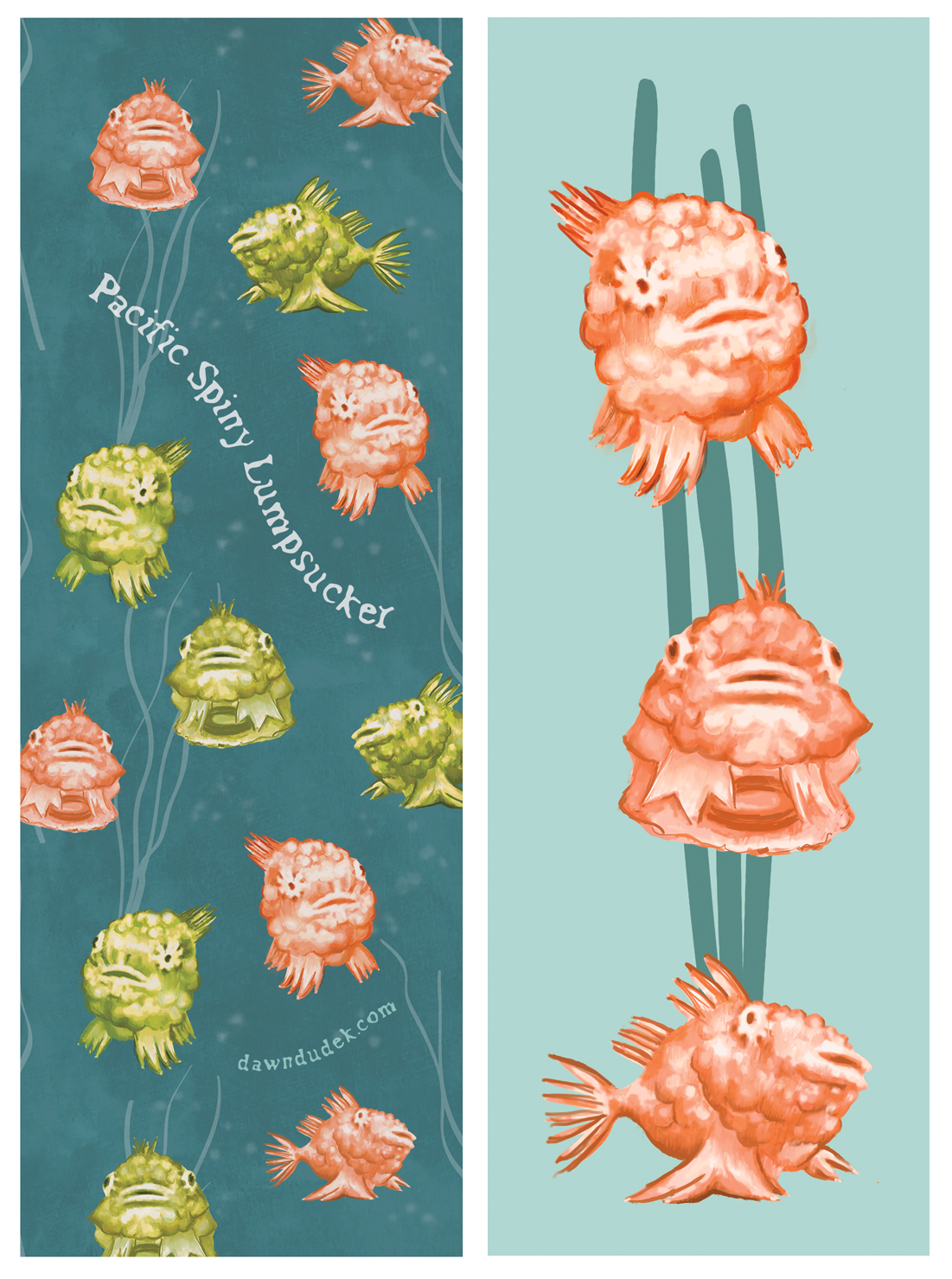
Pacific Spiny Lumpsucker art by dear friend Dawn Dudek. She has bookmarks available through our Marine Education and Research Society Ocean Store at this link.

Sources:

Arita, G. S. (December 01, 1969). Sexual Dimorphism in the Cyclopterid Fish Eumicrotremus orbis. Journal of the Fisheries Research Board of Canada, 26, 12, 3262-3265.

Aquarium of the Pacific – Pacific Spiny Lumpsucker

Cook, Casey, personal communication November 7, 2021

FishBase – Eumicrotremus orbis

Lamb, A., & Edgell, P. (2010). Coastal fishes of the Pacific Northwest. Madeira Park, B.C: Harbour Pub.

Love, M. S. (2011). Certainly more than you want to know about the fishes of the Pacific Coast: A postmodern experience. Santa Barbara, Calif: Really Big Press.

New York Times, Feb. 25, 2022, The Pacific Spiny Lumpsucker Is Armed to the Teeth – The diminutive predator is a terrible swimmer but thrives in the intertidal zone thanks to odd evolutionary adaptation.

University of Washington – College of the Environment Feb. 8, 2022, , This tiny coastal fish wears a toothy coat of armor


Answers to some of my “Find the Fish Friday” challenges involving Pacific Spiny Lumpsuckers.

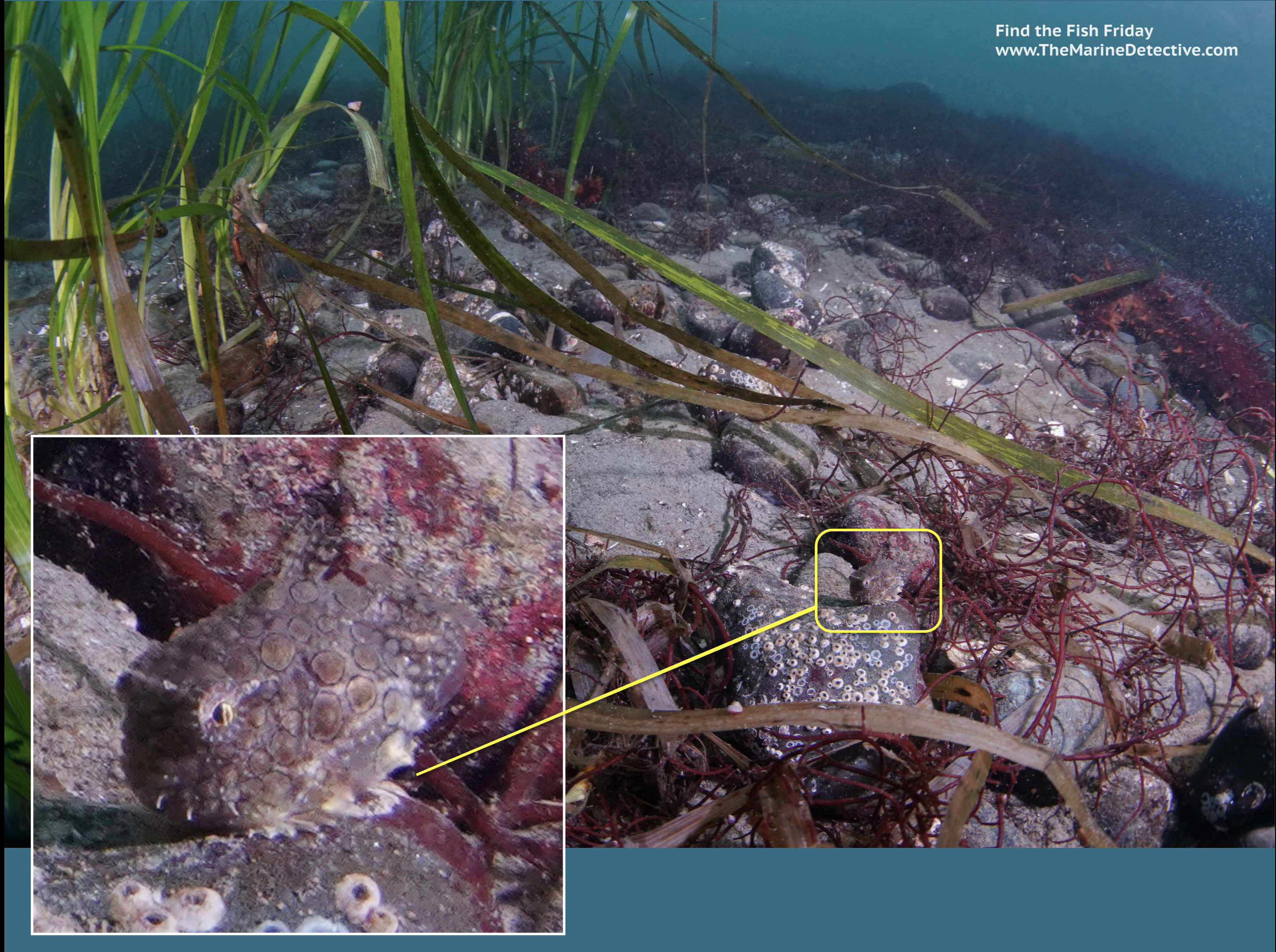
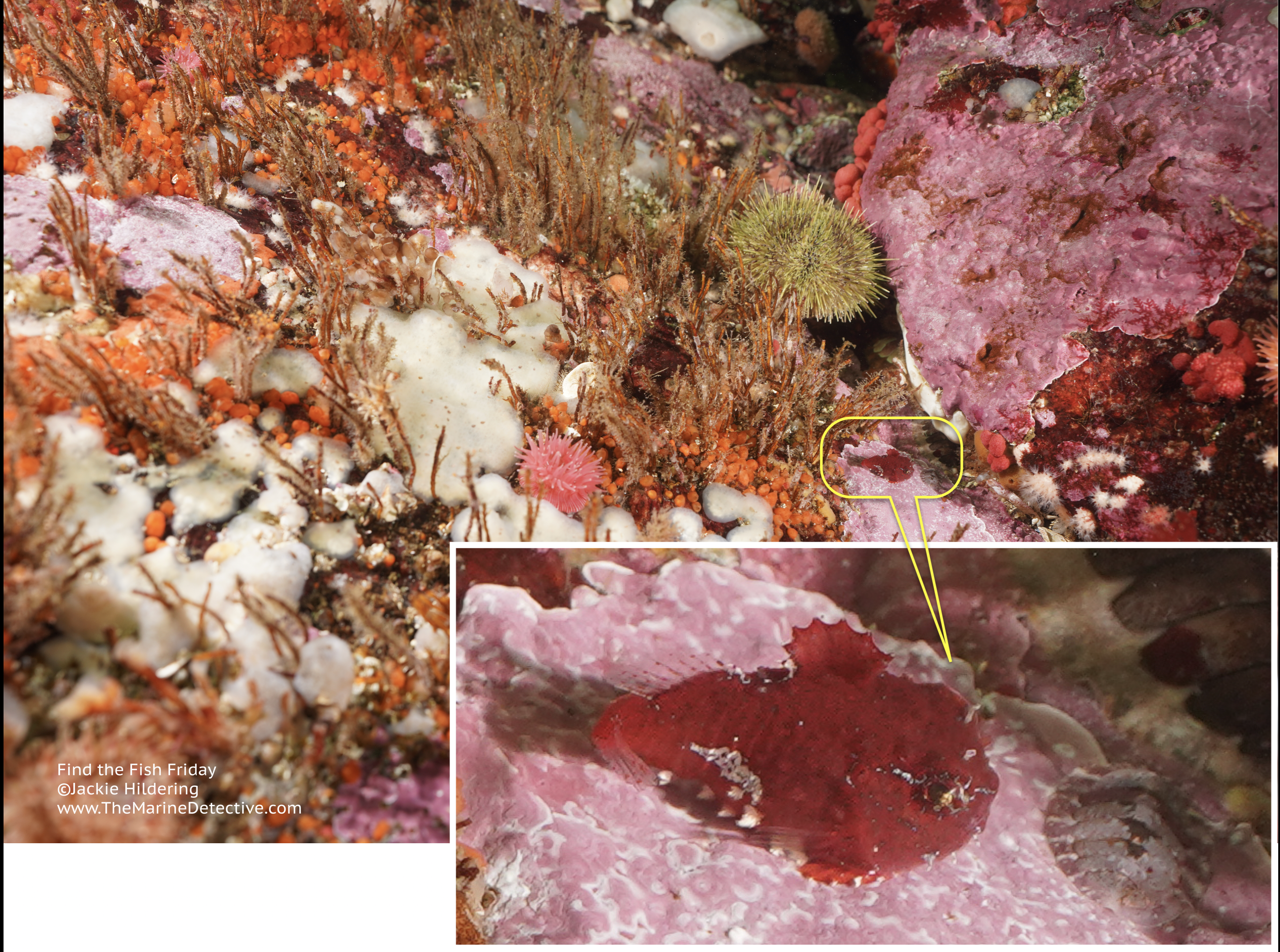
I am including these in the blog so you get as sense of the habitat of Pacific Spiny Lumpsuckers and how well-camouflaged they can be. All photos taken in the traditional Territories of the Kwakwa̱ka̱’wakw (the Kwak̕wala-speaking Peoples).

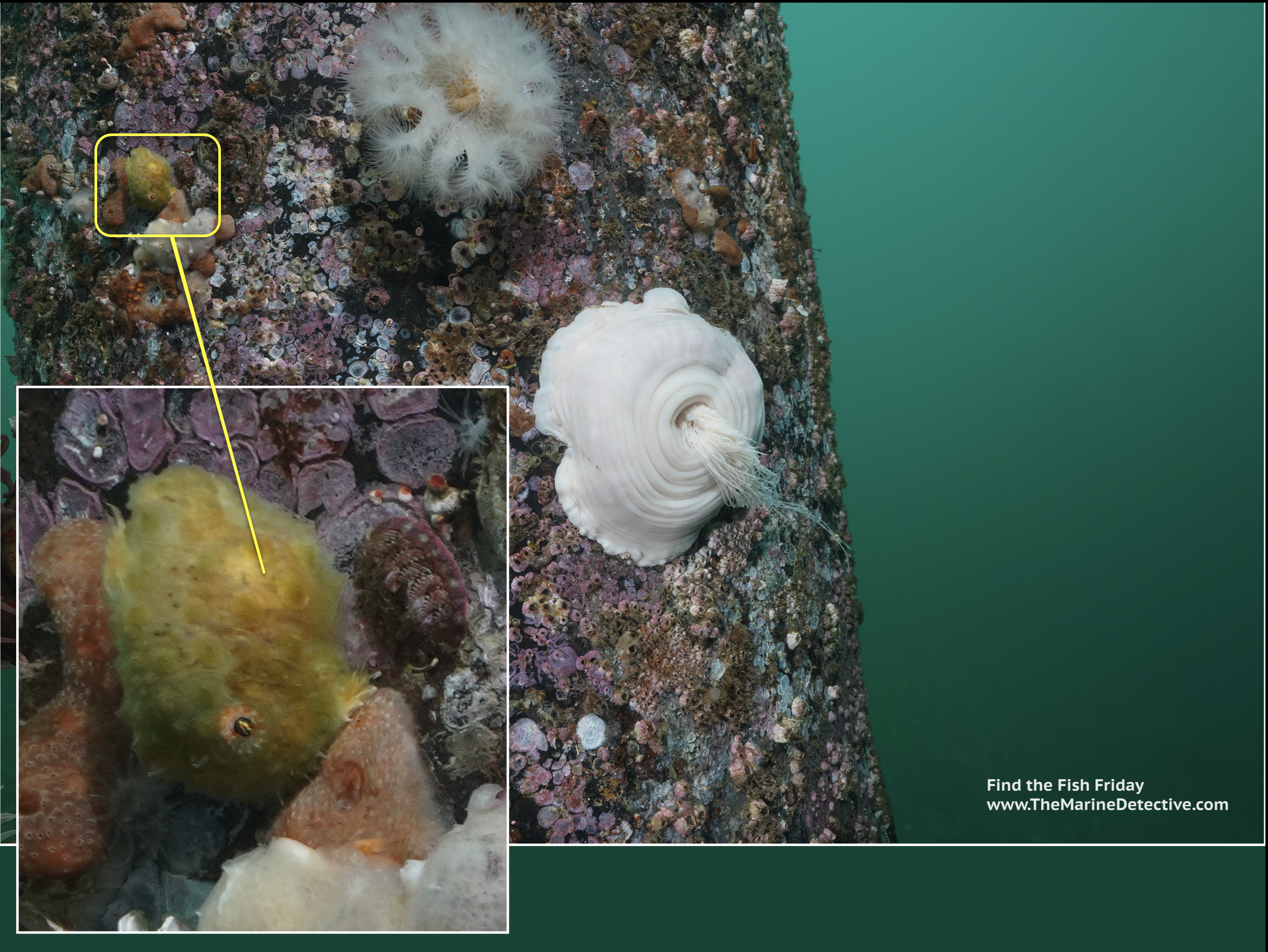
Took this photo because of the Plumose Anemone ejecting acontia. I did not know the Lumpsucker was there until I reviewed the photo on my computer screen. Acontia? These are defensive strands filled with stinging cells (nematocysts) that are ejected from an anemone’s mouth of through their bodies when irritated / threatened / stressed. These threads extend far beyond the anemone and provide longer distance defence than than the stinging cells in an anemone’s tentacles.