
Of Sea Whips and Sea Pens
[Last updated November 15, 2023]
This blog is about Sea Whips and Orange Sea Pens, the predators that stalk them, and how they can defend themselves.
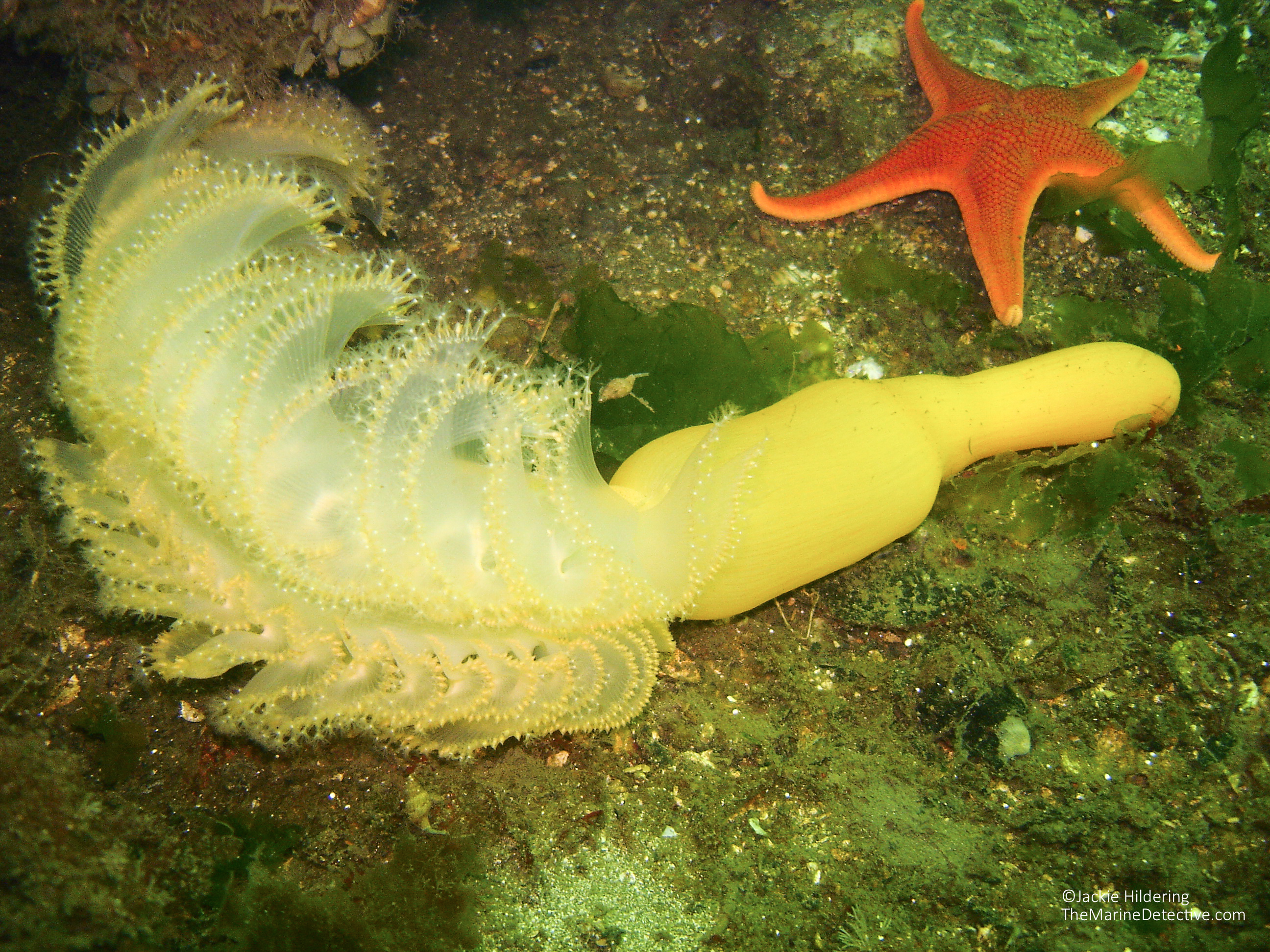
These are the most surreal-looking organisms. Both species are octocorals – colonies of 8-tentacled polyp-like animals. The polyps filter feed on plankton.



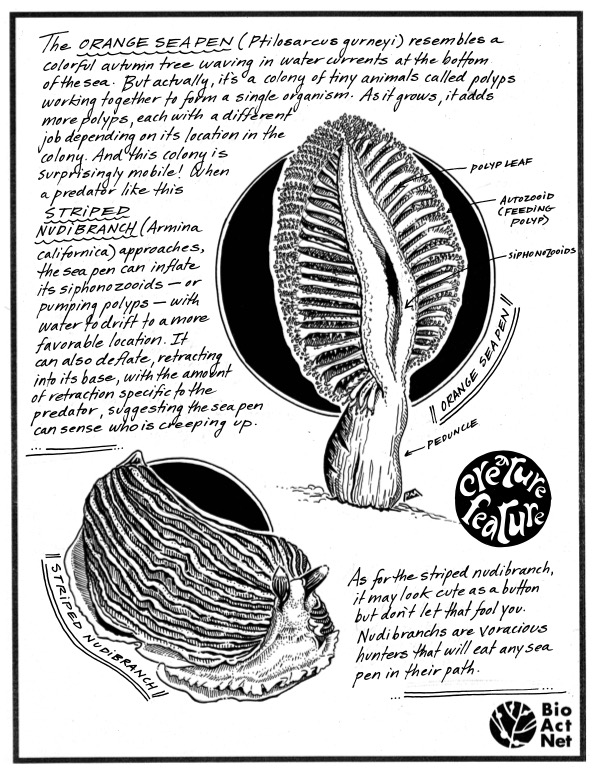
Information on Orange Sea Pens from the Monterey Bay Aquarium “A graceful creature of the seafloor, this sea pen resembles a plump, old-fashioned quill pen. Its colors range from dark orange to yellow to white. Each sea pen is a colony of polyps (small anemonelike individuals) working together for the survival of the whole. The primary polyp loses its tentacles and becomes the stalk of the sea pen, with a bulb at its base—the bulb anchors the sea pen in the muddy or sandy bottom. The various secondary polyps form the sea pen’s “branches” and have specialized functions. Some polyps feed by using nematocysts to catch plankton; some polyps reproduce; and some force water in and out of canals that ventilate the colony.”

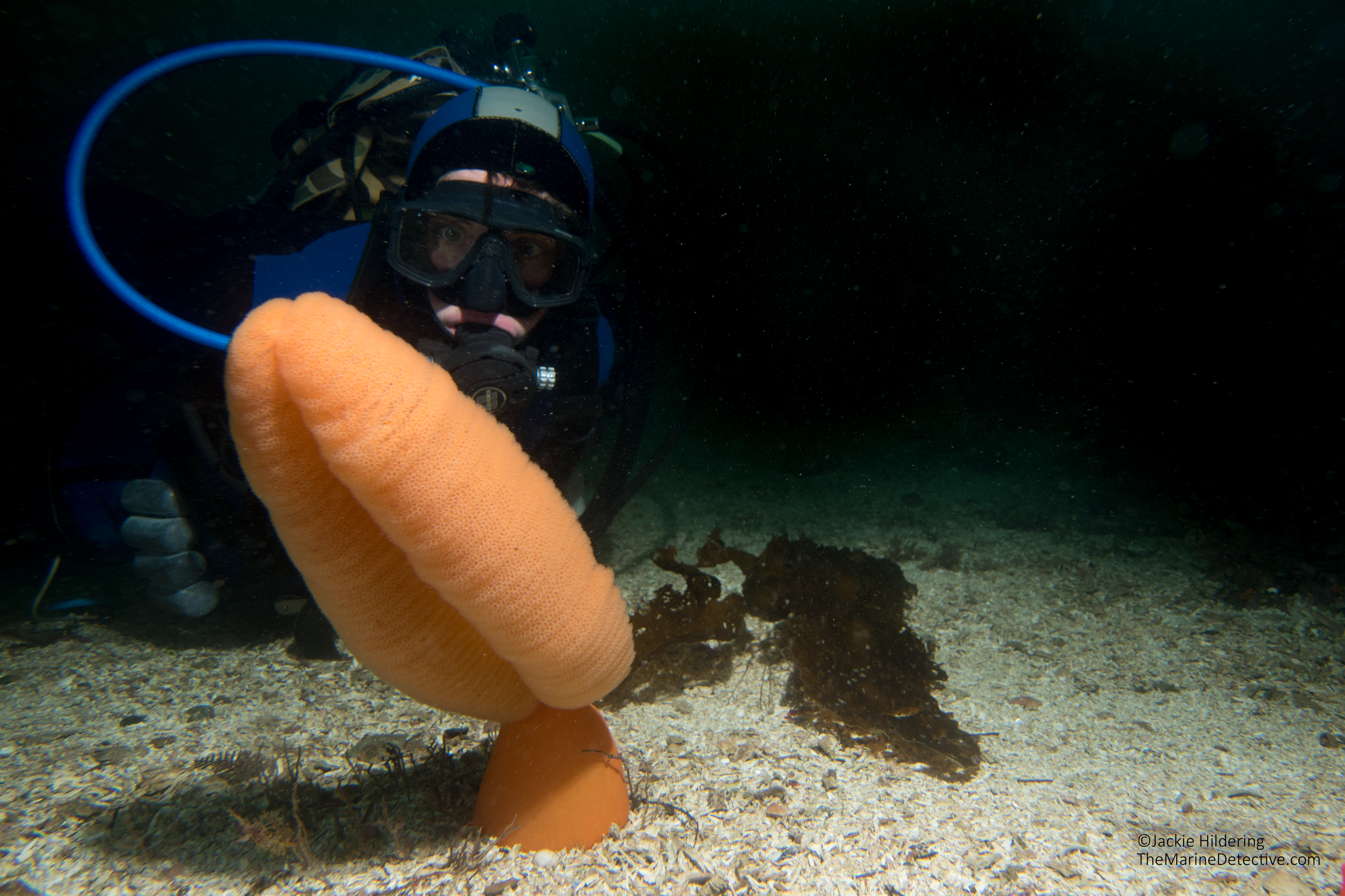

Orange Sea Pen Defences
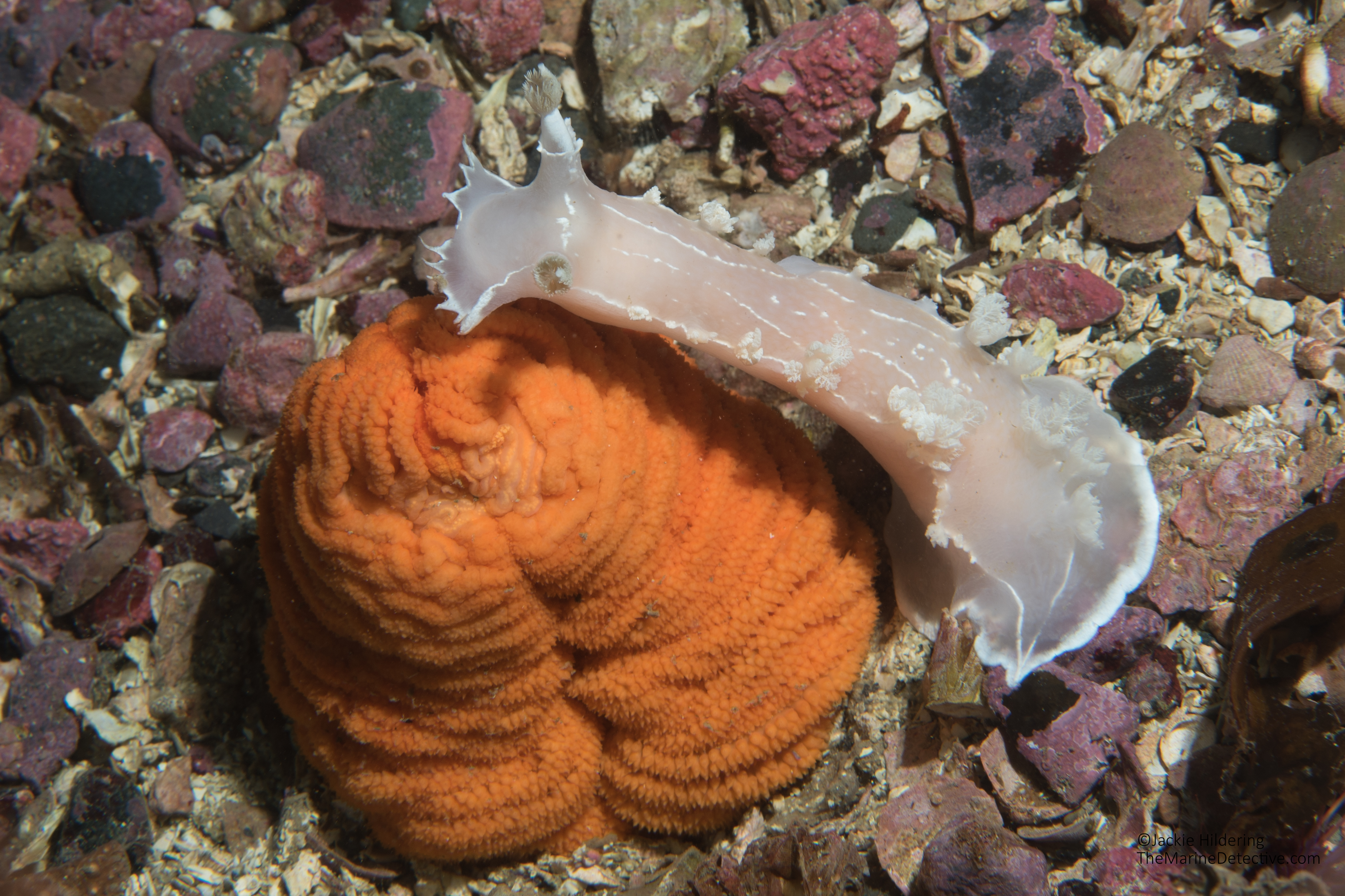
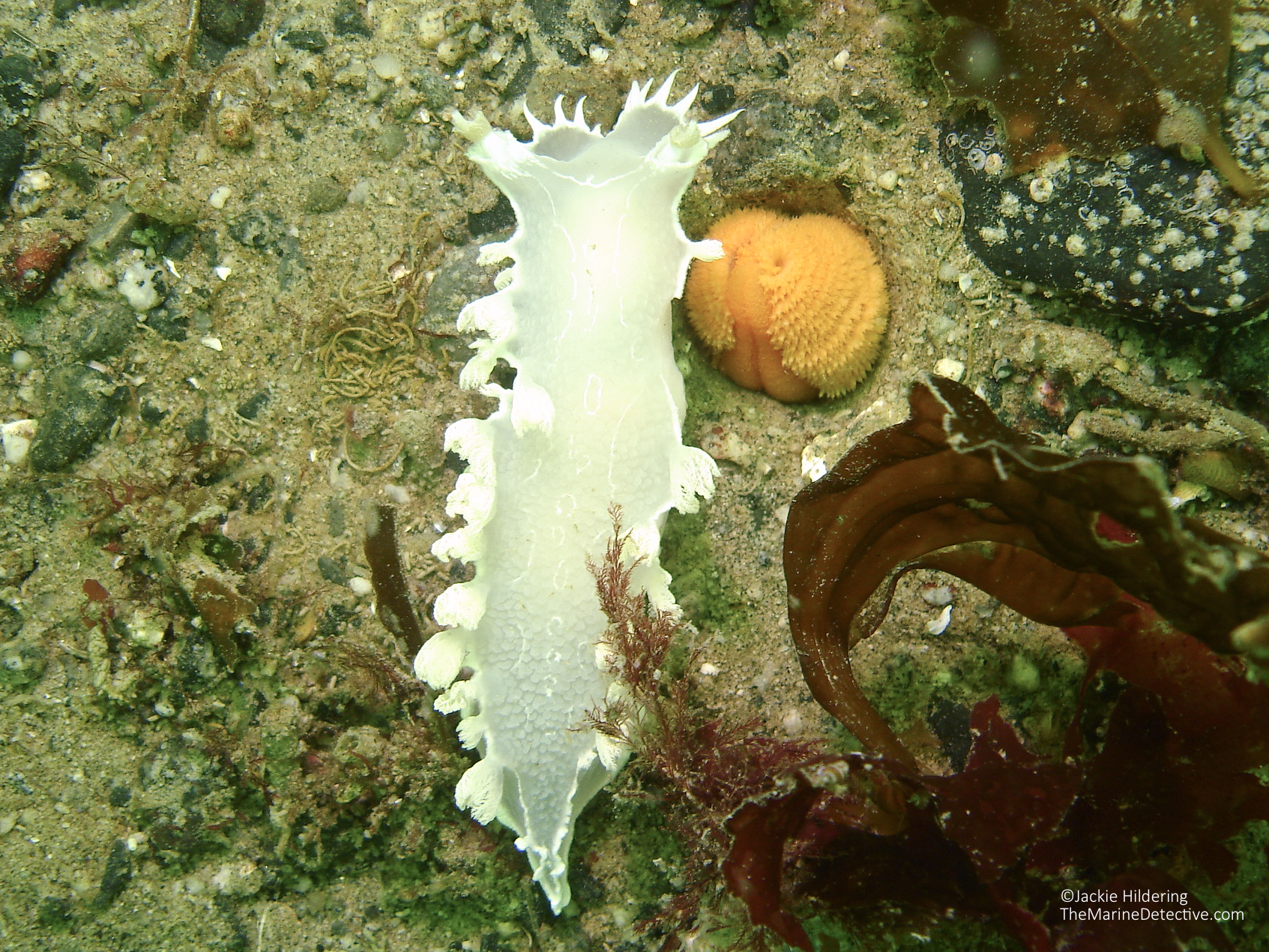
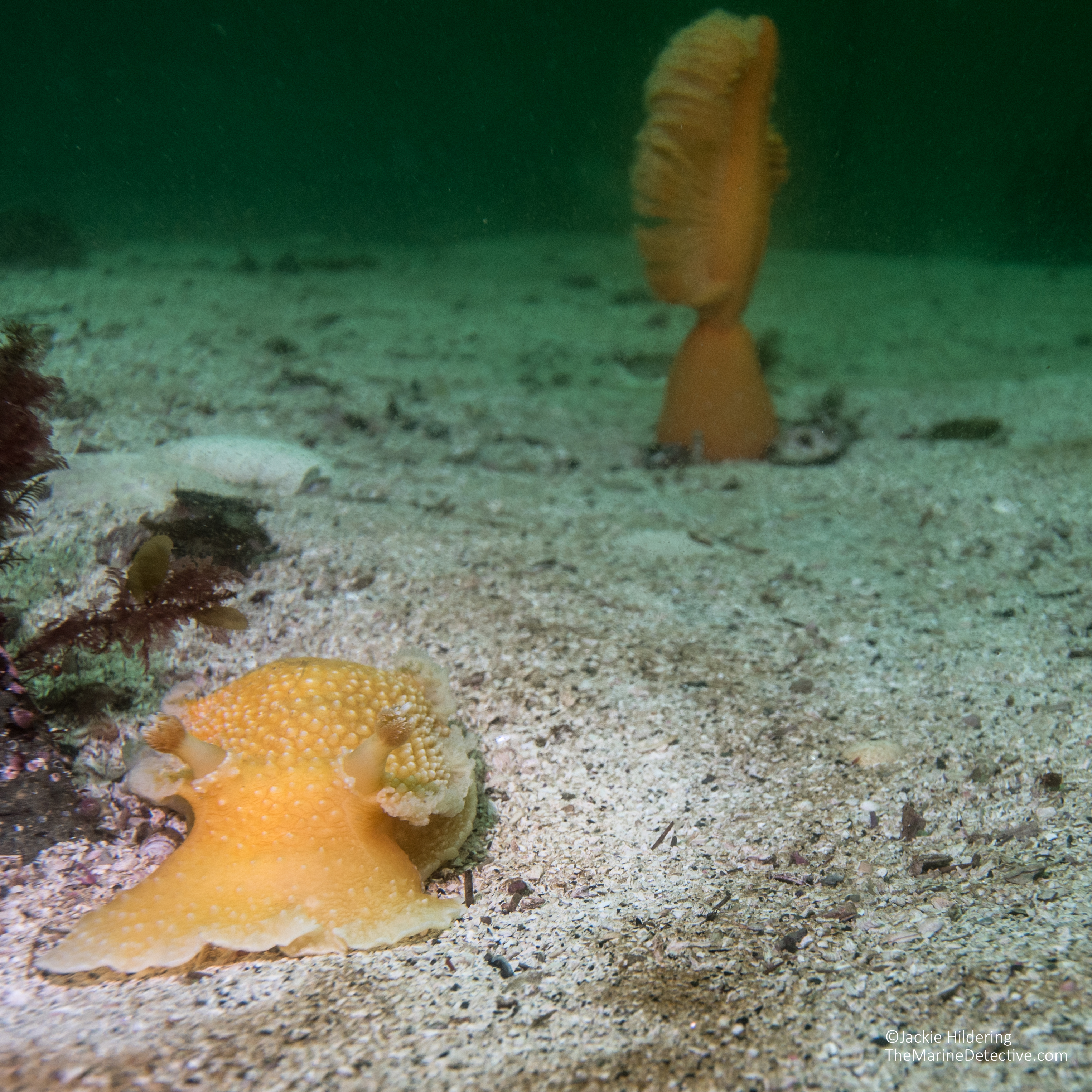
When confronted by sea star and nudibranch predators, Orange Sea Pens can:
1) Deflate, “shrinking” down and into the sand.
2) Inflate, to drift away.
3) Create bioluminescence – making a greenish-blue light that is assumed to somehow deter predators.
4) Produce a toxin but this is poorly understood.
And you thought humans were special! 
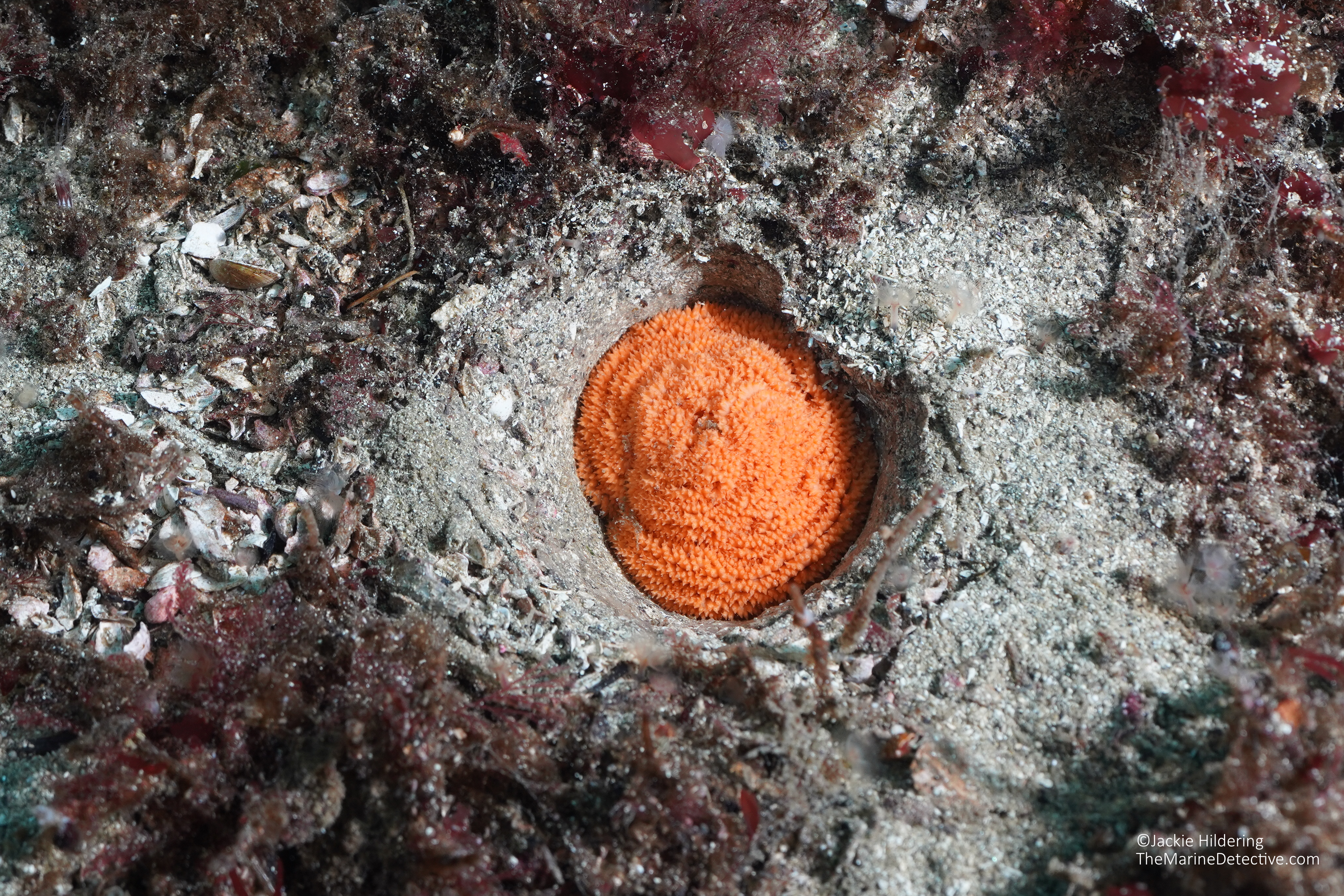
From the excellent blog from the Washington State Department of Ecology:
“The orange sea pen is surprisingly mobile, inflating its siphonozooids with water and drifting like a leaf on the wind when it wants to relocate. It can also deflate, partially retracting into its fleshy base when predators come calling. The amount of retraction has been shown to be specific to the approaching predator, which suggests that the pen can actually sense who is creeping up on it . . . Young sea pens are especially vulnerable to predation. They are incredibly slow-growing, taking over a year to reach about an inch tall. Orange Sea Pens increase their chances of survival with sheer numbers — a single pen can produce about a million eggs during its 10-year lifetime.”






The 2.5-minute clip below is of Sea Whips and Orange Sea Pens and the predators that stalk them.
Video: 1-minute of an Orange Sea Pen and Graceful Decorator Crab in the current in front of Port McNeill, BC.
The following BBC video below is from southwest Tasmania in Australia. This is not the sea pen species found in British Columbia. However, I have included it as it shows, with time-lapse photography, how sea pens can deflate and retract in response to predation attempts by nudibranchs.

Note that I found very little information about the anti-predator responses of Sea Whips. From Malecha and Stone, 2009:
“For those colonies lying on the seafloor, most of the peduncles and the tissues of the rachis below the polyps (approximately 15 cm) were generally not consumed by Tritonia diomedea. Additionally, predation by nudibranchs on erect Halipteris willemoesi [now Balticina willemoesi ] in the abraded and control groups did not occur. The disinclination of T. diomedea to prey on the lower portion of sea whips lying on the seafloor and their inability to prey on erect colonies perhaps suggests that H. willemoesi [Balticina willemoesi ] may have structural and/or chemical defenses on the tissue above their peduncles that deter epibenthic predators. Typically, chemical defenses are concentrated at the distal portions of colonies where polyp density is greatest, whereas structural defenses are often concentrated near the base of colonies (Harvell & Fenical 1989, Wylie & Paul 1989). The distribution of defenses is perhaps an adaptation to various types of predators and their mode of attack. Therefore, if sea whips have evolved defensive structures located at the base of the colony that are specific to epibenthic, non-swimming predators such as nudibranchs and sea stars, the defenses certainly do not provide protection when sea whips are not erect. Disturbed animals, especially those lying on the seafloor, may be more vulnerable to predation from a wider array of predators since the defenses at their polyps may not be adaptively effective against non-swimming predators. Further study could examine the possible chemical and/or structural defenses of sea whips that are common among octocorals.”
For more information:
- Dr. Ronald L. Shimek; Reefkeeping; “The Life and Death of Sea Pens”
- A Snail’ Odyssey
- State of Washington Department of Ecology; Get ready to “fall” for the orange sea pen – Eyes Under Puget Sound – Critter of the Month
- Malecha, PW & Stone, RP. (2009). Response of the sea whip Halipteris willemoesi to simulated trawl disturbance and its vulnerability to subsequent predation. Marine Ecology-progress Series – MAR ECOL-PROGR SER. 388. 197-206. 10.3354/meps08145.
 The Marine Detective
12 Responses to “Of Sea Whips and Sea Pens”
Where were you diving?
Exploratory dive near Greenway Sound.
Very nice I love it and I love this site it is amazing
Thank you Anna!
Excellent post Jackie! Thank you for being such a great photographer and dive buddy, the day was AMAZING!!!
So beautiful…thanks for sharing!!!!!
hI jack,
wonderful photos and video!
do the sea pens ‘recover’ after being munched?
xo
I’ve been enjoying your site so I’m nominating you for the Illuminating Blogger Award for informative, illuminating blog content. I know not everyone participates in blog awards but I hope you’ll at least check it out because it’s a great way to discover new blogs and meet new web friends. If you’re interested in participating, you can check out the details at my site … http://foodstoriesblog.com/illuminating-blogger-award/ … Either way, hope you’re having a great day!
So value the nomination but am a bit too swamped at the moment to respond. Thanks so for the kindness and encouragement.
No worries … Feel free to participate when and if you have the time 🙂
I learn so much from your blog — thank you so much for all the time & effort & passion you put into your presentations. We look out at the ocean every day and love her in all seasons & weather but know so little about what is under the surface.
Thank you Karen and Chris. Highly motivating for me and thank you again for your great hospitality to the film crew!