Why is our cold ocean suddenly tropical blue?
Last update: July 13, 2026
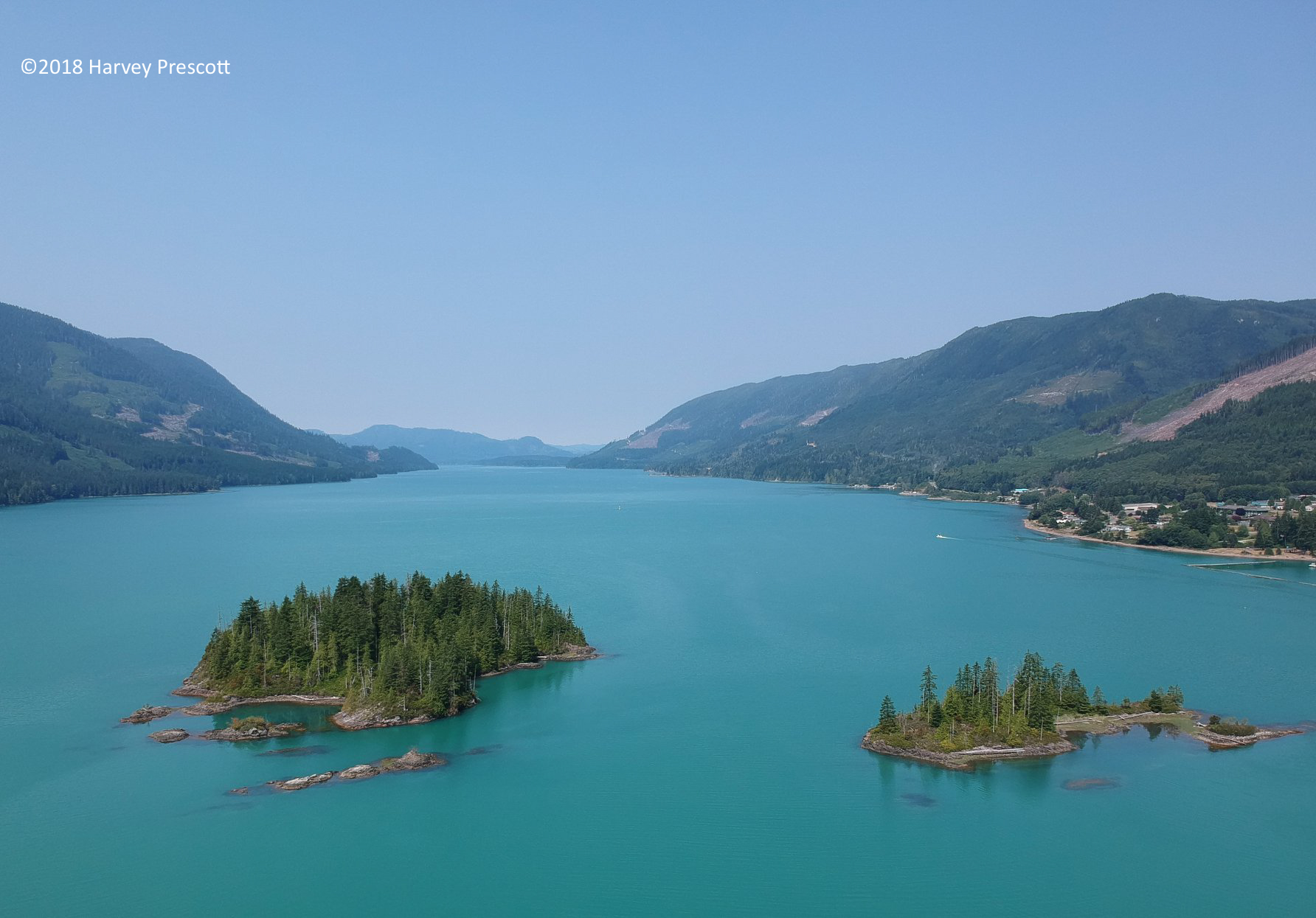
What’s making local waters this amazing milky turquoise colour you would expect for the tropics? It’s a question I’ve been asked a lot again. It’s a Coccolithophore bloom. Say what?!
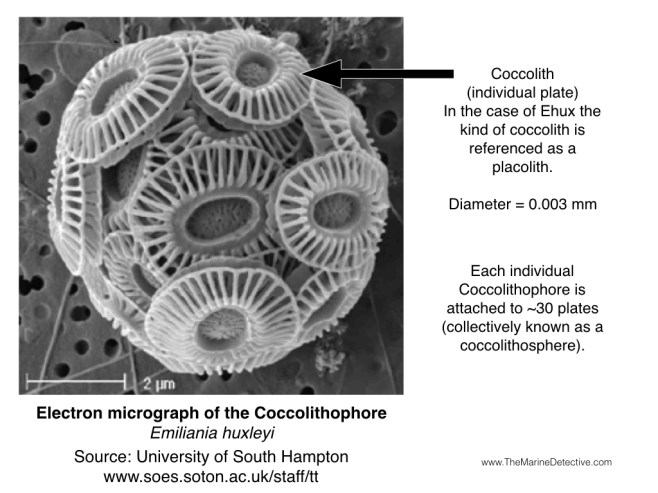
Coccolithophores are a group of non-toxic plant-like plankton (phytoplankton). Coccolithophores are single-celled and have been around for some 220 million years (give or take a million) and there are now more than 300 species. This bloom is likely due to the Emiliania huxleyi, abbreviated as “Ehux” (like the way Tyrannosaurus rex is known as Trex).
In addition to the aesthetic beauty of the colour, there’s often bioluminescence during a Coccolithophore bloom. It’s worth it to go for a night paddle to see the magic. While Coccolithophores themselves are not believed to create bioluminescence, other plankton species often in the mix are and give off light when physically disturbed, most likely to reduce predation.
The colour of the ocean changes because of the armour-like exoskeleton of round calcium carbonate plates Coccolithophores produce and shed. These plates make Coccolithophores unique in the plankton world.
The plates are highly reflective and scatter sunlight in all directions. The way the size and high refractive index of the plates align with the wavelengths of visible light leads to the scattering of blue-green light back toward the surface in a process called Mie scattering.
As stated by Pascal Abtin (pers. comm. July 13, 2026) “Along the path, water absorbs preferentially the reddish part of the light, so the light that exits back up through the surface after multiple scattering looks mostly bluish. Same thing happens in alpine lakes fed by glacial water loaded with silt particles that also induce Mie scattering and the typical vivid turquoise colour of those lakes.”
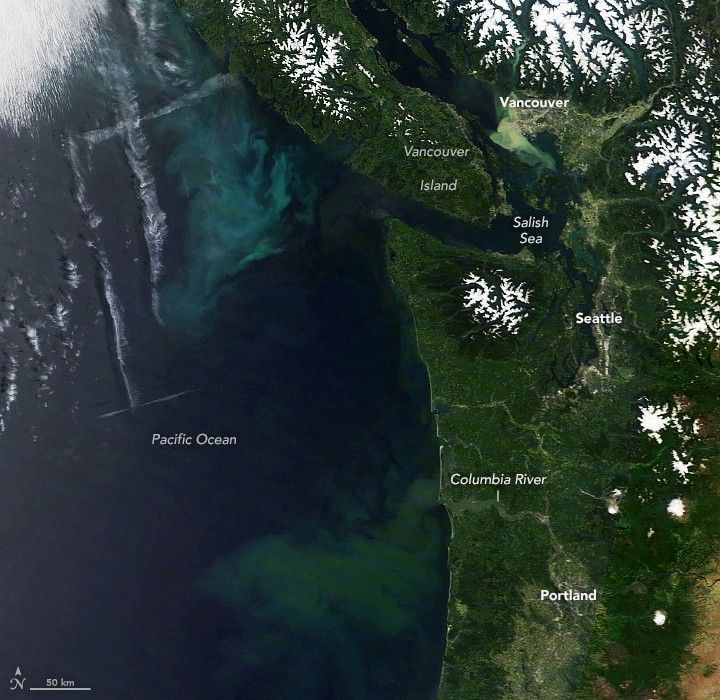
Because of the reflective properties of the plates shed by Coccolithophores, the blooms can clearly be seen from space. See below.
It’s reported that Coccolithophores do really well in areas where the temperature is moderate, the sun is usually out, the water is calm, and nutrient levels are lower. These conditions allow them to flourish and outcompete other species of phytoplankton.
Environmental
Coccolithophore effects on the environment, and the environment’s impact on coccolithophores are very complex, as is of course most often the case in an interconnected system.
Food supply:
More algae generally mean more food for the food web. Since Coccolithophores do well in nutrient-poor areas, this means they are an important source of nutrition where other phytoplankton may not be able to thrive. However, in areas where there are more nutrients, the increase in Coccolithophores may lead to a shift in what species of phytoplankton are fuelling the food web rather than to an increase in the amount of nutrients.
Oxygen levels: Coccolithophores are phytoplankton and thereby photosynthesize, producing oxygen. However, to be considered in areas with low current, is that the large numbers of Coccolithophores sinking to the ocean bottom and decaying (consumption by bacteria) could lead to less oxygen being available to other organisms (hypoxia). This is not a concern in high-current areas.
Climate related (so complex):
Coccolithophores also influence the amount of the climate-changing carbon dioxide in the atmosphere but the net impact is not fully understood. The plates contain carbon (CaCO3 = calcium carbonate) which would be expected to lead to reduced carbon dioxide levels in the atmosphere as a result of carbon being fixed into their bodies and plates in their plates, ultimately sinking to the ocean bottom. However, the process of calcification, by which they produce their plates, increases the levels of carbon dioxide in the atmosphere (source ScienceDirect). Calcium carbonate is alkaline so the large scale shedding of the shells can also influence ocean pH.
As summarized by Read et al., 2013″ “Although coccolithophores export carbon in the form of organic matter and calcite to the sea floor, they also release CO2 in the calcification process. Hence, they have a complex influence on the carbon cycle, driving either CO2 production or uptake, sequestration and export to the deep ocean.”
Ocean acidification also negatively impacts their calcium carbonate plates.
With regard to additional impacts on temperature, the high reflectivity of the plates causes light and heat to be reflected rather than absorbed by the ocean. Also, Ehux contributes to the sulphur cycle by releasing dimethyl sulfide when feeding. Dimethyl sulphide contributes to marine cloud formation and climate regulation (source ScienceDirect).
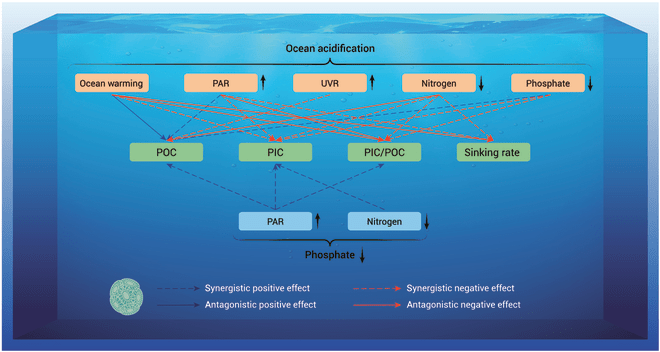
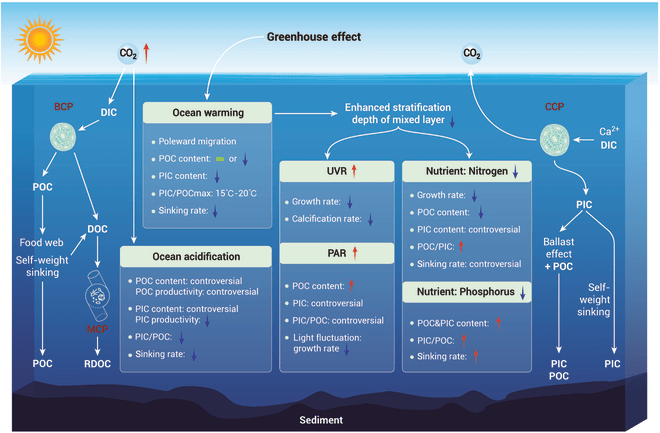
“Changes in carbon accumulation and sinking rate of coccolithophores under variable environmental factors” from Shiqing et al., 2024. PIC = particulate inorganic carbon, POC = particulate organic carbon, UVR = ultraviolet radiation, RDOC = recalcitrant dissolved organic carbon.
In addition to Ehux being of great interest to science regarding why they flourish and what this means for the environment, they are also fo interest for biotechnology and geology.
They produce “polyketides” that are of interest in medicine for antimicrobial, antifungal, antiparasitic, and antitumor properties (source JGI Genome Portal). They are of further interest as nutritional/feedstock supplements and biofuels (source Opening the Gene Box of a Key Ocean Species).
They make up a large part of the sediment of the ocean and allow for information to be gained about the earth’s history. Know too that their bodies, over large expanses of time, become incorporated into rock e.g. the White Cliffs of Dover.
Here’s hoping this information about Coccolithophores enhances interest in the microscopic life that has such an impact on our day-to-day lives AND an appreciation of the the complexity of the biochemical processes that maintain life on our BLUE planet.
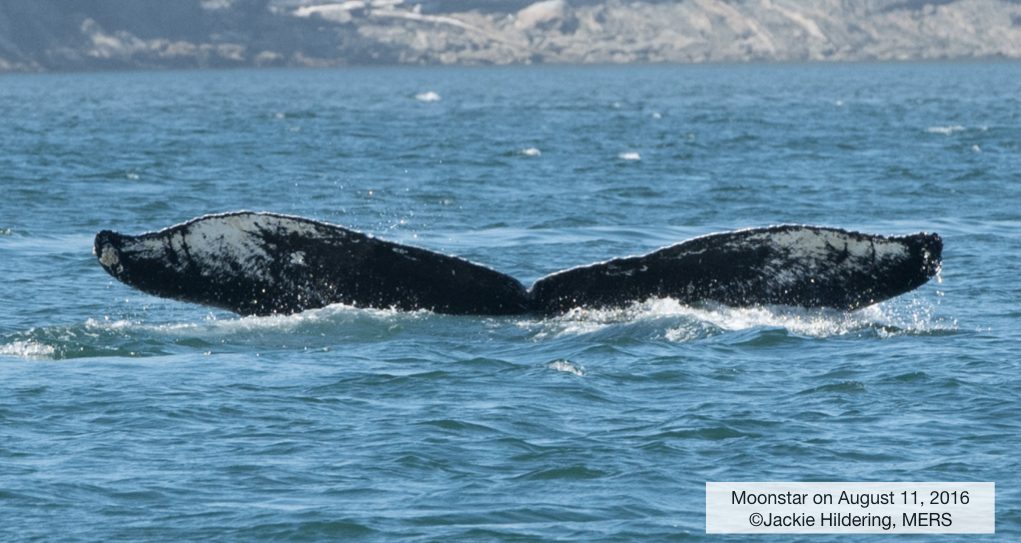
“The name Emiliania huxleyi honors achievements of two great polymaths in Earth science: Cesare Emiliani (1922–1995), founder of paleoclimatology, and Thomas Henry Huxley (1825–1895), discoverer of coccoliths” (source: Opening the Gene Box of a Key Ocean Species).

Sources:
- Eclat Digital. 2020. Mie scattering in materials: how particle size influences color, haze, and appearance. Eclat Digital. [accessed 2026 July 13]..Sci. Adv.
- KQED. 2013. Opening the Gene Box of a Key Ocean Species
- NASA Earth Observatory
- Read BA, Kegel J, Klute MJ, Kuo A, Lefebvre SC, Maumus F, Mayer C, Miller J, Monier A, Salamov A, et al. 2013. Pan genome of the phytoplankton Emiliania underpins its global distribution. Nature. 499(7457):209–213. doi:10.1038/nature12221. [accessed 2026 July 13].
- Shiqing Li, Junwei Zhu, Xiaobo Jin, Yuanyuan Feng, Nianzhi Jiao, Wenjing Zhang. 2024. Multifaceted Contributions of Coccolithophores to Ocean Carbon Export. Ocean-Land-Atmos Res.
- Tyrrell, T; Young J.R. Encyclopedia of Ocean Sciences (Second Edition) via Science Direct – Coccolithophores
- Wang Z. 2025. Detection of coccolithophore bloom development in the Salish Sea, Canada: Leveraging reflectance data from autonomous shipborne in situ radiometers and Sentinel-3A with a random forest classifier. Uvicca. [accessed 2026 July 13].


Leave a Reply