I’ve saved my favourite 2022 marine mystery for you until now.
It’s from Poppy who was in British Columbia visiting from England with her father, sister Maya, grandpa and grandma.
Poppy found these on a beach on Malcolm Island and they were photographed on the back of a cell phone.
It actually hurt my head to try to figure this out. I knew that I SHOULD know what they were but just not make the ID take shape. In wanting to get the answer to Poppy as soon as possible, I reached out to expertise greater than my own. I suspected I would have a big face-palming moment of “but of course” when the shells were identified.
And indeed that happened.
Take a moment to try to determine the ID yourself? Then scroll down for the answer.
Are you sure you want to see the answer?
Here goes!
Of course! 🤦♀️ They are the parts of the shell of a barnacle that open and close!
The answer that came from naturalist supreme Bill Merilees was: “What you have here is a barnacle valve – one of the ‘flaps’ that opens to allow the feeding tentacles to strain food from the water column.Great photo of this unusual shell exoskeleton!”
This led me to try to figure out what barnacle species these might come from and what the names of the structures were.
I believe the most specific ID is that these are the opercular plates of a Thatched Acorn Barnacle. The two parts are the tergum and scutum.
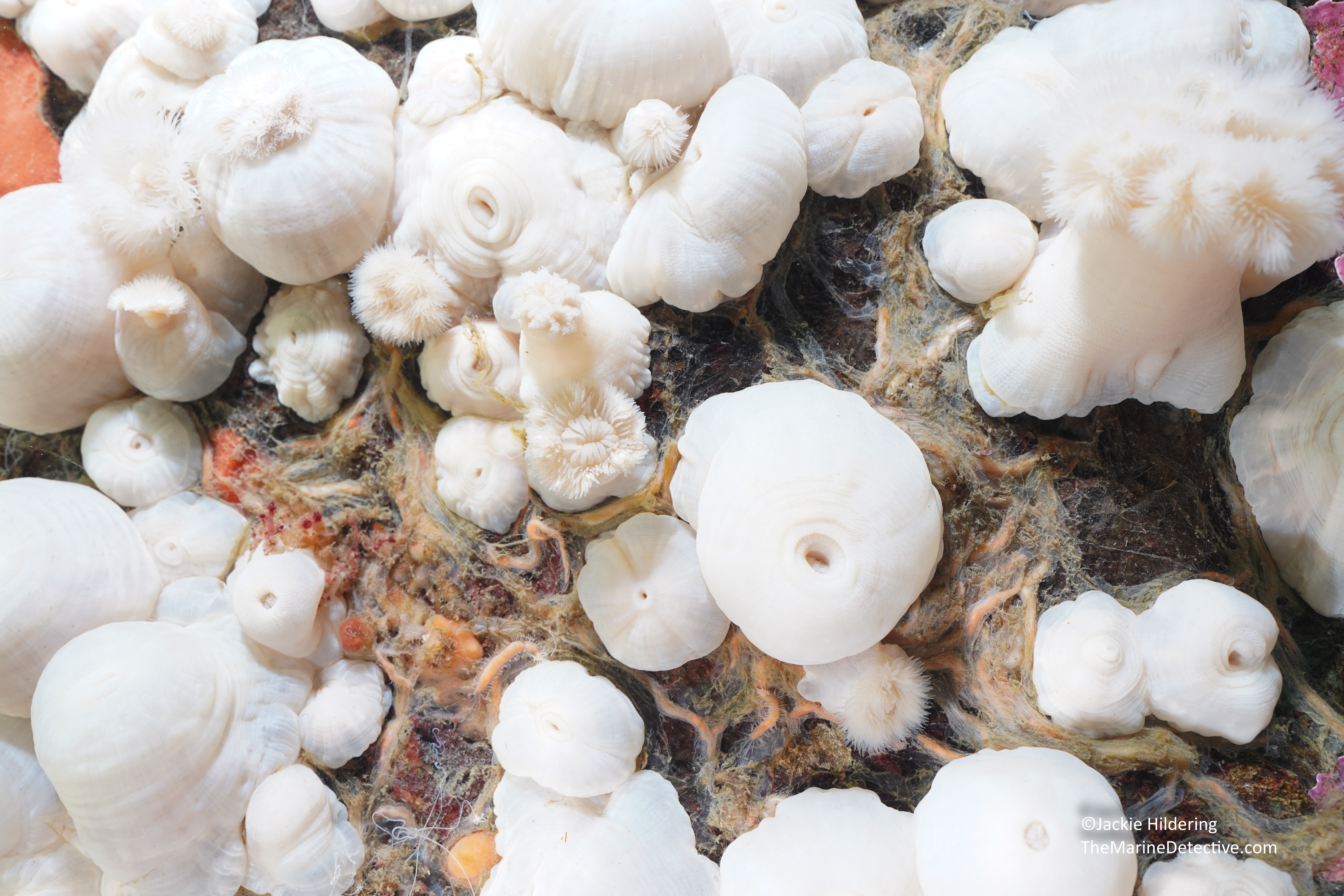
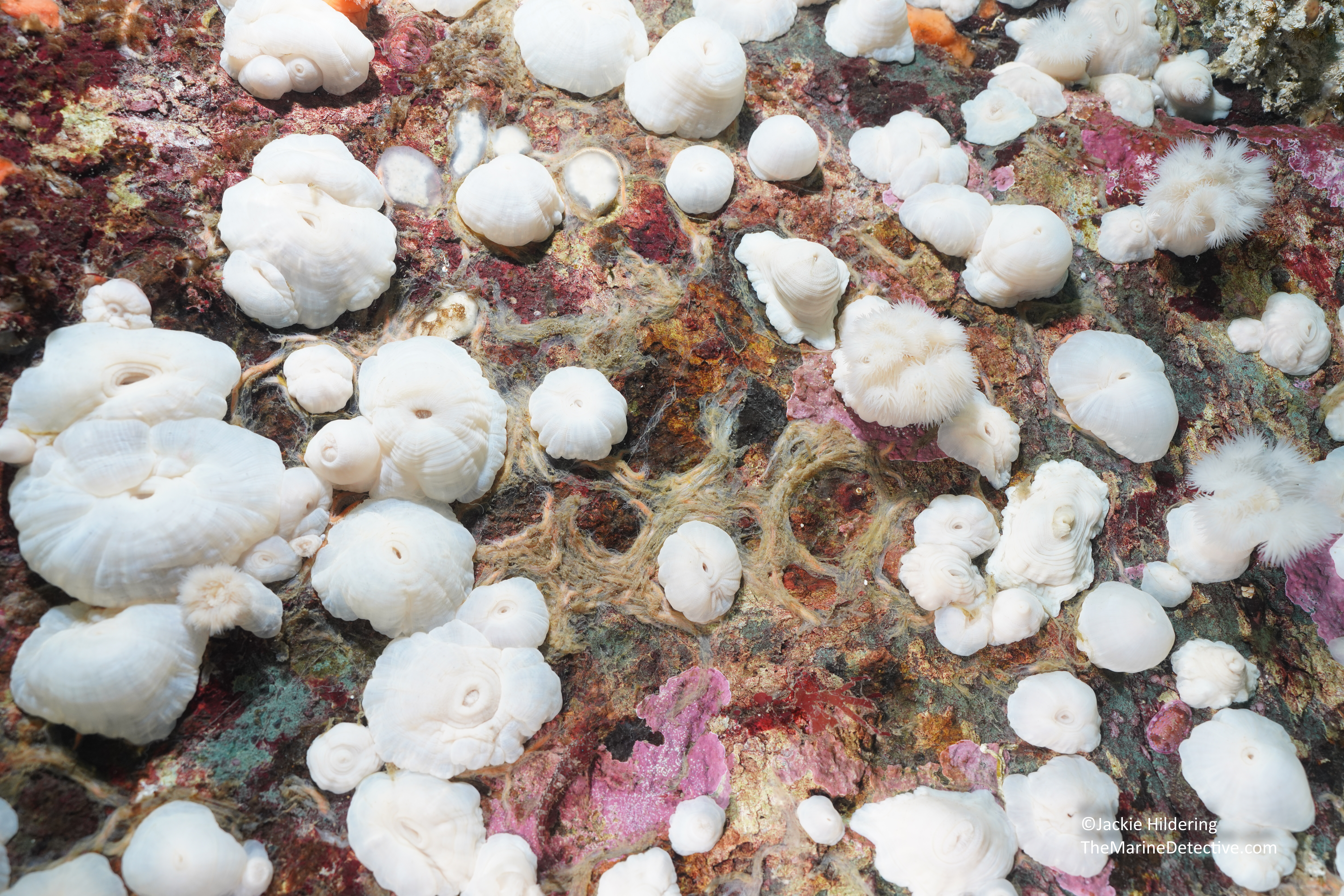
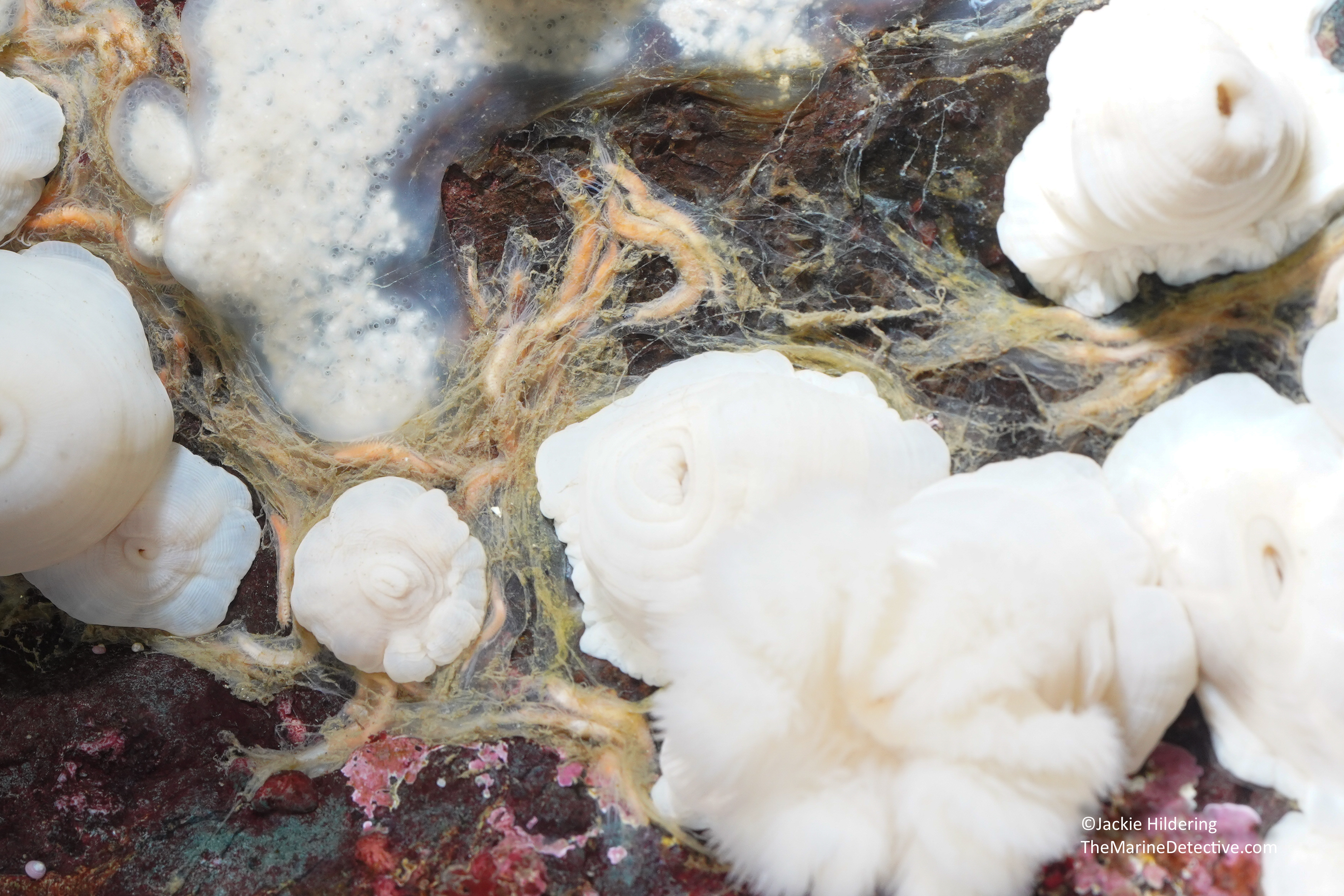
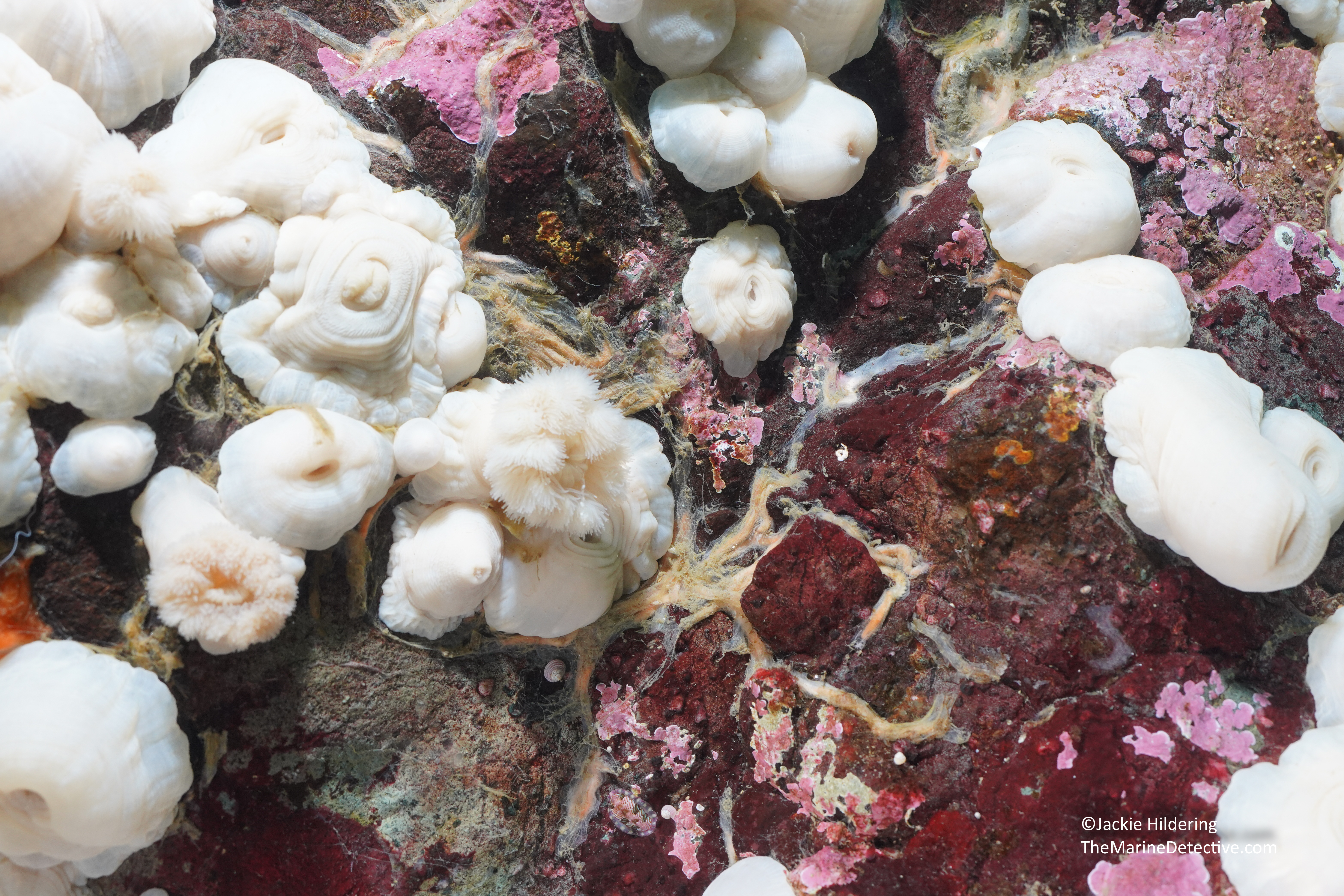
Below are some of my photos of another barnacle species, the Giant Acorn Barnacle (Balanus nubilus) which might help in recognizing the shells. Isn’t it wondrous? All barnacle species start off a plankton and then form their own intricate shells so that their foot can extend out to rake in food.
Happy New Year to you. May the next year be filled with happy mysteries, wonder, and empowerment for positive change.
Sources of illustrations:
Coletti, Giovanni & Bosio, Giulia & Collareta, Alberto & Buckeridge, John & Consani, Sirio & El Kateb, Akram. (2018). Palaeoenvironmental analysis of the Miocene barnacle facies: Case studies from Europe and South America. Geologica Carpathica. 69. 573-592. 10.1515/geoca-2018-0034.
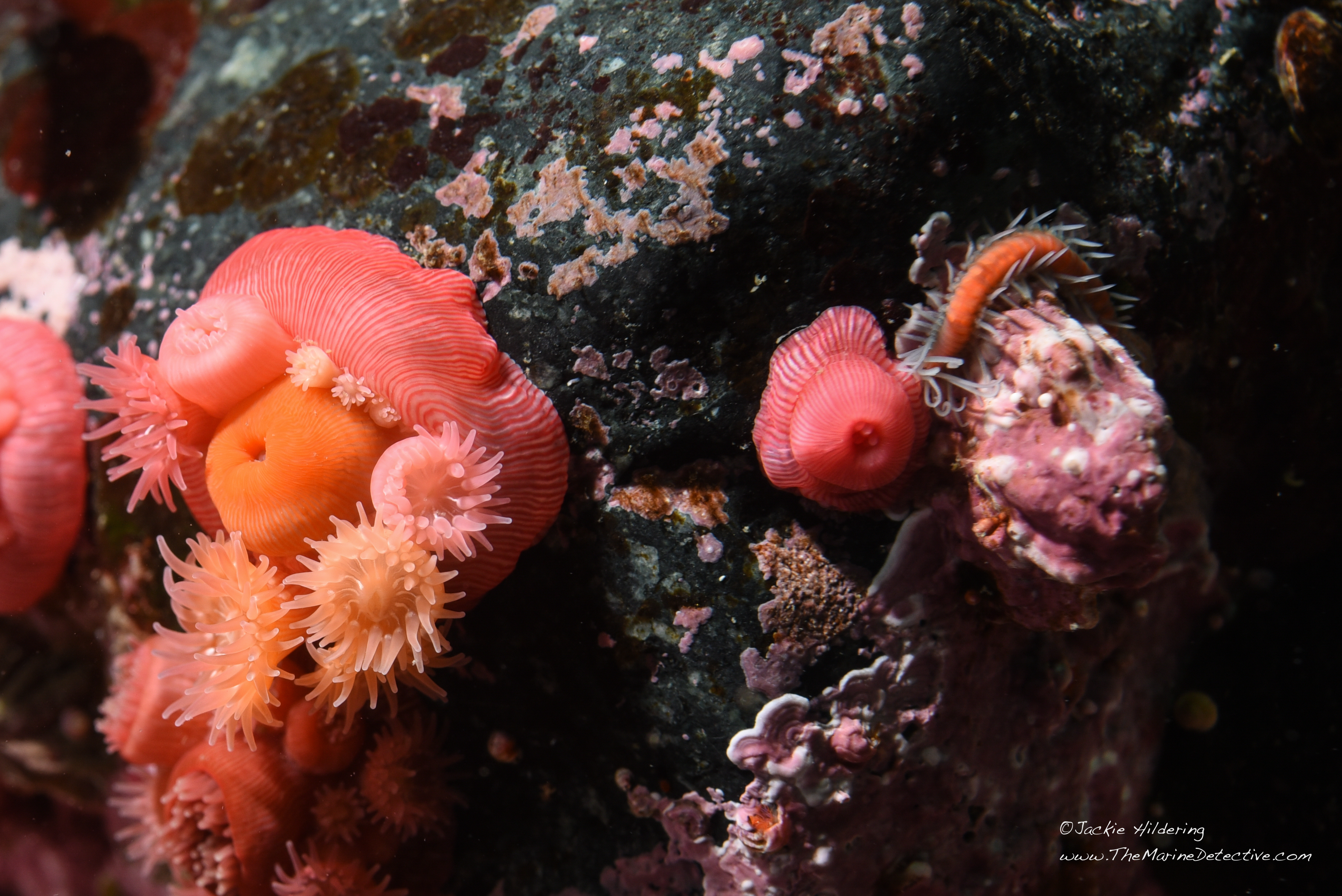
I have relayed my observations to marine worm researchers but want to share with you too. It’s just too fascinating not to do so. These finds emphasize yet again how little we know even about marine species that are just below the surface. I also hope that by sharing my observations here, it may lead to other divers being on the lookout for these interactions and potentially adding to the knowledge about interactions between necklace-worms and anemones.
Necklace-worm species #1 and Proliferating Anemone – January 1st, 2008. Necklace-worm species #2 and Short Plumose Anemones – March 6, 2022.
My observations involve what I believe are two species of necklace-worm. Each is interacting with a different species of anemone. In both cases, the species of necklace-worm is unconfirmed. The polychaete* researchers I have been in contact with have asked for samples of the worms to allow for microscopic examination and potential DNA analysis.
*Polychaetes are the “many-bristled” worms. They are worms that have a pair of paddle-like appendages / bristles on each segment. Most species of worm in this class are found in the ocean or in brackish water and there are about 15,000 known species globally. Polychaetes “are ubiquitous in the ocean, burrowing and hunting in the sand, crawling on algal covered rocks, living in self-made tubes, or swimming in the water” (Encyclopedia of Biodiversity, 2013).
Note that observations and photos here are from the Pearse Islands and Plumper Islands on northeast Vancouver Island in the territory of the Kwakwaka’wakw in depths less than 17 metres / 50 feet.
Necklace-Worm Species #1 and Proliferating Anemones: I have written about this previously but include the observations here again so that the information about these necklace-worm / anemone interactions is bundled in one place. It involves a species of necklace worm appearing to bite into Proliferating Anemones (Epiactis prolifera to 8 cm wide).
My first observation of this interaction goes back all the way to 2008 when I documented the following thanks to the keen eye of my dive buddy Natasha Dickinson.
Both photos: Necklace-worm species #1 appears to be biting into a Proliferating Anemone – January 1st, 2008.
I do not know if the necklace-worm dislodged the anemone of if the anemone let go in an attempt to get away. We came upon this scene when the anemone was already upside down.
I have only noted this interaction twice since then. See photos below.
Necklace-worm species #1 and Proliferating Anemone – February 15, 2015. Note the “casings” the worms are in on the left. Necklace-worm species #1 on the right and Proliferating Anemones – February 22, 2020. [Yes, on the left, those are babies of multiple ages hanging onto their mother. More about that at this link.]
For those who have Lamb and Hanby’s Marine Life of the Pacific Northwest, you may note that this species of necklace-worm looks like AN22 which is referenced as a “mystery necklace-worm”. But again, collection of a sample would be needed to confirm species ID.
Necklace-Worm Species #2 and Short Plumose Anemones:
On February 12, 2022 I saw THIS.
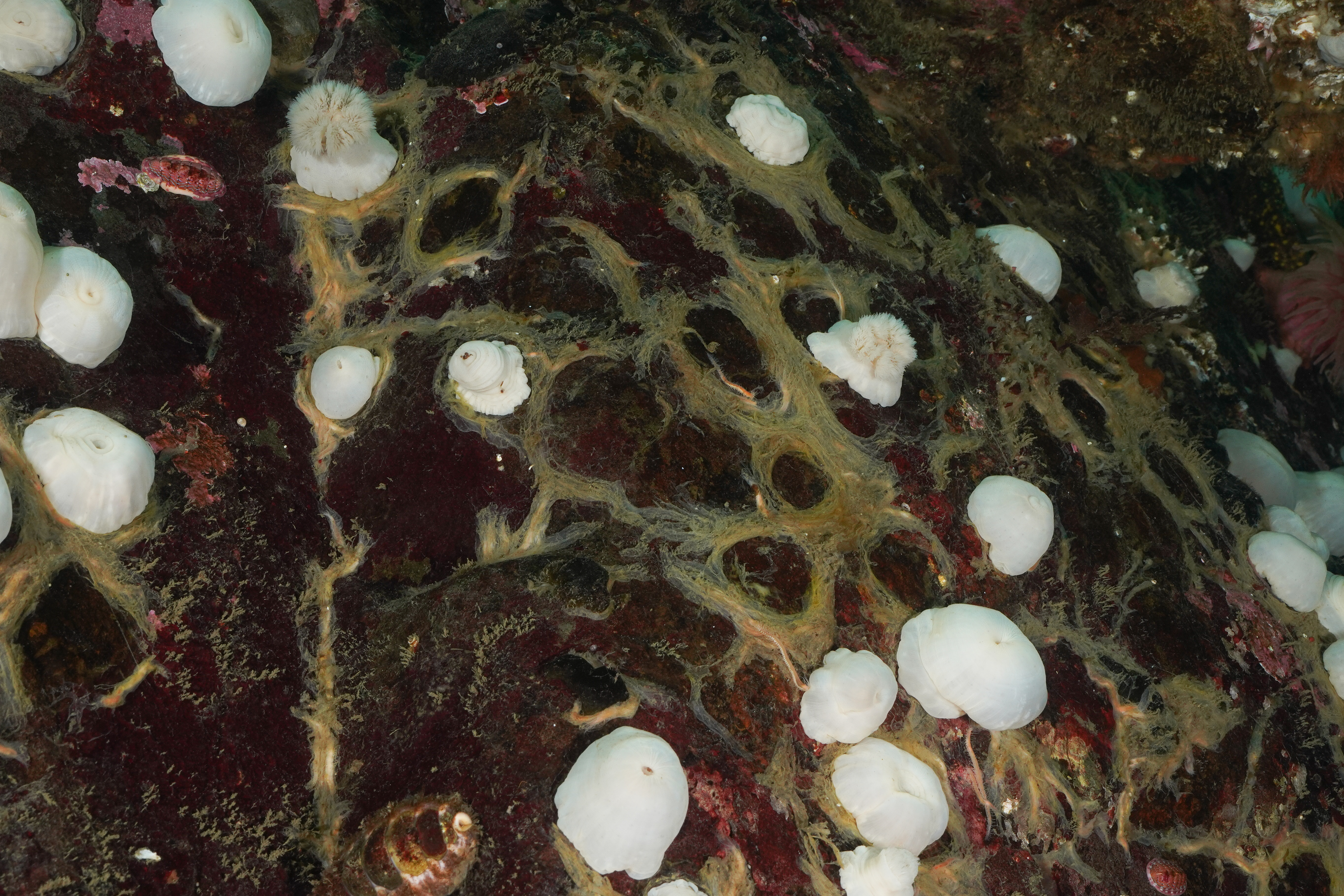
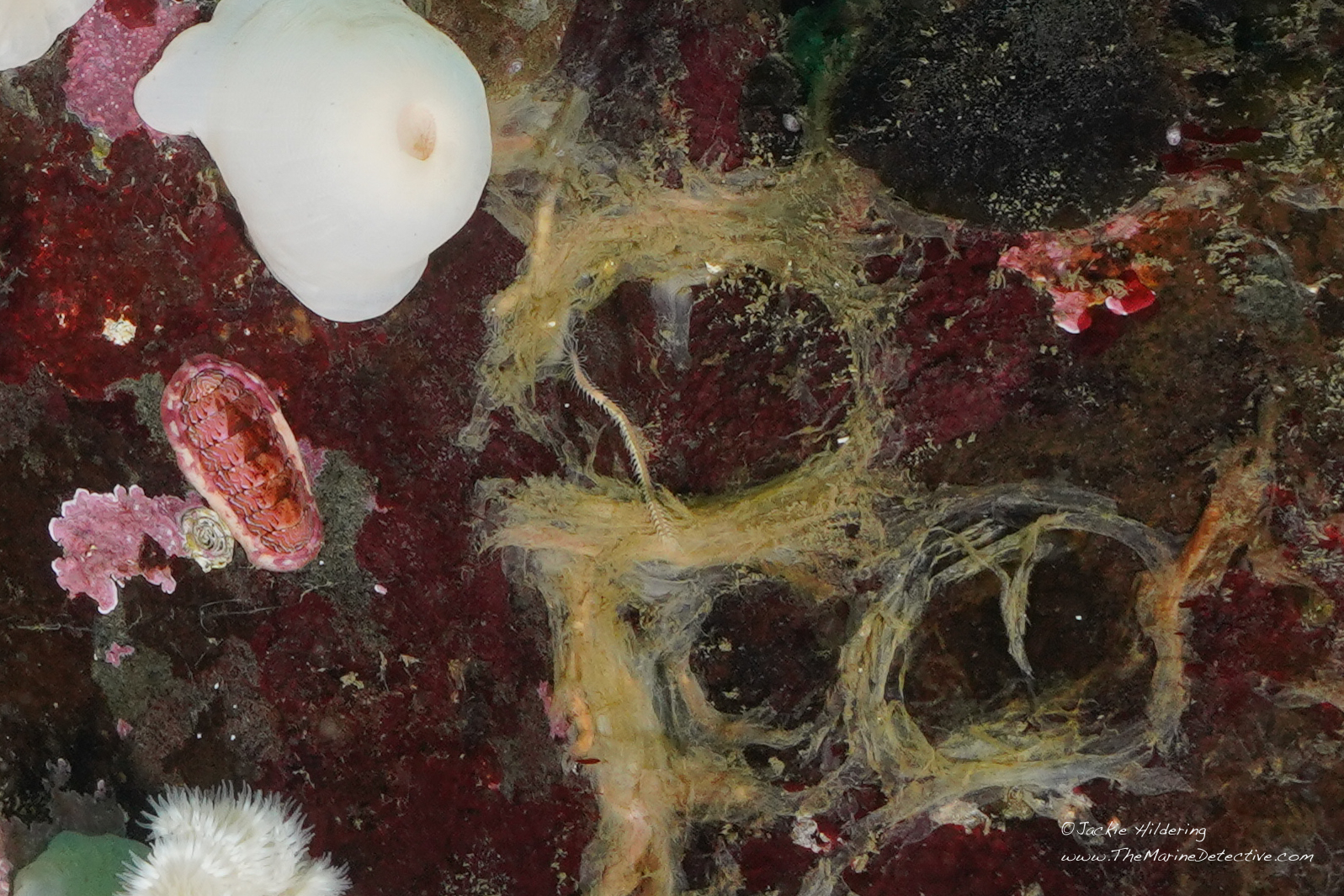
Necklace-worm species #2, Short Plumose Anemones AND the spaces where these anemones used to be. Many of these anemones are retracted. Photo February 12, 2022.
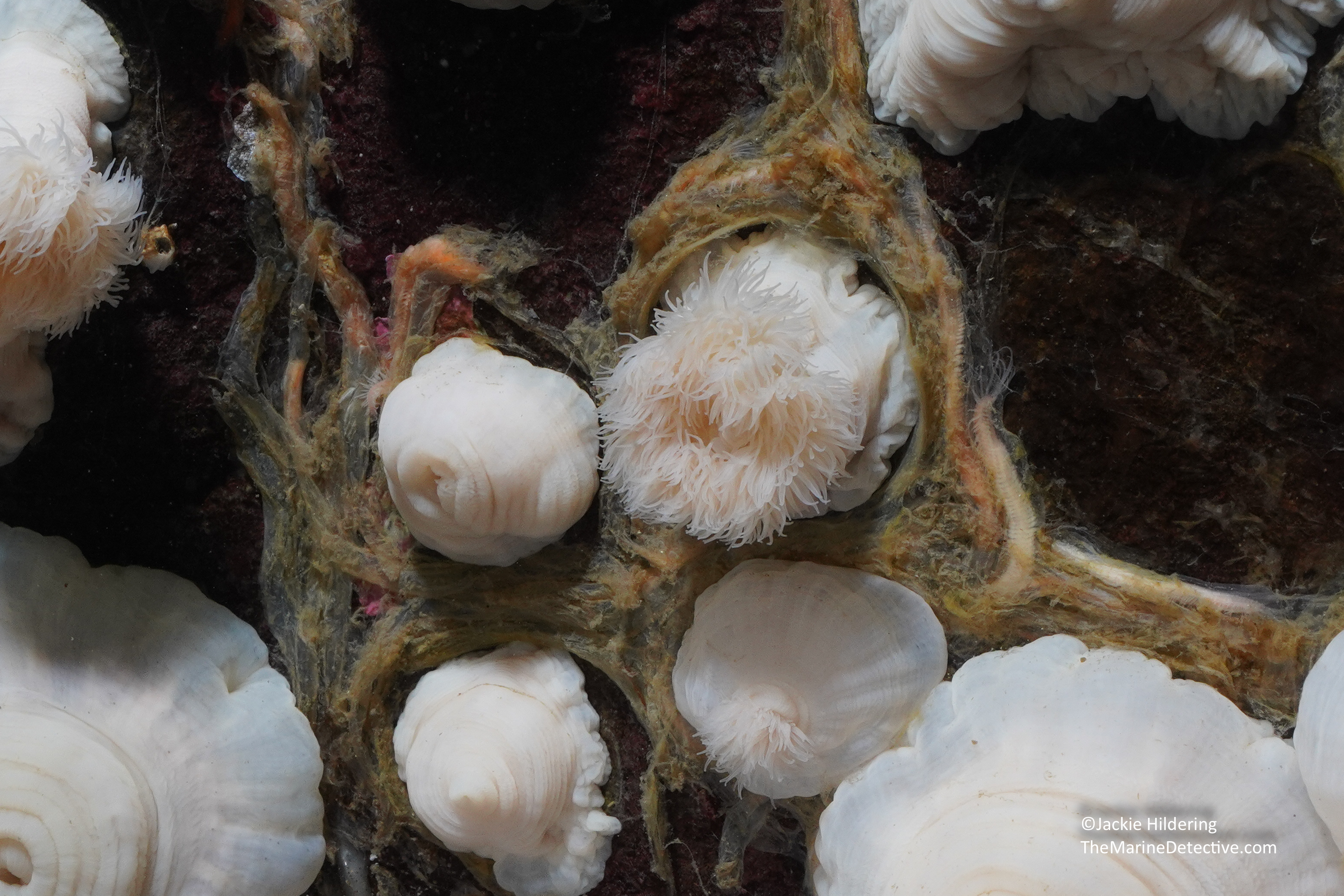
There are necklace-worms in those slime tubes! Where you see the circles is where other Short Plumose Anemones once were (Metridium senile to 10 cm tall and 4 cm across).
Close-up showing the necklace-worms. Photo February 12, 2022.
Were they always at this site? I have done a quick review of past photos and see a few of them in photos back to 2013. Variables in why I may not have noticed them before are that: (1) they were much more apparent as a result of the dislodged anemones; (2) there may be more of them now; and (3) we usually don’t focus on the spot where the concentration of these worms were (we usually dive deeper).
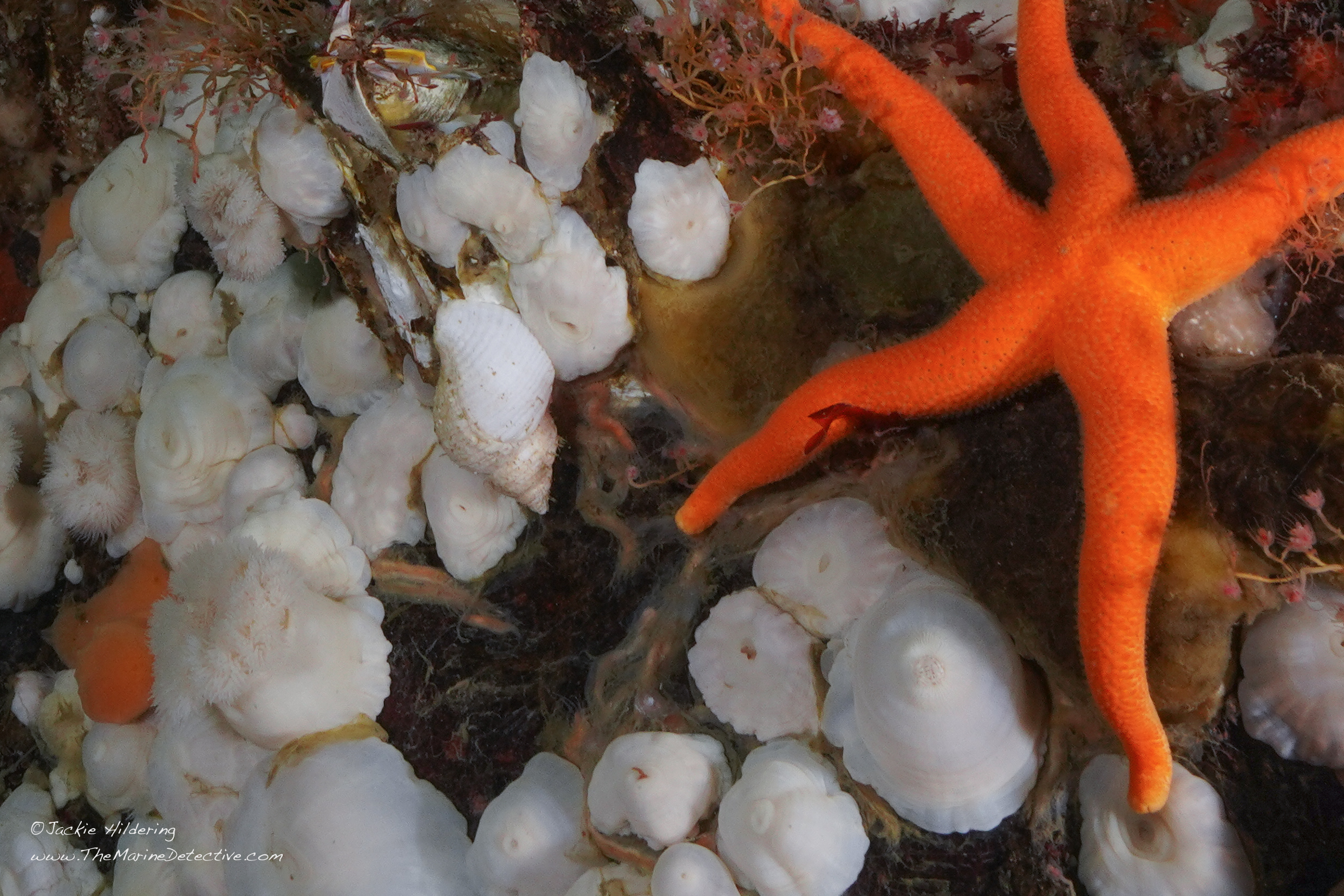
Here’s another photo from that dive to give a better sense of the size of the worms. That Blood Star is about 15 cm long. Photo February 12, 2022.
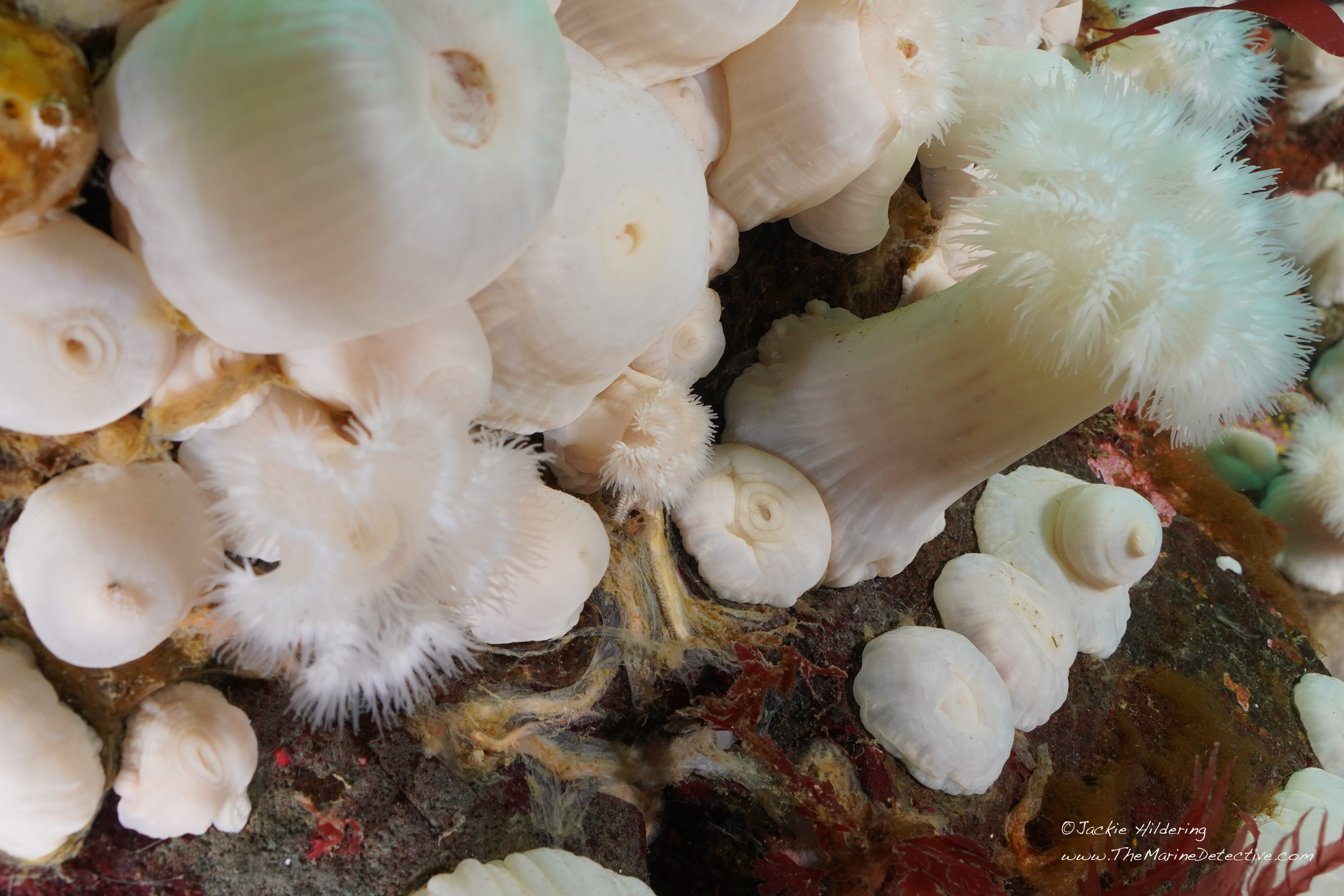
So TODAY’S mission was to return to this dive site and focus on the interaction between this species of necklace-worm and Short Plumose Anemones. How abundant are they? Are they biting the anemones?Are the worms anywhere other than around Short Plumose Anemones? Are the anemones using their acontia as a defense against the worms? Acontia are defensive strands filled with stinging cells (nematocysts) that are ejected when an anemone is irritated / threatened / stressed. The acontia can extend far beyond the anemone, providing longer distance defense than the stinging cells in an anemone’s tentacles.
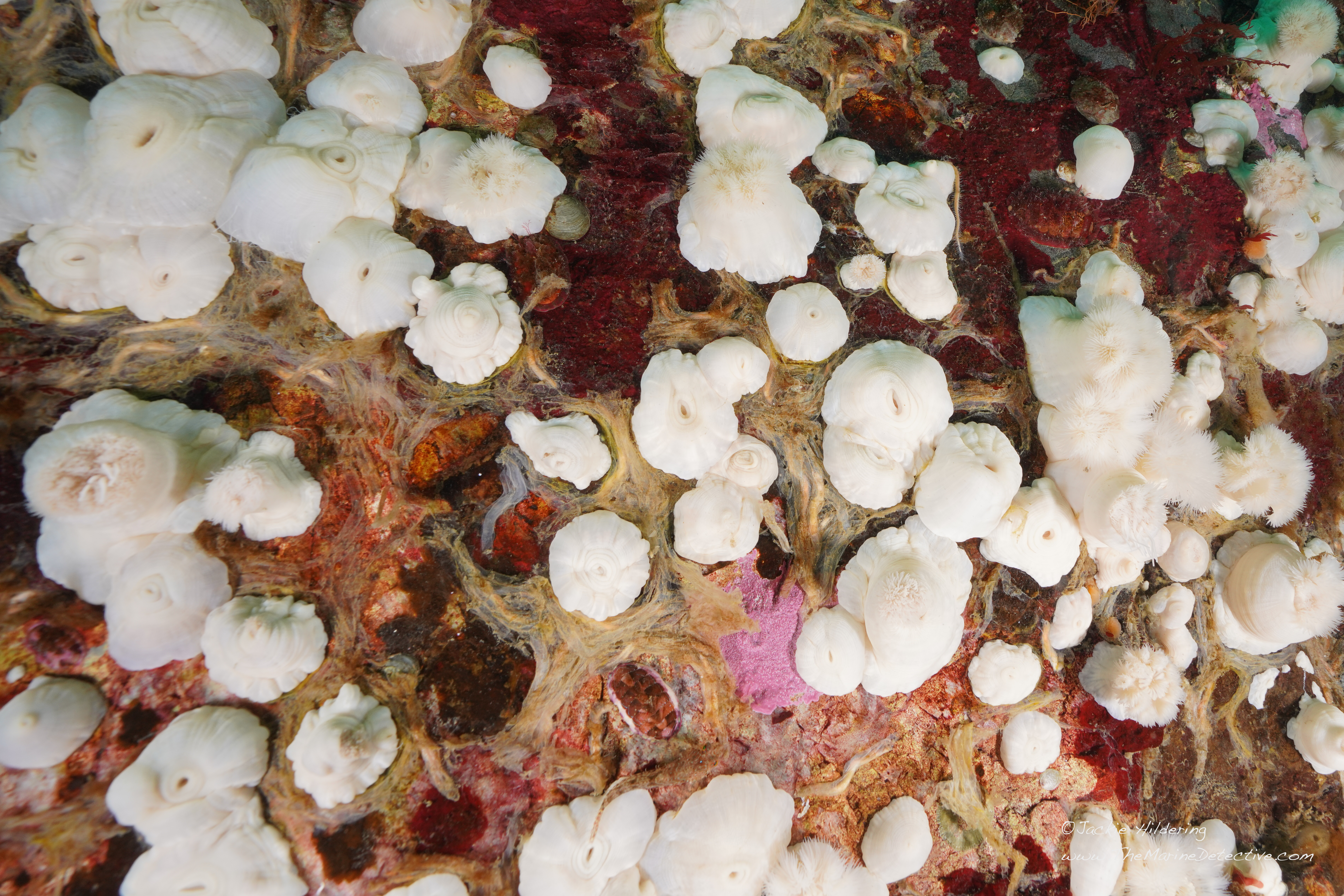
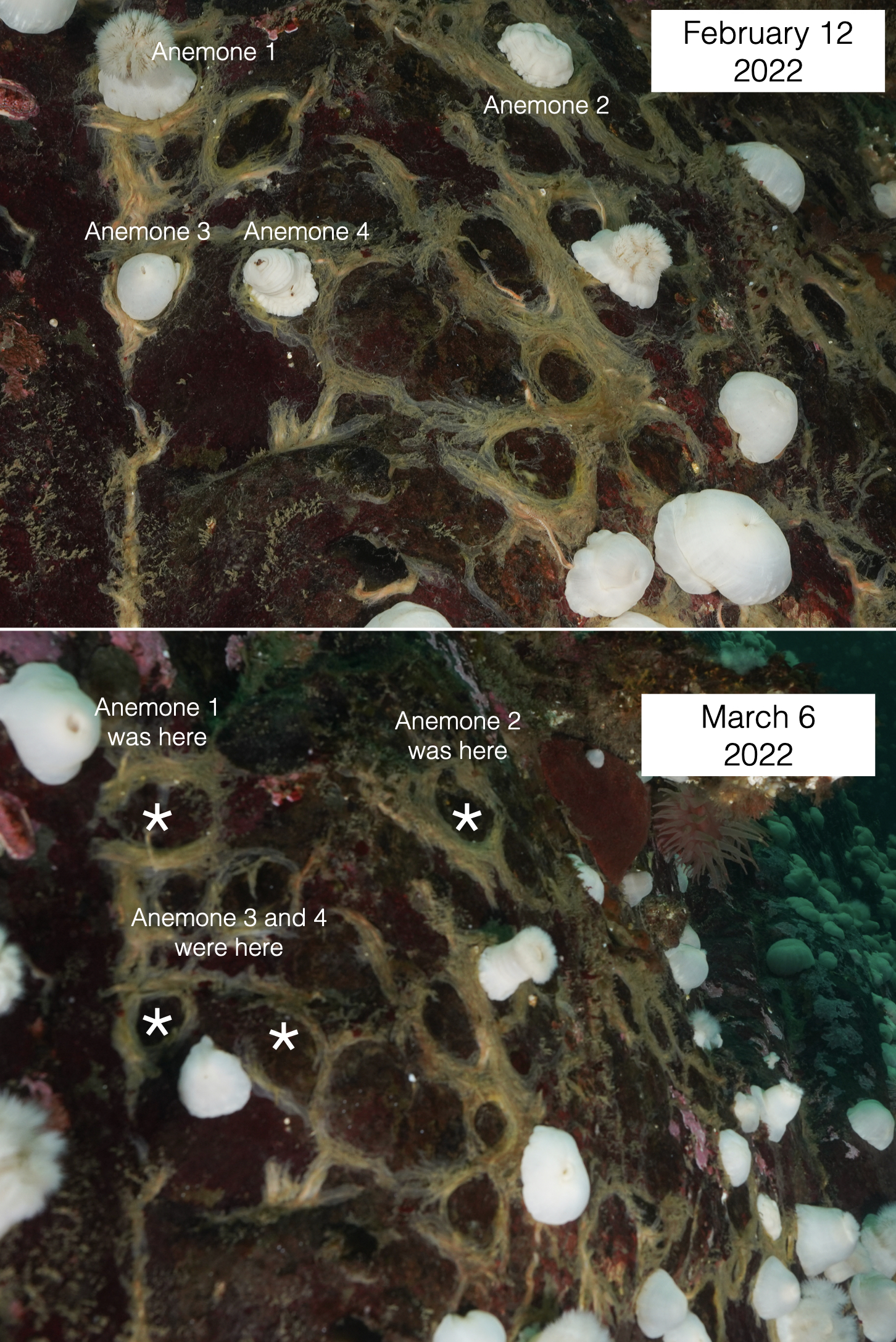
Dive buddy Natasha Dickinson today. This is the exact same spot as what you see in the images from February 12th above. I contrast the two photos at the very end of this blog so you can see how things have changed after 22 days. Of course I do not know how much the anemones would move around in the absence of the worms.
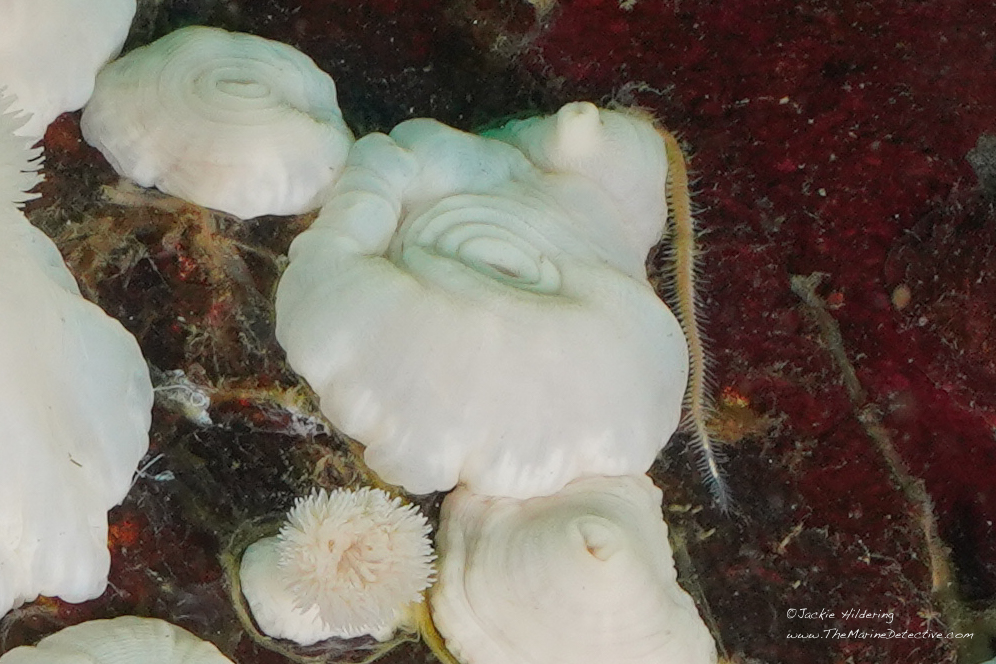
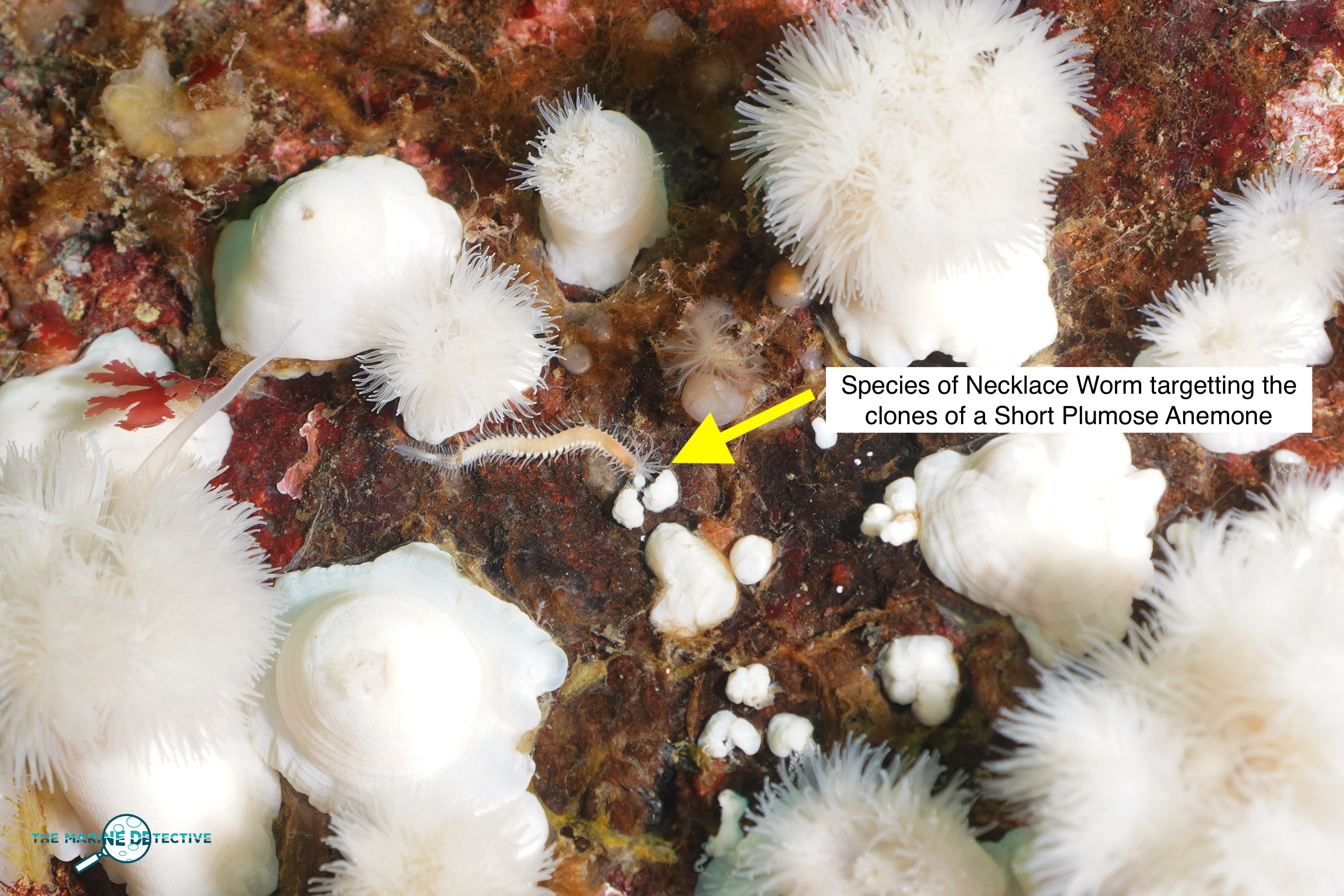
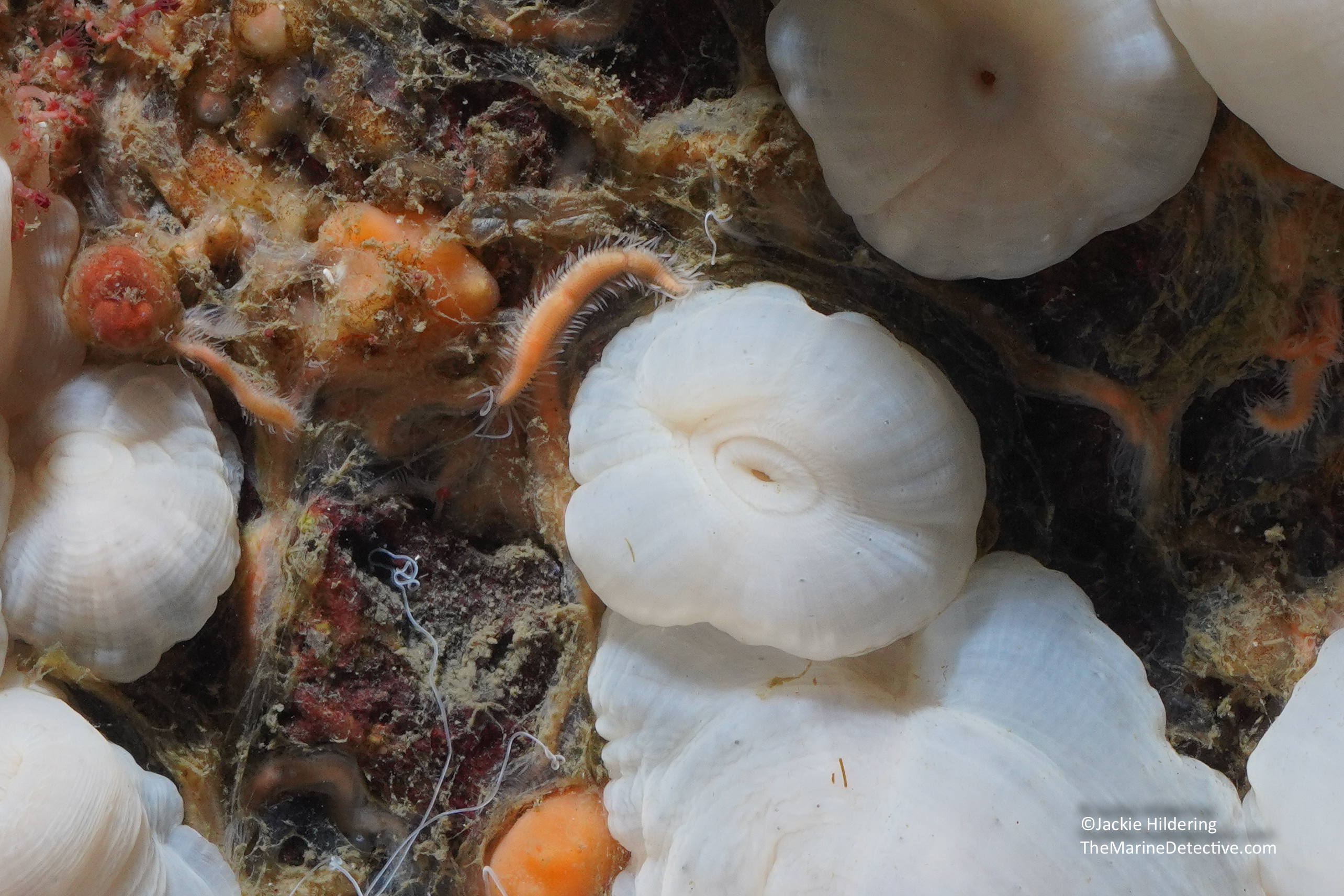
To answer those questions: – I found the slime tubes almost everywhere there were Short Plumose Anemones at this site. I did not find them anywhere else i.e. this species of necklace-worm’s slime tubes were only around Short Plumose Anemones. – I only found a few Short Plumose Anemones using their acontia but it seems more likely that they were being used against other anemones. I cannot know if the anemones dislodge themselves as a defense. There were only a few places where there were the circles of slime tubes where an anemone had once been. There were far more places where the slime tubes were in amongst Short Plumose Anemones. – YES I do believe this species of necklace-worm is biting into the Short Plumose Anemones. See below for abundant photos from today.
Some Short Plumose Anemones using their acontia. See those little white strands?
I will of course provide updates as I learn more via the researchers and other divers / underwater photographers. As always, I hope it is a source of wonder for you to learn more about these species, their adaptations and interactions, AND how much we humans still have to learn about the natural world around us. 🙂
All photos below are from March 6, 2022.
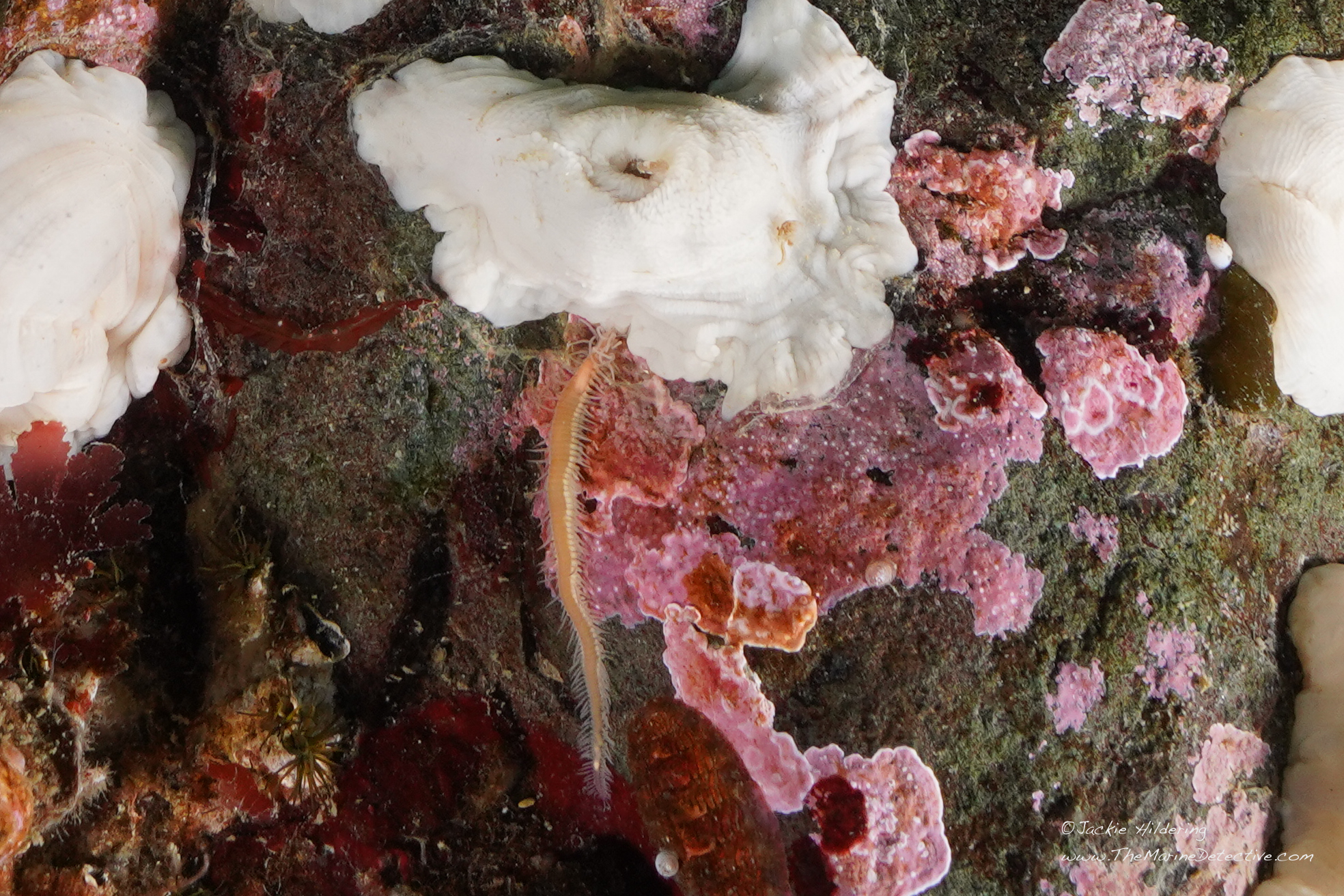
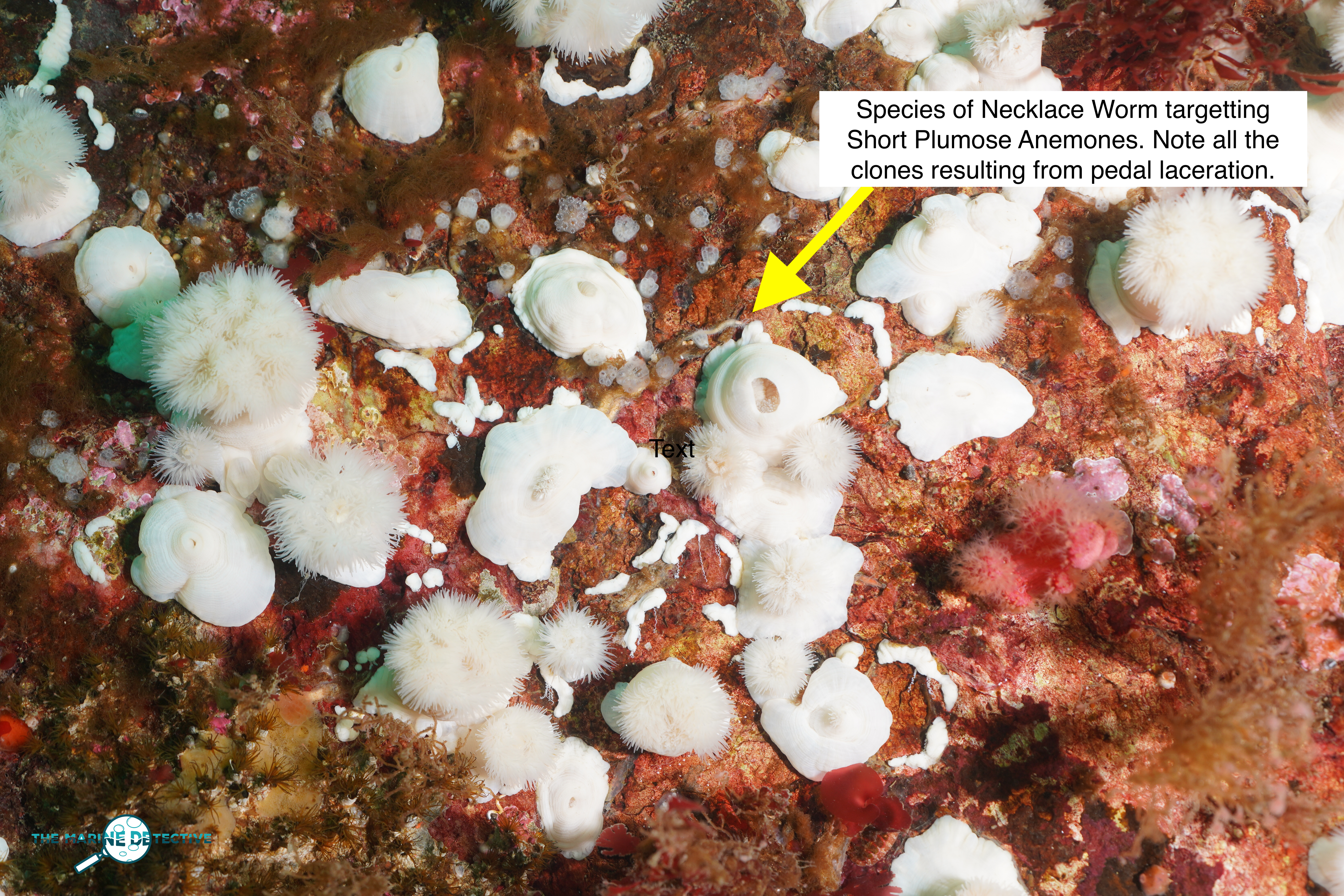
Taking a bite? Also looks like this anemone is about to undergo “pedal laceration” to reproduce asexually. Here too it looks like some of the anemones are in the process of pedal laceration = form of asexual reproduction.
Below, you can contrast the same spot after 22 days. There has been a lot of change but again, I do not know how much the anemones would move around and/or dislodge in the absence of the worms. Oh no, is this now going to be my life? In addition to trying to document individual Humpback Wales and Tiger Rockfish, now I am going to try to document individual Short Plumose Anemones?! Probably.
My additional photos below are from March 19 2023, providing further documentation of Necklace Worm species #2 targeting the Short Plumose Anemones and possibly stimulating pedal laceration and acontial defense.
The following photos are from additional documentation of these interactions at the same site on January 24, 2026.
How I enjoyed receiving the following mystery this week.
Be sure to have your sound on when you read and listen to the clip below.
Yes, it’s a male Pacific Harbour Seal! So many people do not realize that the male Harbour Seals establish and defend territory in the water (unlike species of sea lion and elephant seal who defend territory on land).
From Discovery of Sounds in the Sea . “Harbor seals were thought to be the least vocal of the pinnipeds. Recent studies have shown, however, that males produce underwater vocalizations during the mating season to attract females or to compete with other males. Males establish territories in the waters offshore of haul-out sites. Using underwater vocalizations, they defend their territories against other males and display to females traveling through the area. Their underwater vocalization is described as a roar with a peak frequency at approximately 1.2 kHz. Harbor seals also produce a wide variety of in-air vocalizations, including short barks, tonal honks, grunts, growls, roars, moans, and pup contact calls.”
It is remarkable isn’t it that these sounds were not known to be made by male Harbour Seals until ~1994.? This is the most common marine mammal on so many coasts and yet . . . we know so little.
Note: The person who sent me the mystery preferred to remain anonymous and that the location of the recordings not be provided. I can share that it was in the Sunshine Coast area of British Columbia. However, this underwater sound could be from ANYWHERE male Pacific or Atlantic Harbour Seals wish to pass on their genes.
See below for some of the research into Harbour Seal vocalizations.
“Similar to other aquatically mating pinnipeds, male harbor seals produce vocalizations during the breeding season that function in male-male interactions and possibly as an attractant for females. I investigated multiple aspects of these reproductive advertisement displays in a population of harbor seals in Glacier Bay National Park and Preserve, Alaska. First, I looked at vocal production as a function of environmental variables, including season, daylight, and tidal state. Vocalizations were highly seasonal and detection of these vocalizations peaked in June and July, which correspond with the estimated time of breeding. Vocalizations also varied with light, with the lowest probability of detection during the day and the highest probability of detection at night. The high probability of detection corresponded to when females are known to forage. These results are similar to the vocal behavior of previously studied populations.
However, unlike previously studied populations, the detection of harbor seal breeding vocalizations did not vary with tidal state. This is likely due to the location of the hydrophone, as it was not near the haul out and depth was therefore not significantly influenced by changes in tidal height.
I also investigated the source levels and call parameters of vocalizations, as well as call rate and territoriality. The average source level of harbor seal breeding vocalizations was 144 dB re 1 μPa at 1 m and measurements ranged from 129 to 149 dB re 1 μPa. Analysis of call parameters indicated that vocalizations of harbor seals in Glacier Bay were similar in duration to other populations, but were much lower in frequency.
During the breeding season, there were two discrete calling areas that likely represent two individual males; the average call rate in these display areas was approximately 1 call per minute.
The harbor seal breeding season also overlaps with peak tourism in Glacier Bay, and the majority of tourists visit the park on a motorized vessel. Because of this overlap, I investigated the impacts of vessel noise on the vocal behavior of individual males. In the presence of vessel noise, male harbor seals increase the amplitude of their vocalizations, decrease the duration, and increase the minimum frequency. These vocal shifts are similar to studies of noise impacts on other species across taxa, but it is unknown how this could impact the reproductive success of male harbor seals.
Finally, I looked at the role of female preference for male vocalizations. Using playbacks of male vocalizations to captive female harbor seals, I found that females have a higher response to vocalizations that correspond to dominant males. Females were less responsive to subordinate male vocalizations, which had a shorter duration and a higher frequency. Given that male harbor seals decrease the duration and increase the frequency of vocalizations in the presence of noise, it is possible that these vocalizations become less attractive in noise.“
Click here for Harbour Seal vocal samples from Discovery of Sound in the Sea.
Van, P. S. M., Corkeron, P. J., Harvey, J., Hayes, S. A., Mellinger, D. K., Rouget, P. A., Thompson, P. M., … Kovacs, K. M. (January 01, 2003). Patterns in the vocalizations of male harbor seals. The Journal of the Acoustical Society of America, 113, 6, 3403-10.
Update: 4 pm PDF October 26
Looks very likely that these tracks have been made by a limpet species. Further information under UPDATES below.
Here’s an unsolved mystery, that led to another unsolved mystery, and I suspect there will be more related mysteries to come. 🙂
It began with the photo shown below with an ID request by Marcie Callewart John and Stephen Lindsay. Stephen had taken the photo of the underside of this rock in Stewardson Inlet in Clayoquot Sound, SW Vancouver Island, British Columbia.
They wrote: “We were wondering about your thoughts on these markings. . . . Limpet or chiton feeding marks? Or egg attachment marks?”
I knew that the markings were from the radula of a grazing marine mollusc but not WHICH mollusc.
Marine and terrestrial snails and slugs (including nudibranchs), limpets and chitons all have incredibly strong “rasping tongues” covered with teeth-like structures called radula. In moon snails and some species of whelk, the radula are strong enough to drill holes into shells so that they can feed on whatever mollusc relative lives inside the shell.
In the grazing molluscs, it is the tongue studded with radula that enables them to scrape algae off rocks.
I thought the radular scraping were more likely from a marine snail than a limpet or chiton BUT needed expertise bigger than my own to solve this “who done it”. Thankfully, I could reach out to Rick Harbo, author of Whelks to Whales.
Rick confirmed these were radular markings but did not recognize which marine snail made them. He had a mystery of his own. See below.
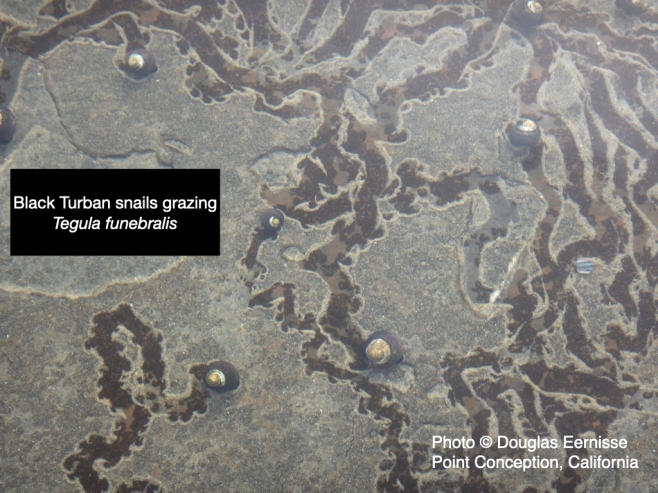
This led to input from Dr. Douglas Eernisse, professor of Biology at the University fo California, Santa Cruz. He did not recognize the specific tracks in Stephen’s or Rick’s photos. He shared the image below showing OTHER radular tracks but with a big difference. His photo showed the marine snail species making the tracks. See the Black Turban snails having dinner? To give you an idea of scale, maximum size of Black Turbans is 4.5 cm.
So out into the world this blog goes in the hopes of engagement and interest and maybe even that someone has documented similar tracks as those in Stephen’s and Rick’s photos with the grazers caught in the act.
I hope it makes you smile too to reflect on how we humans still have so many mysteries to solve. Just peering under a rock or any algae covered surface could lead to another mystery, leaving you wondering “Who goes there?!”
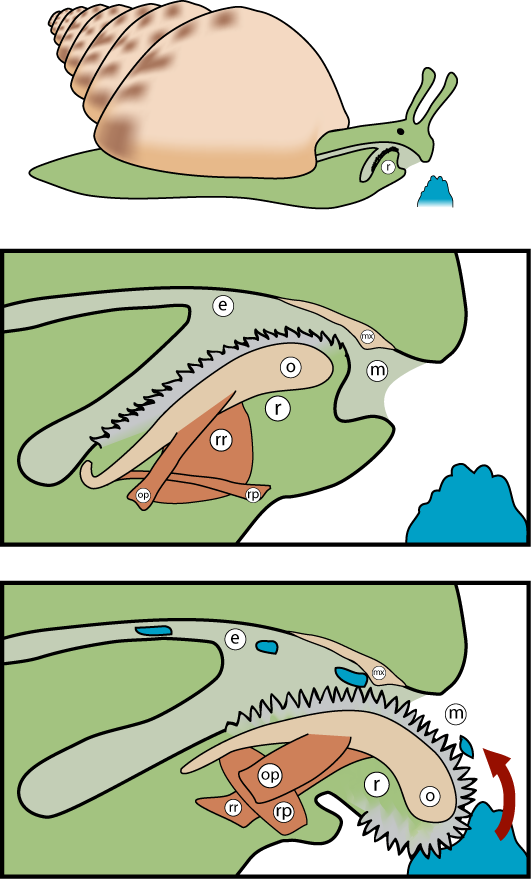
Schematic to give a sense of how the radula are positioned in gastropods (represented by the black zigzag line). I am emphasizing here that both marine and terrestrial snail and slug-like animals have radula. Source of image: Wikipedia.
UPDATES
Information shared by Jason Knight points solidly toward a limpet species being who made these tracks.
The screen grabs below are from Dale Fort’s blog with the same image also being found on the website of the Field Studies Council in the United Kingdom for the Common Limpet (Patella vulgata). We do not have this species in British Columbia but the similarity in the pattern certainly supports that a species of limpet made the tracks in Stephens’ image.
Extra: A fascinating study from 2015 found that limpets (generally) are the “bulldozers of the seashore”. The study found that their “teeth” (radula) are made of the strongest biological material ever tested (and these teeth are less than a millimetre long)! The strength is the equivalent of one string of spaghetti holding up 1,500 kgs. From Professor Steven Hawkins, of the University of Southampton. “The reason limpet teeth are so hard is that when they’re feeding, they actually excavate rock. In fact, if you look at their faecal pellets they actually look like little concrete blocks – because by the time it’s gone through their gut it’s hardened.” (Barber et al).
Barber, Asa & Lu, Dun & Pugno, Nicola. (2015). Extreme strength observed in limpet teeth. Journal of the Royal Society, Interface / the Royal Society. 12. 10.1098/rsif.2014.1326.
Weaver, James & Wang, Qianqian & Miserez, Ali & Tantuccio, Anthony & Stromberg, Ryan & Bozhilov, Krassimir & Maxwell, Peter & Nay, Richard & Heier, Shinobu & DiMasi, Elaine & Kisailus, David. (2010). Analysis of an ultra hard magnetic biomineral in chiton radular teeth. Materials Today – MATER TODAY. 13. 42-52. 10.1016/S1369-7021(10)70016-X.
More tracks made by gastropods
Terrestrial:
Tracks made by a species of garden slug, Richmond British Columbia. Photo: George Holm.
Tracks made by a Banded Garden Snail, Cepaea nemoralis in Queensborough, New Westminster, British Columbia Photo: George Holm.


















 The Marine Detective
