Babies in Their Tentacles!
Oh the fabulously diverse ways that anemones reproduce! I recently documented another species where the larvae develop in the mother’s tentacles! I have even seen the babies move.
See them?!


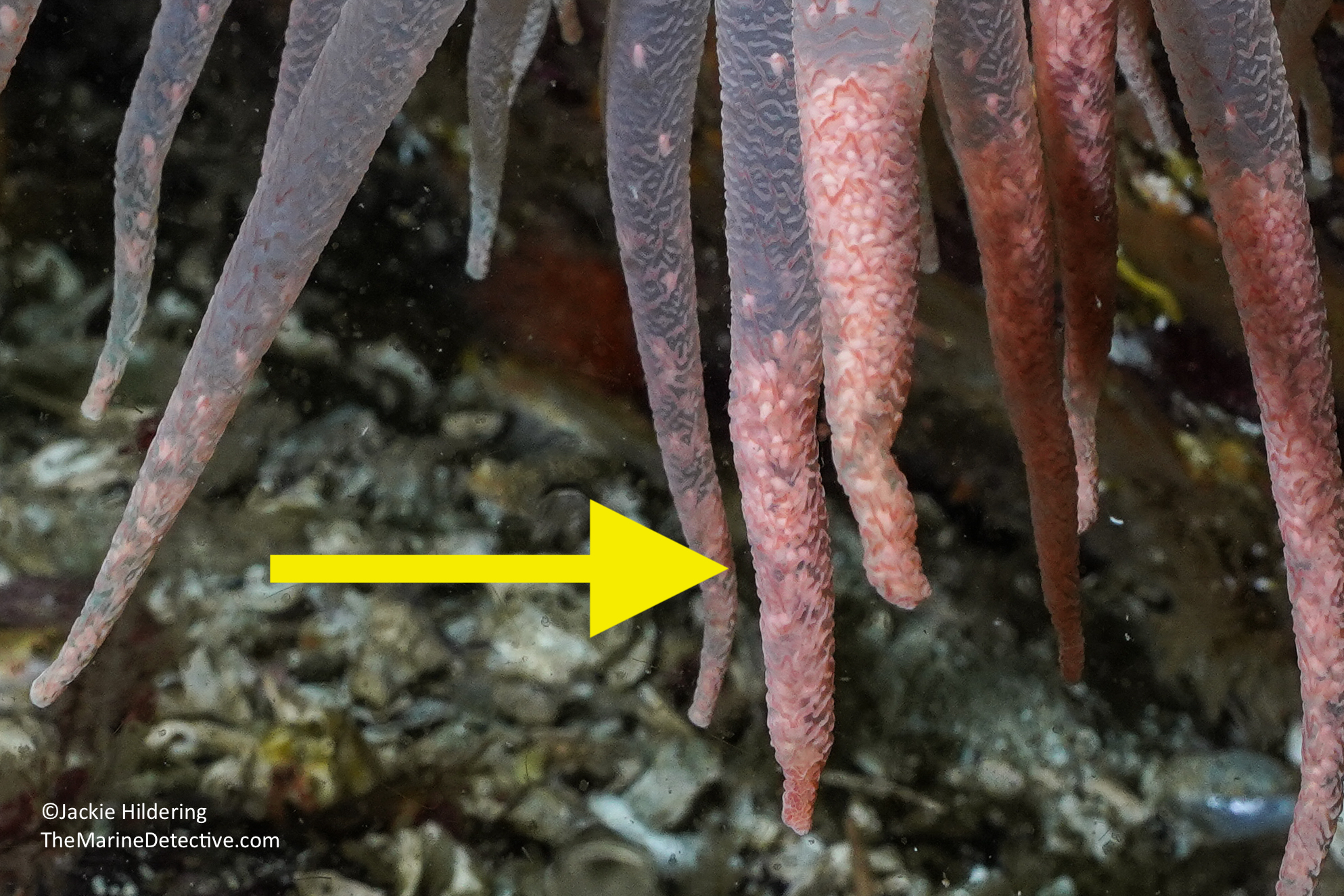
For at least the three anemone species I show here, when the males release sperm into the water column, the females do NOT release their eggs into the water. Instead, fertilization is internal. The embryos are protected as they develop in their mother’s hollow tentacles for around 2 weeks (also in areas known as the pseudospherules). Then, out into the ocean they swim as plankton, via their mother’s mouth.
There are other local anemone species where fertilization is internal too. But the embryos don’t develop in the mother’s tentacles .e.g. Brooding Anemones and Proliferating Anemones. For these species the young are “brooded” in the mother’s digestive cavity and then crawl out of her mouth and are protected under her tentacles.
In many other anemone species, like Plumose Anemones and Painted Anemones, fertilization is external. Both males and females release their gametes into the ocean at around the same time (broadcast spawning). Fertilization happens in the water column and the larvae are plankton until they settle to the ocean bottom.
And then some anemones also have asexual reproductive strategies like budding off offspring; splitting into two; or pedal laceration where a torn piece of the bottom of the anemone can grow into another anemone!
I’ve said it before . . . and you thought human sex lives were interesting. 😉
Snakelock Anemone
Cribrinopsis fernaldi
Described as a distinct species in 1976.
Crown up to 20 cm wide.
There has been considerable reclassification of local anemone species. For this species, the development of the young in the tentacles was described in research from 1976.
“Male Cribrinopsis fernaldi (Fig. 1) in San Juan Islands, Washington release sperm in springtime. The sperm swim or are drawn into the mouths of the females and fertilise the eggs, some of which are still in the gonads, while others are floating freely in the gastrovascular cavity, in the hollow tentacles, and in swellings around the upper outer surface of the body column. Development proceeds within the gastrovascular cavity through gastrulation (3 days) to swimming planula larva (10 days), and then to release of the swimming larvae via the mouth (15 days).”
“Some embryos were removed from the tentacles of the adult on day 1 (early cleavage), and day 7, day 13 (planula), and day 34. These continued their development and metamorphosed and settled at the same time as the larvae which remained in the adult until natural release. It is concluded that the brooding behavior is protective rather than nutritive in function.”


Crimson Anemone
Cribrinopsis rubens
Described as a distinct species in 2019.
Crown up to 10 cm wide.
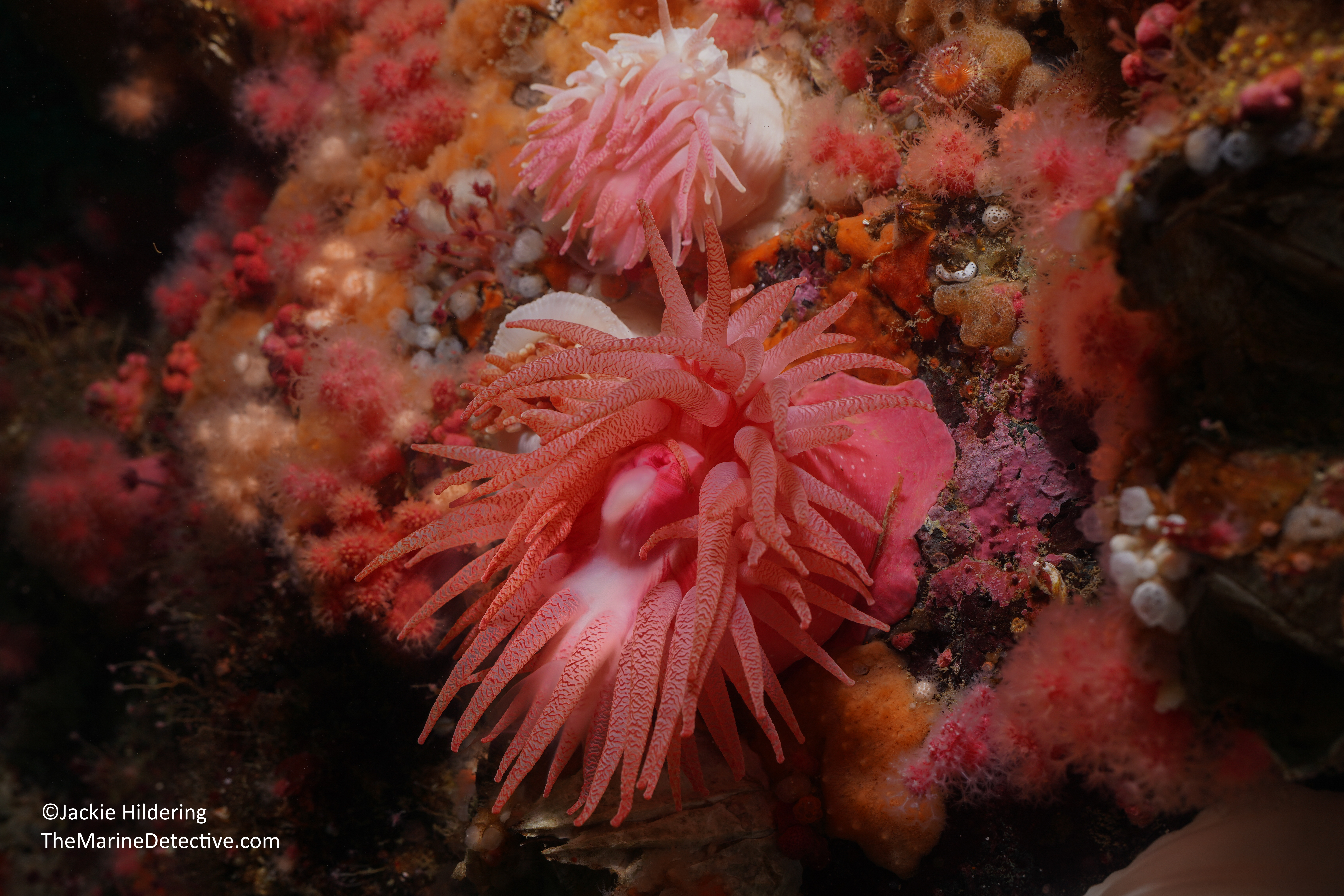
Before I ever managed to find a member of this species with young developing in the tentacles, I often witnessed the spawning of the males. I realized that it was always only males I saw spawning (I never saw eggs being released).
As referenced above, this species was only described as a new species in 2019 having previously been confused with the Snakelock Anemone. Considering how closely the two species are related, it was expected that they would have similar reproductive strategies.
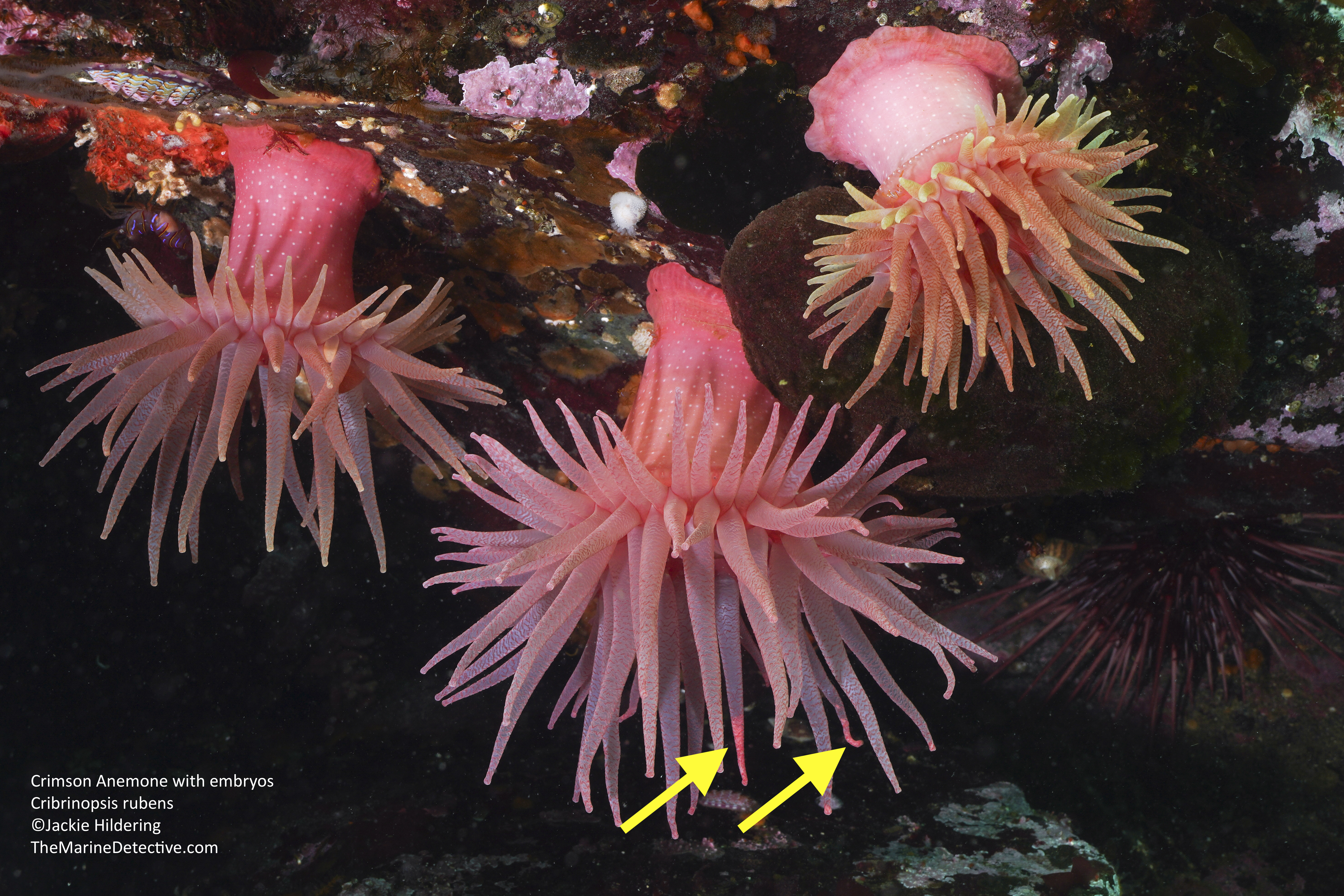
Below, photos of male Crimson Anemones spawning.

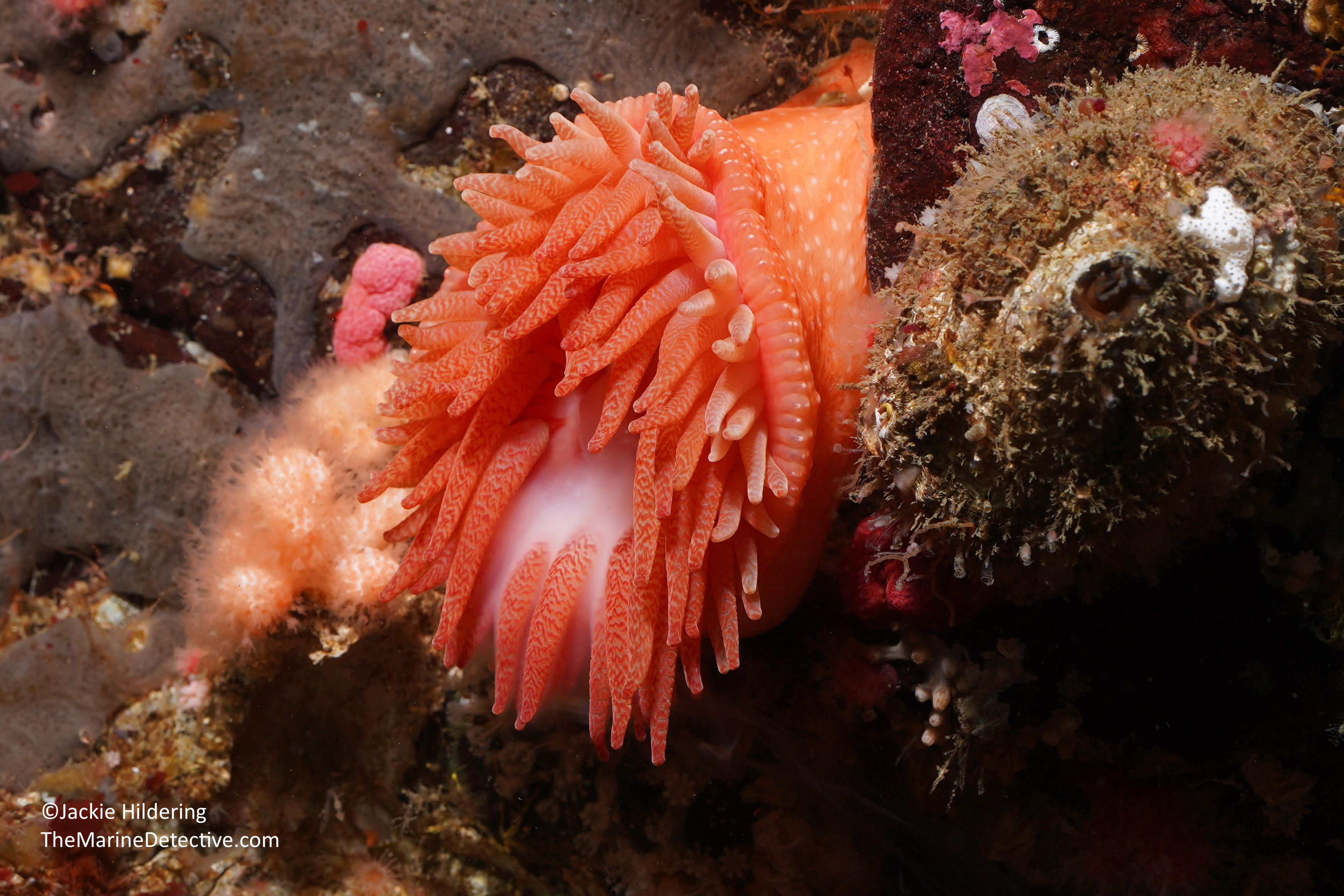
Spotted Pink Anemone
Aulactinia vancouverensis
Described as a distinct species in 2013.
Crown up to 8 cm wide, and as you can see here, not always pink.


Sources:
- Sanamyan, N.P., Sanamyan, K.E., McDaniel, N. et al. A revision of sea anemones of the genus Cribrinopsis Carlgren, 1921(Actiniaria: Actiniidae) from British Columbia with the description of a new species. Mar Biodiv 49, 1951–1969 (2019).
- Sanamyan N, K. Sanamyan, N. McDaniel, 2013. Two new shallow water sea anemones of the family Actiniidae (Cnidaria: Anthozoa: Actiniaria) from British Columbia (NE Pacific).- Invertebrate Zoology, 2013, 10(2): 199-216.
- Siebert, A. E., and J. G. Spaulding. “The Taxonomy, Development and Brooding Behavior of the Anemone, Cribrinopsis Fernaldi Sp. Nov.” Biological Bulletin 150, no. 1 (1976): 128–38.
- Snail’s Odyssey – Sea anemones & relatives – Reproduction: Sexual


 The Marine Detective