Hiding in Plain Sight – An undescribed sea star species
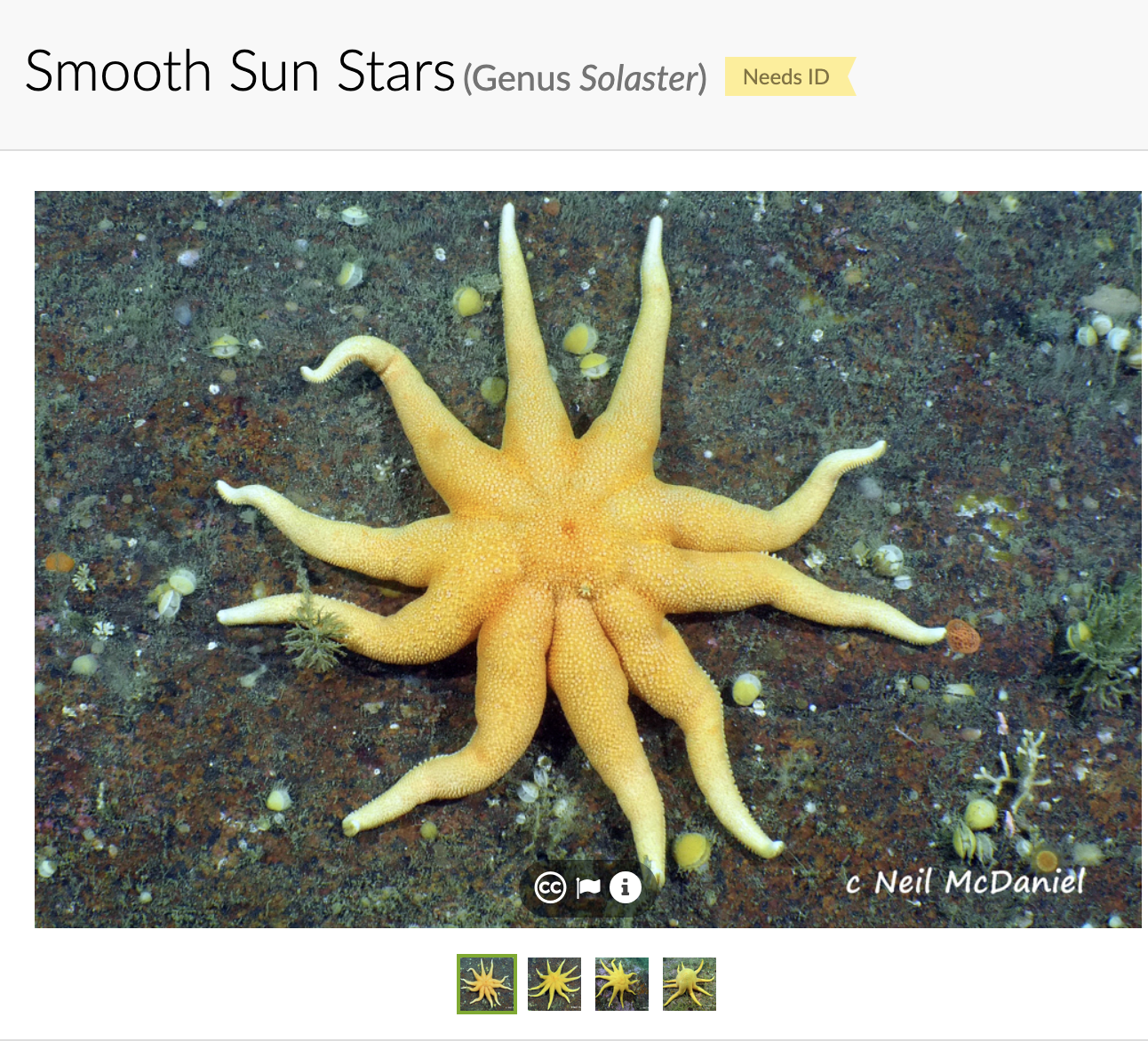
The following photos from my dive yesterday near northeast Vancouver Island are of a new, “undescribed” species of sea star. I documented three different individuals of this species on our dive yesterday, and you will note the colour variation.
I am sharing this with you because it is AGAIN evidence of how little we know about marine species, even in the shadows. May this add to having the appropriate humility and precaution in what we think we know and how we treat the ocean.
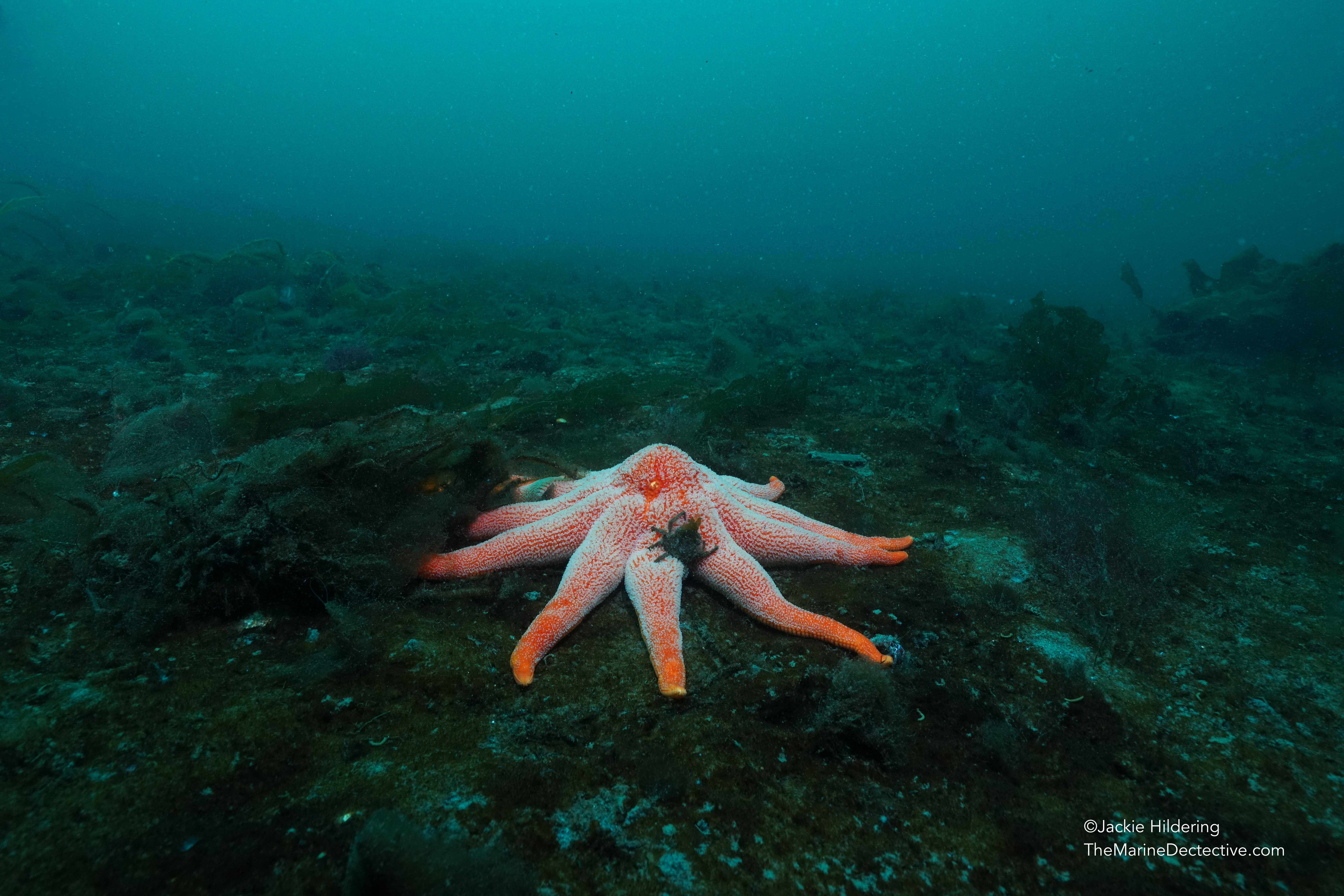
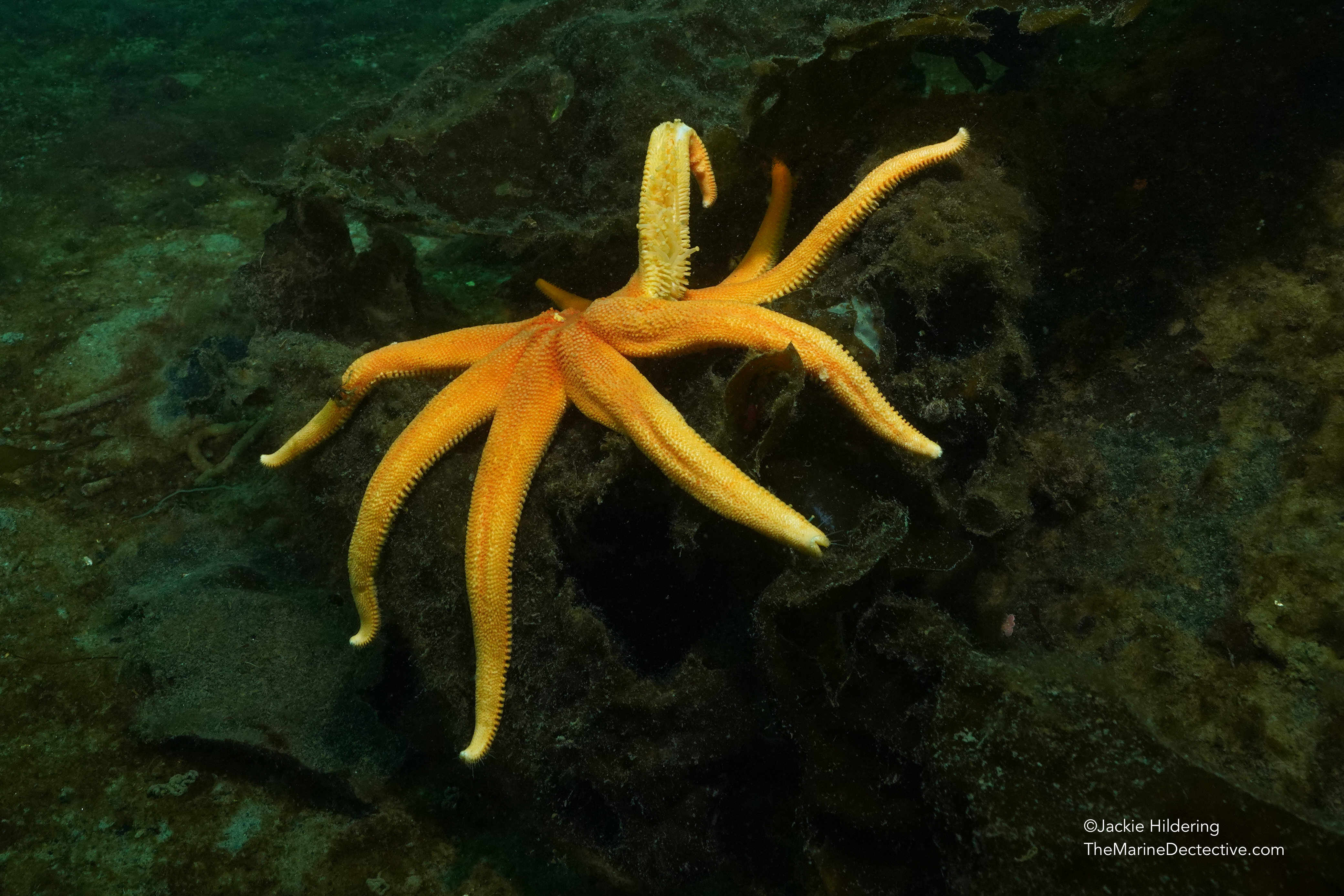
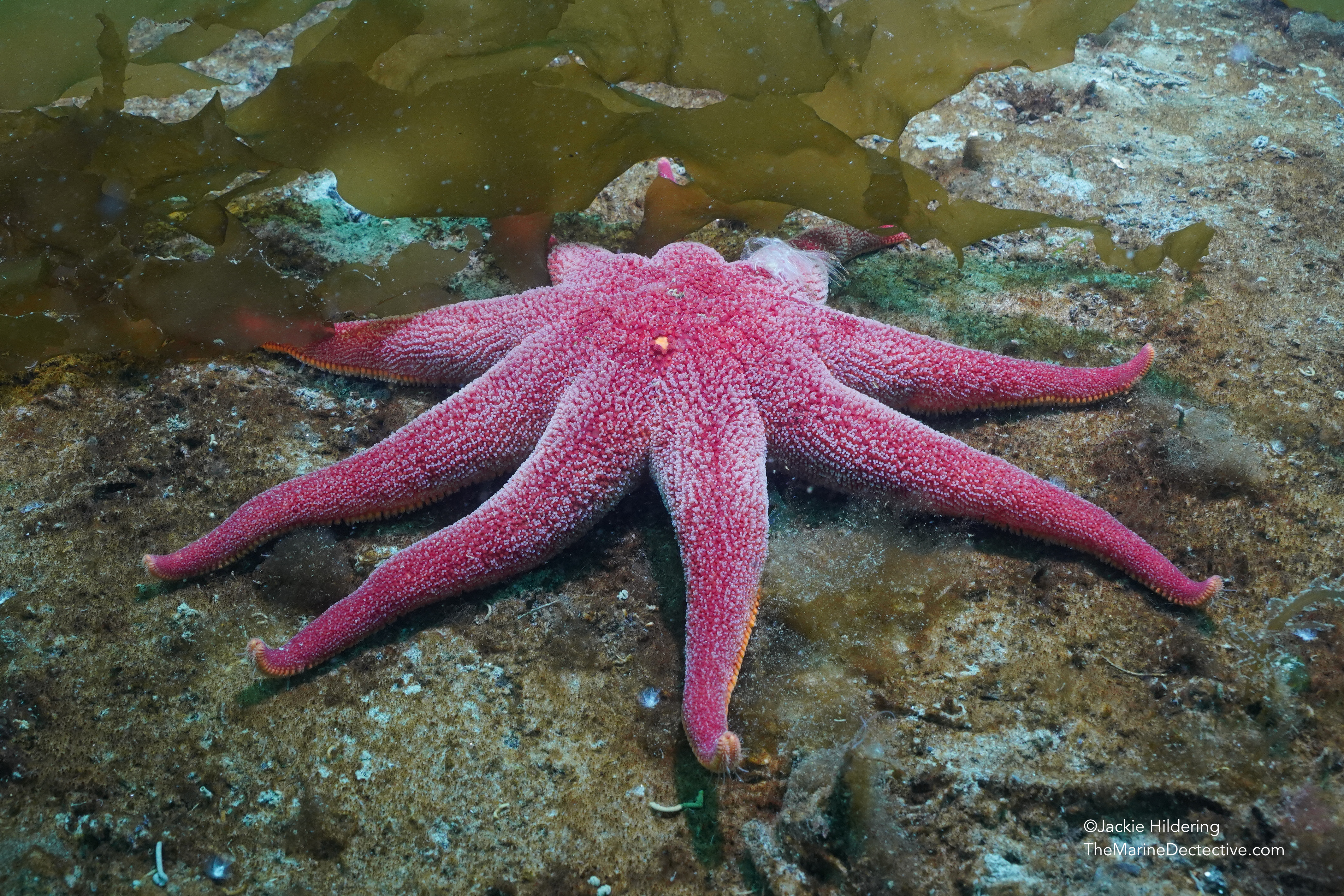
New? This means that previously, humans did not realize it was a distinct species.
Undescribed? This means it is an organism recognized by scientists to be distinct but research has not yet been conducted and published describing how the species is distinct and naming it.
The scientists in this case are Neil McDaniel and Dr. Christopher Mah.
Neil confirmed that it is a “Solaster” (genus) and is, for now, referencing it as Solaster sp. A.
How do I know the three I photographed yesterday are this “new” species? Because I misidentified one in an email to Neil McDaniel. Who let me know the following:
“I believe this is the undescribed species of Solaster found on our coast. In Lambert (2000), it is described as Solaster paxillatus, but my understanding is that is a NW Pacific (Japan) species, not NE Pacific . . . This Solaster usually has between 8 to 10 rays with a rather rough-looking aboral surface due to the conspicuous pseudopaxillae. Colour ranges from yellowish through a deeper orange. It is never bicoloured like stimpsoni [Striped Sun Star]. The rays can be fairly slim or quite puffy-looking. Unlikely to be confused with Solaster dawsoni [Morning Sun Star], which usually has more rays (12 is common), or Solaster endeca [Purple Sun Star], which has a similar number of rays, but much shorter and stouter”. (Neil McDaniel, pers.comm.)
Is it rare? Likely not! More likely is that it has been misidentified, even in Lambert (2000). Neil references it as likely hiding in plain sight. Because who is looking? These three were near a dock, which, like so many docks on our coast, had debris of human origin nearby.
Do you think you have photographed one? If yes, it’s best to upload your photos to iNaturalist to add to the collective knowledge about the species.
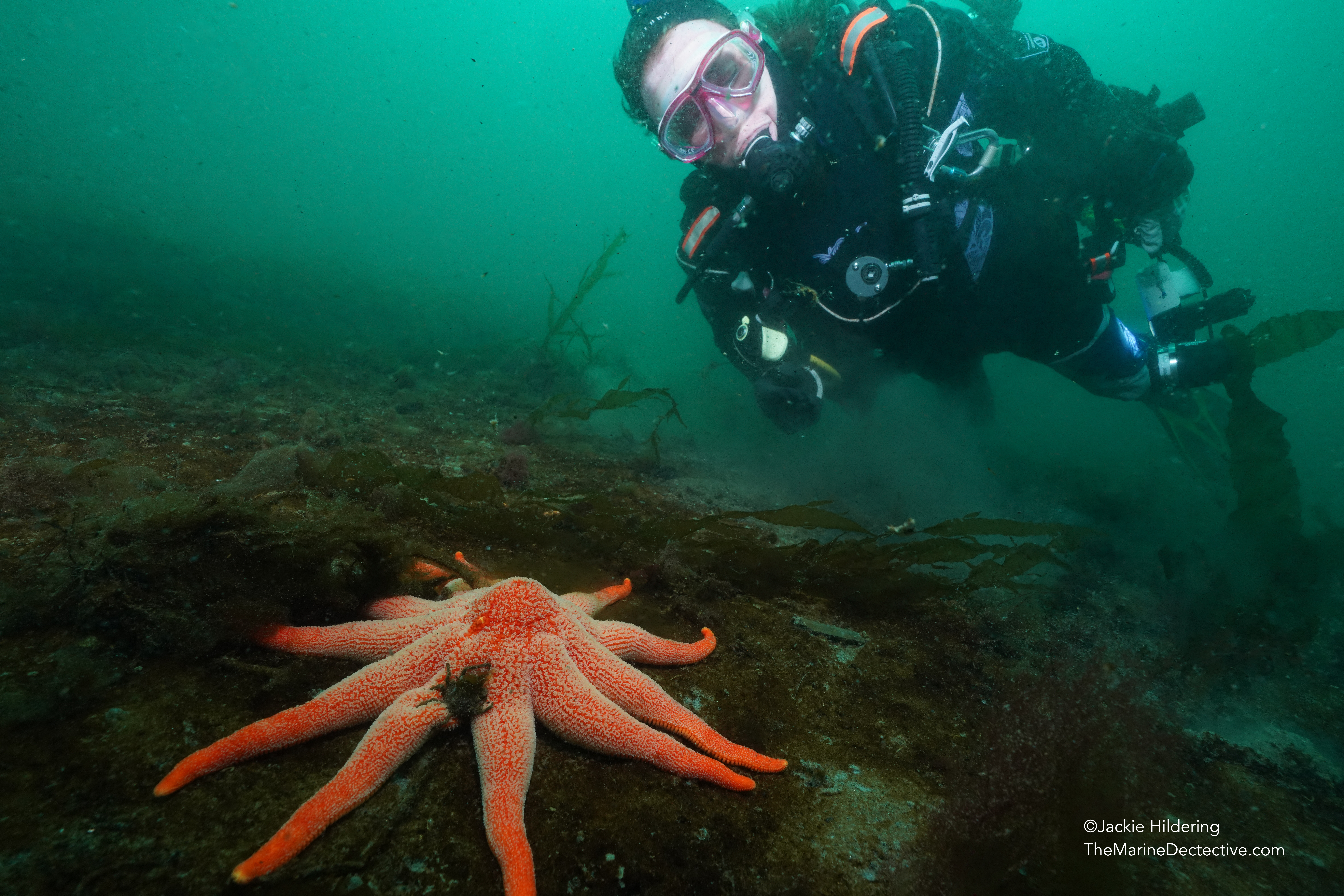
From Neil McDaniel on iNaturalist:
This large species of Solaster has not been described. It reaches 40 cm in diameter and has 9-11 rays, most often 10″ and “This star was once thought to be Solaster paxillatus, (which is found in the NW Pacific), but specimens collected from Knight Inlet were confirmed to be an undescribed species of Solaster (Chris Mah, pers. comm.).”


5 Responses to “Hiding in Plain Sight – An undescribed sea star species”
Lovely photographs. I cannot say anything about species, I don’t know enough, but your work impresses this prairie boy hugely. There are more things in all the oceans, Horatio, than are recognizable in human bases of knowledge
I have bdeen waiting for a new post but it is getting longr and longer. I wanted to tell you about seeing you on national television a few weeks ago. I hope this means you will become the go-to expert on marine biology (but not for the kind of reason you had to talk about this time.) I hope we will see you again.
So busy in May with teaching workshops, grant reporting and a Grey Whale webinar. You may want to sign up for that. Please see https://www.zeffy.com/en-CA/ticketing/webinar-plight-of-grey-whales
the last photo looks like a crown-of-thorns starfish, but the color from online looked a bit on the orange side, so maybe it may not be???
Thank you for your interest.
This is the species about which I write the blog – the undescribed Solaster sp. A.
There are no Crown of Thorns sea stars in this range, NE Vancouver Island.