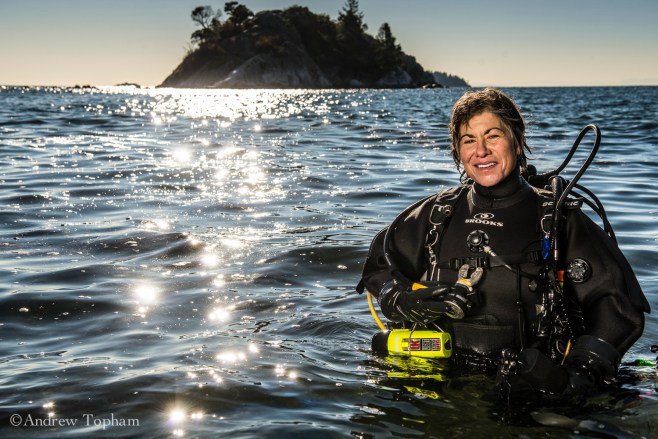
My dry suit has been hosed down and is drying in the sun; my regulator is soaking in fresh water; the washing machine is chug chug chugging with the clothes used over the last days of diving; and my head and heart are full of so much I want to share.
I’m back from another trip organized to God’s Pocket Dive Resort just beyond Port Hardy . . . more than 11 hours spent underwater over the last days. Such an escape. Such an immersion in wonder and that sense of humility that comes with submerging in the force that sustains this planet. Such an opportunity to learn.
I saw my first Sea Angel.
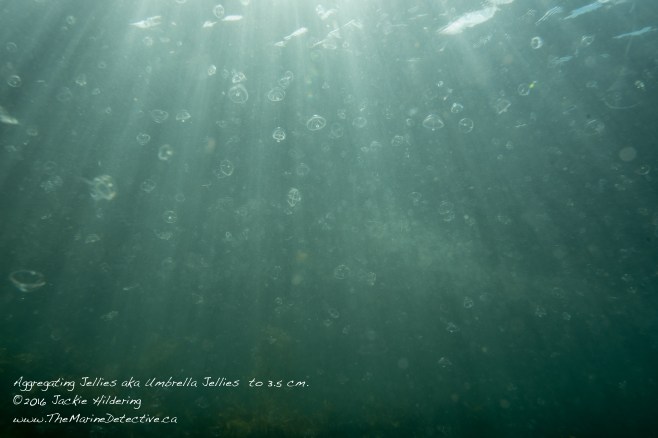
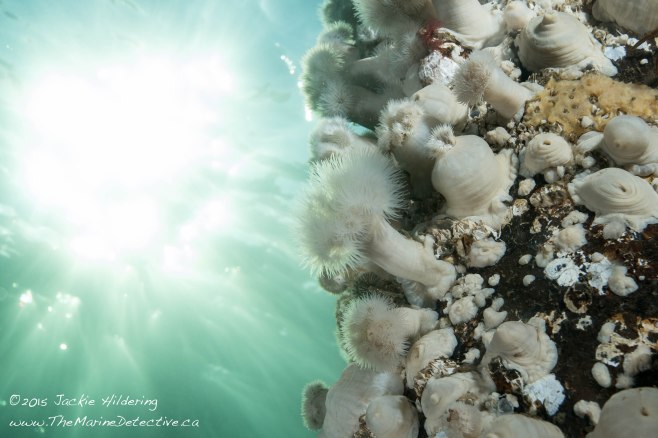
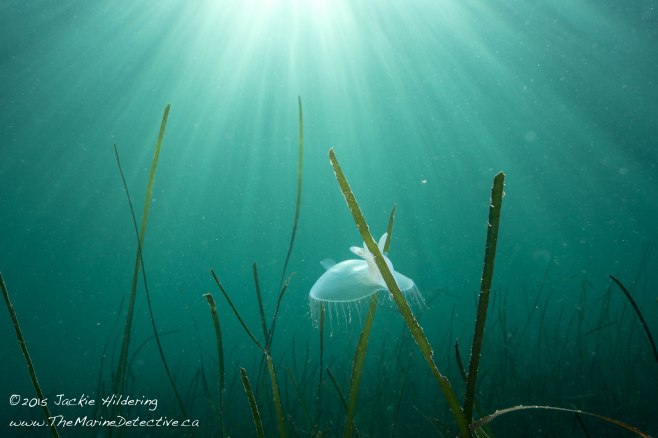
My buddy and I had been drifting along for about an hour. We had schooled with rockfish; hung next to Orange Sea Pens as they bowed in the current; and marvelled at the abundance of anemones and their babies, studding the forests of kelp. We had done our safety stop with a seeming snowfall of pulsing Aggregating Jellies streaming down around us in the sun’s beams.
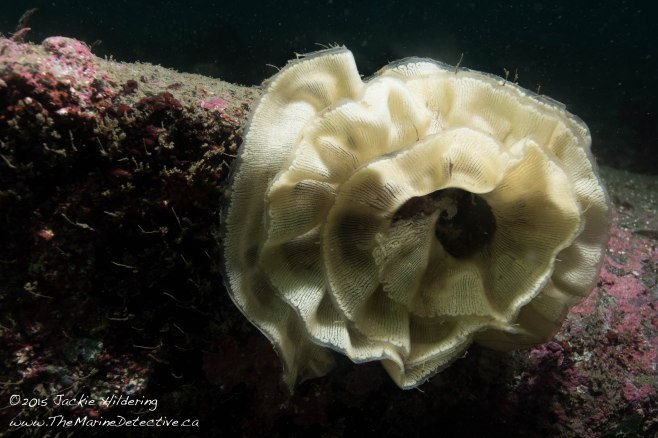
We had already been further awed by Sea Butterflies “flying” by our masks. Sea Butterflies are planktonic sea slugs! They are “pteropods” – swimming shell-less molluscs whose “wings”(ptero) are their feet (pods). This genus does have an internal gelatinous “pseudoconch” (false shell) and the brown dot you see in my image is the gut. Sea Butterflies feed by forming a mucus web up to 2 m in diameter in which they trap smaller plankton and bits of organic matter. Oh to see that. It was apparently first documented in the 1970s by researchers while SCUBA diving.
Sea Butterfly – Corolla spectabilis. Dark spot is the gut. See this link for more species information and a video (with excited diver vocals) of a swimming Sea Butterfly.
All those jellies and Sea Butterflies pulsing around us and then, just when I was about to break the surface back into the world where gravity has such a stronger hold on me, I saw it! So small, tiny wings pulsing . . . a Sea Angel!
This is another species of planktonic, “winged” sea slug (but the adults of this species are completely shell-less; they do not even have pseudoconch). Sea Angels are a rarity so far to the north and are only occasionally seen at the surface (found to depths of 1.5 km). Their presence is likely due to warmer waters (El Nino and possible climate change) and a big northwest wind that had raged a couple of nights prior. The wonder of it, to see something so otherworldly, to know of its rarity in this area, and to get a sense of its planktonic fragility – surviving from a larval stage, escaping predation by fish, and to be carried by the currents in the vastness of the sea.
It may be hard to imagine but this species is a voracious predator! Cliopsis feeds on other planktonic snails by grabbing them with a long proboscis (which can be up to two times its body length), a sharp radula and hooks made of chiton!
Screen grab from the “Plankton Chronicles” showing a Sea Angel feeding! See amazing 1.5 min clip at this link.
When a Sea Angel comes into contact with a Sea Butterfly’s feeding web, it reels it in, dragging the Sea Butterfly with it. When close enough, the Sea Angel then uses its probosis to “cut” the Sea Butterfly from its psuedoconch and eats it.
The marvel of it all, the delicate balance of this planktonic world about which so few of us have knowledge but which can be so impacted by our activities. There is concern about the impact of ocean acidification (caused by our carbon use) on the development of these organisms.
As always, don’t be despondent. See the beauty, know your connection, and recognize the common solutions and great gains of caring more . . .. and consuming less.
Just to put some beauty and love into the world . . . for you, here are my above-the-surface photos coupled with the hauntingly beautiful and poignant song “Dry Land” by Joan Armatrading (1975).
All photos are from around NE Vancouver, the area so close to my heart and home to my efforts as The Marine Detective.
Lyrics include:
“Been a long time at sea – and the season of loving – has long awaited me. Tides and waves have kept me – kept me going. I’m longing for the calm . . . .”
If video does not show above, please see www.youtube.com/watch?v=aHUiN8dEnpI.
Those who are as in awe of the species as I am, describe it as “adorably bizarre” (Dr. Milton Love) and as “true survivors from before the dinosaurs . . . no wonder they look like they’re from another world.” (Ray Troll, source 5).
Maybe not as flattering a description, but certainly accurate is: “They look like you put three or four things in a blender” (unnamed scientist, source 5).
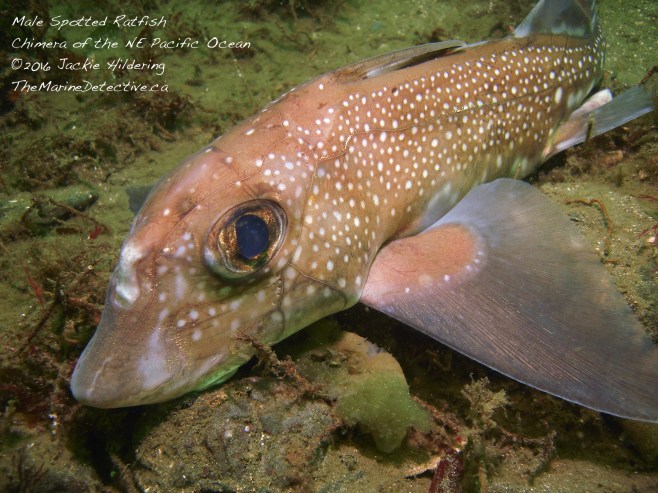
Indeed, this family of fishes is aptly named the “Chimeras” for the creature from Greek mythology that is a composite of other species.
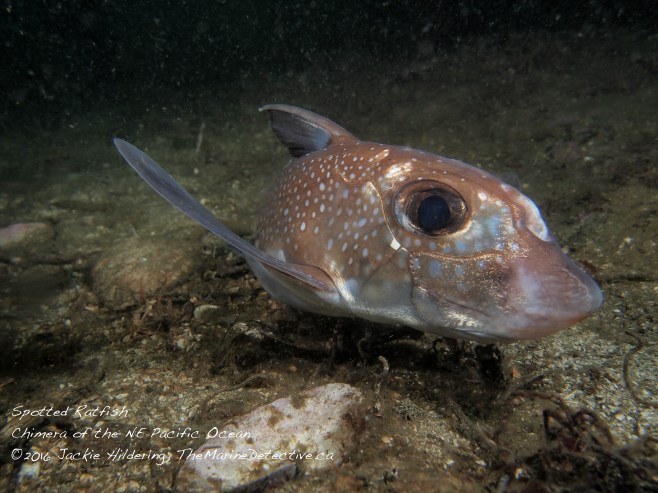
The common name of this fish is the “Spotted Ratfish” favouring the perceived likeness to that rodent. The scientific name “Hydrolagus collieli” favours the rabbit-like resemblance with “Hydrolagus” translating into “water rabbit”.
For me, it is an exquisitely beautiful species and a source of marvel. Notice the wing-like pectoral fins; huge eyes that seem to be able to pivot back and forth in their sockets; scaleless, white-spotted skin with a silvery sheen; and the beautiful gold “stitching” that make it look all the more like it has been assembled from other parts. Oh and then there are the remarkable structures in the males! Read on for an explanation of what they’re all about.
Likely Spotted Ratfish are well known to many fisher-folk in their range from the western gulf of Alaska to southern Baja California but, as a fish out of water, I think it is so difficult to see the species’ beauty. We divers are so lucky to see them below the surface and I’m hoping the photos and information below enhance an appreciation for this fish that should never, ever be referenced as “ugly”! 🙂
Are they sharks? The Chimeras are closely related to rays, skates and sharks. They are all cartilaginous fishes (Chondrichthyes) but sharks and rays belong to the subclass “Elasmobranchii” and the Chimaeras are in a separate subclass, the “Holocephali”. They diverged from their shark ancestors some 400 million years ago.
Senses: Like rays, skates and sharks, they have pores in their heads with which they can detect the electrical fields of their prey – even tiny heartbeats under the sand (source 5). Their huge eyes suggest that Spotted Ratfish are more active at night. Even though Spotted Ratfishes are often in the shallows, my personal observations support that their eyes are designed to function in low light. I will never forget my excitement at seeing one for the first time and, without thinking, turning my dive light on the poor guy. The result appeared to be that I temporarily blinded him. He swam forward – directly into a rock. Eek!
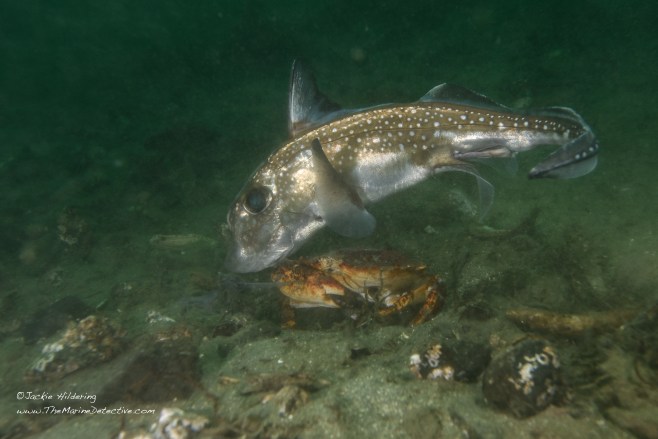
Diet: Ratfish have plate-like grinding teeth and they are reported “to have the highest jaw leverage of any cartilaginous species studied” (source 3). This makes them well-suited to be able to crush the hard bits of fish, crabs including hermit crabs, shrimp, snails, sea urchins, worms, bivalves like clams, and isopods (source 9).
Defences: In addition to their biting strength, Spotted Ratfish have a retractable spine with a venom gland. See it there in front of the dorsal fin? This causes some discomfort in humans but, one study revealed that it can be fatal to Pacific Harbour Seals by perforating the esophagus or stomach and migrating into vital tissues. The spines have also been found in the heads and necks of a few California and Steller Sea Lions but have not been proven to be the cause of death (source 1). In addition to seals and sea lions; Spotted Ratfishes’ predators include Sablefish; shark species like the Bluntnose Sixgill and Spiny Dogfish; birds like Buffleheads, Common Murres and Pigeon Gullemots; Humboldt Squid and, apparently, Northern Elephant Seals eat their eggs (source 9). We humans only went after Spotted Ratfish for their livers in the 1800s. We don’t like the taste of their flesh – lucky Ratfish.
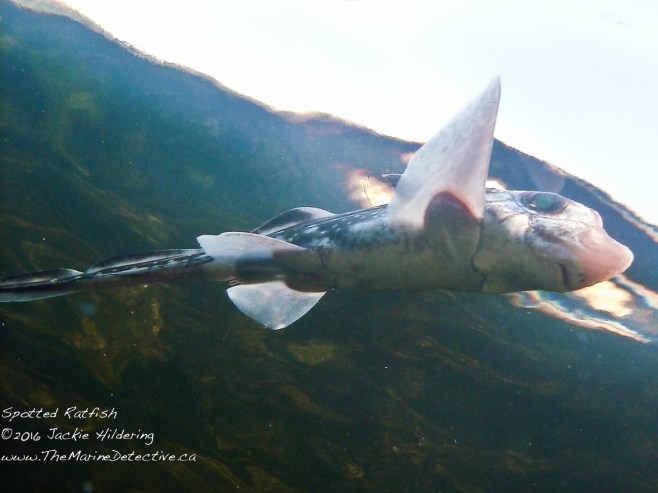
Mobility: In having such a thin, whip-like tail that can’t provide much force, propulsion in Ratfish comes from their wing-like pectoral fins. It is such a thing of beauty to see them swim, or is it fly? Like rays, skates and sharks, they have large livers that aid buoyancy whereby they can hover in the water column and then glide off.
Female bits: Like many rays, sharks and skates, chimeras are “oviparous”. Fertilization is internal and then egg cases are laid. The leathery egg cases look like “little violin cases” (source 2) and each contain one egg. As seen in Wendy Carey’s remarkable photo below, they female “extrudes’ two egg cases at a time – one from each oviduct. Reportedly, they often hang from her in the water column for four to six days before falling to the ocean bottom. Then, she lays another pair (this suggests female Ratfish may be able to store sperm). The baby Ratfish develop within the egg case for 5 to 10 months and then wiggle out when they are around 14 cm. It appears to me that they spawn throughout the year but there may be a peak from May into October (source 9). Little is known about the longevity of Ratfish but preliminary research suggests that they are likely late maturing with females becoming sexually mature at age ~14 and males at age ~12 (source 7). See this link for my blog with photos of other NE Pacific Ocean fish egg cases known as “mermaid’s purses”.
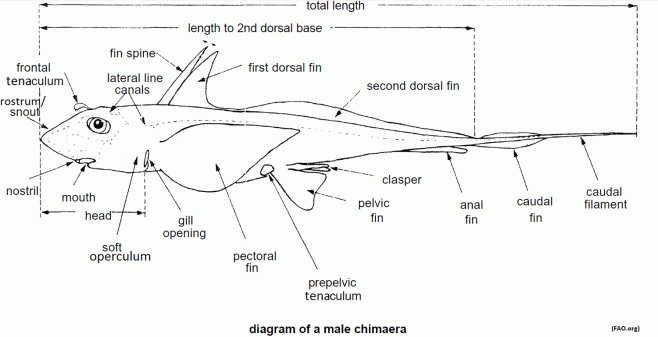
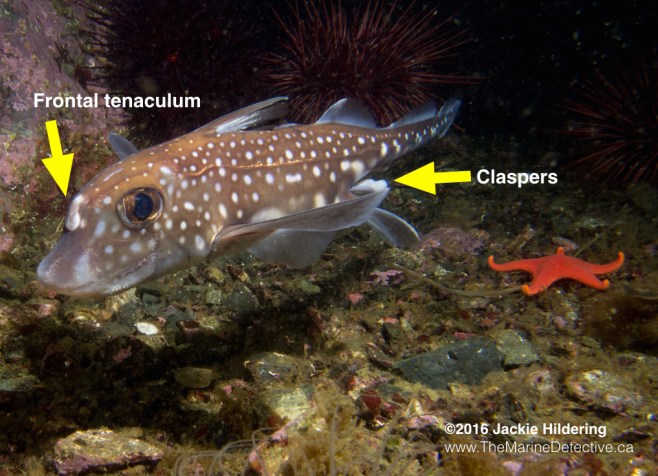
The claspers in the pelvic area you may know from shark species. They are the males’ sex organs containing sperm and they are used only one at a time to inseminate the female.
The remarkable stalked club structure with little hooks on the male’s head is the “frontal tenaculum” and it is unique to adult males in the Chimera family. It is usually withdrawn into the groove in their foreheads but, during copulation, is used to clamp onto the female’s pectoral fin. There is also another grasping structure, the pre-pelvic tenaculum, just before the pelvic fins that also allow the male to anchor into position.
In sharks, males bite onto the female’s pelvic fin to get into position but I suggest, with Chimera’s very different teeth, this would not work well and thereby, that there was a selection pressure for such unique structures. It is noteworthy too that male Chimeras have to be much smaller than females because otherwise, with their heads attached onto the pectoral fin, they wouldn’t be able to position a clasper into the female (source 8).
Ray Troll (colourful always) describes the frontal tenaculum as a “girl grabber” but don’t let that suggest that there isn’t courtship between Ratfish. Apparently, there are colour changes and distinct swimming patterns and, once the male’s clasper is inserted in the female, they swim together like this for between 37 and 120 minutes (source 9).
I assure you, if I manage to witness Spotted Ratfish courtship or mating, there WILL be an update to this blog!
Deep sea ROV video of what may be the species Pointy-Nose Blue Ratfish (Hydrolagus trolli) in the NE Pacific. Good general information on ratfishes in general and would mean a very significant range expansion for this species.
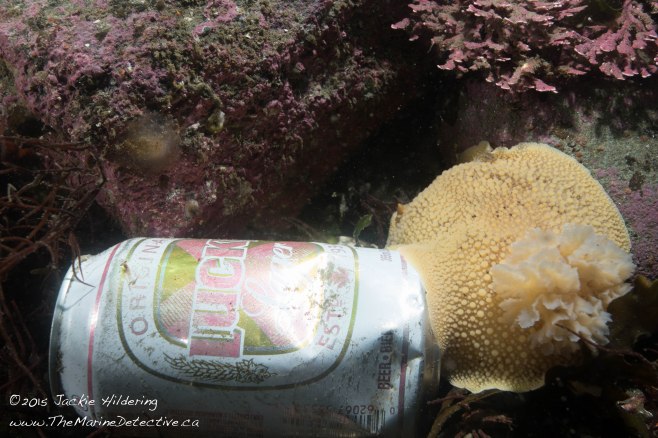
Here’s an item that is shared for the purposes of lightness and connection. Because, let’s face it, there’s enough dark and heavy out there. Also, maybe, just maybe it will create an opportunity for awareness about marine debris?
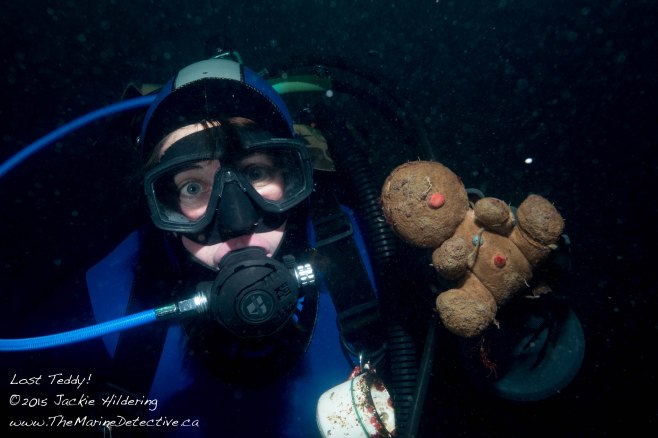
See the image below. Could this be the world’s saddest Teddy?
Lost Teddy! Wouldn’t it be remarkable to find out how, where and when s/he ended up in the Ocean?
My dive buddy, Natasha Dickinson, found him/her at bottom of the Ocean in Port Hardy on January 1st. Unlike so much of the debris near the dock, it is unlikely this little guy was mindlessly tossed away (see photos below).
Wouldn’t it be something to find its home and know its story? Would it enhance a sense of connection? Would the story be a catalyst to discussion, engagement and action about the insult to our Oceans that is marine debris?
Via Facebook and Twitter this information is being shared with “#LostTeddy”.
Teddy is now being cleaned up for potential reuniting with humans.
Update: January 3, 2016 – It’s not a Teddy. I got this clue from that Teddy locating site”That’s Ginger Bell, originally sold by Sears in 2004! Brenda.” Sure enough – looked up a photo and, it’s Ginger Bell.
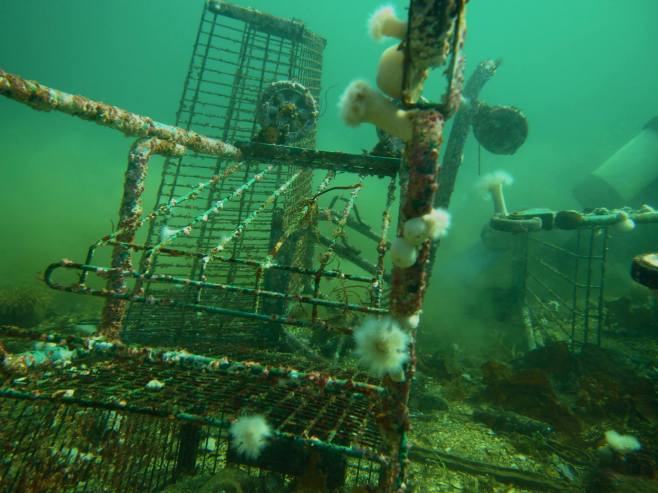
Photos below show some of the beauty striving to survive among the debris under the Seagate Dock in Port Hardy (the dive where Teddy was found). This “scene” is representative of most docks on our Coast and I am striving to raise awareness about marine debris and how, to me, this is the most stark indicator of the disconnect about the importance of the Ocean to human health. We are all vastly empowered to create positive change, not only by ensuring there is less physical pollution (litter) but by reducing use of carbon and chemicals such as pesticides (thereby reducing temperature change, acidification, toxins); and increasing knowledge and engagement about the importance, beauty and fragility of our Ocean. Reality is, what we do to the Ocean we ultimately . . . do to ourselves.
Shopping carts and plastic . . and anemones. Photo by dive buddy Alexandra Spicer.
This, like my “You Otter Know” blog, is aimed at clearing up species confusion and offering some support to my fellow marine educators.
Yes, I am writing this for much needed educational porpoises. Sorry! I will attempt to restrain myself from further bad puns (but I am counting on you, the readers, to come up with some doozies).
Oh the number of times I have had the joy of an exchange like this:
Me: “Look, a porpoise!”
Response: “Ja, ja, een delfin!” or “Oui, oui, un dauphin” or “Ja, ja, een dolfijn” or “Yes, yes, a dolphin!”.
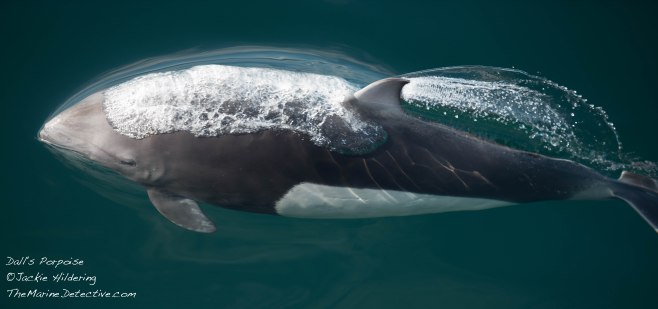
Me (armed with images like those below): “Nein – een schweinswal” / “Non – un marsouin” / “Nee – een bruinvis” / “Nope – it really is a porpoise!”
It is so understandable that there is significant confusion. The words dolphin and porpoise were, colloquially, used as if they were synonyms into at least the 1970s.
But, dolphins and porpoises are more distinct than lions and tigers. Lions and tigers are not only in the same family but in the same genus. Dolphins and porpoises are in different families, having diverged around 15 million years ago.
Below, please see a collection of my images and texts I have been posting as “#OceanVoice”.
At this critical time of decision-making, they are directed at increasing hope; awareness of our connection to the environment; and positive action for the sake of greater health and happiness
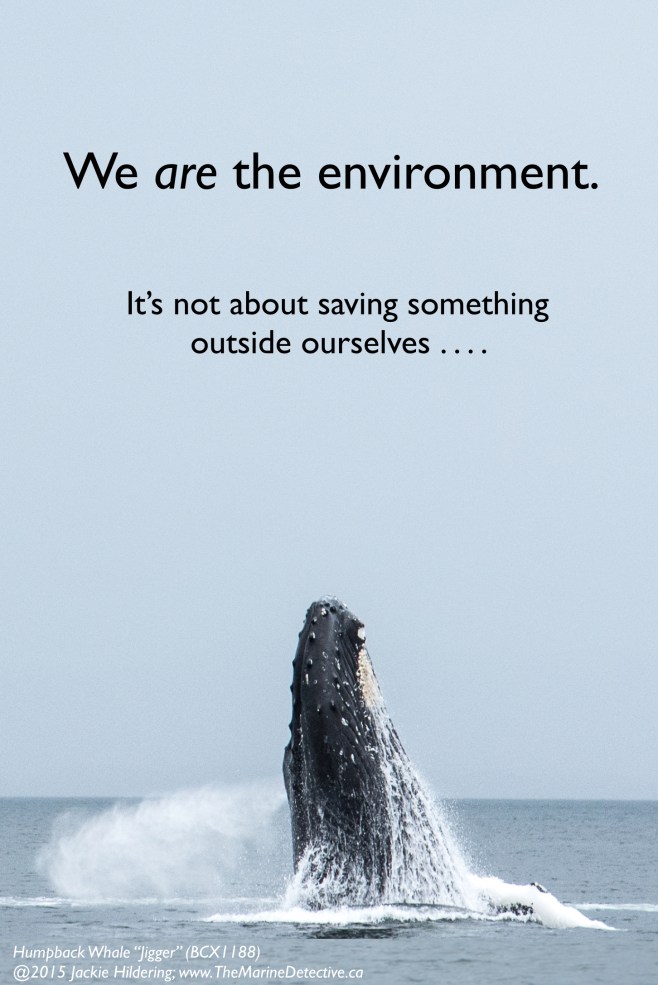
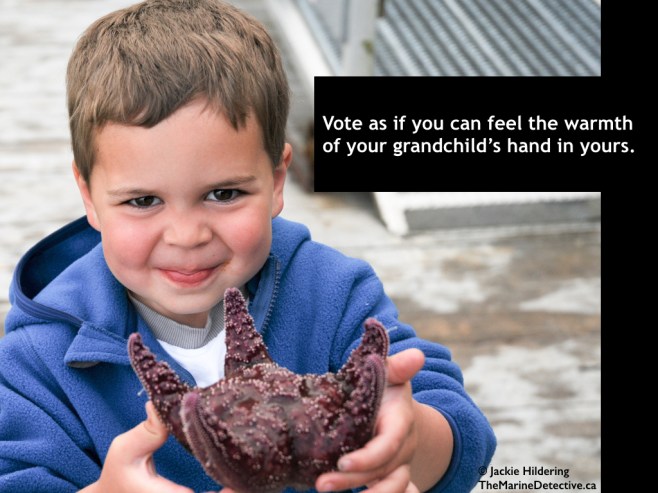
Caption for the above image: It is such a limitation to think, and feel, and speak in a way that this is somehow about something outside ourselves . . . saving “the environment.” We are the environment. It’s not about saving something outside ourselves . . . whales, wetlands, trees, fish. It’s about choices that benefit ourselves and future generations, providing the greatest chances for health and happiness. It’s about children. That’s what all these photos and words are about here on “The Marine Detective” folks. Inspiration. Connection. Understanding our capacity for positive change. Caring More. Consuming Less. Voting for the future. And, knowing our place IN the environment.
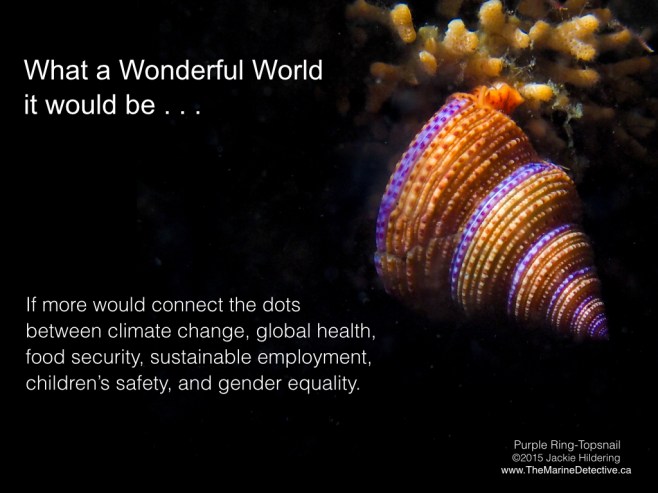
Caption for above image: Yes, I’m going there. It is a critical time of decision-making. Those that have the power now use fear as a blunt tool to perpetuate false dichotomies like jobs vs. the environment / social problems vs. environmental problems. “Saving our planet, lifting people out of poverty, advancing economic growth . . . these are one and the same fight . . . solutions to one problem must be solutions for all.” What a wonderful world it would be if more would connect the dots between climate change, global health, food security, sustainable employment, children’s safety, and gender equality*. We have tremendous potential for positive change when fear is replaced with knowledge and empowerment. It is an essential time to reach out – reducing fear; connecting the dots; creating positive change.
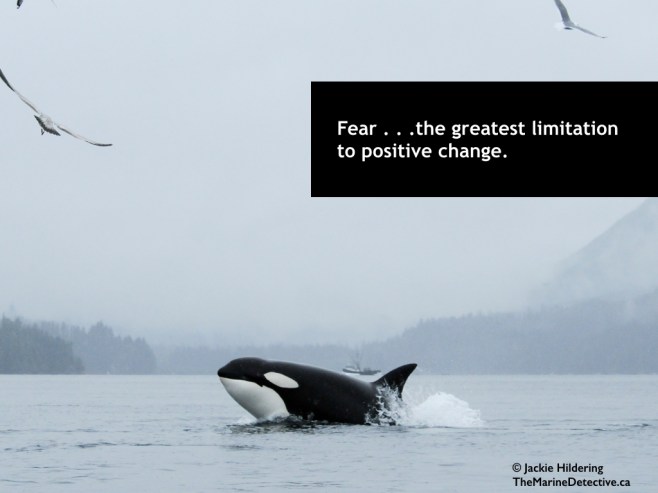
Caption for above image: Fear . . . such a limiting factor to positive change. A lesson learned from Killer Whales – how wrong we can be but how quickly we can change when fear and misunderstanding are replaced by knowledge and connection. Yes, fear sometimes saves lives but too often: Fear masks truth. Fear chokes potential. Fear makes us automatons, marching on, ignoring the reality around us. Fear walks hand-in-hand with disempowerment, the same neurons firing, limiting the way we look at the world and ourselves. And above all, fear loathes change. Thereby, fear is such a powerful tool to be used by those who benefit from things remaining the same. #OceanVoice – thoughts about hope, our connection to the environment, and positive action for the sake of greater health and happiness.
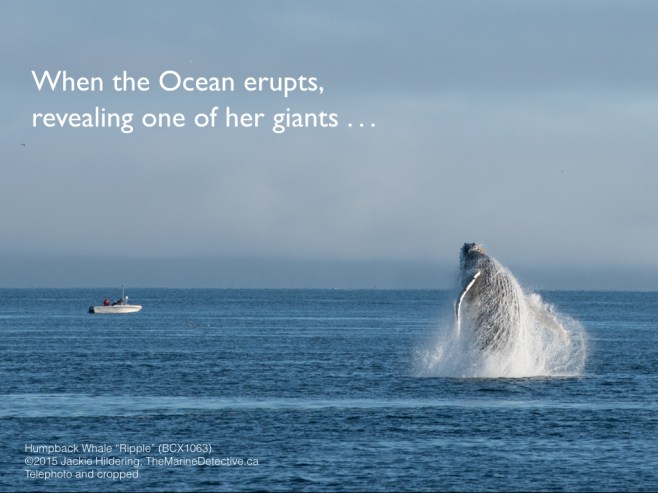
Caption for above image: When the Ocean erupts, revealing one of her giants (Ripple the female Humpback Whale breaching; BCX1063). It’s an opportunity to be awash in wonder, humility, connection, and gratitude. We all depend on the Ocean and where we go from here depends upon knowing while we are so small, our value systems and daily actions have such big impacts. How we consume; how we vote; how much we recognize our great capacity for positive change and how fear of change limits this . . . it’s enough to bring giants back from the brink AND increase human happiness.
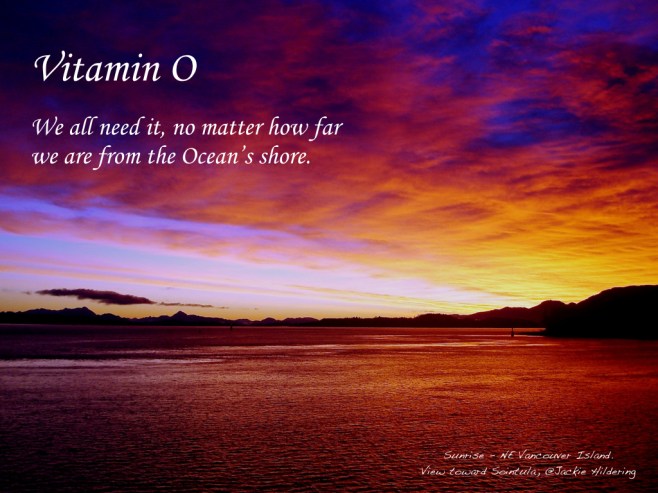
Caption for above image: Vitamin O. Where are you as you read this? Are you far from the Ocean’s shore or feeling her waves below your feet? It doesn’t matter. We are ALL part Ocean from the oxygen in our lungs (50%+); to the fluid in our veins; and many of the nutrients that build us. Our connection to the Ocean is the great common denominator of life on this blue planet. Healing, climate regulating, carbon dioxide buffering . . . life sustaining. Acknowledging how little we know, inspired by the mystery and beauty; embracing the appropriate humility and precaution in our daily actions . . . caring more, consuming less, voting for the future . . . . knowing the vital importance of Vitamin O.
This photo has been on a beloved friend’s refrigerator for almost 16 years. I sent it to my nearest and dearest as a New Year’s greeting at the end of 1999 after leaving my “career” as a teacher and school administrator in Rotterdam.
It references following my need to be learning from Nature, not speaking about it as if it were somewhere else, and to find a more effective way to enable understanding of connection and common solutions to socio-environmental problems.
It led me back to BC; to being a deckhand, and to Orca. Orca as extraordinarily powerful ambassadors of of how wrong we can be; how quickly we can change, and the repercussions of humanity gone mad with chemical use and consumerism.
It led to diving and underwater photography as part of my love of this place. When the giants returned from the brink, it led to Humpback research and cofounding the Marine Education and Research Society.
All the while, the aim continued to be making what I learned count . . . connecting to the wonder of Nature, knowing our capacity for change, acting for the wellbeing of future generations and not fuelling the powers that distract and perpetuate inequality and destruction with fear, overwhelm, and whispers that who we are, is what we own.
Today, I found myself staring back at this old photo, thinking back and reflecting forward. The two whales have now passed – Tsitika (A30, 1949 – 2013) and her son Pointer (A39, 1975 – 2014). Stained, fuzzy, faded, and slightly torn, the photo brings me back through the years, reminding me of how much I’ve learned from them and this place.
I feel fortified. There are more decisions to be made to take the path less travelled. I need to trust that I will look back in another 16 years feeling that my internal compass allowed me to navigate sometimes stormy, lonely, scary, unknown waters to land again where following dreams that are motivated by good, will lead to greater good.
For all of you who joined me along the way, from the depths . . . . thank you.
This is going to be worth the 4 minutes of viewing believe me!
Humpback Whales have many complex feeding strategies. In areas where current and birds do not force the feed together, there are Humpbacks that work as a team to corral the fish. This strategy includes an intense feeding call and making a net of bubbles.
This video was taken while I was with Pacific Wild in Caamano Sound off British Columbia’s Central Coast.
This is exactly the area where there is the potential of increased tanker traffic.
Knowing how important this area is – not only for at-risk Humpback, Fin and Killer Whales; but for human health and so much more – is a huge motivator to do all I can do reduce the demand for fossil fuels.
For more on the feeding strategies of Humpback Whales, please see our Marine Education and Research Society research at this link. It includes that we have published on a never-before-documented strategy we have dubbed “trap-feeding”.
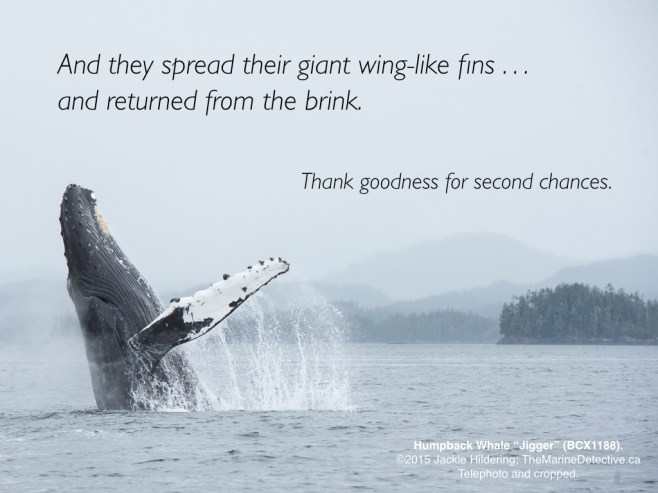
And they spread their giant wing-like fins . . . and returned from the brink.
The whales remind us of our great capacity for positive change . . . when our value systems change and knowledge, connection and humility replace fear and misunderstanding.
The simple solution? Care More. Consume Less.
There are still so many ways to indirectly kill a whale and damage the life-sustaining seas upon which we all depend.
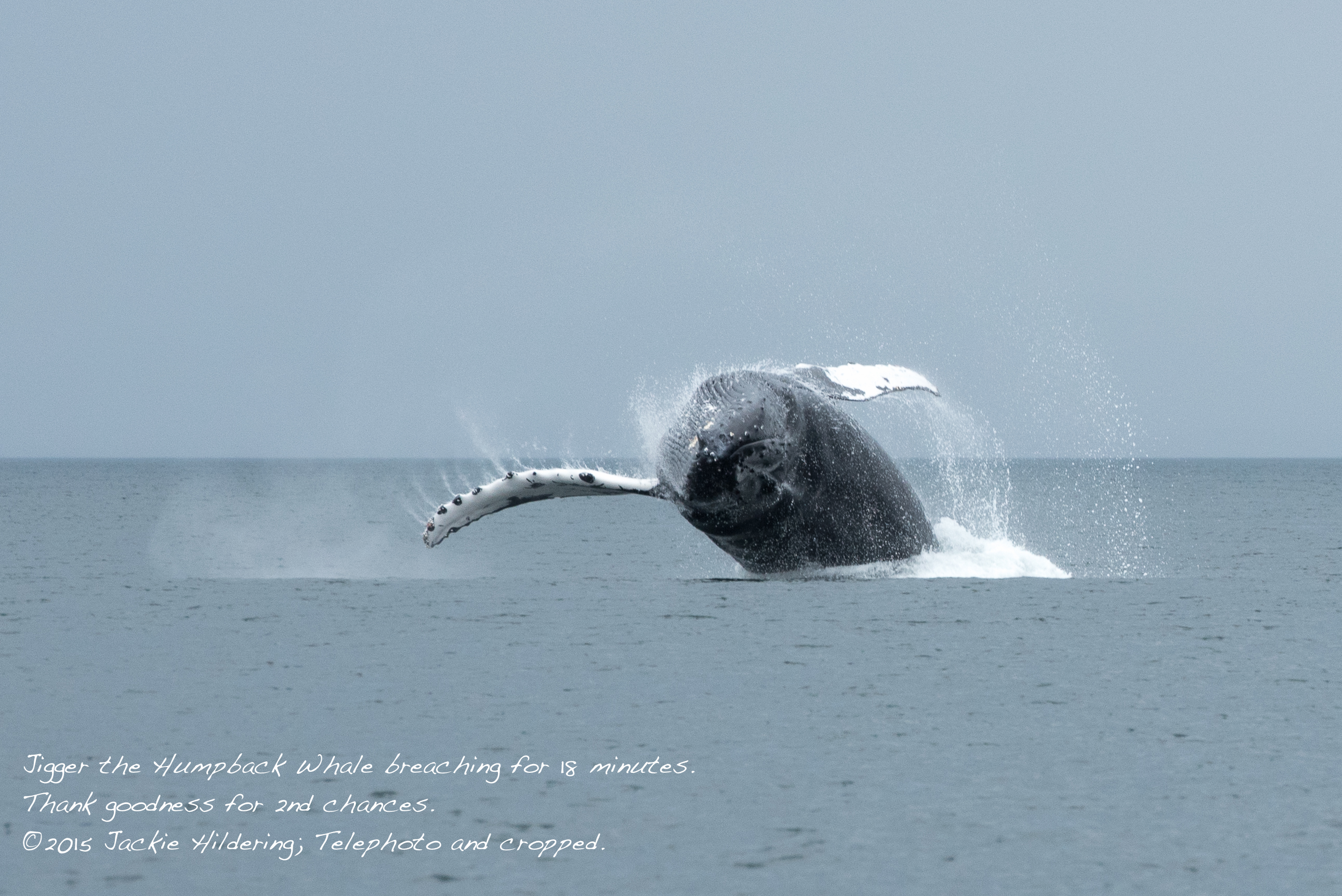
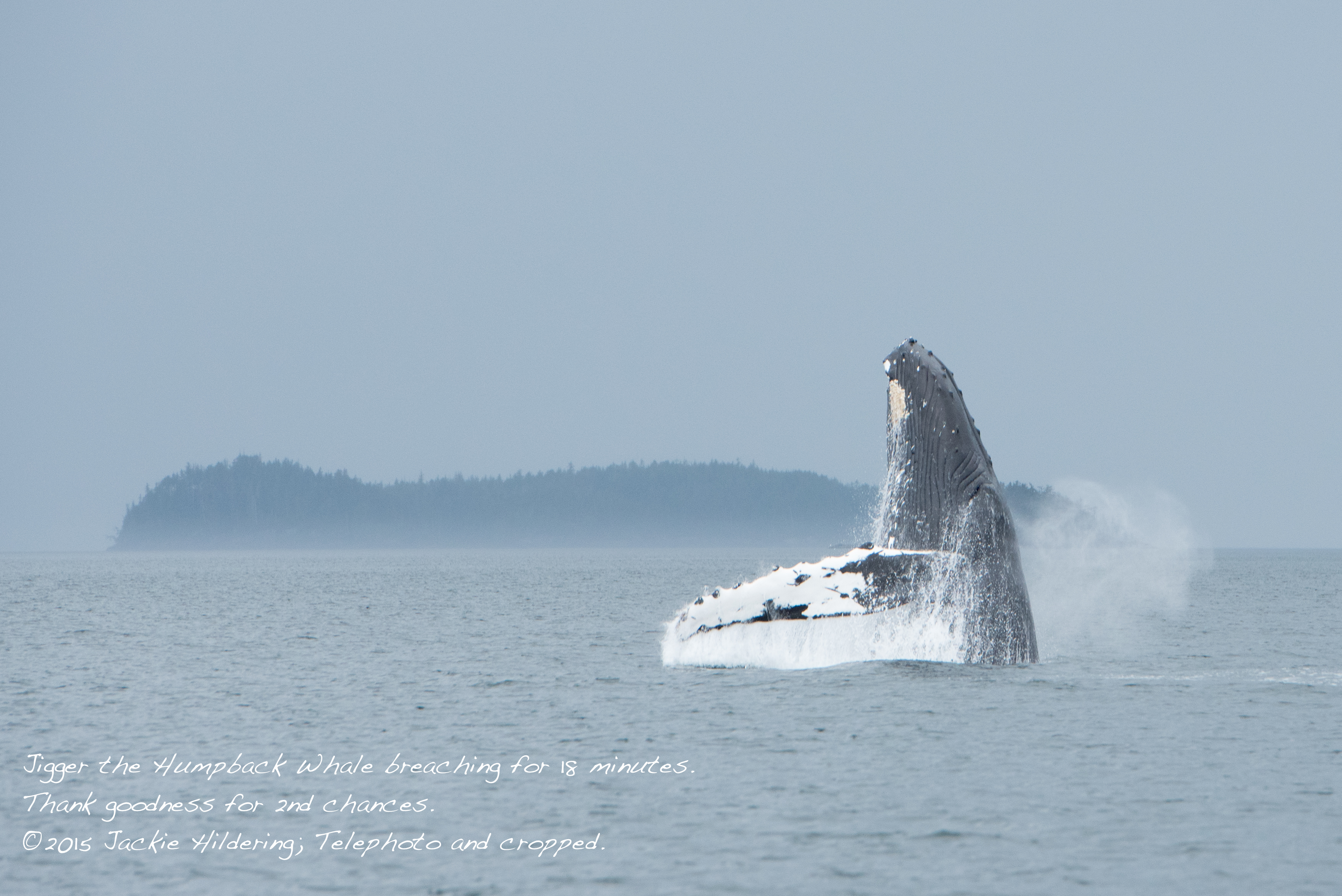
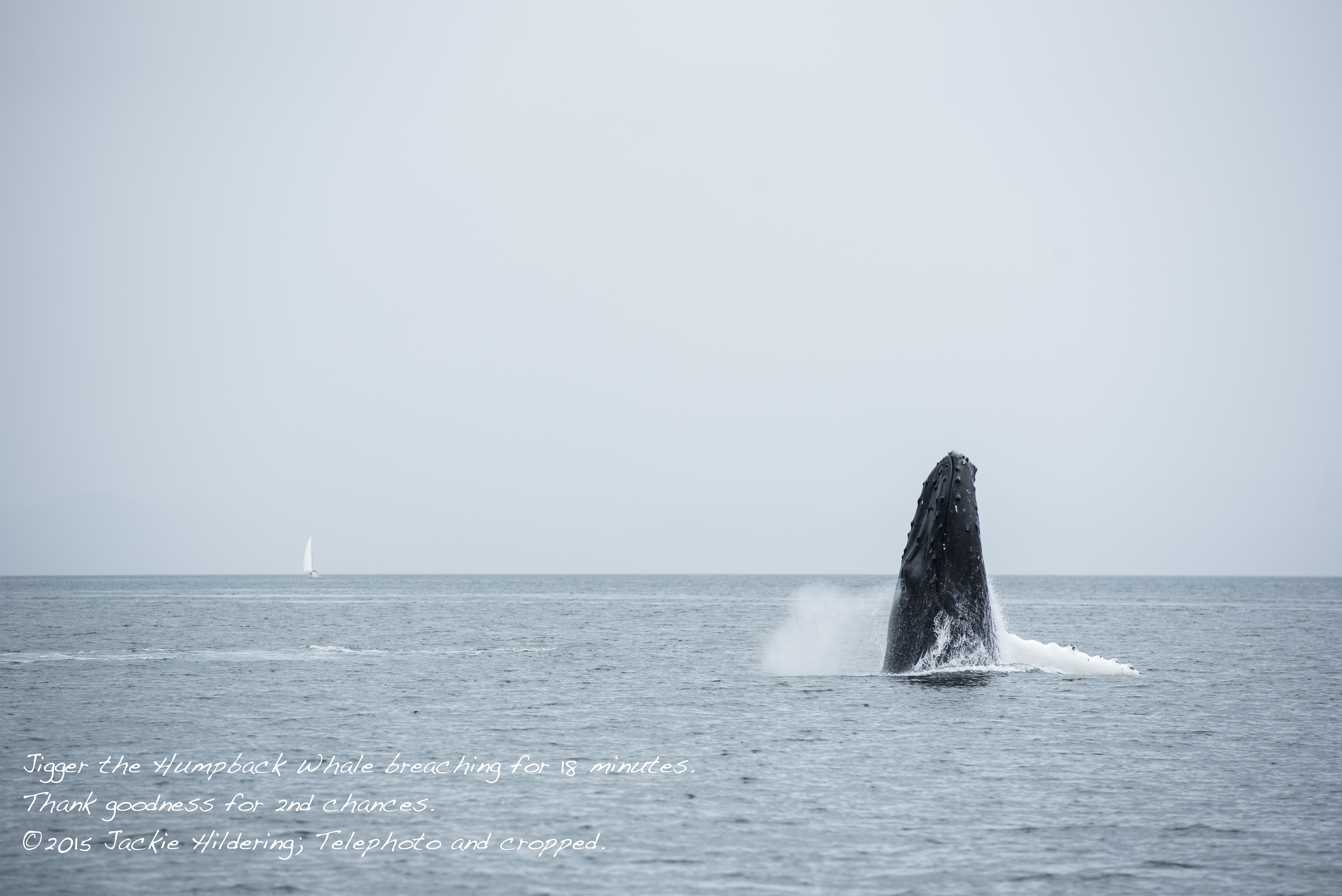
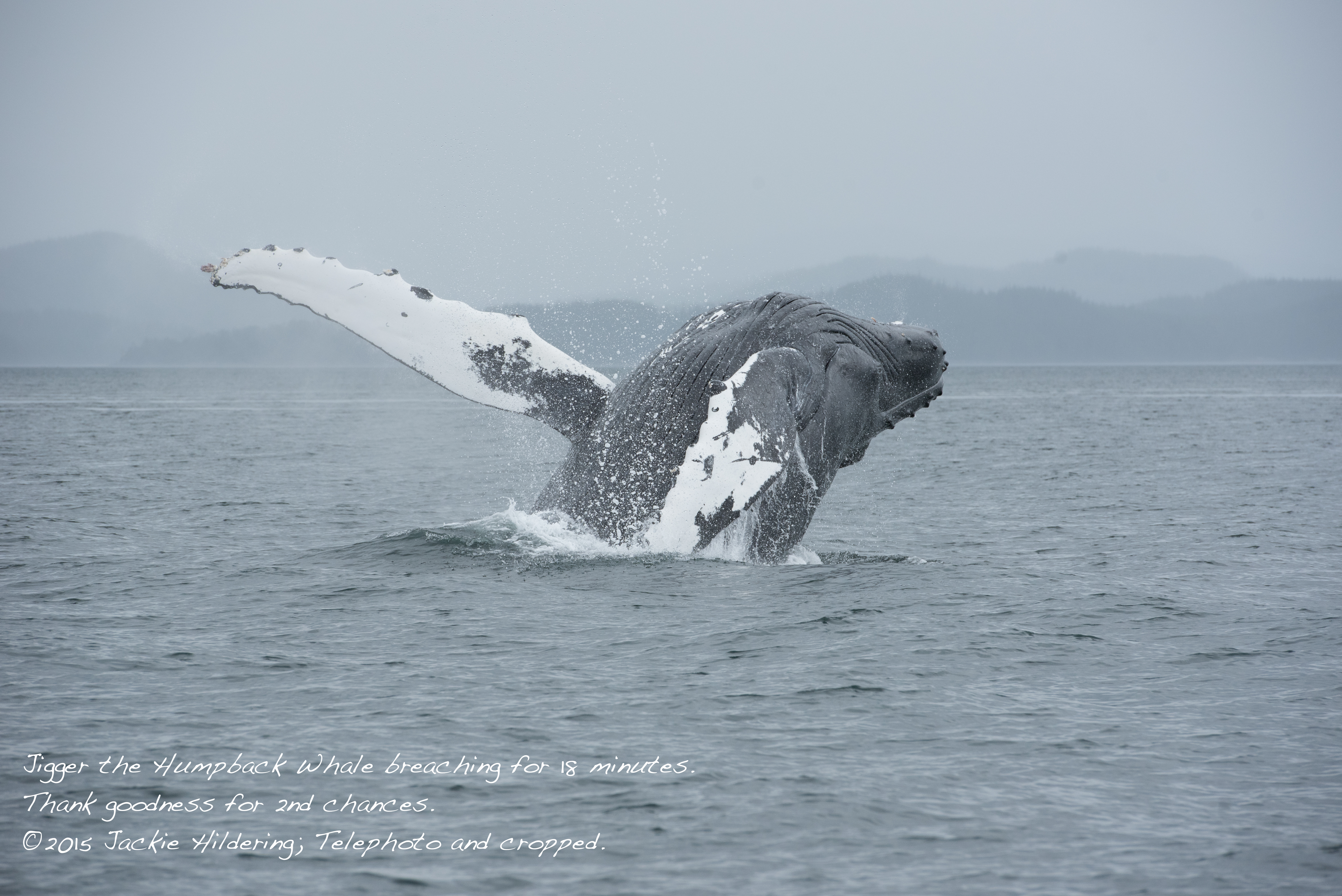
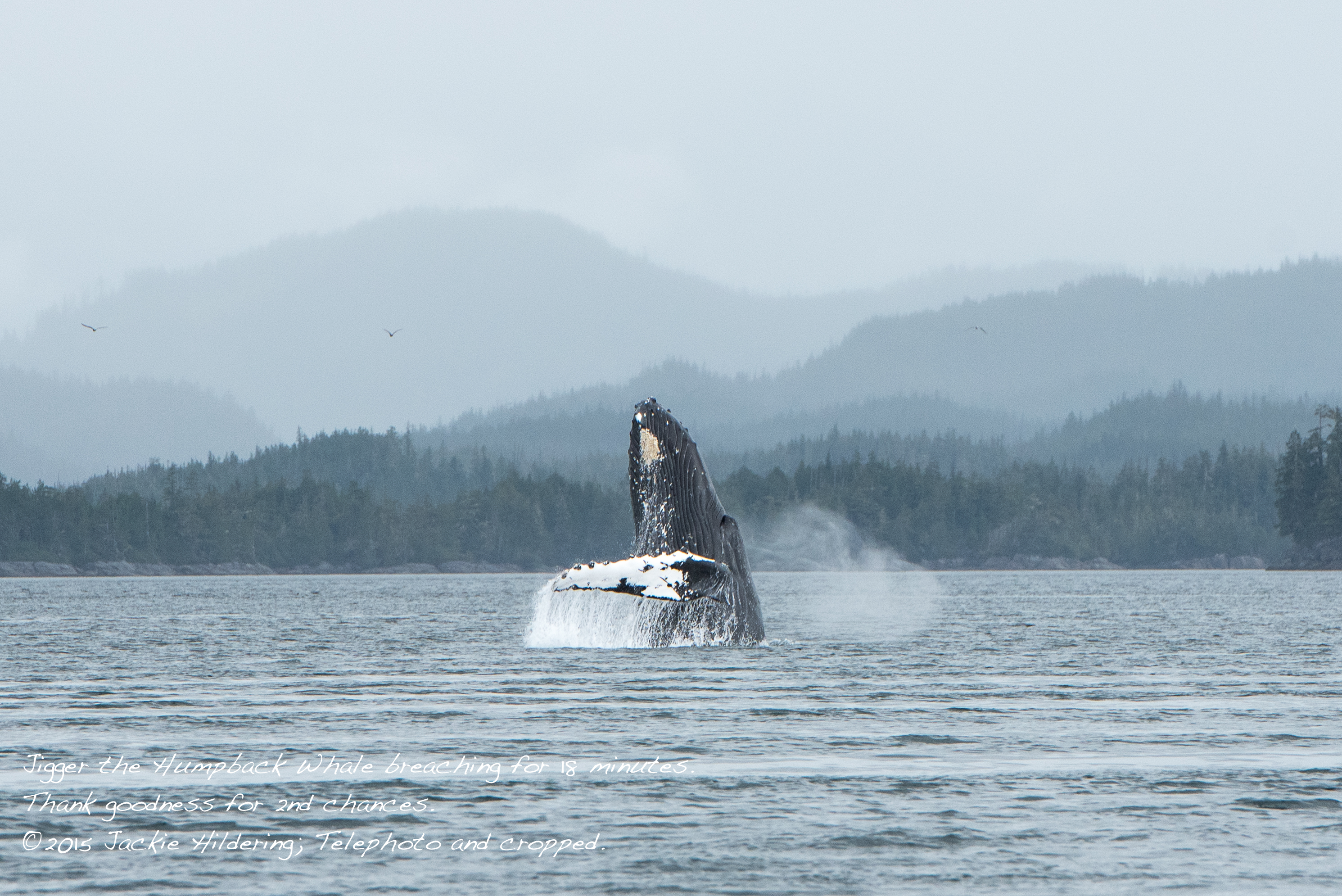
Image is of “Jigger” the mature female Humpback Whale who breached for 18 minutes. More images below.
You simply can’t be the same after seeing something like this, nor would I want to be.
What triggered this behaviour may have been an encounter with another Humpback (“Slash” BCX0177″) but we cannot know for sure.
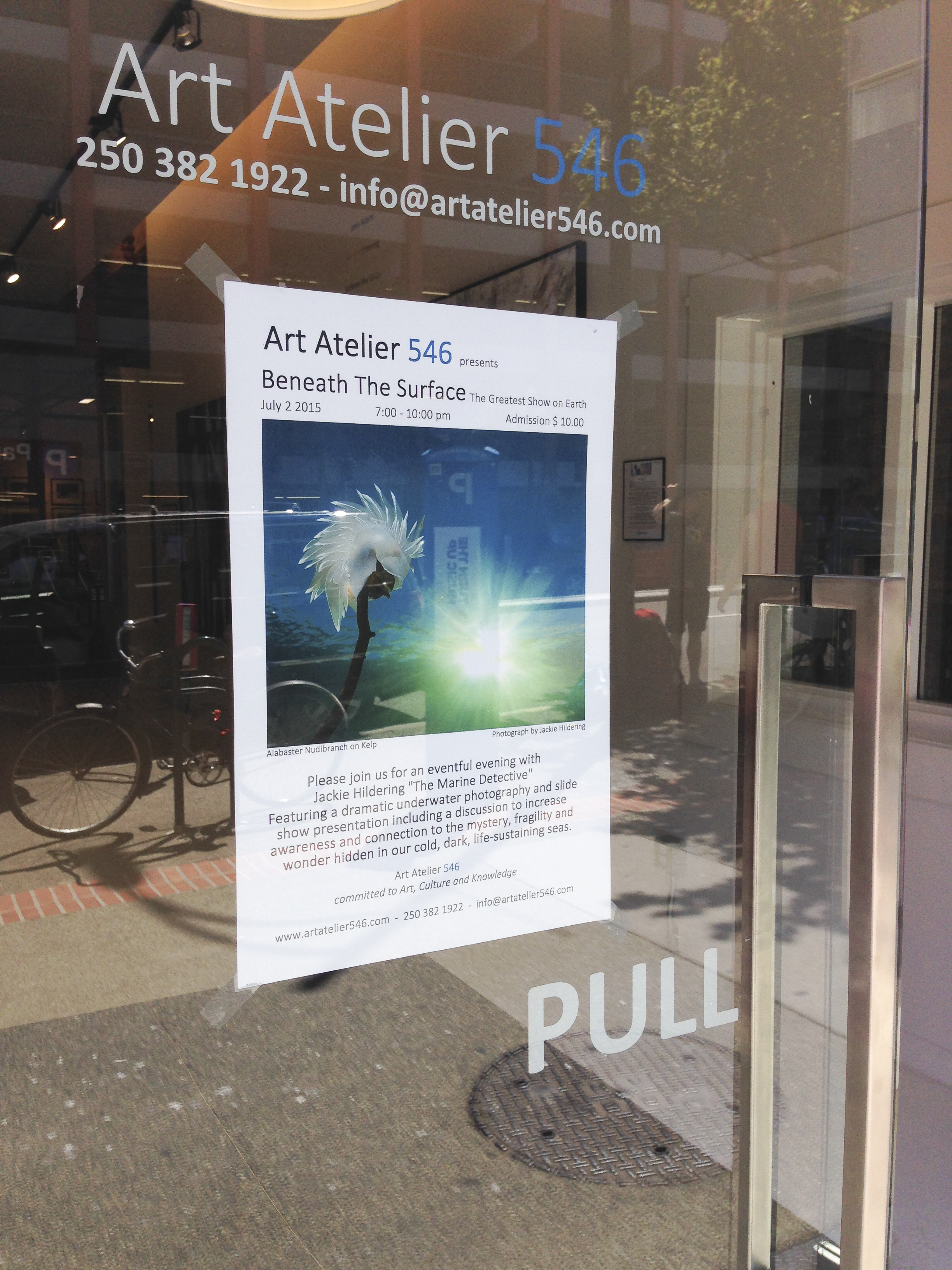
“The Marine Detective” art show at 546 Yates in Victoria. Includes a 15 min rotating slide show of images. Come in, sit down, and disappear into the depths for a little while?
It is the morning after the opening of my first art show and I am awash with a sense of gratitude and community.
As I strived to express last night in my presentation, had anyone told me way-back-when that I would ever have an art show, it would have been the equivalent of being told that I would undertake interplanetary travel.
An art show?! It was very high threshold for me because, rather than just striving to capture the mystery, beauty and fragility of the Ocean to inspire and educate, the images are being put forward as ART.
Therefore, last night was very much for me another “How did I get here?” experience.
But I do know the answer. It is because, however the magic of life works, I have been allowed to fully, deeply understand the importance of the Ocean as the life-sustaining force on the planet. And, as a teacher, enhancing the potential for our children to have healthy, happy futures will always be what gives my life direction.
“The Marine Detective” images at Art Atelier 546 in Victoria (on 546 Yates Street). Click to enlarge.
How did I get here? It has to do with geography, opportunity, difficult and daring decisions made, skills, experience and . . . you.
Please hear me. It has to do with YOU.
Wherever this is going – wherever it has gone – it is because of a force of people who share the values and objectives of “The Marine Detective” and want it to move forward.
The sense of gratitude I am overcome with this morning, and that is so difficult to express, is that I feel I am being held up by an Ocean of people . . . . those who were at the opening last night; the whispers and shouts of support and encouragement on social media; the sharing to expand the reach of the content there; the applause expressed in so many ways; the enablement of diving, photography and whale research; the sharing of calendars and prints into the world so that they might further connect others; the assistance re. potential books, webisodes, whatever . . . it’s you.
I know that The Marine Detective is a community working for greater understanding and positive action for socio-environmental good.
From the depths, thank you.
Because of you I speak louder; I dare more; I keep at it and, I stay afloat . . . gently propelled to who-knows-where.