Join me in the cold, dark, life-sustaining NE Pacific Ocean to discover the great beauty, mystery and fragility hidden there.

Posts by The Marine Detective

Pyrosomes! Say What?


Updates since writing the blog in March, 2017.

  • January 7, 2025 – large numbers being seen on SW Vancouver Island. 
  • March 2024 – updated sources with research about the northward expansion of pysrosomes being association wth the marine heat wave from 2014 to 2016. 
  • Late  2017 to 2018 – Getting reports of pyrosomes again:
    •  December 10 – Central Coast of BC (Borrowman Bay on the north west side of Aristazabel island) by Stan Hutchings & Karen Hansen – small and scattered.
    • November 27 – Oregon (Netarts Bay and Oceanside Beach) by Todd Cliff
    • January 1 – Tofino (Wickaninnish Beach) by Christie McMillan

_________________________________

Pyrosomes – literally “fire bodies” in Greek – are weird and wonderful marine organisms that have been sighted in large numbers from Oregon to British Columbia’s central coast to Yakutat Alaska! The inspiration for their name is that, when alive, they can generate “brilliant, sustained bioluminescence” (Bowlby et al).
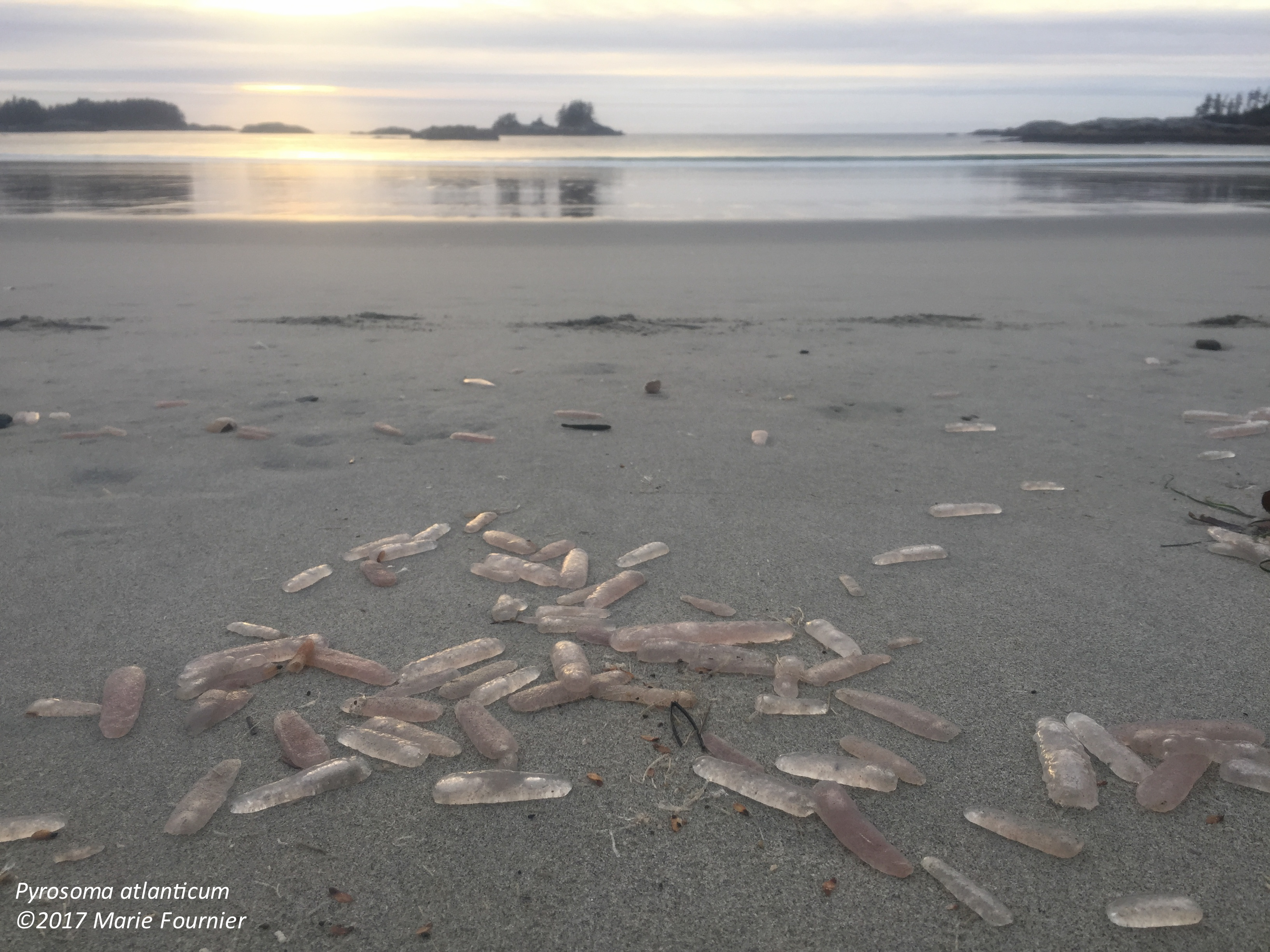
A beach full of Pyrosomes ©Marie Fournier.
January 24, 2017: A beach scattered with Pyrosoma atlanticum. Stunning photo by ©Marie Fournier. Location: West Beach on Calvert Island; 51°39’13”N; 128°08’27″W. 

Specifically, it is Pyrosoma atlanticum that is being seen in large numbers and about which I have been getting inquiries dating back to February of last year. More about this species later. First some general information about this genus.

As gelatinous as pyrosomes appear, they are not closely related to jellyfish. They are colonial pelagic tunicates often found in dense aggregations. Tunicates are highly evolved. They even have a primitive backbone (a notochord).

February 19, 2016 (the first  inquiry I got about this species): A single Pyrosoma atlanticum colony found and photographed by ©Tiare Boyes while diving at ~70′. It was being snacked on by hermit crabs and marine snails. Location: Just outside God’s Pocket; 50°50’15”N, 127°33’40”W.
Pyrosomes on salmon trolling gear.
©Dobie Lyons.

Colonial? Yes, each pyrosome is made up of thousands of individual “zooids” that are connected by tissue (a tunic) to form a rigid, bumpy, hollow tube that is open at one end. This design allows the individuals to filter feed. Cilia draw water into each zooid where plankton are removed with mucous filters; the filtered water passes into the tube; and then out the back end of the colony. This current not only allows feeding but also propulsion of the colony.

But wait, it gets even more remarkable. The individuals making up the colony are clones. Thereby, the colony can regenerate injured and broken parts. “Unless all individual clones are killed at the same time, a colony can theoretically live forever, shrinking and growing based on available food and physical disturbance.  Individual clones are hermaphroditic; they make both eggs and sperm (Oceana).” It is hypothesized that when colonies meet, they may also reproduce sexually.

One Star Trek inspired biologist has referenced pyrosomes as the “the Borgs of the sea”. I just have to share that description with you:

 “One long pyrosome is actually a collection of thousands of clones, with each individual capable of copying itself and adding to the colony. And like members of the Borg, which are  mentally connected, pyrosome members are physically connected– actually sharing tissues. And while the Borg live in a big scary ship, pyrosomes are the big scary ship. The whole colony is shaped like a giant thimble with a point on one end and an opening on the other . . . . Each little “wire basket” is the stomach of one member of the colony. They take water in through a mouth on the outside of their space-ship body, pass it through the little basket to filter out the nom bits, and squirt water out the other end, into the big hollow space in the middle” (R.R. Helm; Deep Sea News).

“Big scary ship”? The “Giant Pyrosome” (Pyrosoma spinosum) can indeed be up to 18 m long with an opening reported to be up to 2 m wide. But that is a species found in tropical waters.

The pyrosome species being sighted along the west coast is much smaller. Pyrosoma atlanticum (class Thaliacea) can reach lengths of 60 cm but as you can see from some of the images here, those being reported nearer to shore are much smaller, ranging from about 5 to 8 cm long. This species may be colourless, pink, grey, or bluish-green.

It is the most widespread pyrosome species. It is found in all oceans with the generally accepted range being between temperate latitudes of 50°S to 50°N.

October 1, 2016: Pyrosoma atlanticum were also being seen but much further offshore. Photo: ©Christie McMIllan. Location: About 145 km off the west coast of Vancouver Island.

Thereby, up to around mid Vancouver Island, British Columbia is part of their range but they are usually much further offshore. It is only when wind and tides wash them onto beaches that more of us get to see them. The species already generated a lot of interest much further to the south when they were getting blown ashore in Oregon from October to December 2016. They were also being sighted far off BC’s coast in October.

It was already unusual to see them off BC’s coast beyond 52°N in March. In May 2017, they were being reported off Yakutat, Alaska, beyond 59°N. This is extremely unusual and is indicative that there must be a warm water mass carrying them further north.

December 2016 photo from ©Stan Hutchings and Karen Hansen.
Location: Quigley Creek in Laredo Channel; 52°39’15”N, 128°44’05”W

For those lucky enough to see them at night, pyrosomes bioluminesce with an intense, bright, blue-green light that can apparently last more than 10 seconds. Their bright lights inspired biologist T.H. Huxley to write in his1849 journal: “I have just watched the moon set in all her glory, and looked at those lesser moons, the beautiful Pyrosoma, shining like white hot cylinders in the water.”

Pyrosoma are unique not only in how brilliant and sustained this bioluminescence is, but also because they are among the few marine organisms where light is made in response to light, not only in response to touch. Thereby, a wave of light passes from one individual in the colony to the next AND from colony to colony (Bowlby et al)! The light is believed to actually be made by bacteria living within the zooids.

Oh to see that!

Thank you to those who relayed all the queries and sightings. This is a solid case of how the observations, interest and knowledge of many allow a bigger picture to come together. This picture may have relevance to science and certainly has value in generating greater interest in our lesser known, wonderfully weird, light-emitting, totally tubular, marine neighbours.

A Pyrosoma atlanticum colony.
©Stan Hutchings and Karen Hansen.

TEDx talk on Pyrosomes – June 7, 2018

Particularly large Pyrosoma atlanticum, 35 nautical miles off Neah Bay, Washington. In photo: Dobie Lyons. Photo by Alan Tyler.

Sources:

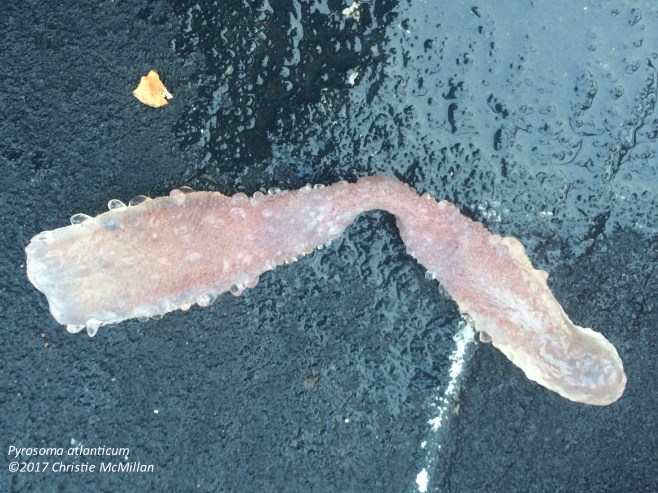
Pyrosome 2018-01-01 Wickaninnish Beach near Tofino
; ©Christie McMillan

News and Research Papers:

Video by Patrick Anders Webber. 

Video below if from New Zealand.

My 1,000th Dive – Fishes, Friends and . . . So Much More

Yesterday (February 25, 2017), I completed dives number 1,000 and 1001.

This is not a big deal if you are a warm water diver where it is common to do 3 or more dives a day.

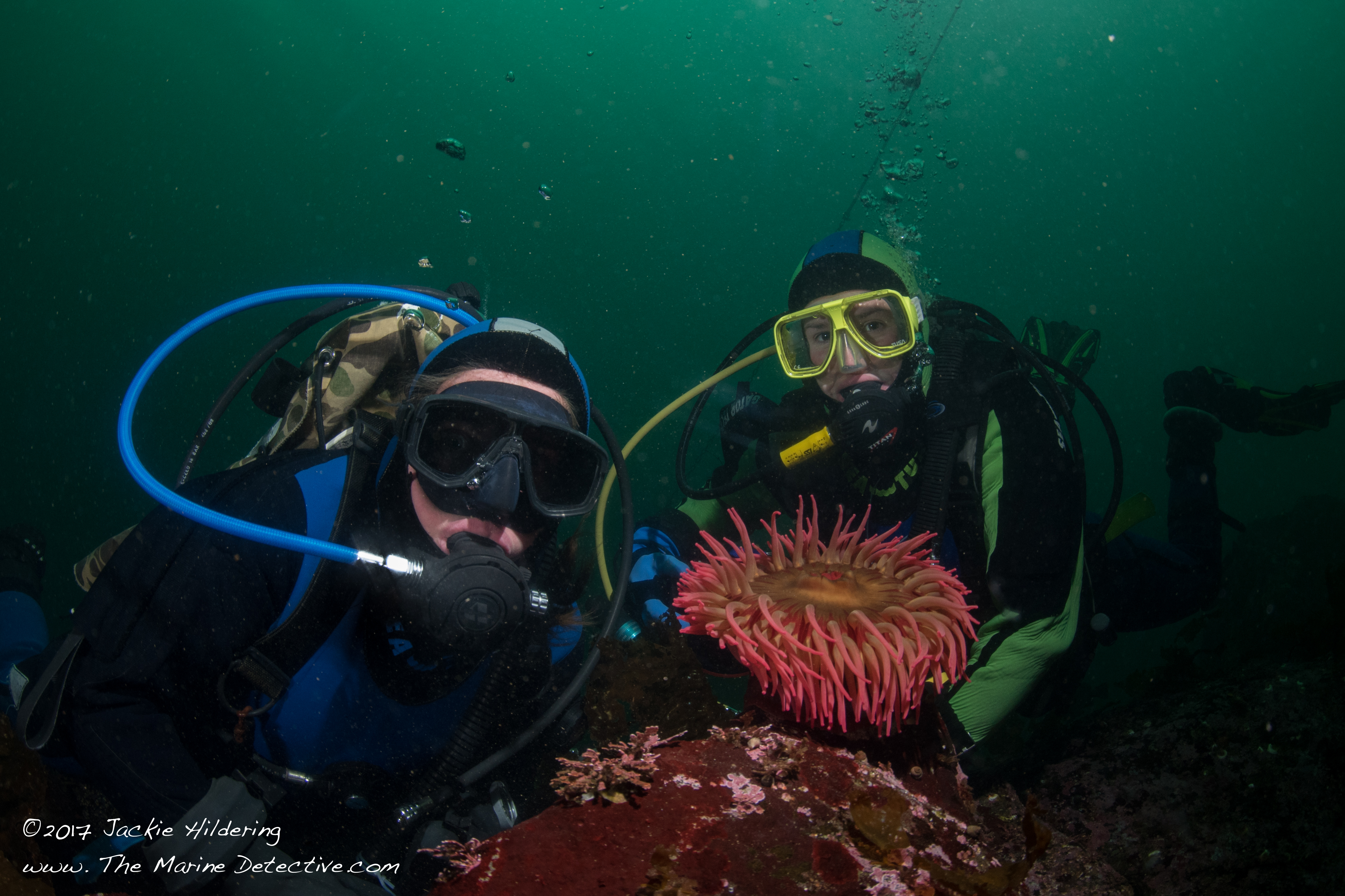
But, for me at least, I feel it is important to reflect upon this milestone. How did I get here? The equivalent of ~31 days spent underwater over the last 17 years, almost all in the cold, dark NE Pacific off northern Vancouver Island, British Columbia?

And, where am I going?

Younger me on January 9th, 2000 in a wet suit before I had even done a dive from a boat. Now am on to my 2nd battered dry suit and am most often on the other side of a camera.

Younger me on January 9th, 2000 in a wet suit before I had even done a dive from a boat. Now, I’m much greyer; on to my 2nd battered dry suit; and am most often on the other side of a camera.

I was 36 when I started diving. (I’ll save you doing the math – yes, that means I am 53 now). It was a year of some very big life decisions including leaving solid ground when it came to employment and what many would have considered “a career”. I let go. I followed my internal compass knowing only that I needed to learn from Nature again.

Learning to dive did not feel like one of the big decisions. Looking back, it seemed almost like a flirtation; a “sure, why not?”. Maybe that’s the way it works with the big things in life. There were some pretty big clues that it should be on my path though. For example, back when I worked in the Netherlands, I had hung all kinds of marine animals from the ceiling of my shower. Clearly I wanted to feel like I was under the Ocean. Also, my most crystalline, happy childhood memories are of spending seemingly endless hours exploring the beach when we lived in Chemainus (southern Vancouver Island).

Adrift with so many rockfish during yesterday's dives. ©2017 Jackie Hildering.

Adrift with so many rockfish during yesterday’s dives. ©2017 Jackie Hildering.

But know that while saying “yes” to taking a dive course was easy, diving has not come easily to me. I’ll spare you the details of how encumbered the instruction was; that I even inflicted injuries upon myself; and how the learning never stops. (If you would like to see what mask squeeze looks like, click here.) I remember feeling that achieving my Dive Masters was bigger than anything I had achieved in university.

But when I saw that first sea star underwater, it was like a lightning bolt went through me. I knew. It was as if I heard a click, as if a puzzle piece fell into place. This was going to be important. But I could never have known how important.

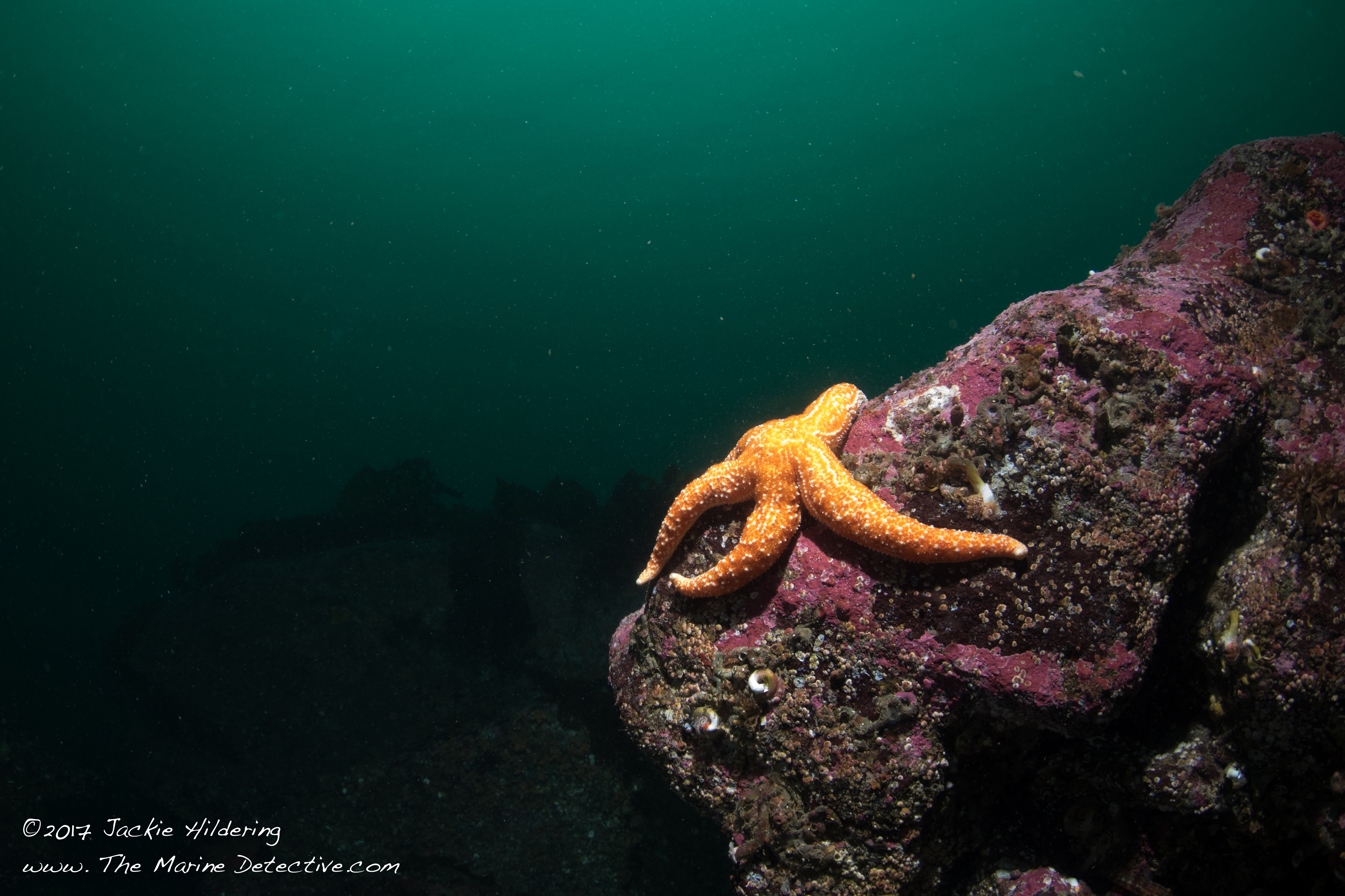
Lone Mottled Star. Yes, the sea stars are still in trouble. An example of how the Ocean may be testifying to environment issues. See here for more. ©2017 Jackie Hildering.

Lone Mottled Star. Yes, the sea stars are still in trouble – an example of how the Ocean may be testifying to environment issues but because this reality is hidden, too few of us notice and take heed. More information at this link. ©2017 Jackie Hildering.

It felt like a lot of puzzle pieces clicked into place that year. Since then, some have fallen out of place leaving an odd shaped hole. This is certainly how life works. Some pieces never were a good fit or were only part of the big picture for a brief while. Okay, enough already of that puzzle metaphor and about what has come and gone, but was once essential in getting to where I am now.

Now . . . 1,000 dives completed.

Now . . .  the extraordinary privilege of knowing one small part of the planet from individual fish to individual whales. “Knowing”? Correction  . .  I am learning from the life in these cold, dark waters.

Now . . .  “The Marine Detective”.  It’s a handle that I hope captures the mystery and the correct humility. I am a student of the Ocean and, in recognizing that privilege and importance, I want it to count.

The Ocean. Mother Ocean. The ultimate teacher. It’s where life began and upon which life depends. It’s often where the impacts of our disconnect and misguided value systems appear first. It’s our opportunity to have the humility to realize how little we know. It’s our opportunity to connect and to heal and to know how little we are.

Leaving solid ground. Being adrift. Better knowing when and how to fight the current. Learning so many lessons about the life around me and, about myself.

What lies ahead? Another 1,000 dives. More lessons. More puzzle pieces. More trying to make it count.

I am so grateful for it all – to have the health that makes this possible; to being able to live where I do; to my dive buddies; and to you who care enough to read these words, making the effort so worthwhile.

From the depths – thank you.


Here is a past reflection on diving. I wrote this poem after my 600th dive.  It still all applies.

Constricted by my dry suit,
Thirty pounds bound to my waist,
Hunchbacked by my cylinder,
A mask suctioned to my face,

I leave the world we’ve cultivated,
To attempt to meet our every whim,
To where Nature’s voice can still be heard,
Far above civilization’s din.

No governments, no borders,
Nor economies present.
When down here, I’m reminded,
Of life’s depth and true intent.

I’m an awkward and brief visitor,
In this world of colour and perfection.
I fill with humility, wonder,
Passion and quiet introspection.

For Mother Ocean is home to life,
Older than mammals can comprehend.
I’m grateful that I may learn from her,
Leaving solid ground when I descend.

Diving brought me greater purpose,
Love, vision and camaraderie.
I think that what some find in a church,
I find . . . deep . . . within the sea.


Below, additional photos from yesterday’s dives shared with fishes, friends, and so much more.

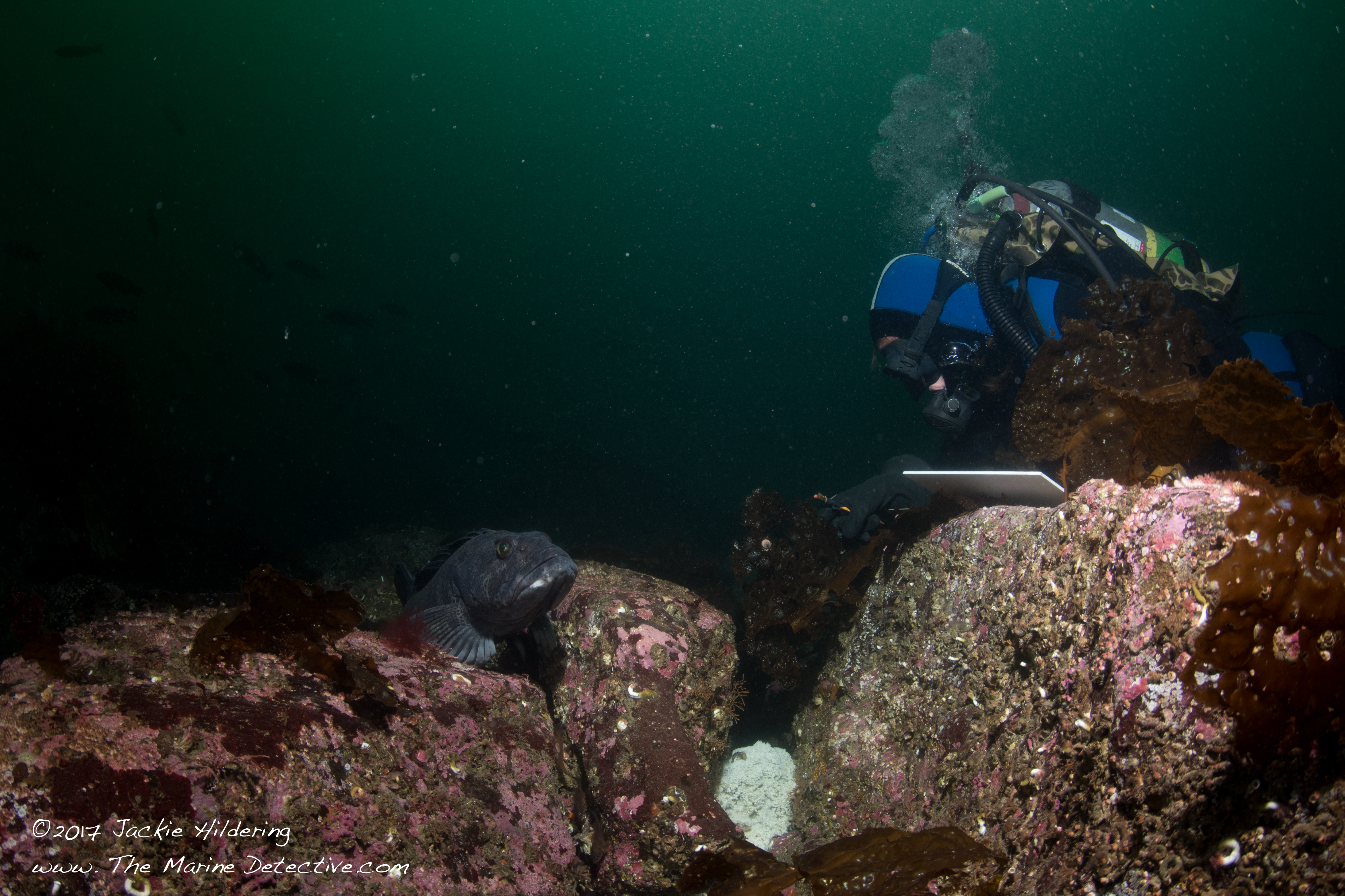
One of yesterday's dives was a Lingcod Egg Mass survey. That's buddy Natasha Dickinson recording depth, size, etc. The males guard the egg masses to ensure their kind has a better chance of survival. More information here. ©2017 Jackie Hildering.

The purpose of one of yesterday’s dives was to do a Lingcod Egg Mass Survey. That’s buddy Natasha Dickinson recording depth, size, etc. The males guard the egg masses to ensure their kind has a better chance of survival. More information on “Lingcod – Fastidious, Fanged Fathers” at this link. ©2017 Jackie Hildering.

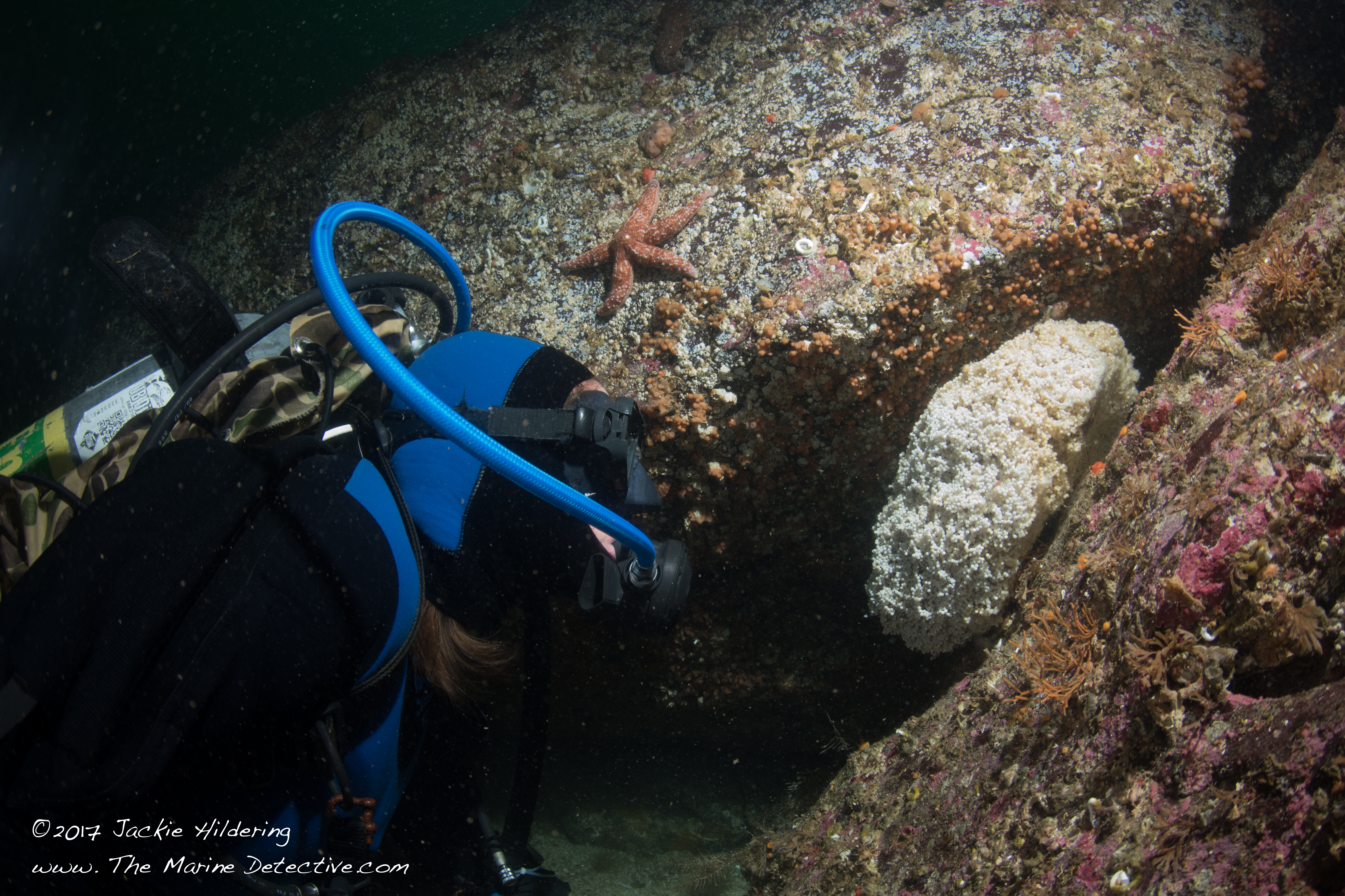
Dive buddy Natasha examining an unguarded egg mass for the Ling Cod Egg Mass survey. ©2017 Jackie Hildering.

Dive buddy Natasha examining an unguarded egg mass for the Ling Cod Egg Mass Survey. ©2017 Jackie Hildering.

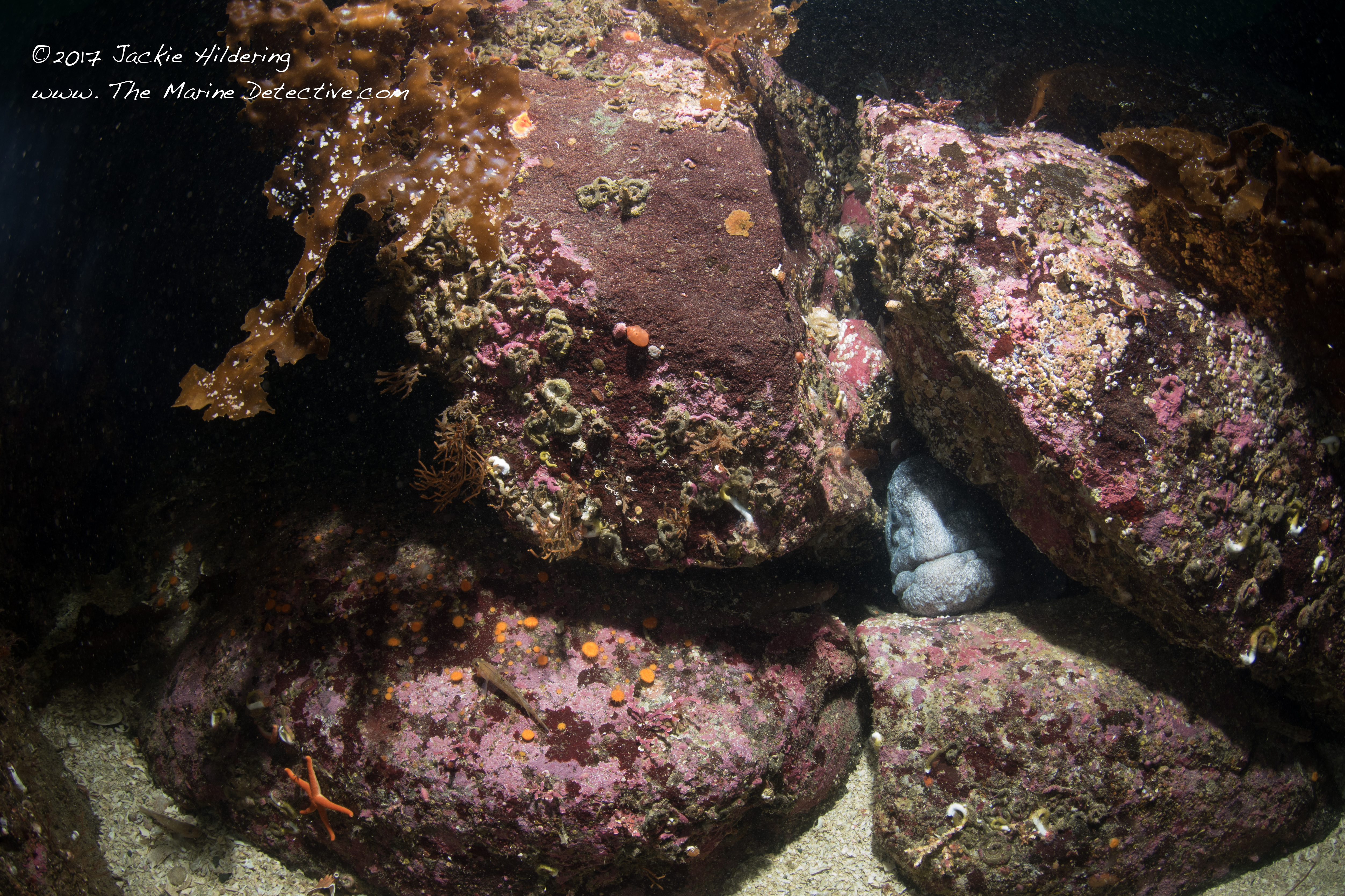
Oops - got distracted from the survey by a mature male Wolf Eel. How could I not?! More on this remarkable species here. ©2017 Jackie Hildering.

Oops – got distracted from the survey by a mature male Wolf-Eel. How could I not?! More on this remarkable species at this link. ©2017 Jackie Hildering.

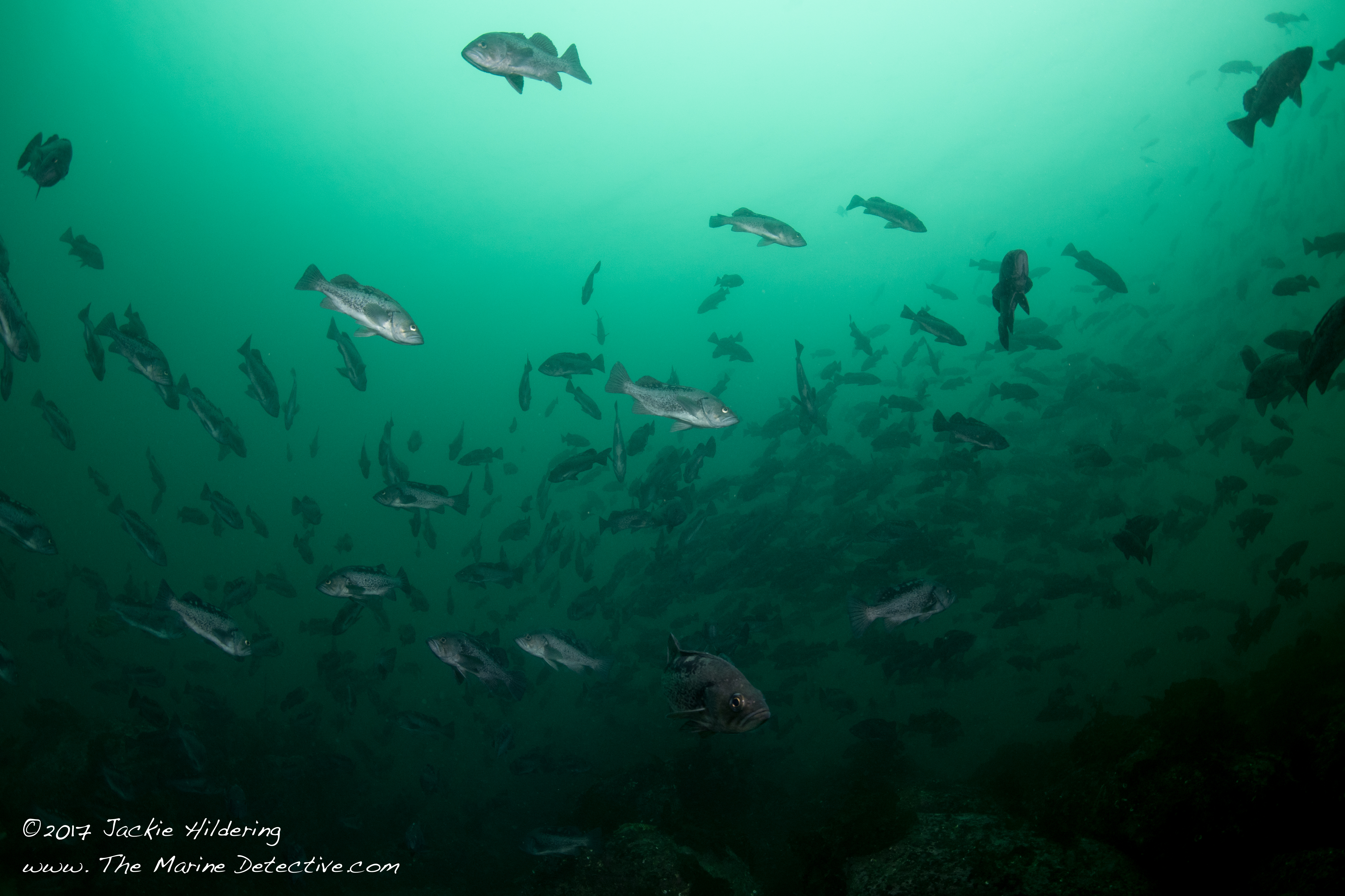
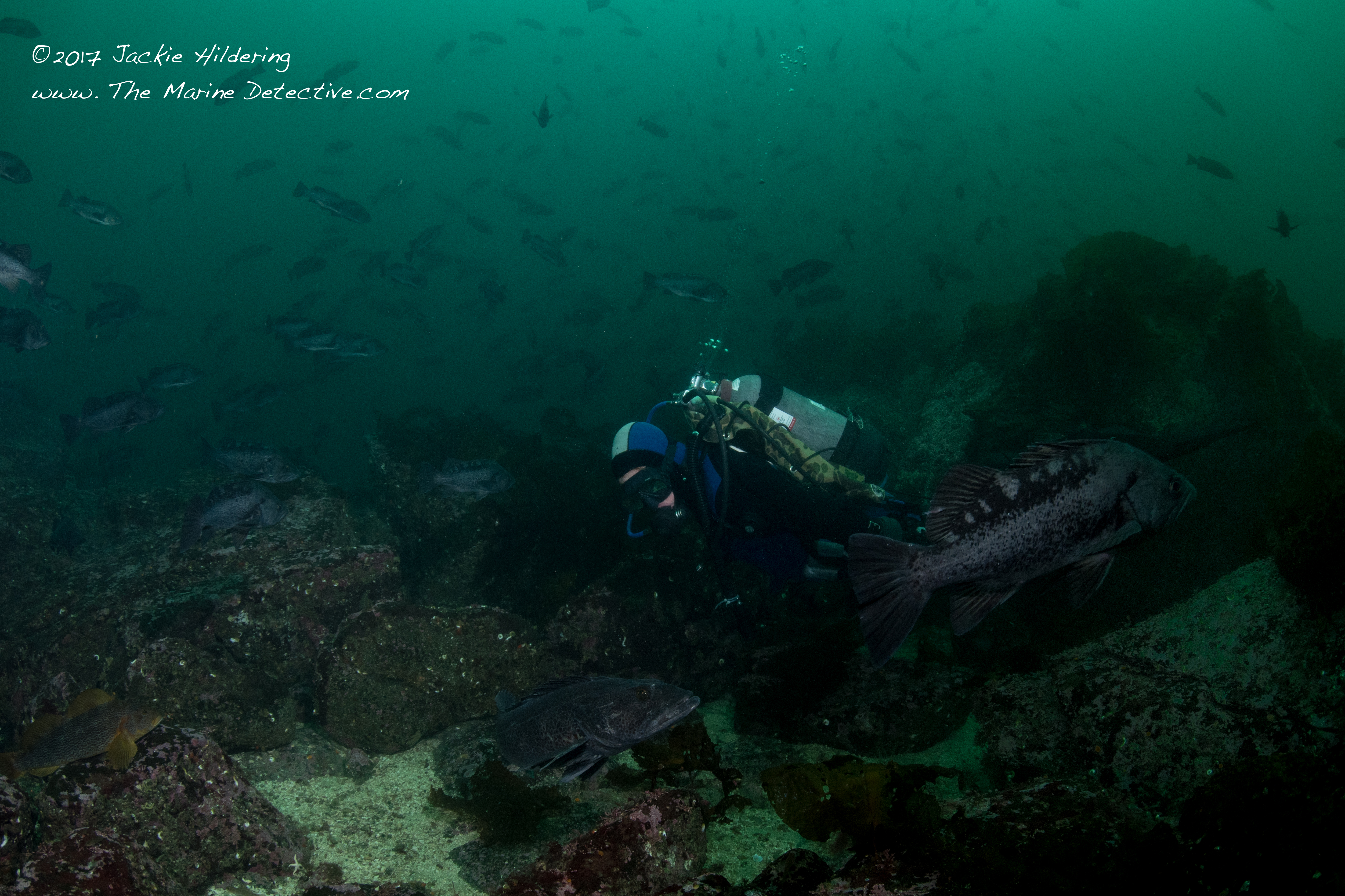
Swimming with the fishes . . . so many fishes and testament to Rock Fish Conservation Areas being so important. Our dive club has been monitoring this site for over 20 years. ©2017 Jackie Hildering.

Swimming with the fishes . . . so many fishes and testament to Rockfish Conservation Areas being so important. Our dive club has been monitoring this site near Port Hardy for over 20 years. ©2017 Jackie Hildering.

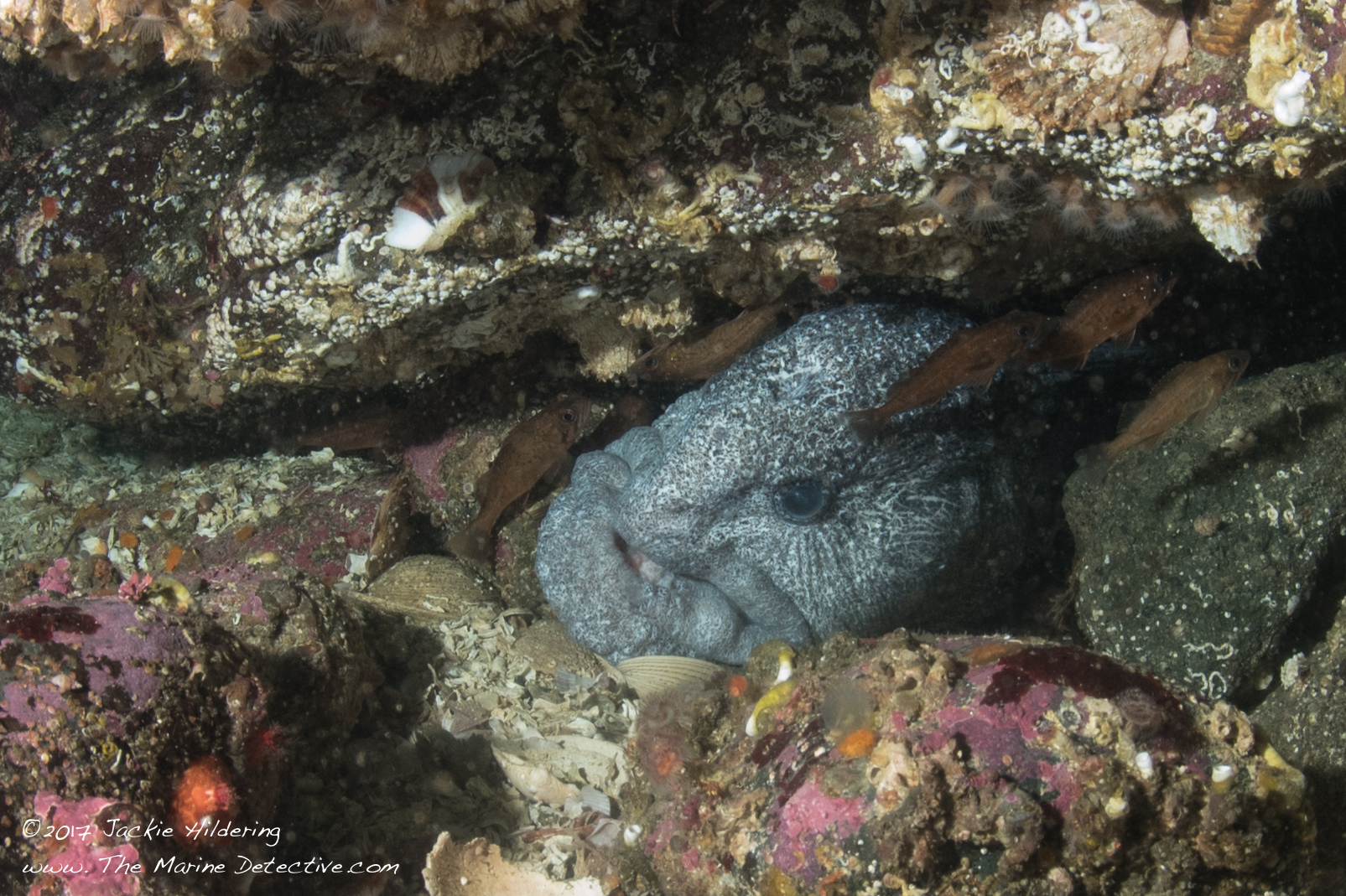
Another "distraction" - mature male Wolf Eel. Intriguing that this one had many juvenile rockfish swimming around his head. ©2017 Jackie Hildering.

Another “distraction” – mature male Wolf-Eel. Intriguing that this one had many juvenile rockfish swimming around his head. ©2017 Jackie Hildering.

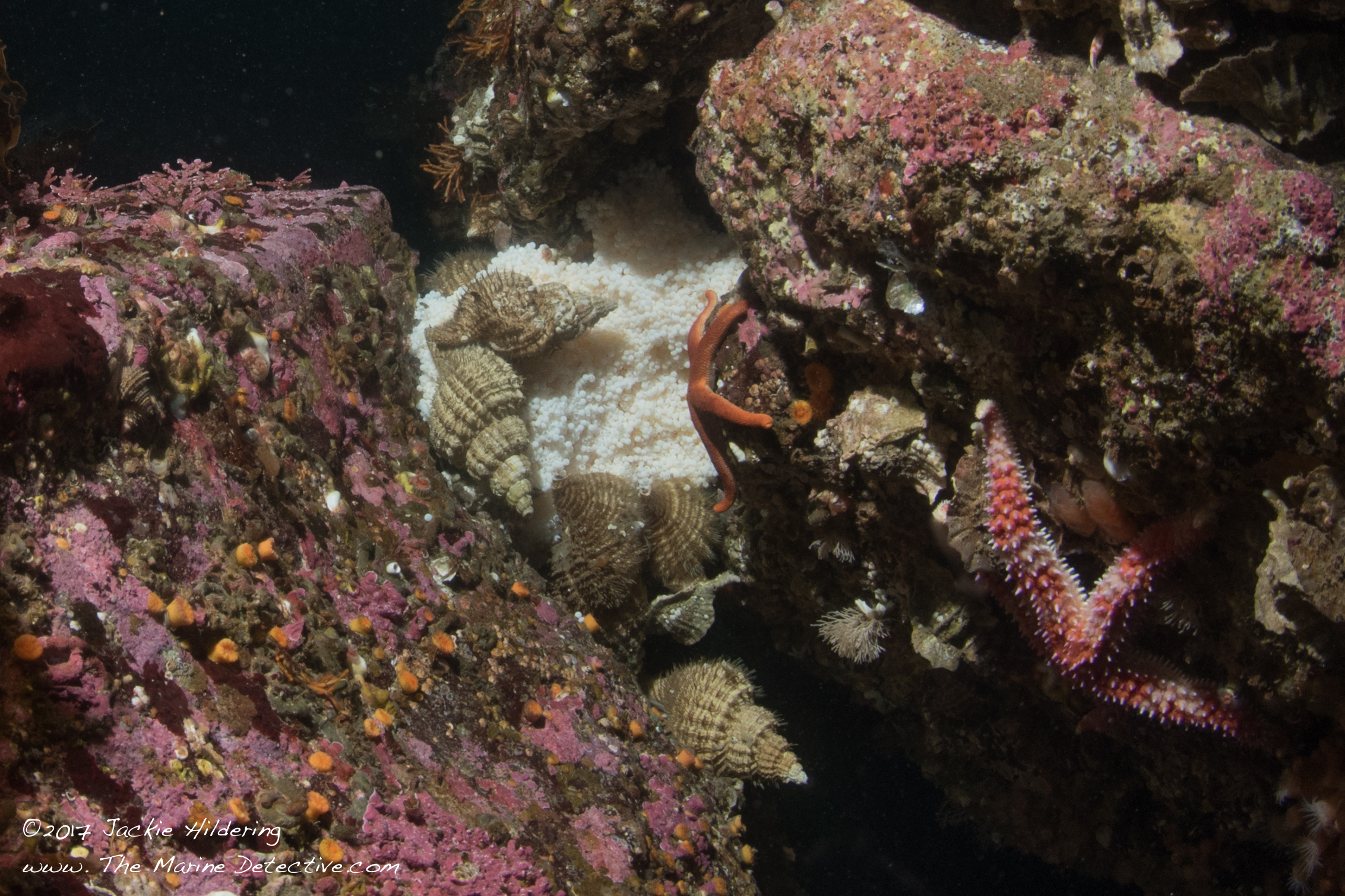
Oregon Tritons (marine snail species) feeding on an unguarded Lingcod Egg Mass. ©2017 Jackie Hildering.

Oregon Tritons (marine snail species) feeding on an unguarded Lingcod Egg Mass. ©2017 Jackie Hildering.

Dive buddies . . . could not do it without them. Here, Natasha Dickinson and Alexandra Spicer. Dear dive buddy Jacqui Engel was unable to join due to the flu but her name absolutely needs to appear on this post where I am reflecting on 1,000 dives and how I got here. ©2017 Jackie Hildering.

Dive buddies . . . could not do it without them. Here – Natasha Dickinson (left) and Alexandra Spicer (right). Dear dive buddy Jacqui Engel was unable to join yesterday due to the flu but her name absolutely needs to appear anywhere where I am reflecting on the importance of diving in my life and how I got here. [P.S. it was 5.5°C!] ©2017 Jackie Hildering.


May There Be Depth . . .

It’s a time of year of excesses and absences; of light and dark; of warmth and cold; of celebration and elation . . . but also often of freneticism and vacuity.

My wish for you and for myself is that within it all, we find depth – abundant depth of emotion, and connection, and meaning.

My depth of gratitude to all of you who contribute to that for me – the sense of shared values and common goals and the abundant motivation.

Be merry. Be bright. Feel the wonder. Add to the light.


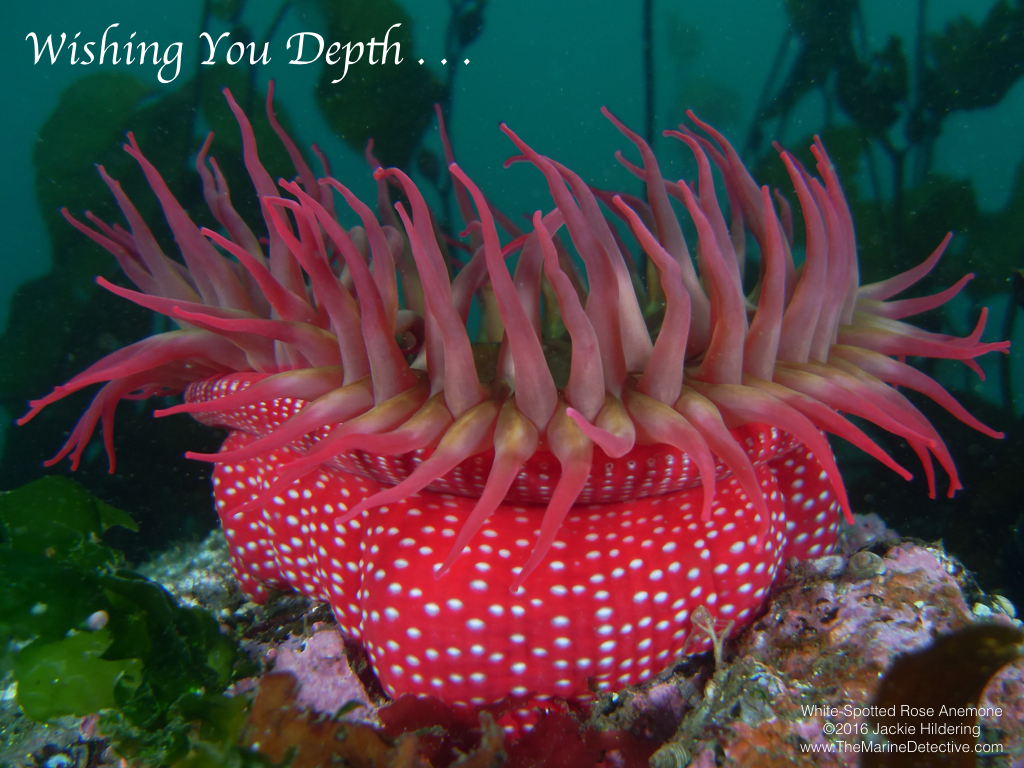
White-Spotted Rose Anemone. I've known this individual for about 8 years. ©2016 Jackie Hildering.

White-Spotted Rose Anemone. I’ve known this individual for about 8 years. ©2016 Jackie Hildering.

Mr. Prime Minister . . . . (after the Bella Bella spill)

Thank you dear reader, thank you for caring enough to come to this page.

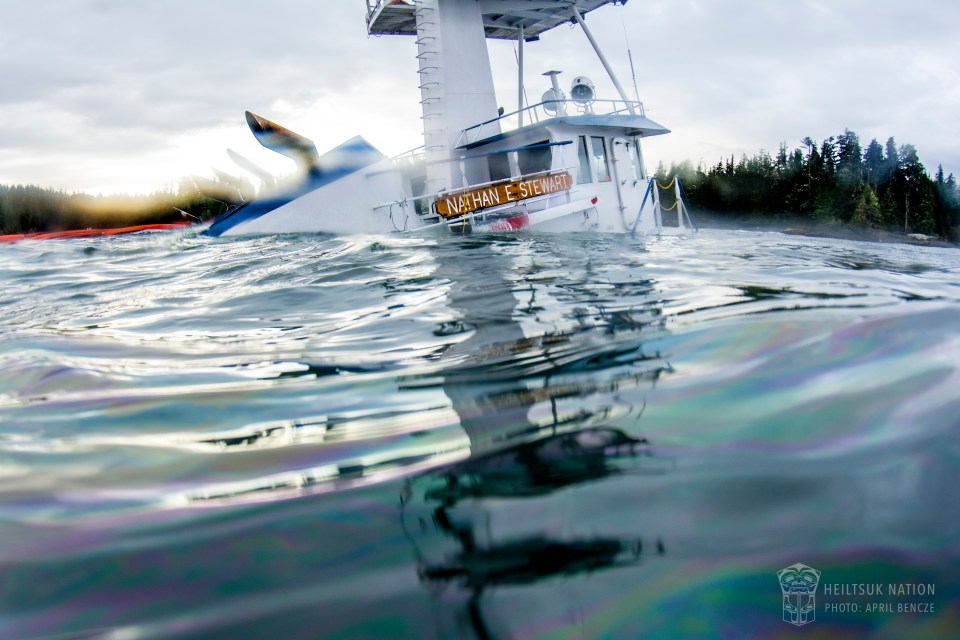
You are among those who are gutted by what is being learned from the sinking of the tug, the Nathan E. Stewart, near Bella Bella on BC’s North Coast. You have not somehow rationalized it away, but see the spill fully for what it is – a disaster – a cultural, environmental, and economic disaster. This was “only” the diesel from a tug – a dire indicator of what insane risks are being flirted with regarding tanker traffic on our coast.

You want the lessons to be fully learned and acted on. You want the voices of those most directly impacted to be heard. You don’t want it to happen again.

You want to know what to do.

You are my motivation for this page. For you, I want to bundle what I believe are the most useful actions we can undertake with the resources that support them.

Mammal-hunting Orca T057A traveling through the area of the spill. Photo: ©April Bencze.

Mammal-hunting Orca T057A traveling through the area of the spill. Photo: ©April Bencze.

Please see the four “What You Can Do” points below and, as if you needed further motivation, read the words below. They are from April Bencze. She and Tavish Campbell are on site striving to be of use to the Heiltsuk First Nation in witnessing and documenting the extent of the the impact of the spill with their considerable skills as video/photographers and divers. They are dear friends of mine. I will update this blog with their insights and images and those of the Heiltsuk. April’s powerful words from this morning  . . . .

“Every tide pool has a layer of diesel coating it. The sea breeze, my favourite smell in the world, now reeks of diesel, burns my eyes and gives me a headache as I walk the beach looking into each devastated tide pool and seeing the intertidal life being irreversibly poisoned. Spill response can’t fix this. No one can fix this, no matter how much money or how many resources are thrown at it. Canada should not pretend it has the ability to undo this damage. Justin Trudeau should be mourning the loss of a large expanse of wilderness that has been poisoned, and then do everything in his power to ensure this never happens again. That means no tankers on this coast. But it’s hard. It is hard because Prime Minister Justin Trudeau cannot see the marine life dying. He cannot feel the sting of diesel in his eyes. He cannot taste oil on the breeze where there should only be salty fresh air. He cannot see the deer and wolves feeding on the diesel-soaked intertidal life. He cannot see the orcas inhaling diesel and diving with it permeating their lungs. He cannot see the grief of the people who live here. He cannot see the thick diesel covering the ocean, and the tides that carry it to all stretches of the land. He cannot see the spill response team being dismissive about reports of diesel sheen near sensitive salmon creeks. He cannot see that the people here mourn the loss of their food source from the very beaches now made toxic. This is a disaster. Please start a conversation about what you are willing to risk to transport oil/fuel on this coast. I did not accept this risk. The Heiltsuk Nation did not accept this risk. Did you?”

What You Can Do:

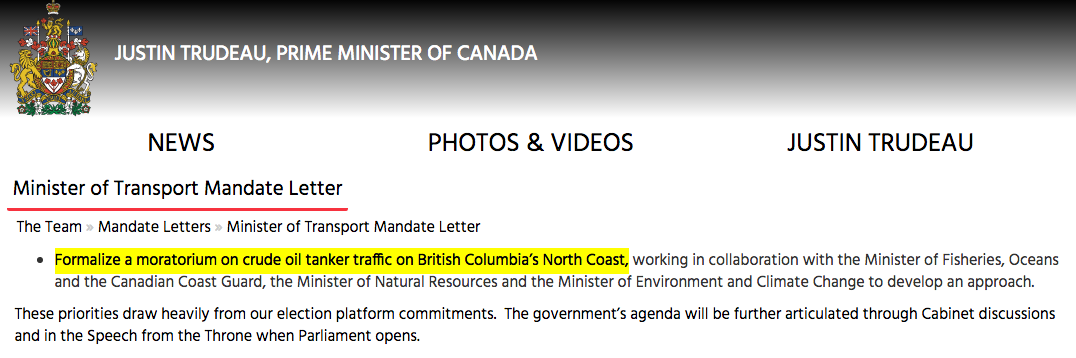
  1. Write Prime Minister Justin Trudeau, referencing the election promise made to “Formalize a moratorium on crude oil tanker traffic on British Columbia’s North Coast.” This can easily be done by using the David Suzuki Foundation’s resource at this link and adapting the text as you see fit to reference the Bella Bella spill. Let him know that you too do not accept the risk.

    Click to enlarge. Content from PM Trudeau’s November 2015 mandate letter to the Minister of Transport confirming the priority of the moratorium. The mandate letter can be found here.

  2. Reduce the use of fossil fuels and support initiatives to transition to non-carbon energy sources. Enjoy the savings as well as the knowledge that you are not fuelling the demand that threatens our coast with tanker traffic.
  3. Support the Heiltsuk First Nation. If you can, provide financial support so that the impacts can be independently investigated, documented and made public. See this link to make donations.
  4. Help amplify the knowledge of this spill. This happened on a pristine, remote part of BC’s coast.  Imagine the attention and action there would be had it happened near an urban centre. Imagine the number of outraged voters wanting risks reduced. Imagine the resulting political will to follow through on campaign promises. There are those in powerful positions who hope that the remoteness of the disaster means that the concern will go away – unlike the impacts of the spill. Please let’s not let that happen.

Coming: Slide show of April and Tavish’s photos.

Resources: 

Bring in the Clowns

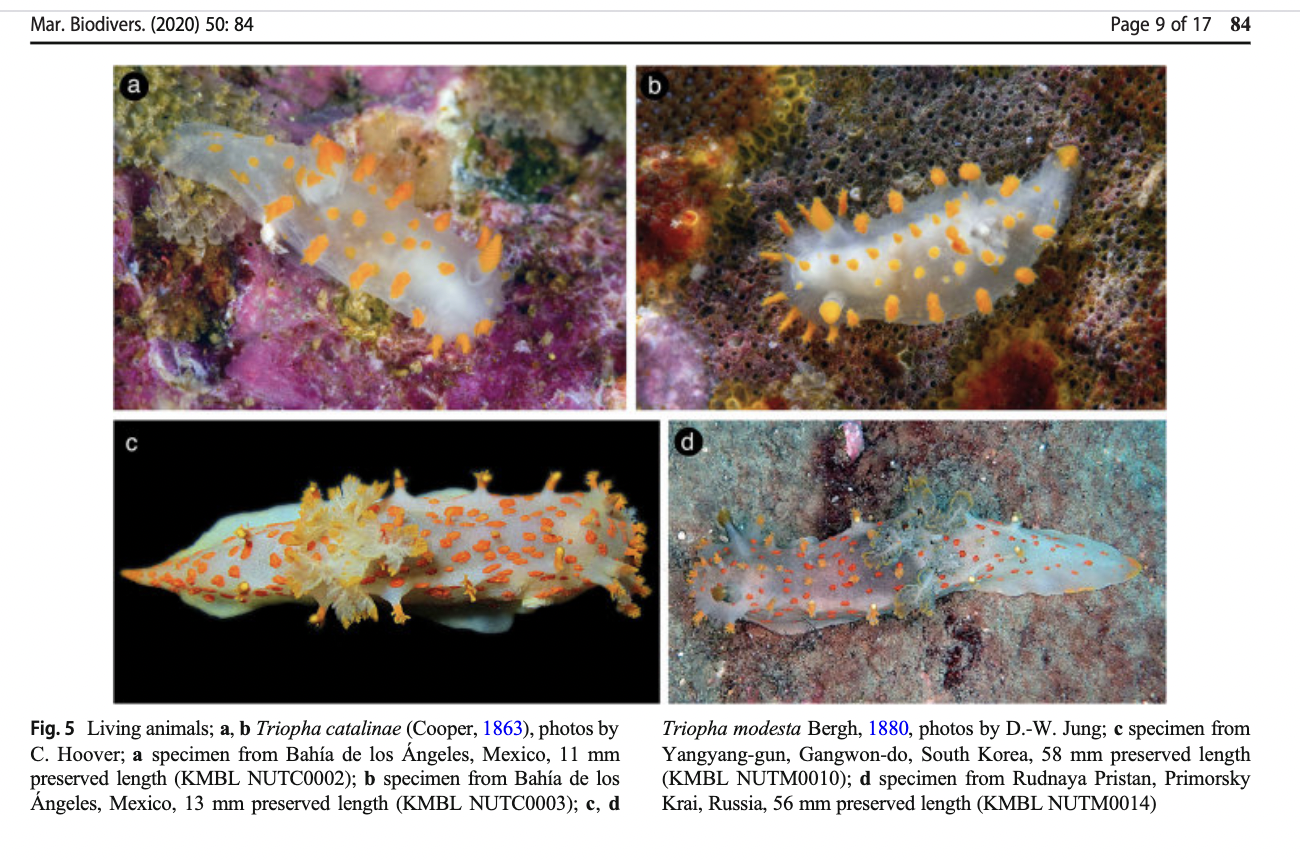
Update September 24, 2020 – Species has been reclassified into two.

Triopha modesta has been determined to be a trans-Pacific species (Korea, Japan, Siberia, and Alaska to California) and is far more likely to be off the coast of British Columbia and has both flat and branching tubercles and globular bits on their side.

Triopha catalinae has been determined to be a species only found in the eastern Pacific Ocean (SE Alaska to the Gulf of Mexico) and they have large, conical or rounded dorsal tubercles.

More detail:
Jung, D., Gosliner, T.M., Choi, T. et al. The return of the clown: pseudocryptic speciation in the North Pacific clown nudibranch, Triopha catalinae (Cooper, 1863) sensu lato identified by integrative taxonomic approachesMar. Biodivers. 50, 84 (2020).


Original post from 2016:

In having noted the recent “Creepy Clown” Halloween-related absurdity in the far off periphery of my life, I thought I would share the beauty of the clowns abundant below the surface at this time of year – Clown Dorids.-

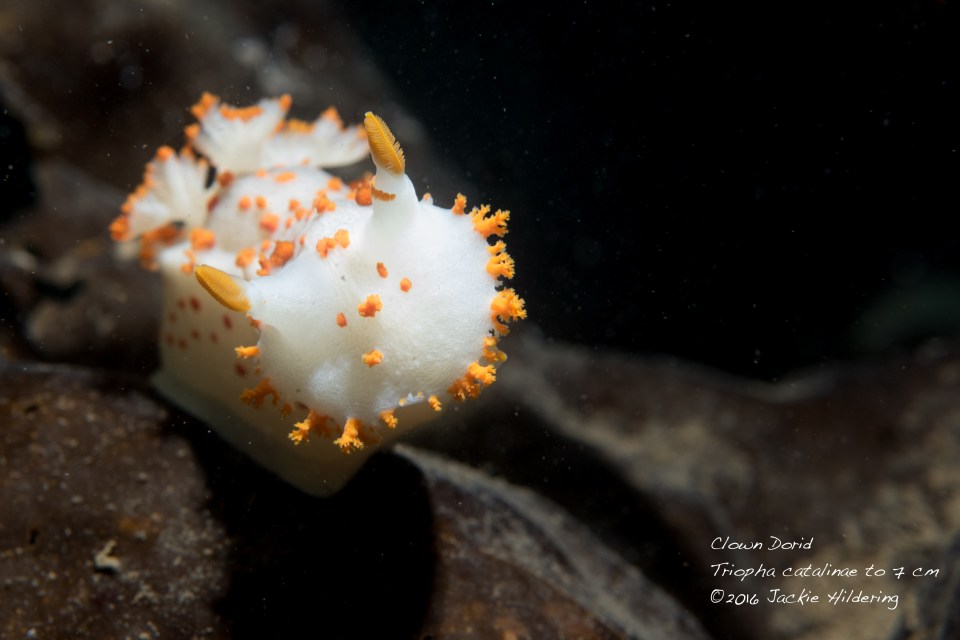
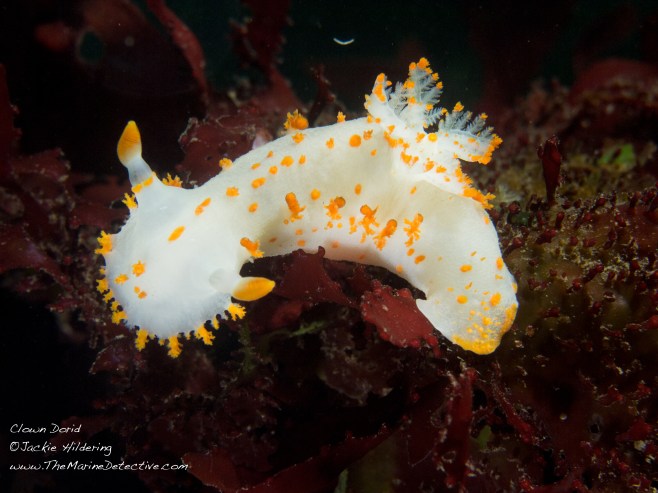
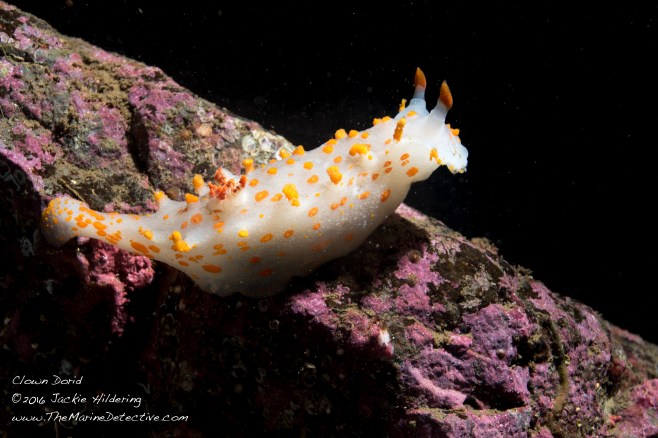
Clown Dorids are a species of nudibranch (Triopha modesta to 7 cm).

Nudibranchs are sea slugs with naked gills and those in the dorid suborder most often have their plume of gills on their posterior (around the anus in fact). See the orange frills in the Clown Dorids in these images? Those are their gills.

Clown Dorid; gills on right @Jackie Hildering.
Clown Dorid with gills are on the right. It’s “rhinophores”, by which it smells its way around, are on the left, atop its head. 

Many dorid species fully retract their gills when disturbed. Clown Dorids can only partial retract their gills.

_jh13796
That’s all!  Clown Dorids cannot fully retract their gills like most other dorid species.

Note too the beautiful “oral veil” with papillae that aid Clown Dorids in finding food.

_jh13183
Image allowing a good look at the Clown Dorid’s oral veil. 

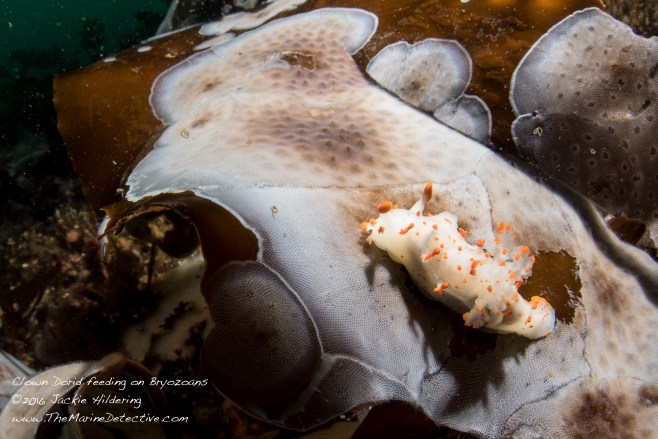
Also unlike many dorids, Clown Dorids do not feed on sponges. They feed exclusively on bryozoan species; those crusty colonies of organisms often found on kelp.

_jh16262
Clown Dorid likely feeding on Kelp-Encrusting Bryozoan. 

There were a particularly large number of Clown Dorids on my dive this past October weekend with many egg masses.

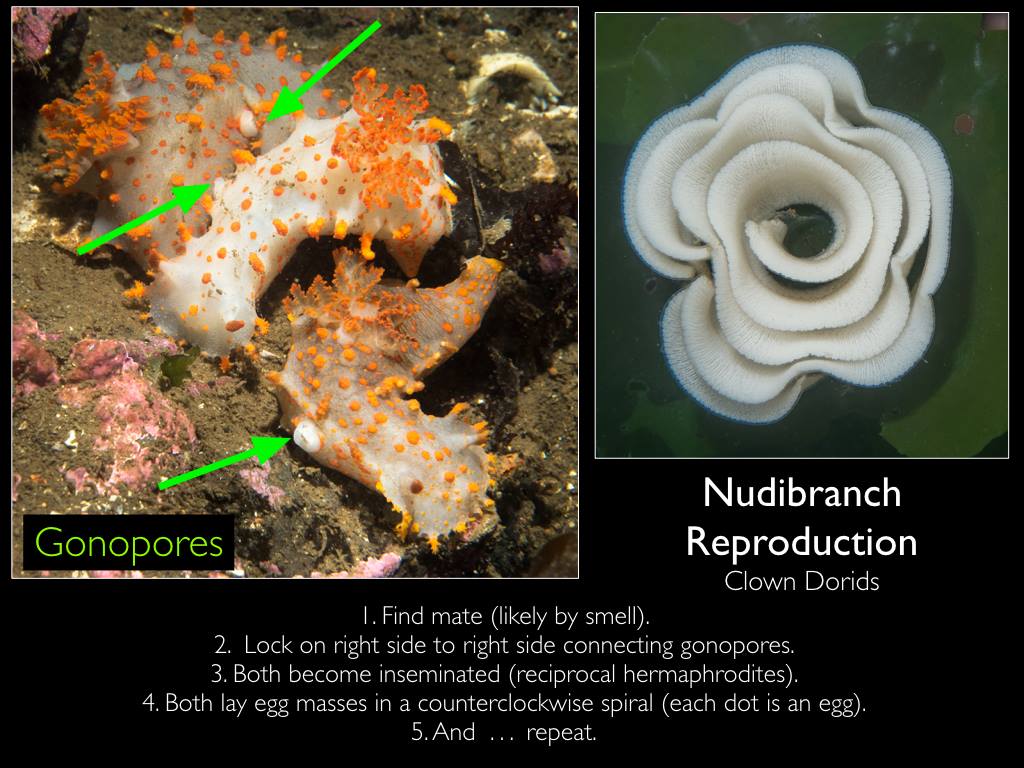
Sea slugs are reciprocal hermaphrodites. This of course makes good sense as a reproductive strategy when you are a slow slug and your offspring hatch out to be plankton. Reciprocal hermaphrodites have both male and female sex organs whereby both individuals are inseminated and lay eggs = way more eggs!

_jh15227
Clown Dorids that have found one another (relying on smell and touch) and maneuvering into the mating position. 

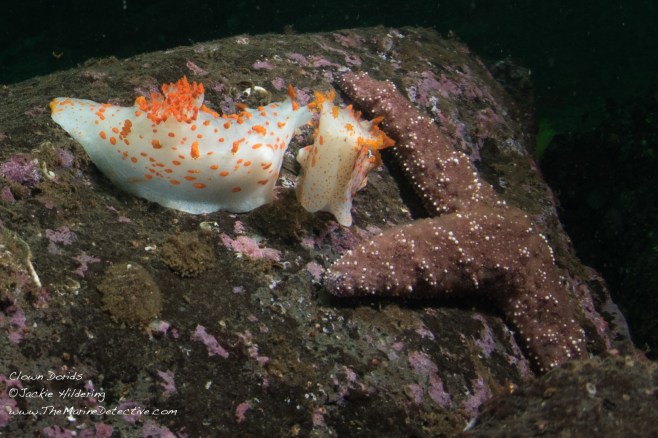
Nudibranchs mate right side to right side. If you look very carefully in the photo below, you can see a bump on the individuals’ right side. This structure is the “gonopore” and is usually retracted. They lock onto one another with their gonopores and both become inseminated.

_jh15263
Clown Dorids extending their mating organs and about to lock on right side to right side. (Ochre Star beside them.).

The gonopore is easier to see in the following  image.

Clown Dorid - note the "gonopore" on the right near the nudibranch's head. ©2017 Jackie Hildering.
Clown Dorid – note the “gonopore” on the right near the nudibranch’s head. [Update since the reclassification, I believe this one is a  Triopha catalinae].

The egg masses of each species of sea slug look different. However, it is very difficult to discern the eggs masses of some closely related dorids. The ideal is to find an individual laying the eggs.

However, in all these years, I have never managed to get a photo of a Clown Dorid laying eggs. Dive buddy Paul Sim has though. See his great image below.

paul-sim-clown_dorid_triophina_catalinae
Clown Dorid laying an egg mass. Note each little dot? That’s an egg! ©Paul Sim.

15391252_10155035088154218_4230382590543451490_o

Summary from my social media post on December 13, 2016: Oh the fabulous way sea slugs ensure their kind survives! Imagine the challenges as a sea slug – you’re slow, you can only sense light and dark . . . . so when you finally find a mate it sure makes sense to be a simultaneous hermaphrodite so you both end up laying eggs. And the beauty of the egg masses! They are species specific i.e. the egg mass of each species of sea slug looks different. AND, wondrously, for almost all nudibranch species (at least in the northern hemisphere), these masses are almost always laid in a counterclockwise direction (sinistral) starting at the centre, with equal space between the whorls (i.e. an Archimedes spiral). 


More information:

Come Away With Me . . .

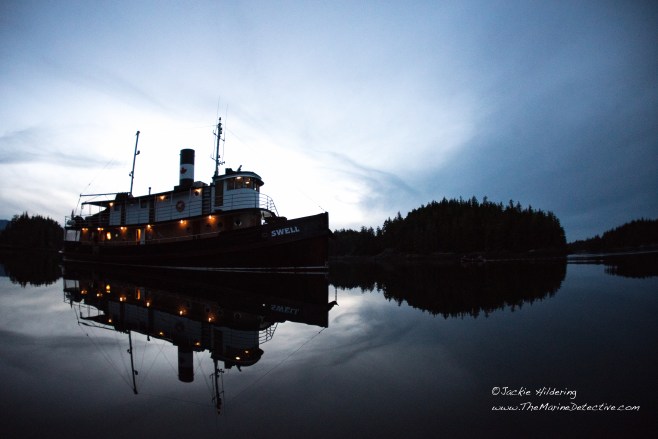
For you: photos and a two-minute slide show from my recent days aboard Maple Leaf Adventures‘ MV Swell in my own backyard – the Broughton Archipelago on NE Vancouver Island.

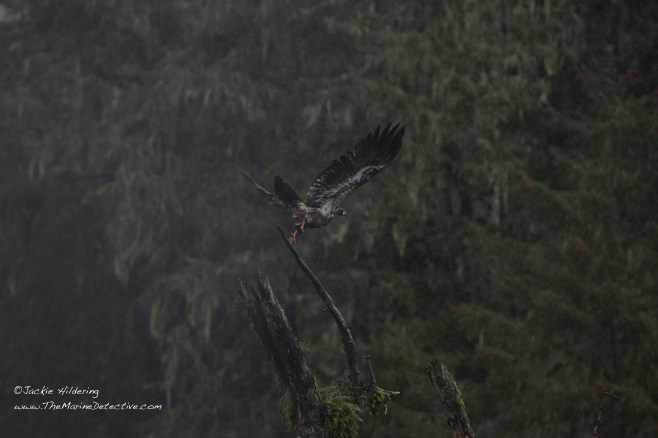
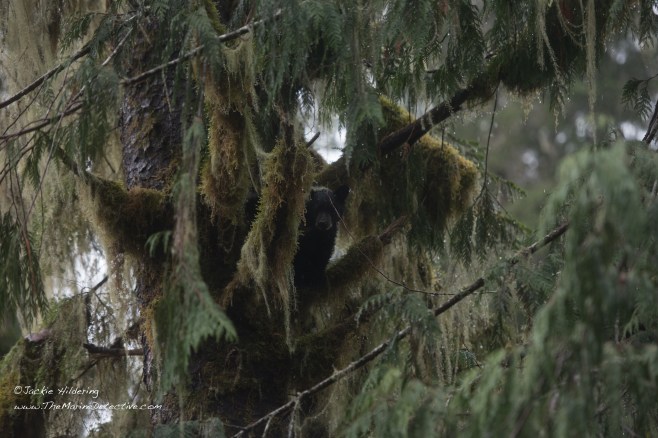
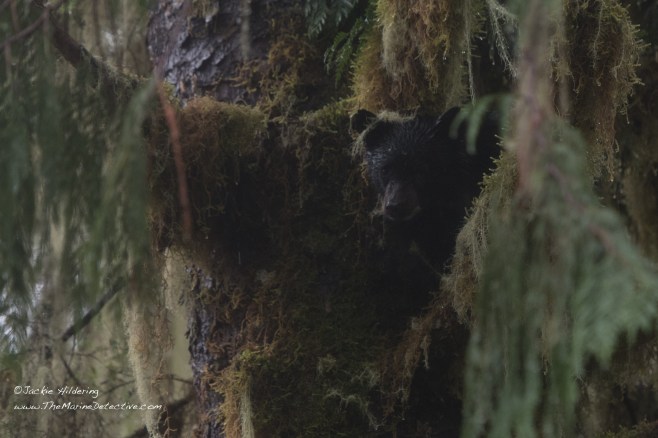
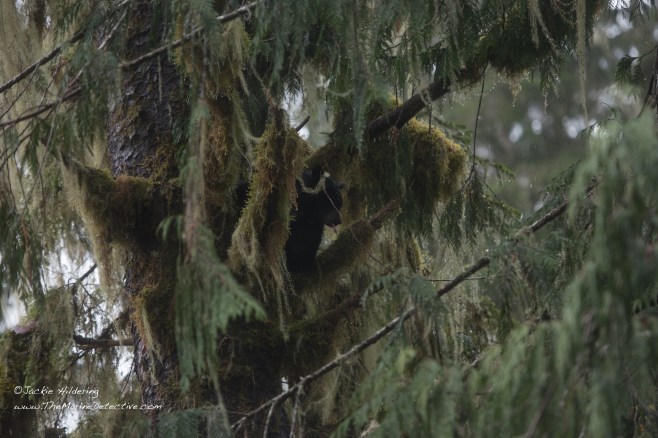
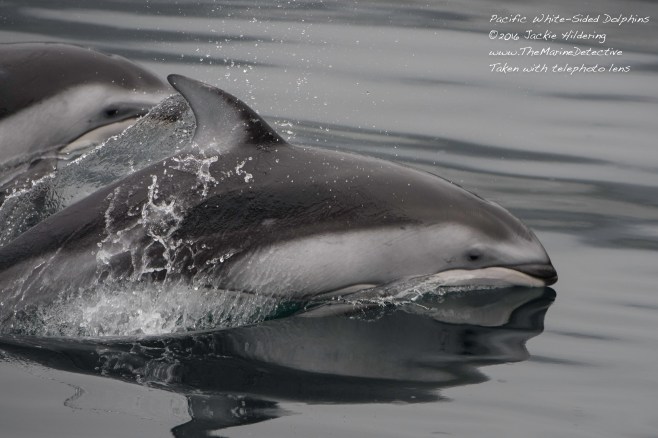
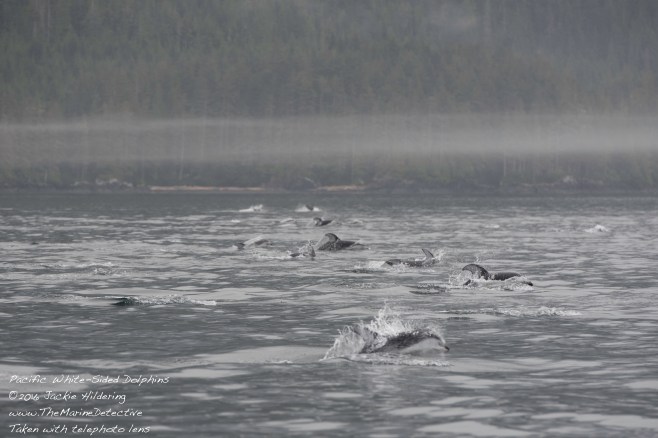
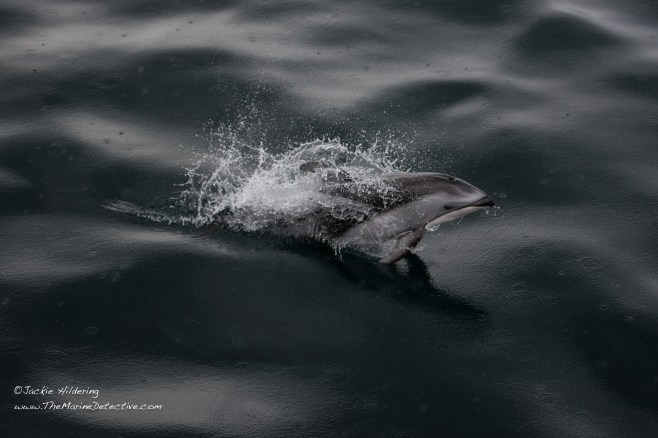
The work while aboard? Striving to be a conduit of understanding for the life around us: Freckles the Humpback who was acrobatic for over an hour; the Black Bear cub in a rain-soaked, moss-covered Cedar with lichen draped over his/her ear; the Pacific White-Sided Dolphins leaping over a Humpback and then surfing in a ship’s wake; the giant Steller Sea Lions growling at a frequency the resounds far and deep; the Bald Eagles tearing apart the salmon that feeds this coast; and . . . so much more.

With the recent diesel spill further to the north on BC’s Central Coast, it all felt even more fragile. I feel even greater urgency and importance to try to capture the excruciating beauty and balance here so that it might enter more human lives and increase true awareness and true action.

Know and celebrate your connection no matter how many kilometres you are from the life in these images.

See the common life-enhancing solutions: reducing demand for fossil fuels; reducing use of dangerous chemicals; increasing values based on the longterm health of the environment our lives depend on . . . that’s where happiness, health and empowerment lie.

Don’t be despondent because tipping into the pit of despair will truly bring darkness.

Do it . . . . come away with me.

MV Swell built in 1912 with major overhauls by Maple Leaf Adventures to be both very comfortable and have a reduced carbon footprint / be energy efficient.

MV Swell built in 1912 with major overhauls by Maple Leaf Adventures to be both very comfortable and have a reduced carbon footprint / be energy efficient.

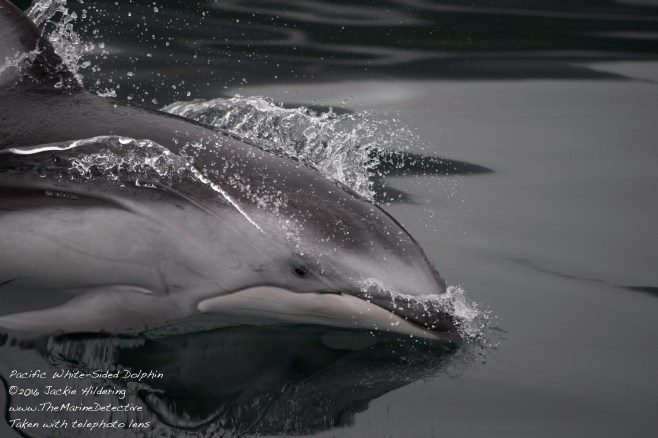
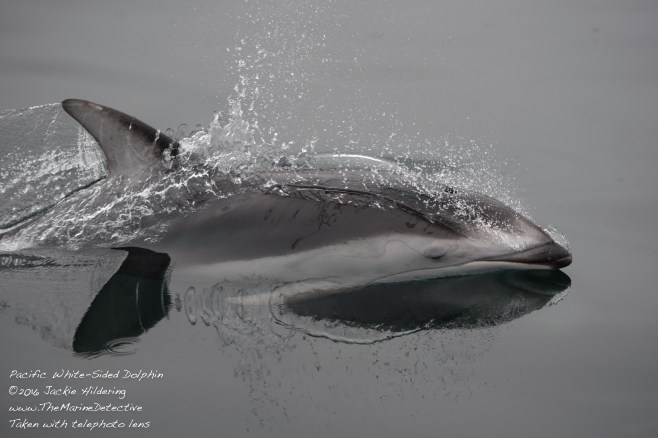
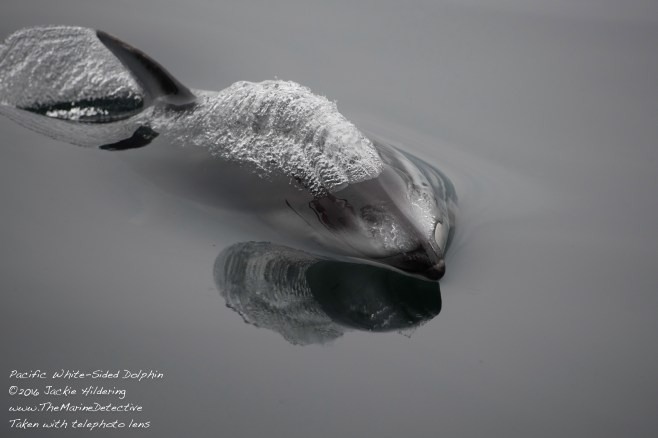
Pacific White-Sided Dolphin in the rain. ©2016 Jackie Hildering.

Pacific White-Sided Dolphin in the rain. ©2016 Jackie Hildering.

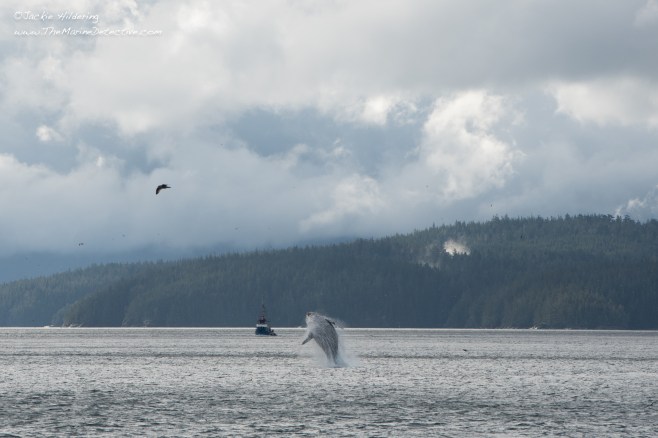
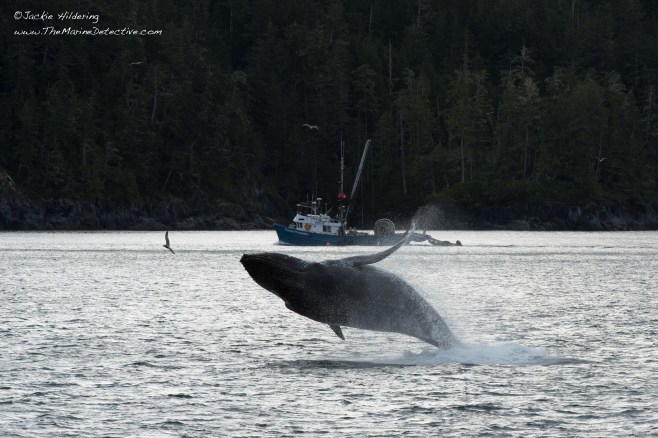
Freckles the Humpback Whale (BCY0727) breaching. ©2016 Jackie Hildering.

Freckles the Humpback Whale (BCY0727) breaching. She was acrobatic for over an hour.
©2016 Jackie Hildering.

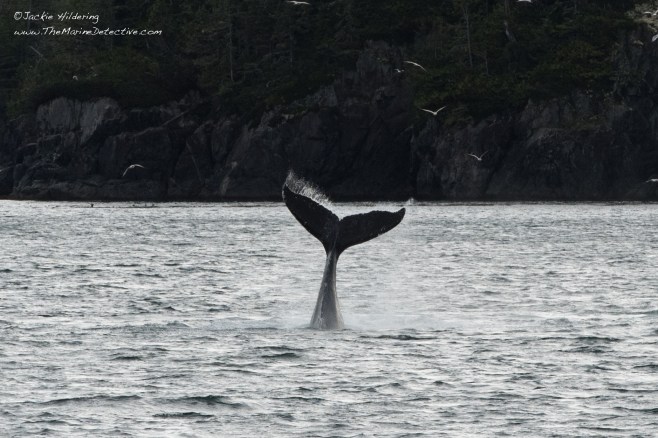
Freckles the Humpback (BCY0727) tail-lobbing. ©2016 Jackie Hildering.

Freckles the Humpback (BCY0727) tail-lobbing. ©2016 Jackie Hildering.

Freckles the Humpback Whale (BCY0727) breaching. ©2016 Jackie Hildering.

Freckles the Humpback Whale (BCY0727) breaching.
©2016 Jackie Hildering.

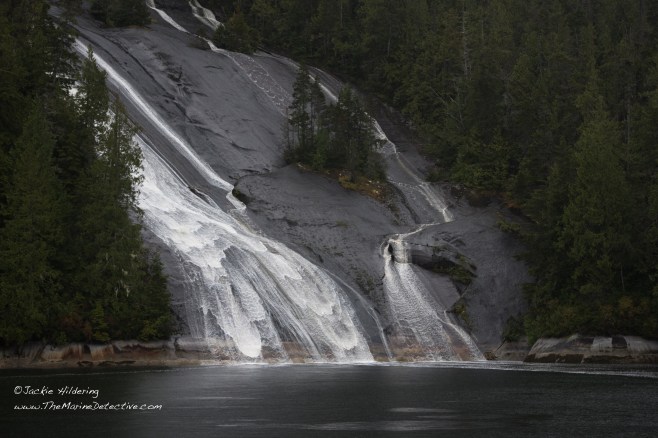
Lacey Falls, Broughton Archipelago. ©2016 Jackie Hildering.

Lacey Falls, Broughton Archipelago. ©2016 Jackie Hildering.

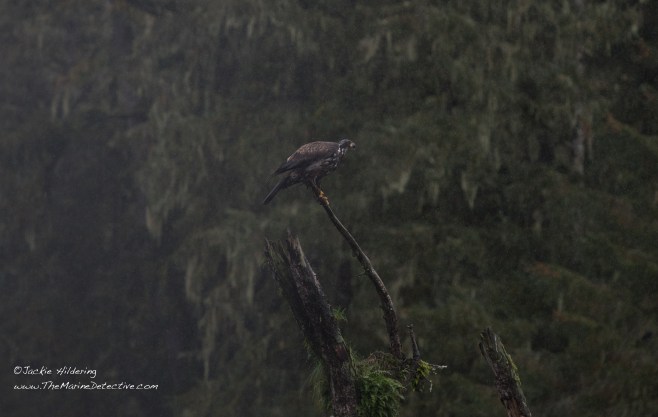
Juvenile Bald Eagle water dripping off beak. Imagine the sounds and smells I cannot relay in this image - the rain falling on the Ocean; the calls of eagles, ravens, various ducks and gulls; and the air thick with the smell of Chum Salmon that fought their way back to the river where they were born to ensure their offspring have the best chance of a healthy environment by fertilizing it with their own bodies. ©2016 Jackie Hildering.

Juvenile Bald Eagle water dripping off beak. Imagine the sounds and smells I cannot relay in these images – the rain falling on the Ocean; the calls of eagles, ravens, various ducks and gulls; and the air thick with the smell of Chum Salmon that fought their way back to the river where they were born to ensure their offspring have the best chance of a healthy environment by fertilizing it with their own bodies.
©2016 Jackie Hildering.

Wet juvenile Bald Eagle takes flight. ©2016 Jackie Hildering.

Wet juvenile Bald Eagle takes flight. ©2016 Jackie Hildering.

Black Bear cub with lichen draped over his/her right ear

Black Bear cub with lichen draped over his/her right ear – peering down from a moss-covered Cedar, salmon musk thick in the air; moisture dripping off his/her fur and everything else including us . . so clearly this was the rainforest, fed by salmon.
©2016 Jackie Hildering.

Close-up. Little Black Bear Cub peering down from moss-covered Cedar. ©2016 Jackie Hildering.

Close-up. Little Black Bear Cub peering down from moss-covered Cedar. ©2016 Jackie Hildering.

jackie-hildering-14696

See his/her tongue sticking out and the lichen over his/her right ear? ©2016 Jackie Hildering.

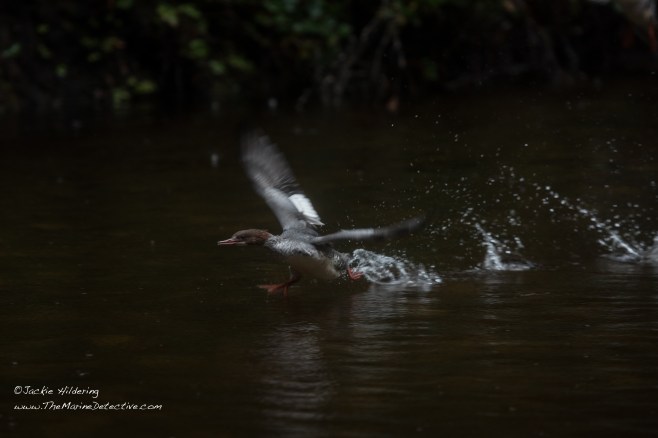
Merganser running to before flight. ©2016 Jackie Hildering.

Merganser running to before flight. ©2016 Jackie Hildering.

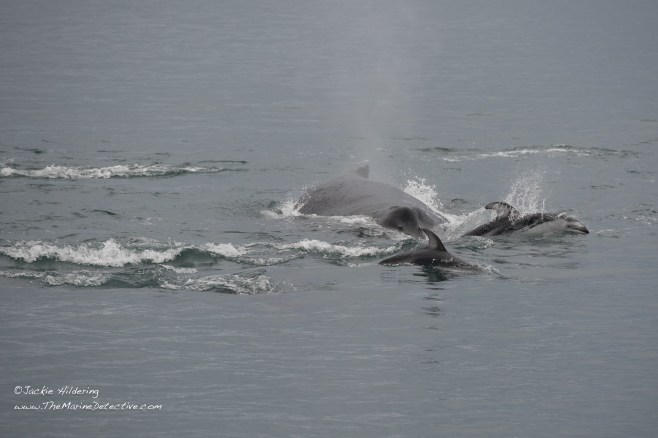
Humpback Whale being mobbed by Pacific White-Sided Dolphins. S/he was repeatedly trumpeting, presumably in exasperation. ©2016 Jackie Hildering.

Humpback Whale being mobbed by Pacific White-Sided Dolphins. S/he was repeatedly trumpeting, presumably in exasperation. ©2016 Jackie Hildering.

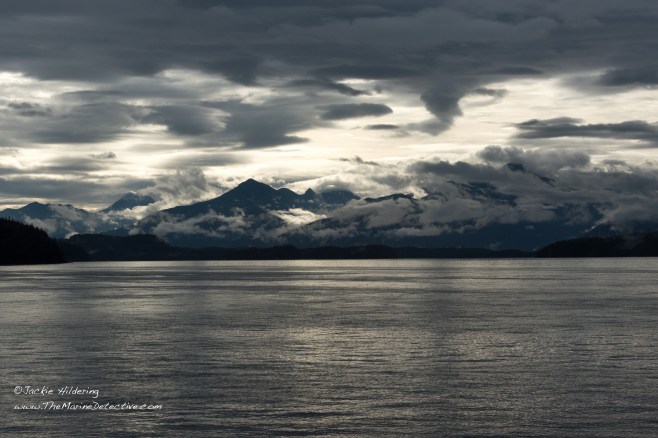
Morning light. ©2016 Jackie Hildering.

Morning light. ©2016 Jackie Hildering.

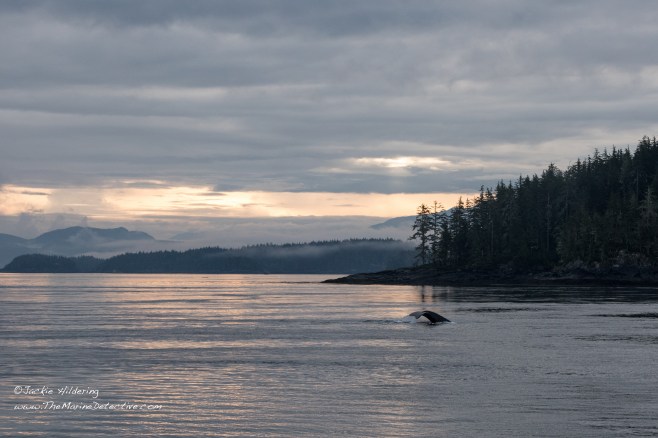
Argonaut the Humpback in the morning light (BCY0729). ©2016 Jackie Hildering.

Argonaut the Humpback in the morning light (BCY0729). ©2016 Jackie Hildering.

Happiness . . and purpose. I'm on the right on MV Swell. Photo by Captain Alex Ruurs.

Happiness . . and purpose. I’m on the right on MV Swell. Photo by Captain Alex Ruurs.

Two-minute slide show with more images.


And -the faces and voices of the people most directly impacted by the fuel spill on BC’s Central Coast. The impacts of this, of “only” a tug sinking, it makes so very clear that there has to be a ban on tanker traffic and that we all have to reduce the demand for fossil fuels for so many reasons including that it literally fuels the demand for tankers on our coast.

Eight-Legged Dive Buddy

Yesterday . . .  Browning Wall off NE Vancouver Island  . . . . . a few minutes in my life.

A few minutes that fuels me in a way that I can never fully express. It’s why I have to take pictures.

And by sharing, I hope the NE Pacific Ocean opens up to more people; that there is more awareness of our marine neighbours and our connection to them.

They’re living their lives just below the surface, most often hidden in the dark planktonic soup that sustains them. We humans are most often on the other side; living our lives too often in the dark about our connection to them and how we are also dependent on Mother Ocean as the life sustaining force on the planet.

It’s a world of colour, mystery, marvel and surprise.

Okay, that’s enough words. Here are the photos of a few minutes in my life where I was graced by the presence of marine royalty.

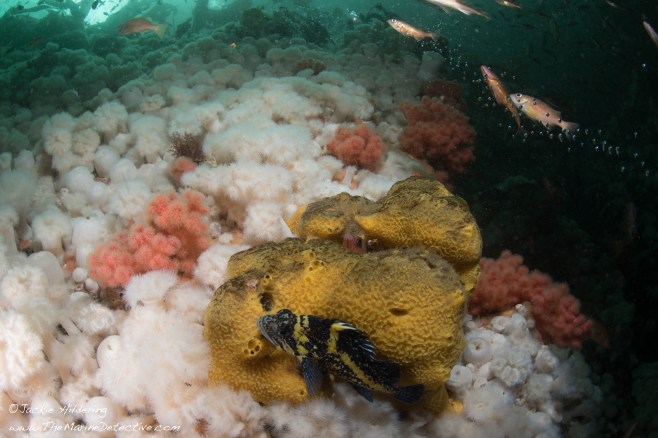
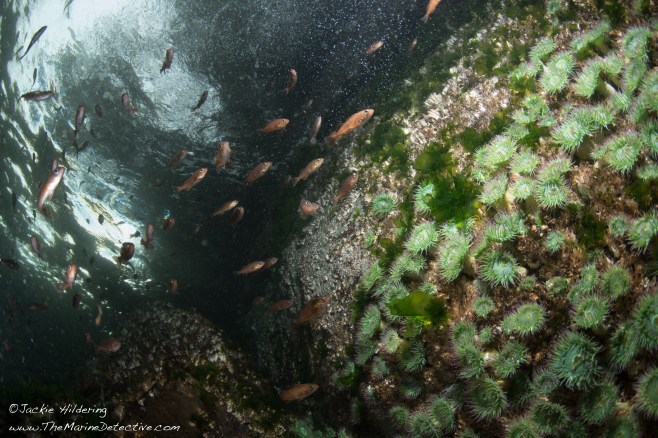
We were ascending slowly to our safety stop (scuba divers spend at least 3 minutes at 5m/15′ to offload nitrogen). On the way, at around 10m depth I stopped, striving to “capture” the beauty of the fish with the surface of the Ocean visible above them.

The view at about 8 metres . ©Jackie Hildering.

The view at about 10 metres . ©Jackie Hildering.

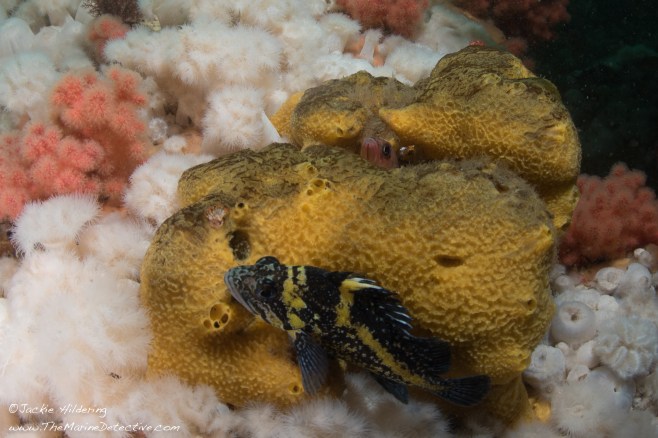
I was smiling at the China Rockfish and Puget Sound Rockfish using the sponge as a couch. Here’s a close-up.

A sponge couch for these fish. ©Jackie Hildering.

See the Puget Sound Rockfish’s head poking out between the sponges? ©Jackie Hildering.

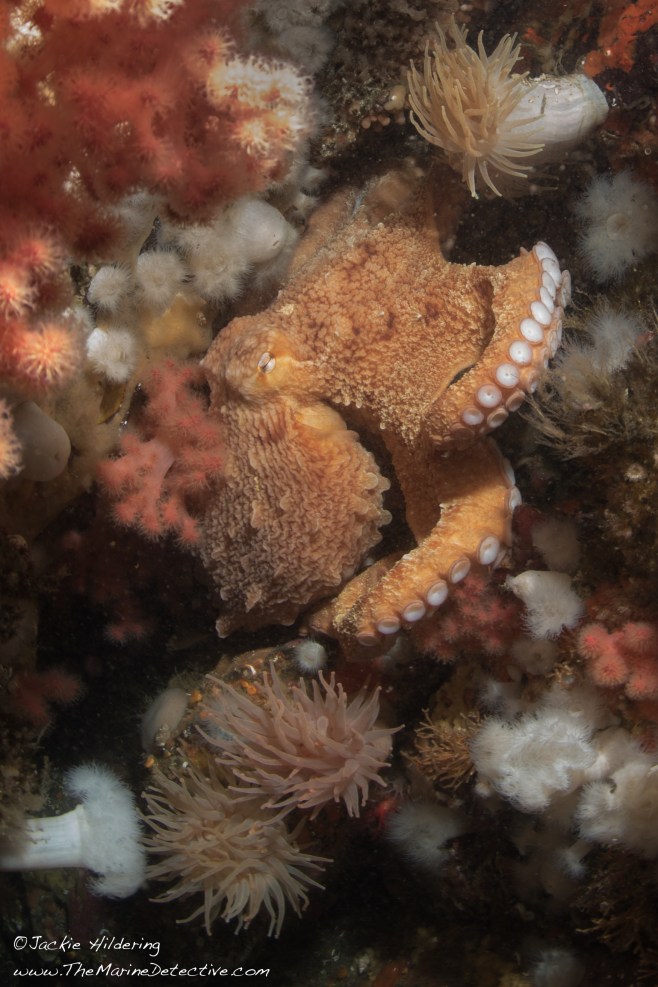
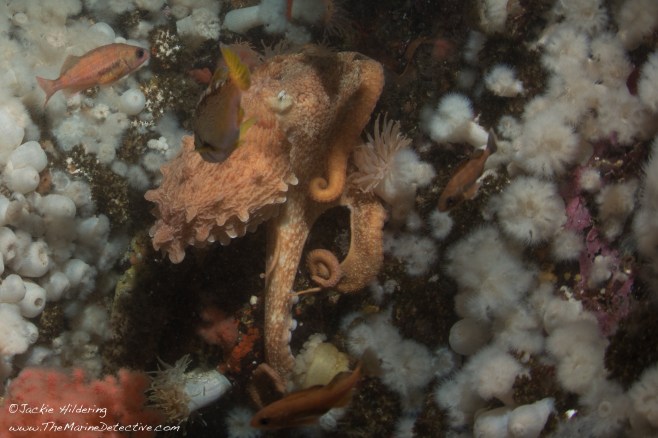
I looked to the right and saw that I was being watched. There, fully out in the open was a Giant Pacific Octopus.

jackie-hildering-13796

Giant Pacific Octopus watching me. ©Jackie Hildering.

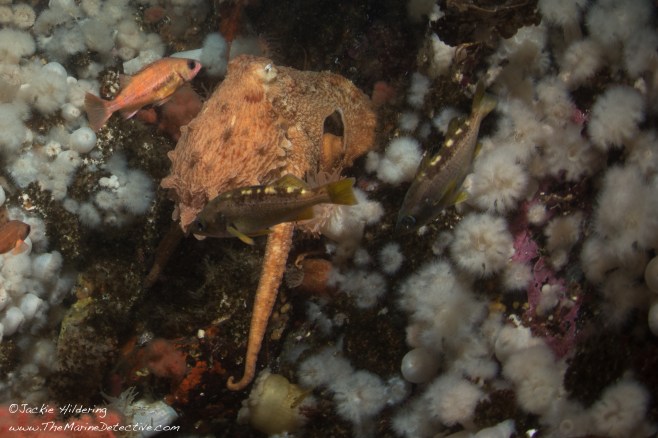
I stared in awe for a little bit and then had to proceed to my safety stop. I was accompanied by the octopus.

Eight-Legged Dive Buddy! ©Jackie Hildering.

Eight-Legged Dive Buddy! ©Jackie Hildering.

jackie-hildering-13799

Eight-Legged Dive Buddy walking to 5m depth beside me! ©Jackie Hildering.

Together, we advanced to 5m. S/he tolerating the flashing of my camera and me trying to find some balance between documenting this experience and living it.

When we reached safety stop depth, off the giant jetted into the depths. With the octopus having descended deeper into the Ocean in which its kind have lived for some 500 million years, this human needed to return to the environment of air where our ancestors strived to start walking upright only about 6 million years ago (with Homo sapiens only dating back ~200,000 years ago).

I was left at 5m depth with 3 minutes to think about the marvel of what had just happened and how I might make the experience count in some way.

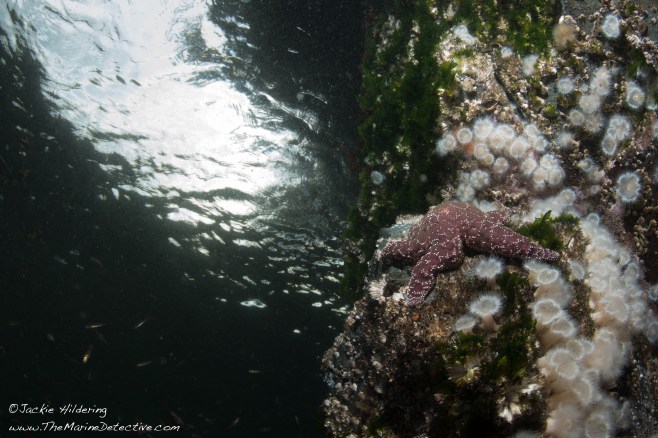
This was the view.

View to the surface. ©Jackie Hildering.

View towards the surface. ©Jackie Hildering.

View towards the surface. ©Jackie Hildering.

How to Kill a Living Dinosaur. The Epitome of Disconnect?

I saw a Leatherback Sea Turtle. I did! And I don’t know if I can ever be the same again.

It happened on July 25th 2016, while I was a member of Fisheries and Oceans Canada’s (DFO) Marine Mammal Research Section aboard the Canadian Coast Guard Vessel J.P. Tully. We surveyed up to 138 nautical miles (256 km) west of Vancouver Island. The purpose of the DFO survey was to increase knowledge about at-risk marine mammal and turtle species’ distribution and abundance.

Can you imagine the wonder, the euphoria, the astonishment, the sense of privilege at seeing this endangered giant that is a living dinosaur?

Here’s how it unfolded. It was at the end of the survey day around 8:02 PM on July 25th. I had finished my shift but was still having a discussion on the port side of the bridge. Suddenly, the Third Officer Brent Seamone said, from the other side of the bridge, “Hey, it’s a turtle!”

With all I had, I rushed to the other side of ship (apologies to any fellow crew members who may have been bruised as a result). And there it was . . . a shadow just under the surface, gliding away from the ship. I stared down its ridged back. Time seemed frozen, suspended for a turtle heartbeat or two. My synapses firing, my adrenaline surging, my brain questioned – could it really be true? And it was. In the vastness of the NE Pacific Ocean we had chanced upon a male Leatherback Turtle. This was the first known sighting of this endangered species in BC waters in two years* (and also reported to I-866-I-SAW-ONE).

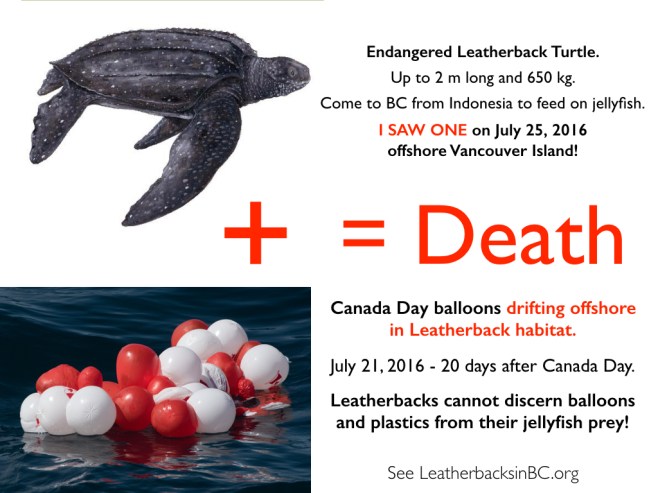
Leatherbacks belong in the rich waters off BC’s coast, coming all the way from Indonesia to feed on jellyfish. I knew this well having only just launched the resource “Leatherbacks in BC” to raise awareness about these giants and the risks they face.

I marvelled at the incredible good luck of it – finding a proverbial needle in such a very large and deep haystack – but of course also that I happened to be on the bridge when I was. My dear friend who works so hard for Leatherback conservation and with whom I wrote the resource, had left the bridge mere minutes before the sighting. How wonderful it would have been for the Chief Scientist to see the turtle too.

I don’t have a photo. I wish I did to make the next part of what I have to share more impactful. Yes, now comes the “How to kill a living dinosaur” part.

Only a few days earlier, we retrieved these from the ocean – Canada Day balloons drifting out at sea in Leatherback habitat 20 days after Canada Day.

Canada Day balloons drifting in Leatherback habitat on July 21st. Photo: Hildering.

Canada Day balloons drifting in Leatherback habitat on July 21st. Photo: Hildering.

It was already our intent to have these images go widely into the world in the hope that it might make more realize that plastics (especially plastic bags) and balloons can kill endangered Leatherback Turtles (and other marine species). Sea turtles cannot discern these from their jellyfish prey. In fact, in a global study of 408 dead Leatherback Turtles, more than 30% had plastics in their intestines (Mrosovsky et al, 2009).

You can certainly see how the balloons could be mistaken for jellies.<br> Lisa Spaven of DFO in photo.

You can certainly see how the deflated balloons could be mistaken for jellies. Lisa Spaven of DFO in photo.

You can imagine my increased motivation for awareness now.

Of course we don’t know the backstory on these balloons – where they came from or if there was any attempt to retrieve them.

Tully crew removing the balloons from the ocean.

Tully crew removing the balloons from the ocean for the sake of Leatherbacks and other species.
Photo: Hildering. 

We do know that it is a far too common a practice to “celebrate” by releasing balloons into the air e.g. as symbolization when someone dies and even to mark an environmental event (yikes!!!)

But of course, unless items are biodegradable, there is no “away”. There is no throwing “away”, flushing “away” or  . . .  drifting “away”.  There is a cost to other species, and ultimately, to ourselves.

What I hope these images and words do, is increase this knowledge. Please could you help?

The solutions are simple, please help increase awareness that #balloonsblow and #plasticspollute.

For more on the wonder that is Leatherback Turtles in BC, please see www.LeatherbacksInBC.org.

TMD Memes.001

* Last reported sighting of a Leatherback Turtle in BC waters prior to this was August 20, 2014 off SW Vancouver Island.

At a loss for words . . .

If a photo is worth a 1,000 words, will these 14 photos be worth 14,000?

Will they do more than “capture” a moment in the life of our marine neighbours?

Will they communicate the emotion felt when I pushed the shutter button: the overwhelming awe; the relief of humility, feeling smaller and more insignificant when witnessing the wild; and the gratitude and motivation at having second chances with these ambassadors of our life-sustaining seas?

I add them to the 100s of other photos shared in the hopes that, somehow, they relay what I cannot find the words to adequately express.

Into the world they go – to you.

These 14 photos were taken in less than 24 hours in one small area of the cold current-fed waters around NE Vancouver Island while I was aboard with Maple Leaf Adventures.

First three photos: Humpback Whale “Inukshuk” (BCZ0339) exploding out of the misty water. He was acrobatic for over 15 minutes. Threatened population.

@2016 Jackie Hildering-10453

@2016 Jackie Hildering-10456

Female mature Bald Eagle near nest in lichen-draped Cedars.

@2016 Jackie Hildering-10496

“Sonora” (A42) chasing salmon with her 4 offspring. “Northern Resident” Killer Whales are a Threatened population.

@2016 Jackie Hildering-10537

@2016 Jackie Hildering-10567

Pacific White-Sided Dolphins in mirror-calm seas this morning, socializing in a group of around 300 individuals.

@2016 Jackie Hildering-10637

@2016 Jackie Hildering-10675

@2016 Jackie Hildering-10688

@2016 Jackie Hildering-10692

@2016 Jackie Hildering-10698

@2016 Jackie Hildering-10725

@2016 Jackie Hildering-10648

@2016 Jackie Hildering-10759

Sea Angels and Sea Butterflies?!

My dry suit has been hosed down and is drying in the sun; my regulator is soaking in fresh water; the washing machine is chug chug chugging with the clothes used over the last days of diving; and my head and heart are full of so much I want to share.

I’m back from another trip organized to God’s Pocket Dive Resort just beyond Port Hardy . . . more than 11 hours spent underwater over the last days. Such an escape. Such an immersion in wonder and that sense of humility that comes with submerging in the force that sustains this planet. Such an opportunity to learn.

I saw my first Sea Angel.

My buddy and I had been drifting along for about an hour. We had schooled with rockfish; hung next to Orange Sea Pens as they bowed in the current; and marvelled at the abundance of anemones and their babies, studding the forests of kelp. We had done our safety stop with a seeming snowfall of pulsing Aggregating Jellies streaming down around us in the sun’s beams.


Thousands of Aggregating Jellies aka Umbrella Jellies. Eutonina indicans to 3.5 cm across. Collective noun for jellies is "smack". ©2016 Jackie Hildering.

Thousands of Aggregating Jellies also known as “Umbrella Jellies”. Eutonina indicans to 3.5 cm across.
Collective noun for jellies is “smack”. ©2016 Jackie Hildering.


Close-up on Aggregating Jelly aka Umbrella Jelly. Eutonina indicans to 3.5 cm across. ©2016 Jackie Hildering.

Close-up on Aggregating Jelly –  Eutonina indicans to 3.5 cm across.
©2016 Jackie Hildering.


We had already been further awed by Sea Butterflies “flying” by our masks. Sea Butterflies are planktonic sea slugs!  They are “pteropods” – swimming shell-less molluscs whose “wings”(ptero) are their feet (pods). This genus does have an internal gelatinous “pseudoconch” (false shell) and the brown dot you see in my image is the gut.  Sea Butterflies feed by forming a mucus web up to 2 m in diameter in which they trap smaller plankton and bits of organic matter. Oh to see that. It was apparently first documented in the 1970s by researchers while SCUBA diving.

Sea Butterfly - Corolla spectabilis. Dark spot is the gut. ©2016 Jackie Hildering.

Sea Butterfly – Corolla spectabilis. Dark spot is the gut. See this link for more species information and a video (with excited diver vocals) of a swimming Sea Butterfly. 


All those jellies and Sea Butterflies pulsing around us and then, just when I was about to break the surface back into the world where gravity has such a stronger hold on me, I saw it! So small, tiny wings pulsing . . . a Sea Angel!


Image #1 of the Sea Angel - Cliopsis krohni to 4 cm long. Also known as a "Sea Cherub". ©2016 Jackie Hildering.

Image #1 of the Sea Angel – Cliopsis krohni to 4 cm long. Also known as a “Sea Cherub”.
©2016 Jackie Hildering.


Image #2 of the Sea Angel. ©2016 Jackie Hildering.

Image #2 of the Sea Angel. ©2016 Jackie Hildering.


Image #3 of the Sea Angel. ©2016 Jackie Hildering.

Image #3 of the Sea Angel. ©2016 Jackie Hildering.


This is another species of planktonic, “winged” sea slug (but the adults of this species are completely shell-less; they do not even have pseudoconch). Sea Angels are a rarity so far to the north and are only occasionally seen at the surface (found to depths of 1.5 km).  Their presence is likely due to warmer waters (El Nino and possible climate change) and a big northwest wind that had raged a couple of nights prior. The wonder of it, to see something so otherworldly, to know of its rarity in this area, and to get a sense of its planktonic fragility – surviving from a larval stage, escaping predation by fish, and to be carried by the currents in the vastness of the sea.

It may be hard to imagine but this species is a voracious predator! Cliopsis feeds on other planktonic snails by grabbing them with a long proboscis (which can be up to two times its body length), a sharp radula and hooks made of chiton!


Screen grab from the "Plankton Chronicles" showing a Sea Angel feeding! See amazing 1.5 min clip here http://planktonchronicles.org/en/episode/pteropods-swimming-mollusks/.

Screen grab from the “Plankton Chronicles” showing a Sea Angel feeding!
See amazing 1.5 min clip at this link.


And yes, their diet includes Sea Butterflies. Sea Angels can eat organisms up to three times their size!

When a Sea Angel comes into contact with a Sea Butterfly’s feeding web, it reels it in, dragging the Sea Butterfly with it. When close enough, the Sea Angel then uses its probosis to “cut” the Sea Butterfly from its psuedoconch and eats it.

The marvel of it all, the delicate balance of this planktonic world about which so few of us have knowledge but which can be so impacted by our activities. There is concern about the impact of ocean acidification (caused by our carbon use) on the development of these organisms.

As always, don’t be despondent. See the beauty, know your connection, and recognize the common solutions and great gains of caring more  . . ..  and consuming less.