Humpback Comeback Project – Worth the Vote
Update: See this link for the results of the Humpback Comeback Project in the AVIVA competition.
________________________
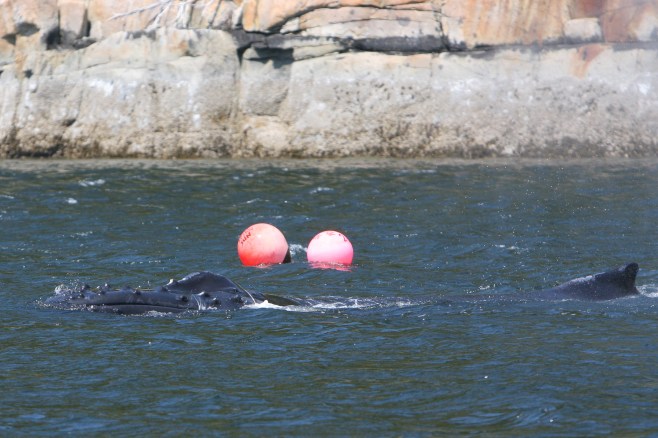
In recognition of how important the information was to our Humpback Comeback Project, Jim Borrowman provided us with his photos of a humpback whale entanglement dating back to September 23rd, 1994. This was a time when it was very rare to see humpbacks around N. Vancouver Island (B.C., CANADA) since they had been whaled intensely into the 1950s.
I include one of these images below but be warned that it is very upsetting. I share it with you as it shows how devastating the threat of getting entangled in fishing gear can be. The photo provides insight into how necessary research into the threat of entanglement is and . . . how valuable your voting is for the Humpback Comeback Project. (Please click here to place your daily vote so that $25K could be won for humpback entanglement research).
Christie McMillan (colleague in the Project who has expertise in judging the severity of entanglement injuries), concluded that the whale must have been entangled for a considerable time before these images were taken. The evidence of this is that the whale is very thin (emaciated) and its skin condition is very poor, being heavily covered in cyamids (whale lice).

Whale with severe entanglement injuries, 1994. Photo by Jim Borrowman; Stubbs Island Whale Watching; http://www.stubbs-island.com/
Jim Borrowman, Mike Durban and Dave Towers worked together and succeeded in freeing this whale from the lines. This heroic effort served as the inspiration for the children’s book “The Rescue of Nanoose” by Mary Borrowman and Chloe O’Loughlin; illustrated by Jacqueline Wang.
More, larger photos showing the severity of this entanglement at this link.
If you need more background on how to vote for the Humpback Comeback Project , please click here.