Join me in the cold, dark, life-sustaining NE Pacific Ocean to discover the great beauty, mystery and fragility hidden there.

Whorling Wizardry

Here’s a big dose of wonder for you.

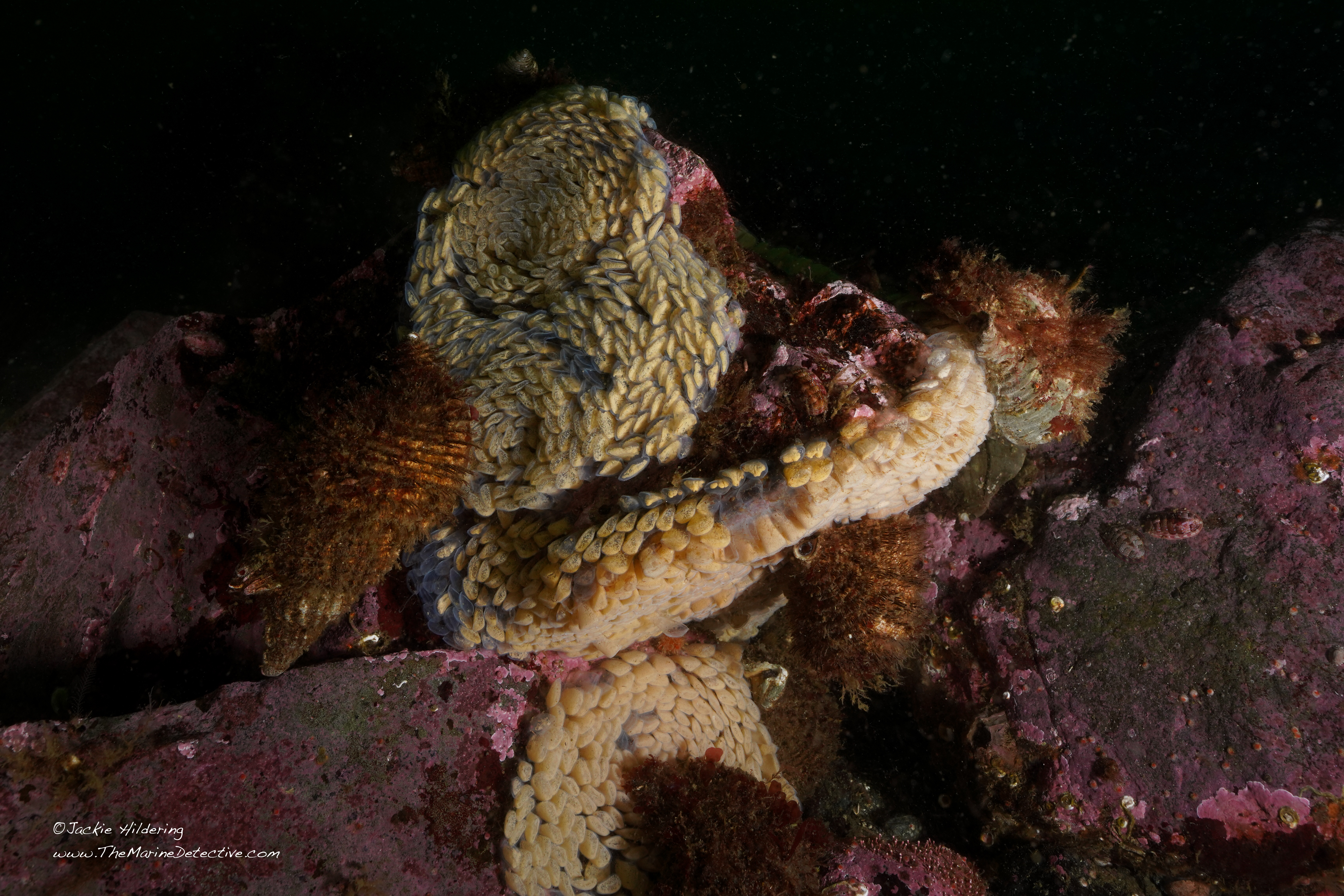
It’s the time of year when female Oregon Tritons are laying their eggs. These are BIG, predatory marine snails at up to 15 cm long.

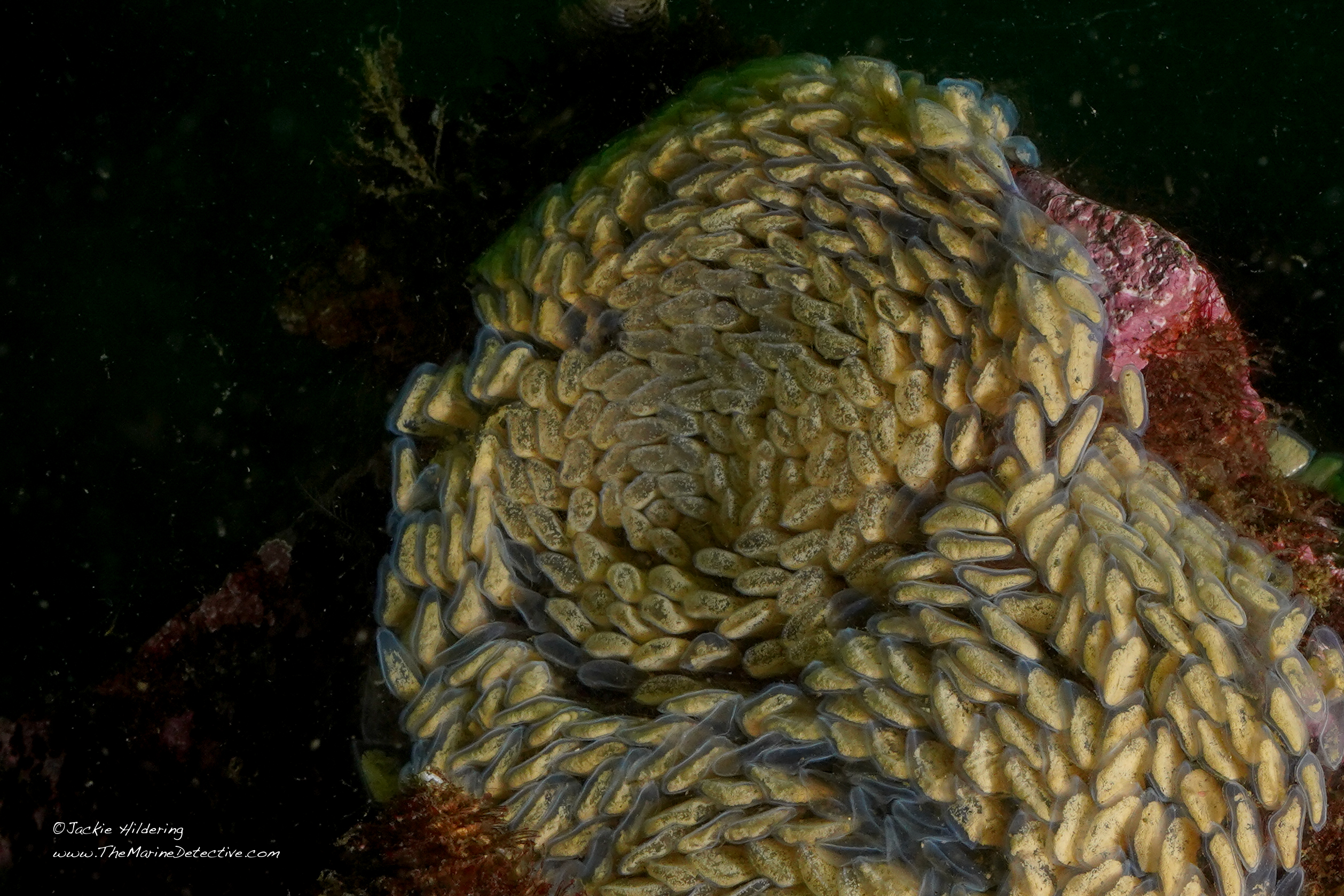
Look at how many fertilized eggs are in each “capsule” and marvel at the shape of the egg mass. These capsules are referenced as “sea corn” for this species. It takes each female about 2 weeks to lay her eggs in this wondrously shaped clutch. A friend referenced the shape of the egg mass as being reminiscent of Van Gogh’s “Starry Night”. Agreed!

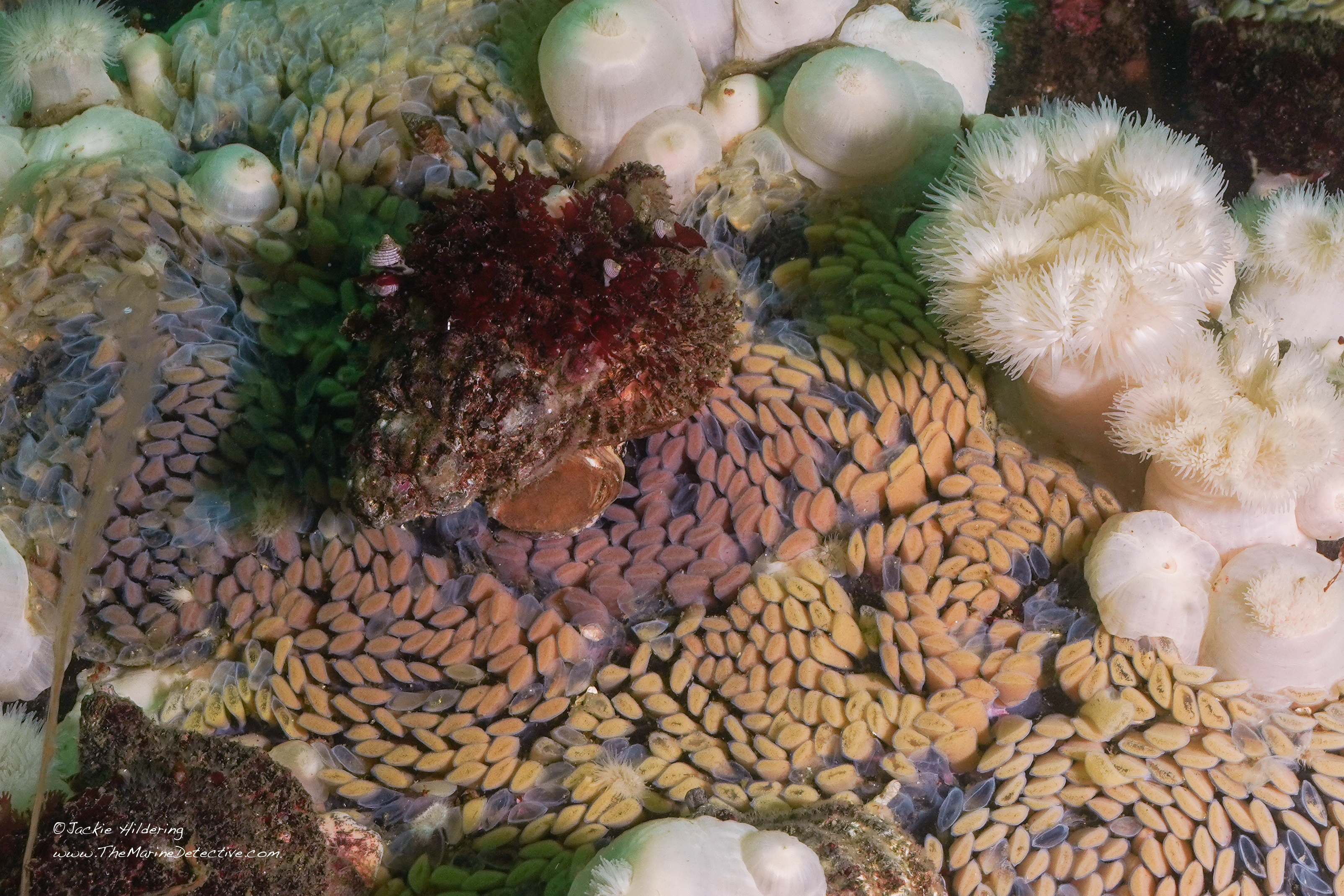
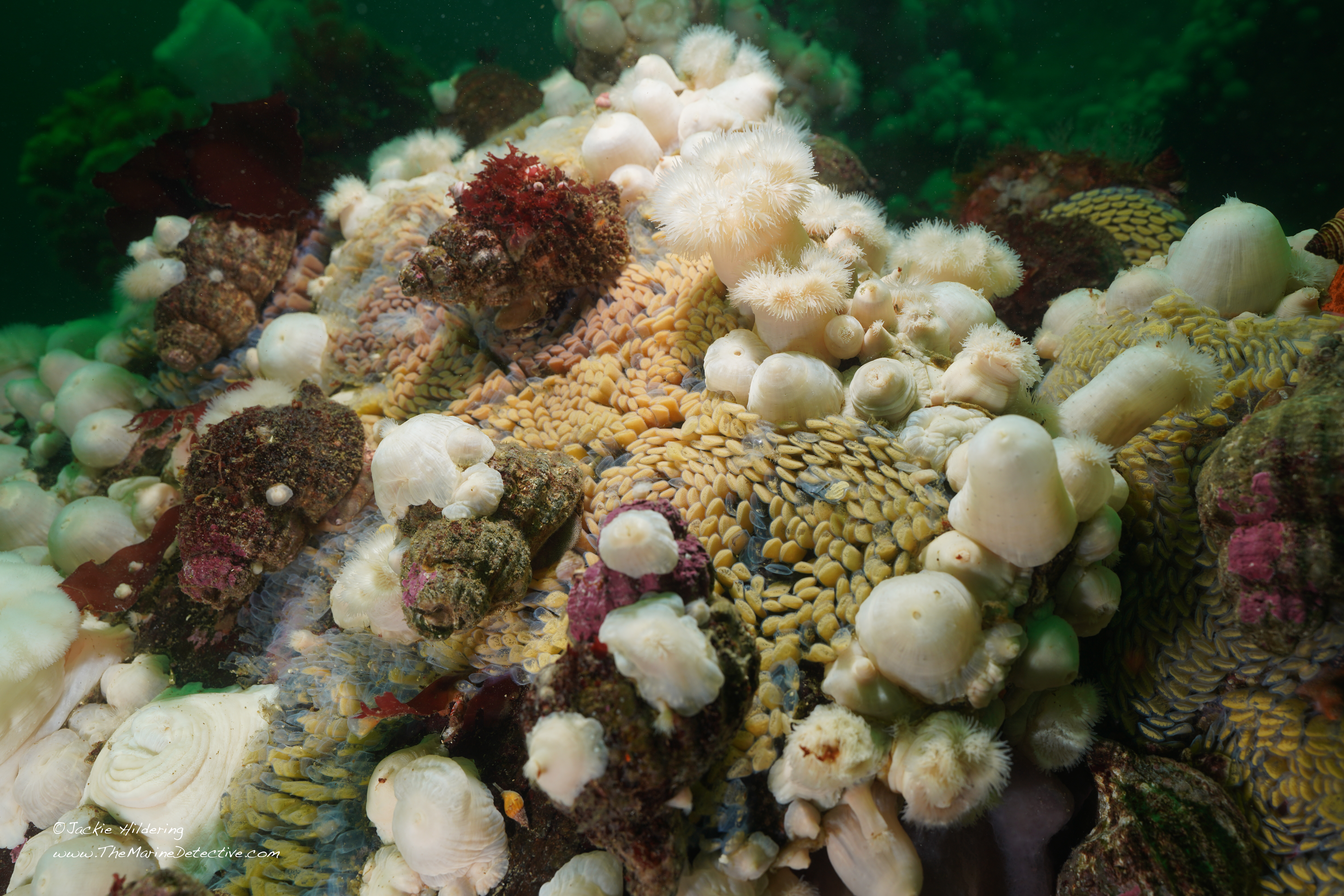
See the “blank” egg capsules? They have likely been preyed upon e.g. by shrimp, hermit crabs or other snail species. You can even see hermit crabs and snails in these images feeding on the eggs. Some hermit crabs are even sitting on females as they lay eggs. Oh the cheek!

See the hermit crabs and “blank” egg capsules?
I could not resist providing a closeup on this Whiteeknee Hermit from the previous photo.
Look at those eyes!
Closeup on a Blue Turban snail snacking on eggs (from previous photo).

Almost every time I see Oregon Tritons lay eggs, they are doing so as a group. Reportedly, up to 30 individuals have been found laying eggs together.

Why are there so many eggs? Because chances of survival are so low when there is no parental care (other than the architectural marvel of the egg case) and the young hatch into the soup of the Ocean. Planktonic larvae hatch out of the eggs at about 2 weeks of age.

With it taking 2 weeks for the young to hatch, and 2 weeks for Mom to lay the whole mass, the first capsules could be hatching by the time she is finishing her work. I learned from aquarist Casey Cook from her microscopic observations at the Aquarium of the Pacific that, “By hatch time there are significantly less in the egg [capsules] than at the beginning of the lay. We presume the babies eat each other to gain nutrients for creating their first shell layers.”


One study found that, in an aquarium, the larval stage for this species was up to 4.6 years and they only began metamorphosis into their adult form when something was available for them to settle on e.g. rocks (Strathmann and Strathmann, 2007). Further “time from metamorphosis to first reproduction was 3.3 years” (in these conditions in the aquarium).

The scientific name for Oregon Tritons is Fusitriton oregonensis. That’s a whole lot of Oregon in their name and the species is the official seashell of Oregon state (there’s trivia for you). However the range for this species is well beyond Oregon. They are found from northern Alaska to northern Mexico, and Japan. They are common around northeast Vancouver Island. Depth range is reported to be from the intertidal to 180 m. In my experience they are rarely in the intertidal however.

They are also known as the Hairy Triton. “Hairy” for the bristly “periostracum” you see atop the shells which appears to stop attachment of marine organisms. Some loose this bristly covering and, resultantly, can have a lot of settlement and growth on their shells.

The brown structure you see at the opening of the shell is the operculum. This is hard and made of keratin and serves as the door to close the shell. More about that in my “Shut the Door!” blog at this link.

Predatory? Yes! They are among the marine snail species that drill holes into prey, sedate, and slurp. From Invertebrates of the Salish Sea: “Feeds on ascidians, urchins, bivalves, sea stars, brittle stars, chitons, abalones, and polychaetes [worm species] . . . It produces sulfuric acid in its salivary glands, which may help in boring through shells. A gland in the proboscis secretes an anaesthetic used for subduing prey. It feeds with biting jaws as well as a radula . . . Humans should not eat this snail because it carries a pathogen in its salivary glands which can be fatal to humans.”

I have also seen this species scavenge on dead crabs, anemones and fish and eat Lingcod eggs.

Oregon Tritons scavenging on the head of a Lingcod.
Oregon Tritons mating. I hope you appreciate the mood lighting.

All photos: ©Jackie Hildering, northeast Vancouver Island in unceded Kwakwak’wakw Territory.

Oh look! It’s a Scalyhead Sculpin (indicated with arrow).

Octopuses Have Arms

Big questions often come from little people and there are so many times that I have been asked by children why I reference the limbs of an octopus as “arms” and not “tentacles”.

Here’s why:
Arms have suckers down the full length of the appendage. Tentacles only have suckers near the tip. Thereby, all eight octopus appendages are arms while squid have two tentacles and eight arms. Further, the purpose of tentacles is generally limited to feeding where arms have more functions. Octopuses use their limbs for feeding, locomotion, reproduction (if male*), defence, etc!

Oh and why are they called “arms” vs. “legs”? Because octopuses’ appendages have more purposes than just locomotion.

Octopus walking on her arms (and you thought YOU were special 😁). How to know this is a female octopus? See below for the link to my blog* on octopus sex.

There are scientists who have put forward that some octopus species use two of the limbs mostly for locomotion whereby they would have two “legs” and six “arms” but let’s avoid that debate!

While we are on the topic of semantics and cephalopods, and anticipating that there will be those who question my use of the plural form of “octopus”, please note the origin of the word octopus is Greek, not Latin. Thereby “octopuses” or “octopods” is truly more correct than “octopi”. 😉 From a strict linguistic perspective, the most correct is “octopods” but I choose not to use that. I think if I were to say “octopods” it would distract what I am trying to communicate that is more important that grammar. I might also come across as pretentious and have fewer human friends 🐙.
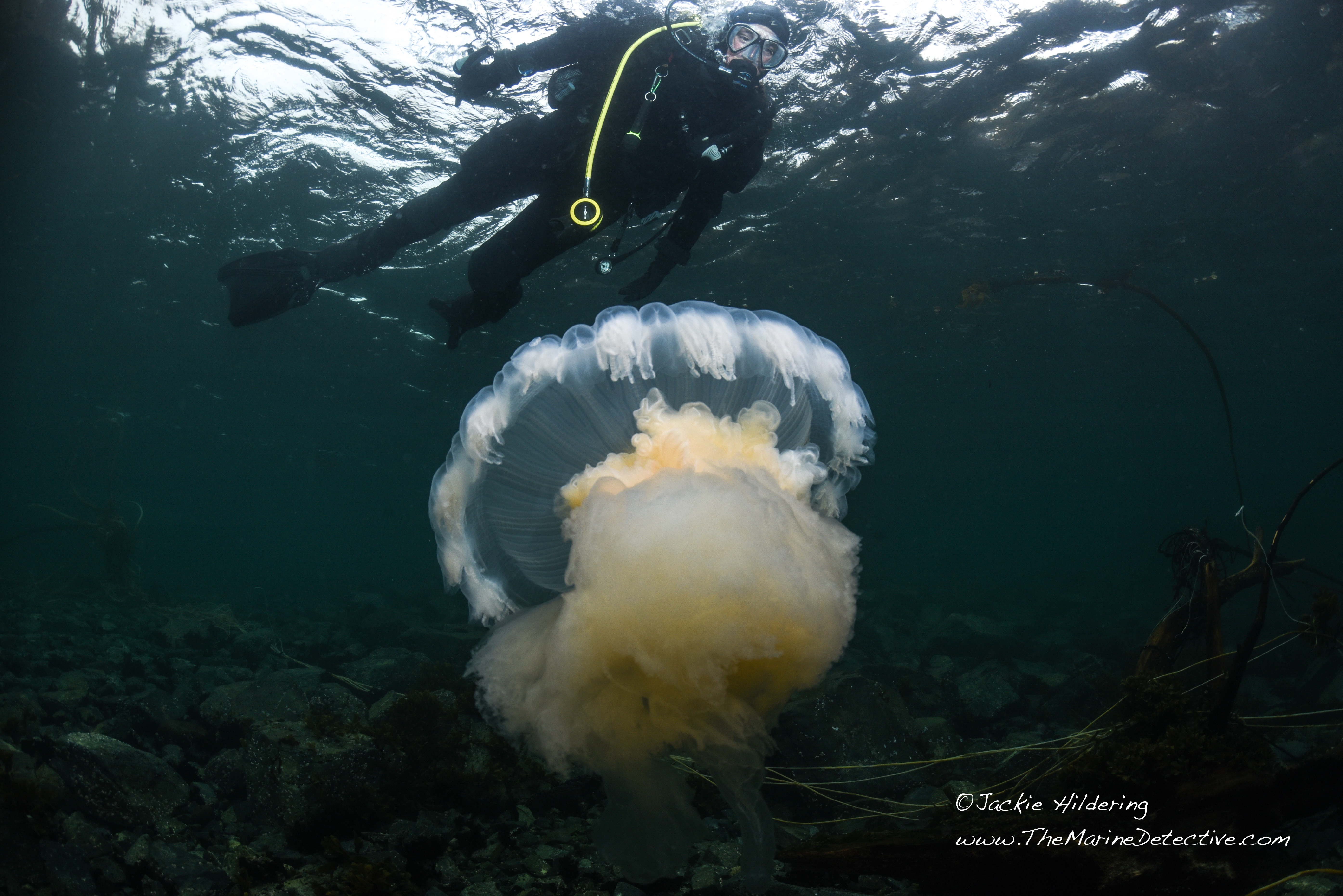
There, don’t you feel much better armed to speak for our awe-inspiring eight-legged neighbours? Or, are you up in arms?


*Related blog: Giant Pacific Octopuses – How Do They Mate?

Scuba Sisters

Here’s to the salty sisterhood of cold-water divers (and the men with whom we submerge). I am a week late with posting this for “Women’s Dive Day”. Yes, it’s been busy.

But, it’s still really important to me to put these photos into the world and reflect on how much this sisterhood means to me, and why. I have tears in my eyes as I type this, so apparently, the feelings run deep.

Scuba sister Jacqui Engel with Egg Yolk Jelly.

Why? Because you may have noticed that, by some, there is an increasing downward pressure on womxn in an attempt to limit the spaces in which we expand and the choices we WILL make. Because some want to hold on to the assumption of inherent privilege based on the absurd “criteria” of skin pigmentation; whether one’s chromosomes have one X or two; or gender identification. Because some fight equality to claim superiority.

I now have some pretty good expletives in my head which I will not type here.

Scuba sister Natasha Dickinson and Sunflower Star. We documented the same one over a span of 71 days. It’s the sea star species that was / is impacted the most by Sea Star Wasting. This individual is on an anchor block covered with encrusting coralline algae.

Of many examples of times it has become very clear to me that being a womxn* in science and scuba is important, let me share the following:

On a really hot day, I was “show and tell” for two children in our community. I dressed up in all my dive gear (the full weight and heat of it) and walked down the hallway and into the classroom with Cayden’s little hand in mine on one side, and Sophia’s little hand in mine on the other.

I walked in as a surprise to the other students. I then was gifted the time to talk about the science of the dive gear and the life that lived in the cold Ocean; our neighbours who were just below the surface of where we lived.

I took the equipment off piece by piece after explaining what it did. The children chose to try to lift the weights and cylinder and we discussed pressure and buoyancy (always good metaphors 🙂 ).

In the course of this, among so many moments the filled my heart, a little boy looked up at me. He had such an open expression on his face and he said . . . “You’re my first scuba diver”.

I was his first scuba diver – me an older woman, speaking for science and the sea, engaging not in an elevated way but in a way that invited them all to follow where their loves took them, and yes, I was wearing a bright green tutu.

Scuba sister Janice Crook.

How does this help shape the future? We will never know will we? We are all projecting our energies and images into places where we might increase what is good in the world, or suppress it.

From the depths, love to you my scuba sisters, and to the men we swim beside. Respect and gratitude to all who shine their light so that others may follow; who do NOT push others down in an attempt to feel elevated. That’s such a tragic and transparent indicator of being a hollow human.


Below: A slideshow to honour some scuba sisters.

For those that may not have seen the use of “womxn” before. The spelling of womxn is a feminist choice in two ways. It removes the “m-a-n” from “woman” and “m-e-n” from “women”. It’s also an acknowledgement that I am including trans and non-binary humans when I use the word.

I Want for Rights . . .

The is not a scientific post. It is an #OceanVoice post = my thoughts about hope, connection, equality and positive action for future generations.

Scenery The Marine Detective
Mother Ocean. NE Vancouver Island, Kwakwak’wakw Territory ©Jackie Hildering

I posted the following on social media last night with the text:
“I needed to write this for myself.
May it land with those who need it too.”

The reaction to the poem suggests it may be of value to readers here too. Here goes.

I want to hide
Below the waves
Where man
Does not decree

I want escape
From values vile
That choke
Humanity

I want to be
Where those with eyes
Use them
To truly see

I want for light
To shine in dark
This way
To equality

I want for rights
So those who wrong
Shrink in . . .
Their toxicity

Bull Kelp The Marine Detective
Grow towards the light. Summer Solstice 2022.
Bull Kelp just below the surface near NE Vancouver Island, Kwakwak’wakw Territory. ©Jackie Hildering.

For more #OceanVoice, please see click here. 

Silver strands of salmon

Salmon – shiny, silvery threads of life.
Take a few minutes to marvel at the role of wild salmon in holding together the fabric of life on our coast?

June 1st is #BCWildSalmonDay.

See the salmon in Surf’s mouth?
Surf is A66, a mature male Orca belonging to the inshore fish-eating (clearly) population of threatened Northern Residents. He was born to Sonora (A42) in 1996. While “Resident” populations of Orca also eat other fish species, their well-being is correlated to availability of salmon (especially Chinook Salmon).
Whales do not randomly blunder about looking for food. Nor are salmon flailing about arbitrarily. The fabric is so much finer than that.
For thousands of years, generation-upon-generation, families of Orca have depended on the same lineages of salmon. In these dark waters, the fish-eating Orca can literally sound out location, size and species of their prey with biosonar / echolocation. Females almost always share the catch with their family (Wright et al).

Salmon fight to return to the exact rivers of their birth by some pull we human have yet to fully understand. This flow is predictable and essential. This predictability provides ease of hunting for the many who depend on the silver flow – from fish-feasting Orca to human fisherfolk. Less energy is needed because the prey SHOULD be easy to find.

The salmon are guided to spawn so that, in death, they deliver nutrients from the Ocean back to the freshwater where they were born, even hundreds of kilometres inland. That is, if transit is not impeded by drought, siltation and slides, parasites and/or disease, or by lack of cold refuges.

The rich bodies of salmon will nourish the ecosystem so that enough of their young may survive to hold the fabric together. Their bodies feed trees, bears, eagles, song birds, insects, deer, wolves, and so much more.

By spawning and dying, the salmon also ensure their diseases and parasites die with them. Nutrients remain.

This web is made of a fabric of exquisite beauty and perfection, shaped by vast expanses of time. Weathered, refined, and adapted by slow change.

But, now, change comes far too fast through the actions, and insufficient reactions, of those who do blunder and act arbitrarily. We, the humans without sufficient understanding of the intricacy of it all, nor how we are attached to the threads.

Know that what helps salmon, herring, whales – is the fabric that holds we clumsy bipeds together too.

Not disparate problems.
But the same life-enhancing solutions.

Care more. Consume less.

Photo: ©Jackie Hildering taken in 2014 in Kwakwak’wakw Territory, northeast Vancouver Island.


Related blog but with me applying Seussian style: A World Without Salmon

Life Begins Anew

Dear readers, look! Just look!

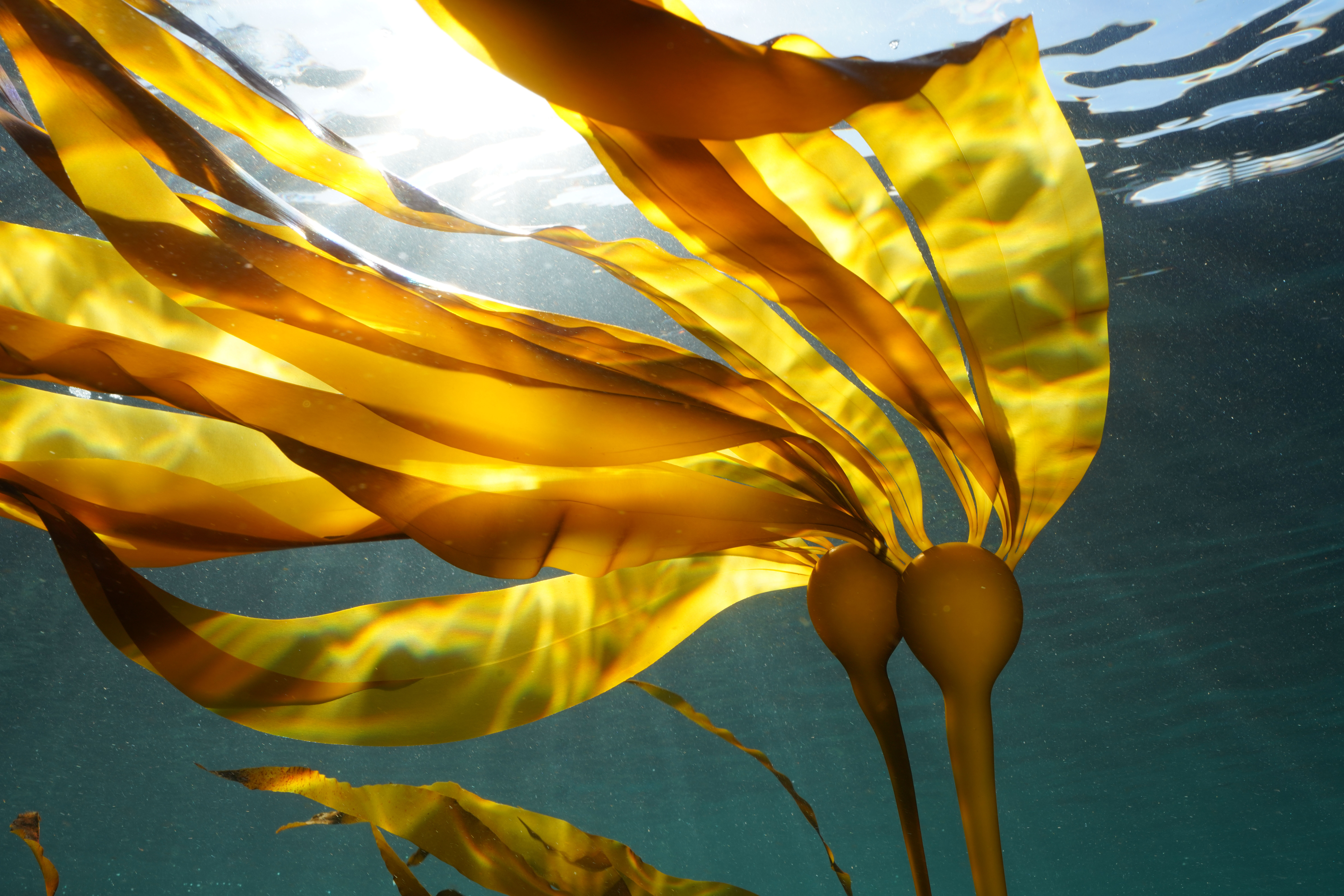
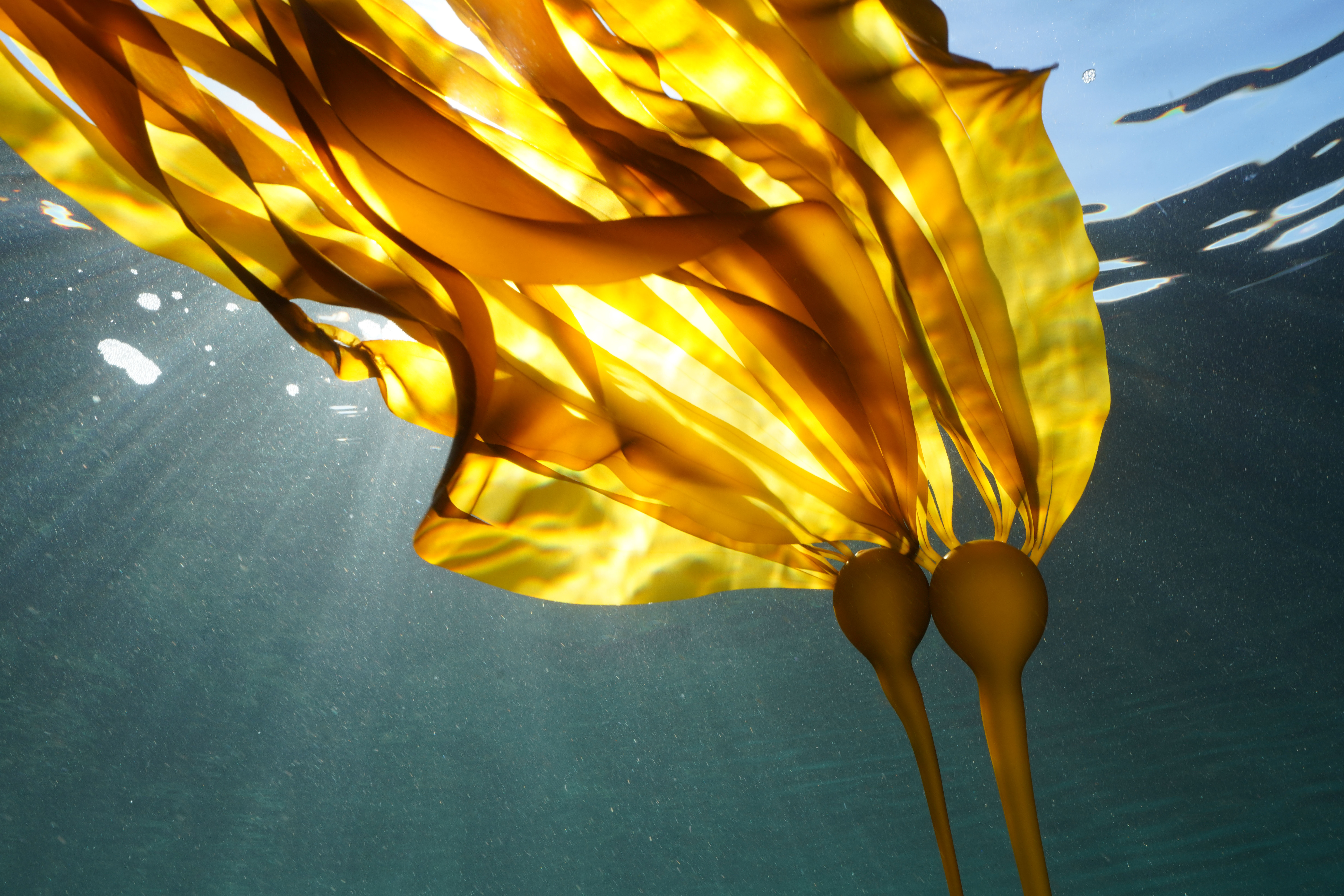
These photos are from today. The baby Bull Kelp is growing toward the sun. With these images, I have tried to capture the aching beauty of the light “dancing” over the flowing fronds, creating rippling spectrums.

I cannot express in the way I want how watching this interplay filled me with a sense of comfort, continuance, exaltation and even relief.

While humans collide, love and lose, and may not even know what winning is, this continues despite it all (at least for now).

Life begins anew . . . the marvel of another spring . Phenology.

“Our” part of the planet is now tilted closer to the sun. Tomorrow, March 20th, coincidentally is spring equinox when the sun’s rays directly grace the equator in the earth’s journey around the sun. As we spin, the northern regions of the earth will progressively get more sun. It’s the first day of spring for we in the northern half of the planet.

There is more light to fuel the kelp’s growth and leads to food, oxygen, refuge, reduced carbon dioxide and whatever this heady, healing, emotional cocktail is that I am feeling right now. 💙

I hope some of that transmits to you, through the photos and my effusiveness. ☺️


All photos here: March 19, 2022 northeast Vancouver Island in Kwakwaka’wakw Territory ©Jackie Hildering with dive buddy Natasha Dickinson.


More about this version of Bull Kelp and it’s growth rate:

Kelp species and seaweeds are not plants. They are algae.

What you see in these photos is the “sporophyte” stage of Bull Kelp (Nereocystis luetkeana). It results from the reproduction of a completely different looking version of the same species, the “gametophye”. Yes, it’s alternation of generations and I have a blog about it here.

The stipe (stem-like structure) of Bull Kelp can grow to be up to 36 m long. The stipe would have to grow an average of 17 cm a day to reach this length in the 210-day growing period (source: Druel). It has to grow so quickly to reach the sun and be able to photosynthesize and help support life on earth.

If you include both the rate of growth of the stipe and the fronds (leaf-like structures), Bull Kelp can grow 25 cm per day on average to reach the surface (source: Duncan).  


My additional posts about Bull Kelp include:


Sources:

Regarding the farming of kelp, please see the Hakai Magazine article at this link which also includes a video from kelp experts about “Kelp Farming: Promises, Pitfalls, and What We Still Don’t Know”.

Worms That Bite Anemones?!

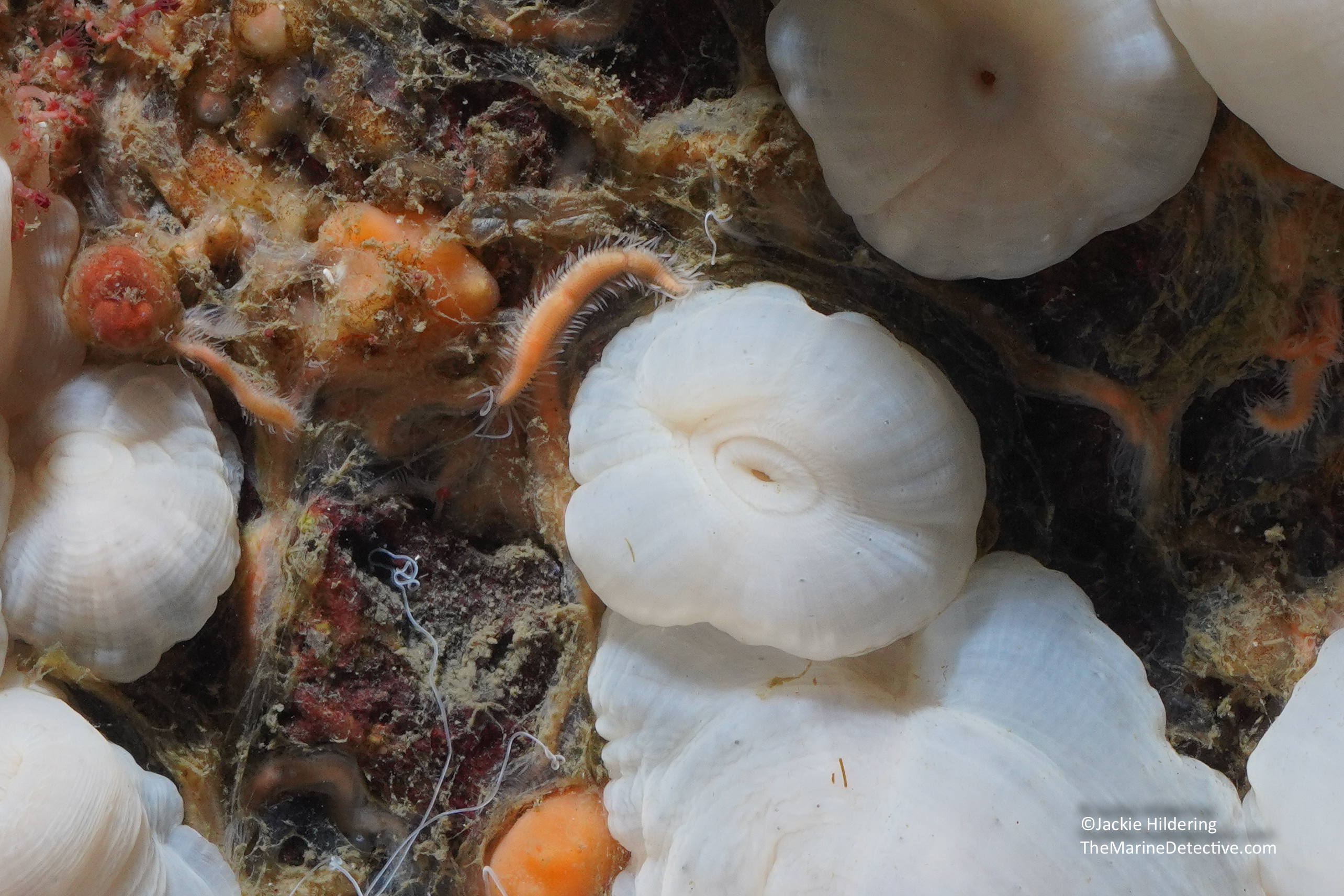
Okay, this is a true mystery.

I have relayed my observations to marine worm researchers but want to share with you too. It’s just too fascinating not to do so. These finds emphasize yet again how little we know even about marine species that are just below the surface. I also hope that by sharing my observations here, it may lead to other divers being on the lookout for these interactions and potentially adding to the knowledge about interactions between necklace-worms and anemones.

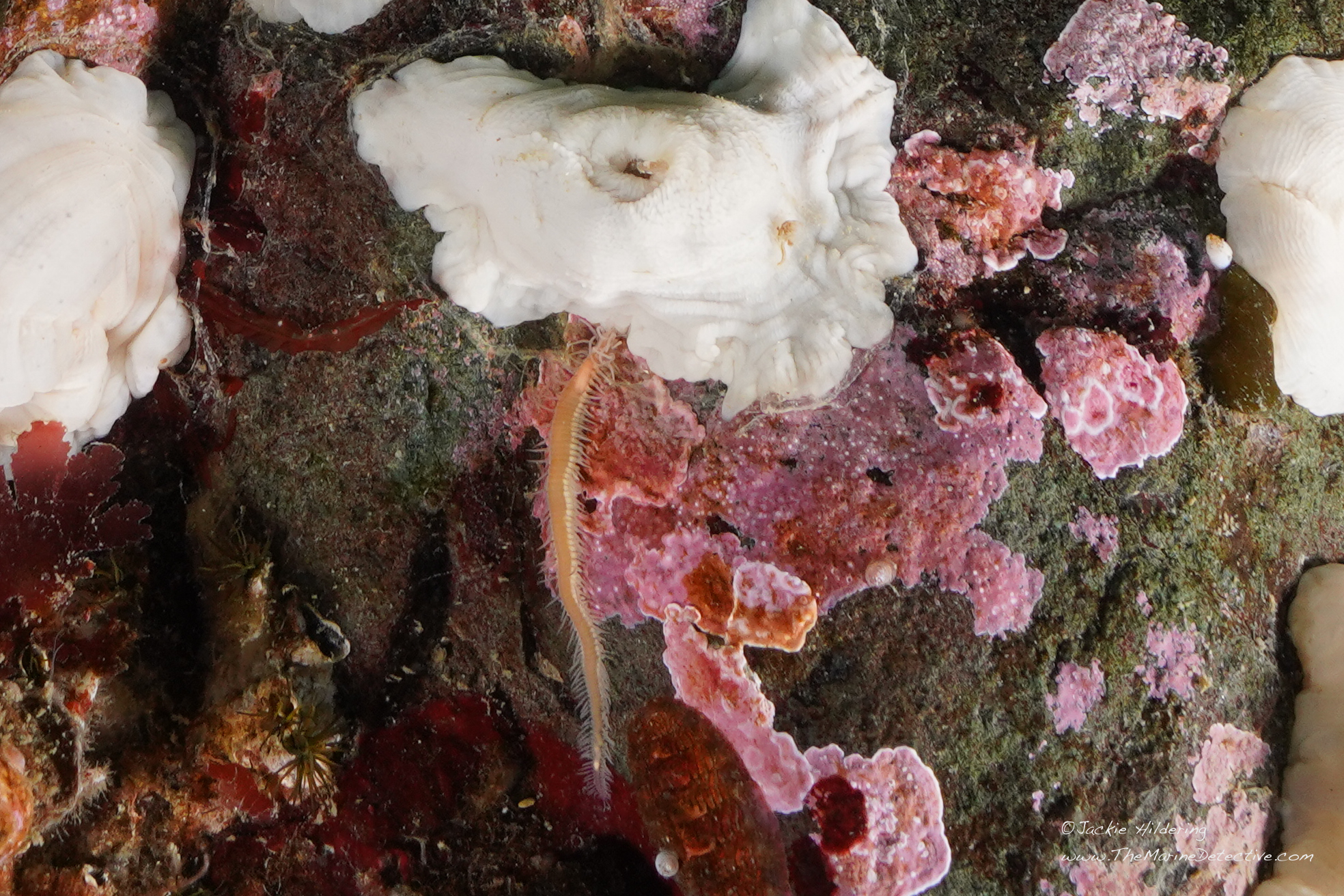
Necklace-worm species #1 and Proliferating Anemone – January 1st, 2008.
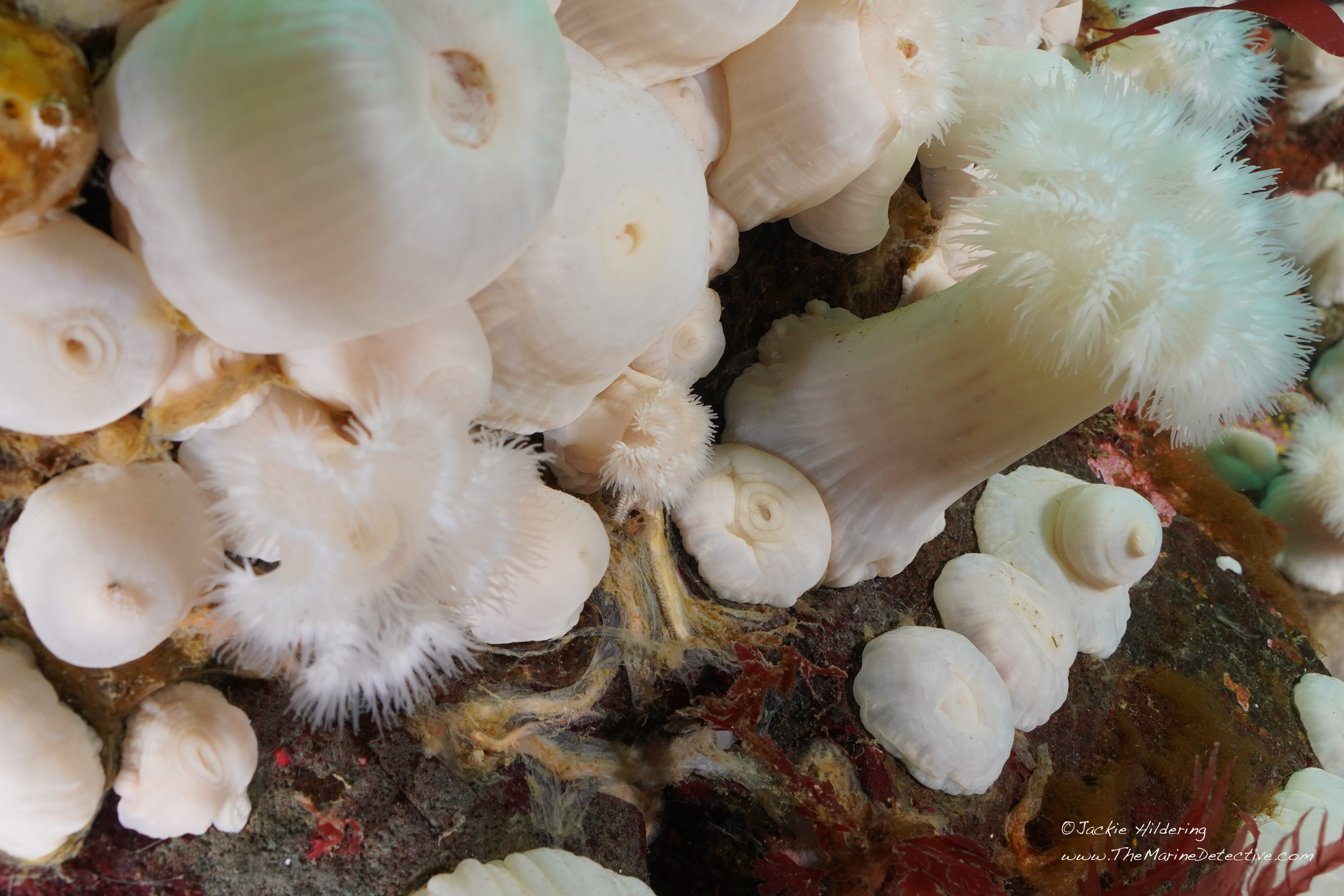
Necklace-worm species #2 and Short Plumose Anemones – March 6, 2022.

My observations involve what I believe are two species of necklace-worm. Each is interacting with a different species of anemone. In both cases, the species of necklace-worm is unconfirmed. The polychaete* researchers I have been in contact with have asked for samples of the worms to allow for microscopic examination and potential DNA analysis.

*Polychaetes are the “many-bristled” worms. They are worms that have a pair of paddle-like appendages / bristles on each segment. Most species of worm in this class are found in the ocean or in brackish water and there are about 15,000 known species globally. Polychaetes “are ubiquitous in the ocean, burrowing and hunting in the sand, crawling on algal covered rocks, living in self-made tubes, or swimming in the water” (Encyclopedia of Biodiversity, 2013).

Note that observations and photos here are from the Pearse Islands and Plumper Islands on northeast Vancouver Island in the territory of the Kwakwaka’wakw in depths less than 17 metres / 50 feet.


Necklace-Worm Species #1 and Proliferating Anemones:
I have written about this previously but include the observations here again so that the information about these necklace-worm / anemone interactions is bundled in one place. It involves a species of necklace worm appearing to bite into Proliferating Anemones (Epiactis prolifera to 8 cm wide).

My first observation of this interaction goes back all the way to 2008 when I documented the following thanks to the keen eye of my dive buddy Natasha Dickinson.

Both photos: Necklace-worm species #1 appears to be biting into a Proliferating Anemone – January 1st, 2008.

I do not know if the necklace-worm dislodged the anemone of if the anemone let go in an attempt to get away. We came upon this scene when the anemone was already upside down.

I have only noted this interaction twice since then. See photos below.

Necklace-worm species #1 and Proliferating Anemone – February 15, 2015. Note the “casings” the worms are in on the left.
Necklace-worm species #1 on the right and Proliferating Anemones – February 22, 2020. [Yes, on the left, those are babies of multiple ages hanging onto their mother. More about that at this link.]

For those who have Lamb and Hanby’s Marine Life of the Pacific Northwest, you may note that this species of necklace-worm looks like AN22 which is referenced as a “mystery necklace-worm”. But again, collection of a sample would be needed to confirm species ID.


Necklace-Worm Species #2 and Short Plumose Anemones:

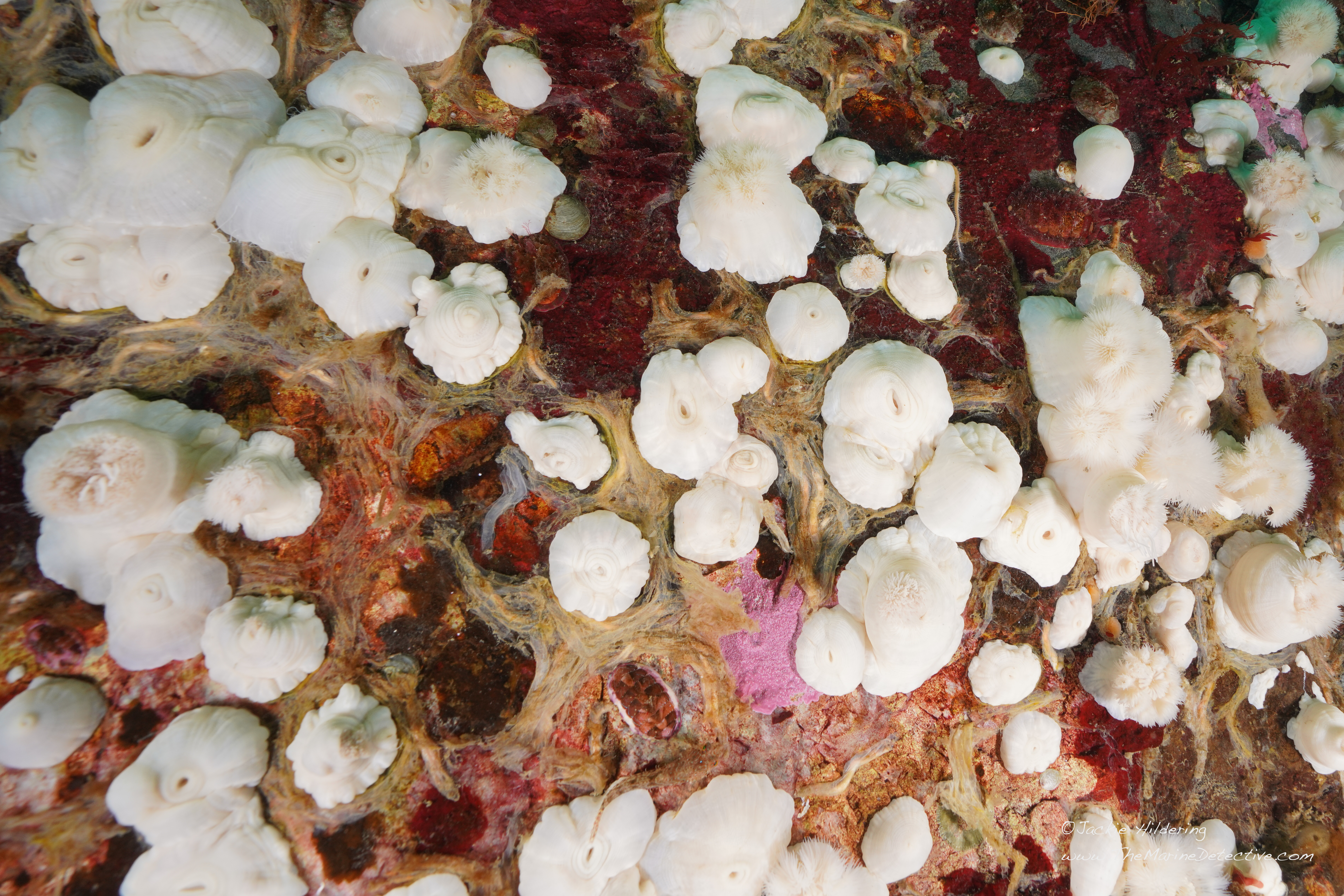
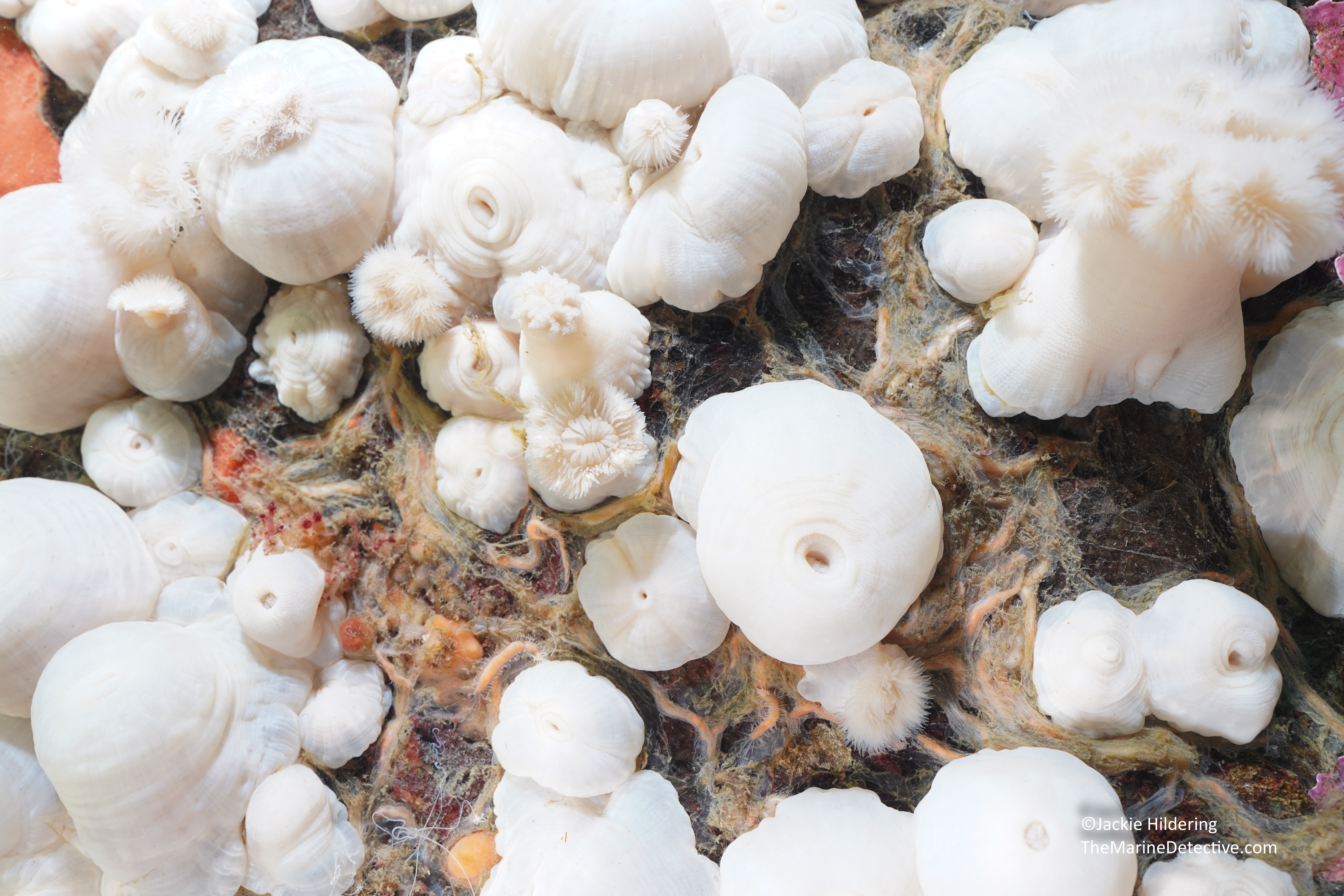
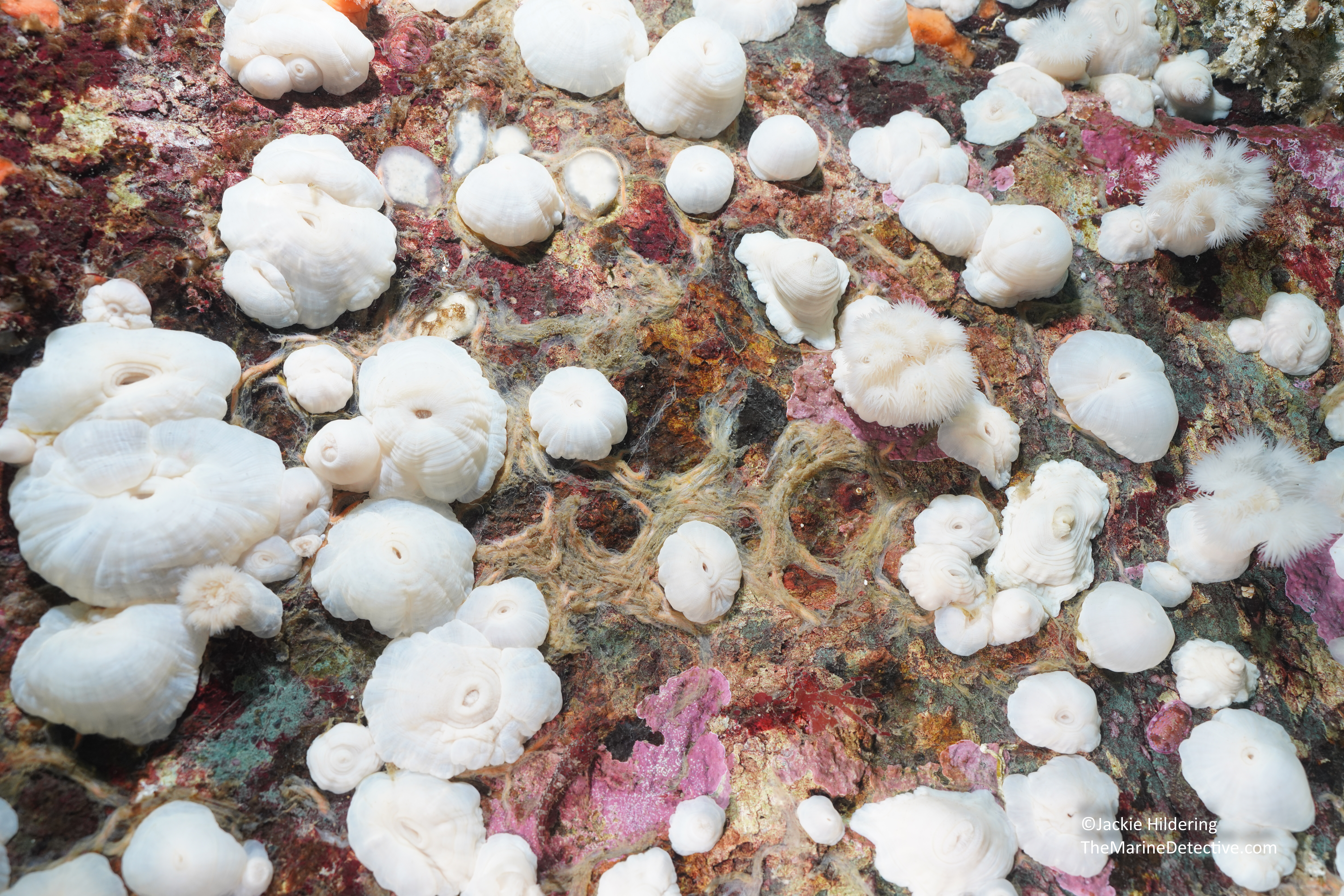
On February 12, 2022 I saw THIS.

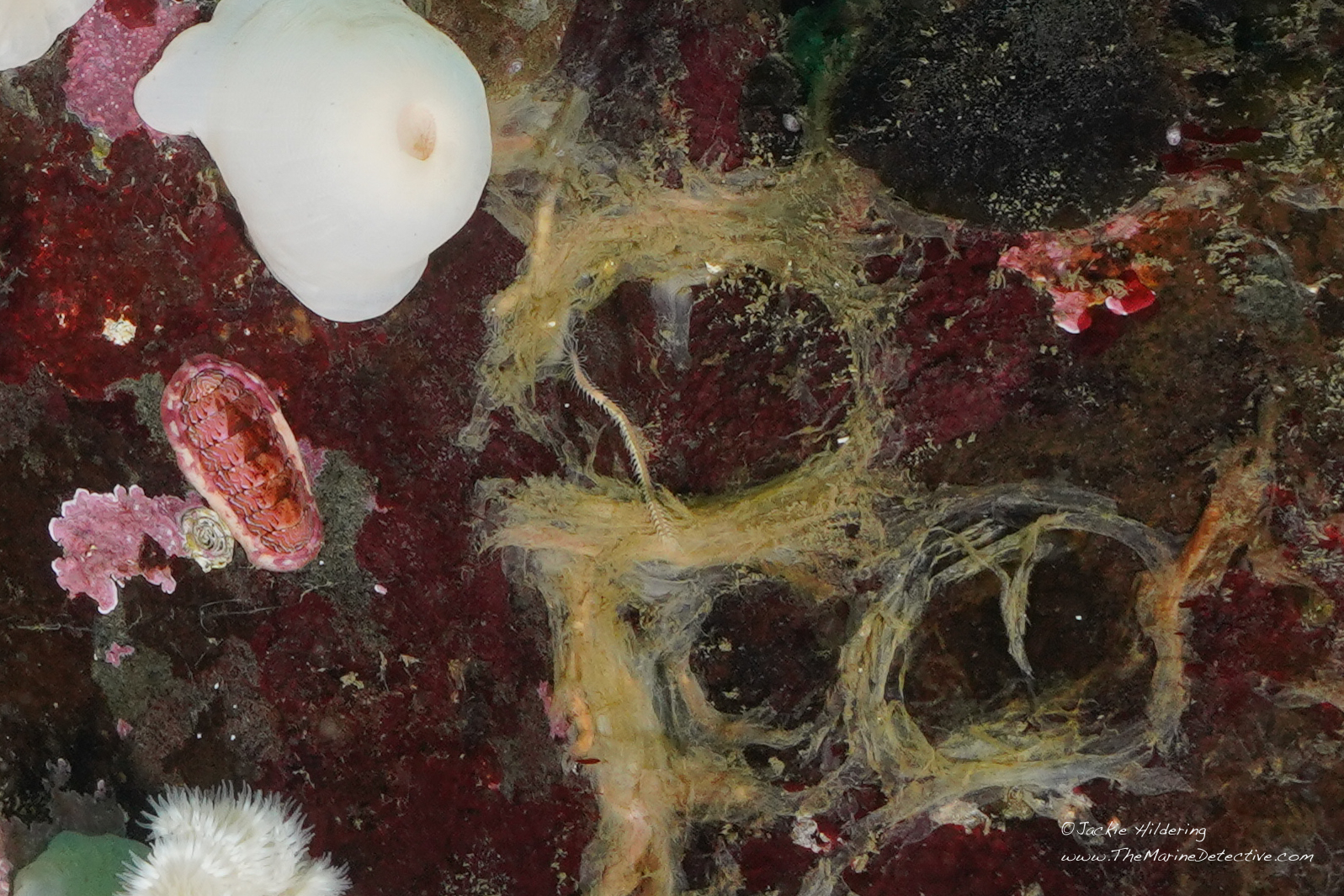
Necklace-worm species #2, Short Plumose Anemones AND the spaces where these anemones used to be. Many of these anemones are retracted. Photo February 12, 2022.

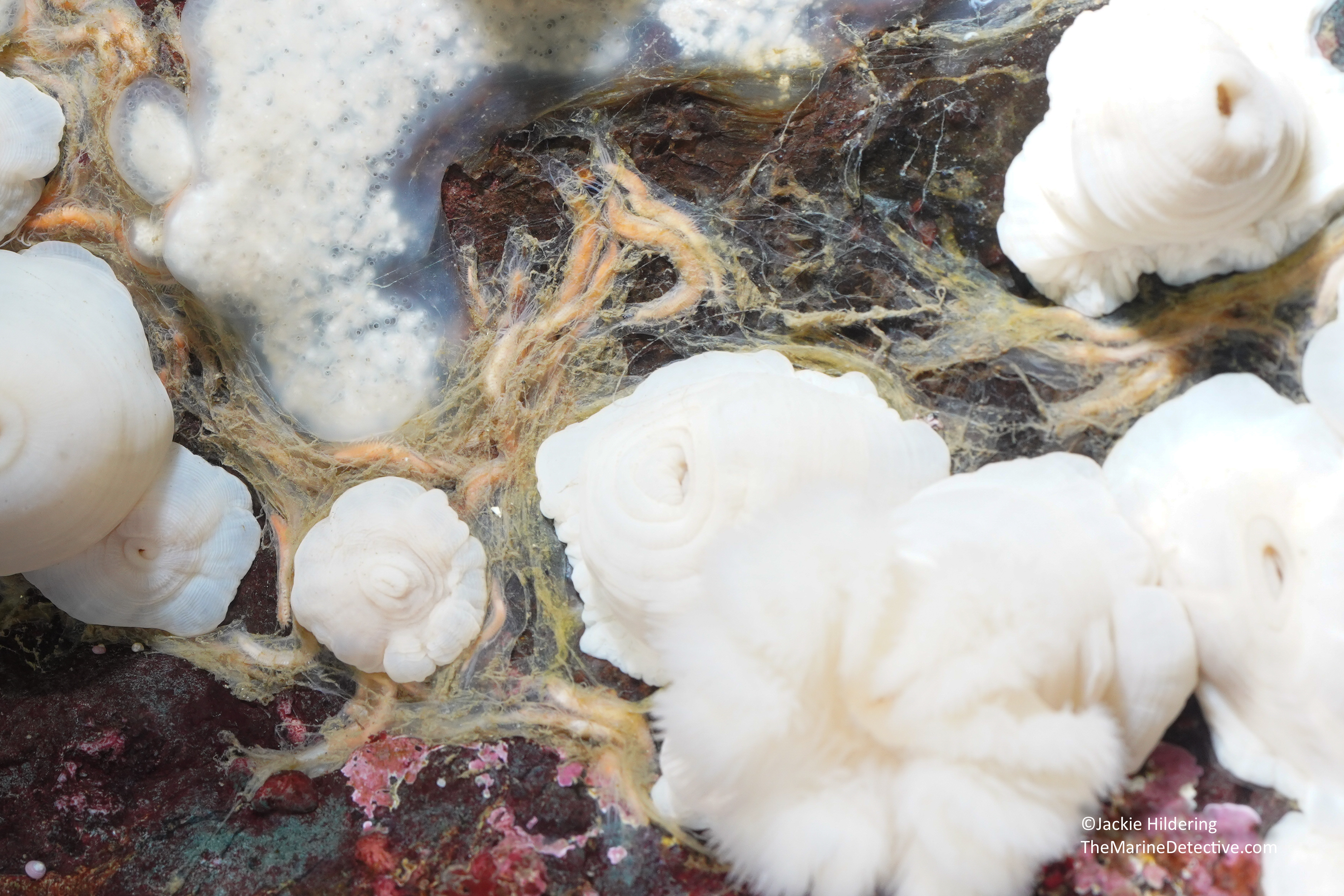
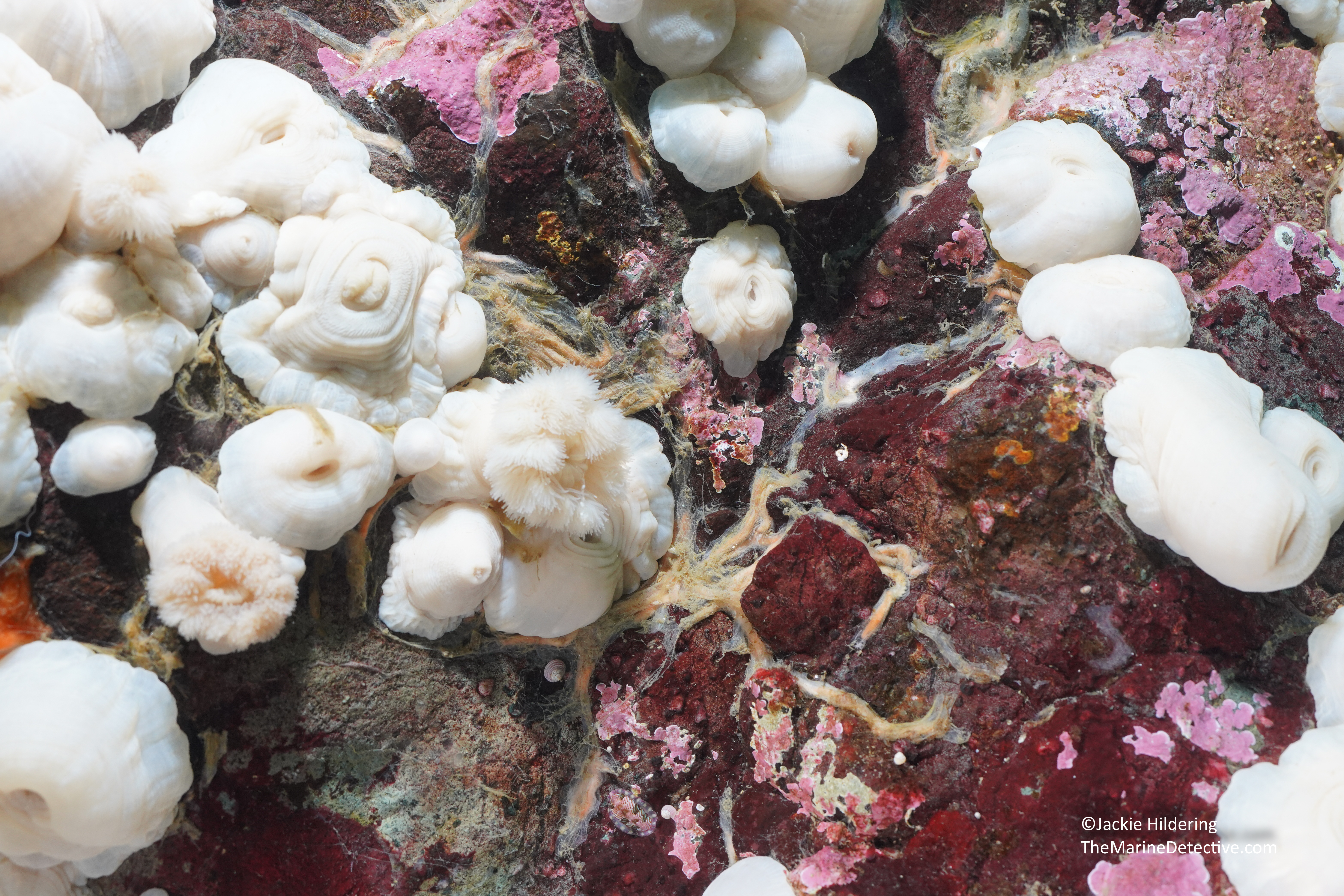
There are necklace-worms in those slime tubes! Where you see the circles is where other Short Plumose Anemones once were (Metridium senile to 10 cm tall and 4 cm across).

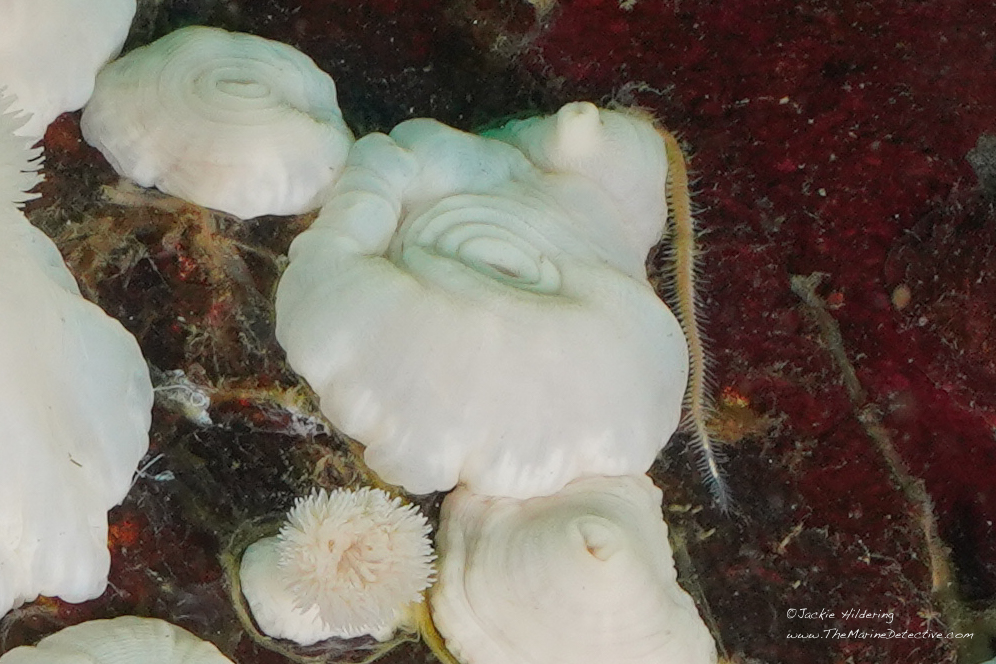
Close-up showing the necklace-worms. Photo February 12, 2022.

Were they always at this site? I have done a quick review of past photos and see a few of them in photos back to 2013. Variables in why I may not have noticed them before are that: (1) they were much more apparent as a result of the dislodged anemones; (2) there may be more of them now; and (3) we usually don’t focus on the spot where the concentration of these worms were (we usually dive deeper).

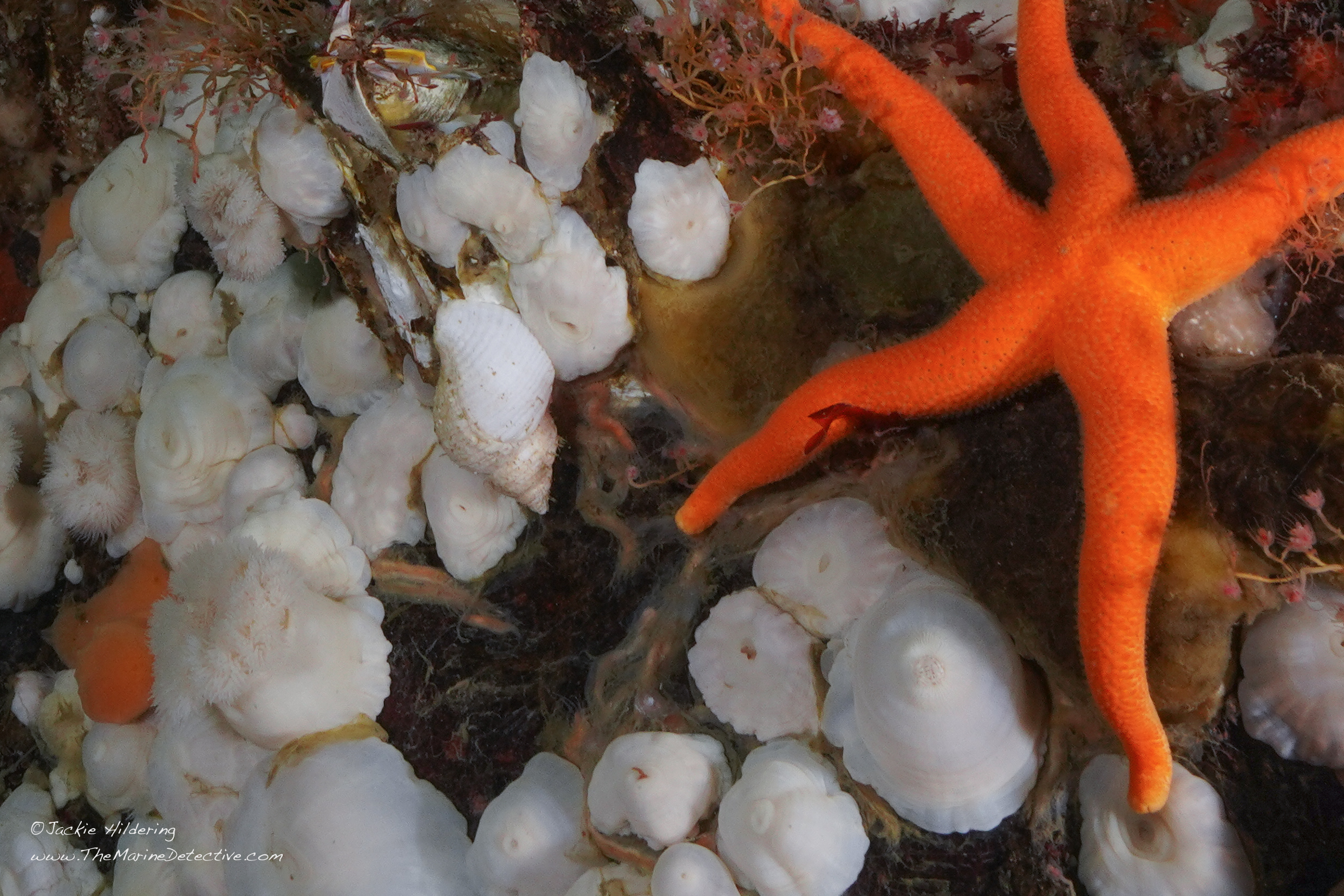
Here’s another photo from that dive to give a better sense of the size of the worms. That Blood Star is about 15 cm long. Photo February 12, 2022.

So TODAY’S mission was to return to this dive site and focus on the interaction between this species of necklace-worm and Short Plumose Anemones. How abundant are they? Are they biting the anemones?Are the worms anywhere other than around Short Plumose Anemones? Are the anemones using their acontia as a defense against the worms? Acontia are defensive strands filled with stinging cells (nematocysts) that are ejected when an anemone is irritated / threatened / stressed. The acontia can extend far beyond the anemone, providing longer distance defense than the stinging cells in an anemone’s tentacles.

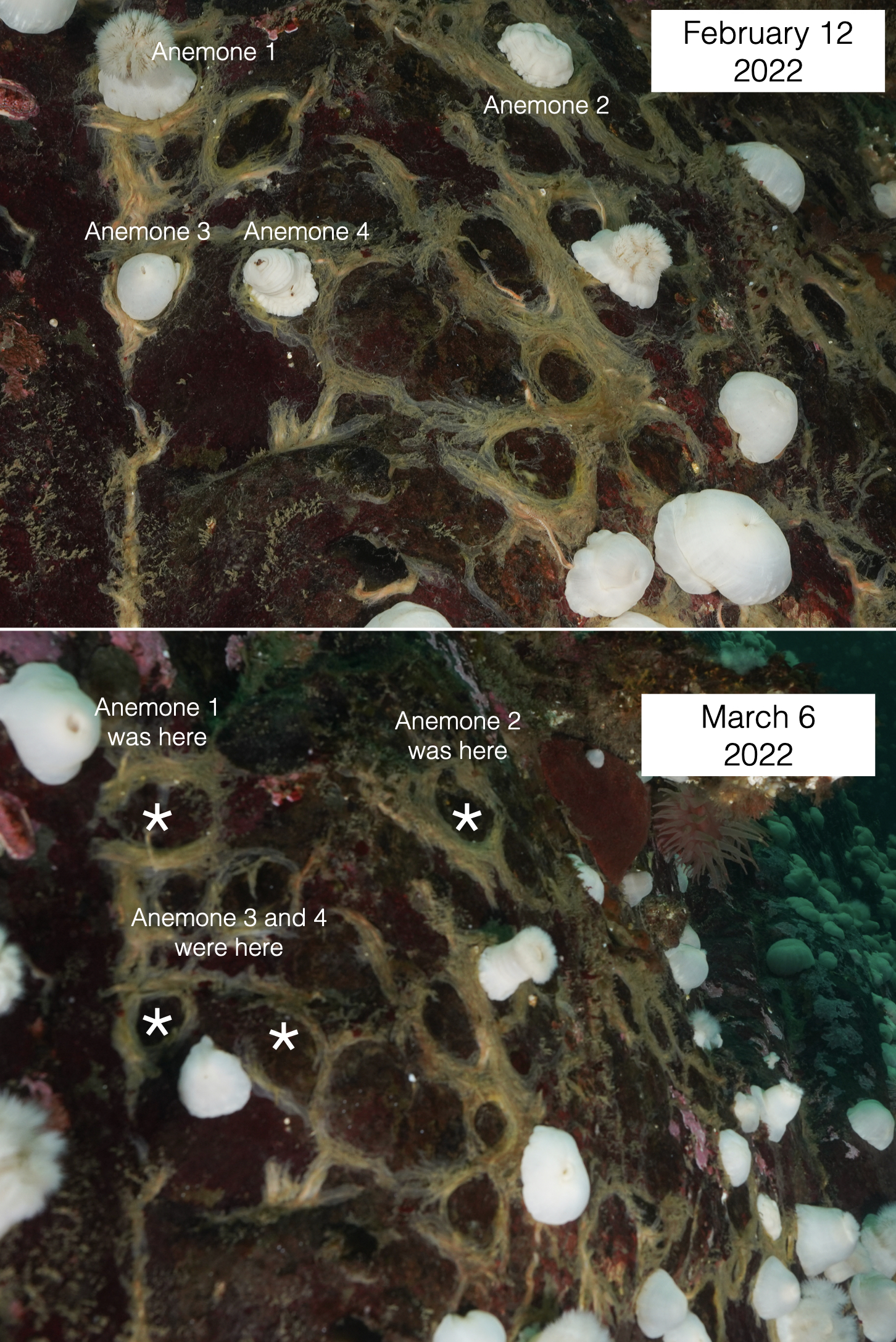
Dive buddy Natasha Dickinson today. This is the exact same spot as what you see in the images from February 12th above. I contrast the two photos at the very end of this blog so you can see how things have changed after 22 days. Of course I do not know how much the anemones would move around in the absence of the worms.


To answer those questions:
– I found the slime tubes almost everywhere there were Short Plumose Anemones at this site. I did not find them anywhere else i.e. this species of necklace-worm’s slime tubes were only around Short Plumose Anemones.
– I only found a few Short Plumose Anemones using their acontia but it seems more likely that they were being used against other anemones. I cannot know if the anemones dislodge themselves as a defense. There were only a few places where there were the circles of slime tubes where an anemone had once been. There were far more places where the slime tubes were in amongst Short Plumose Anemones.
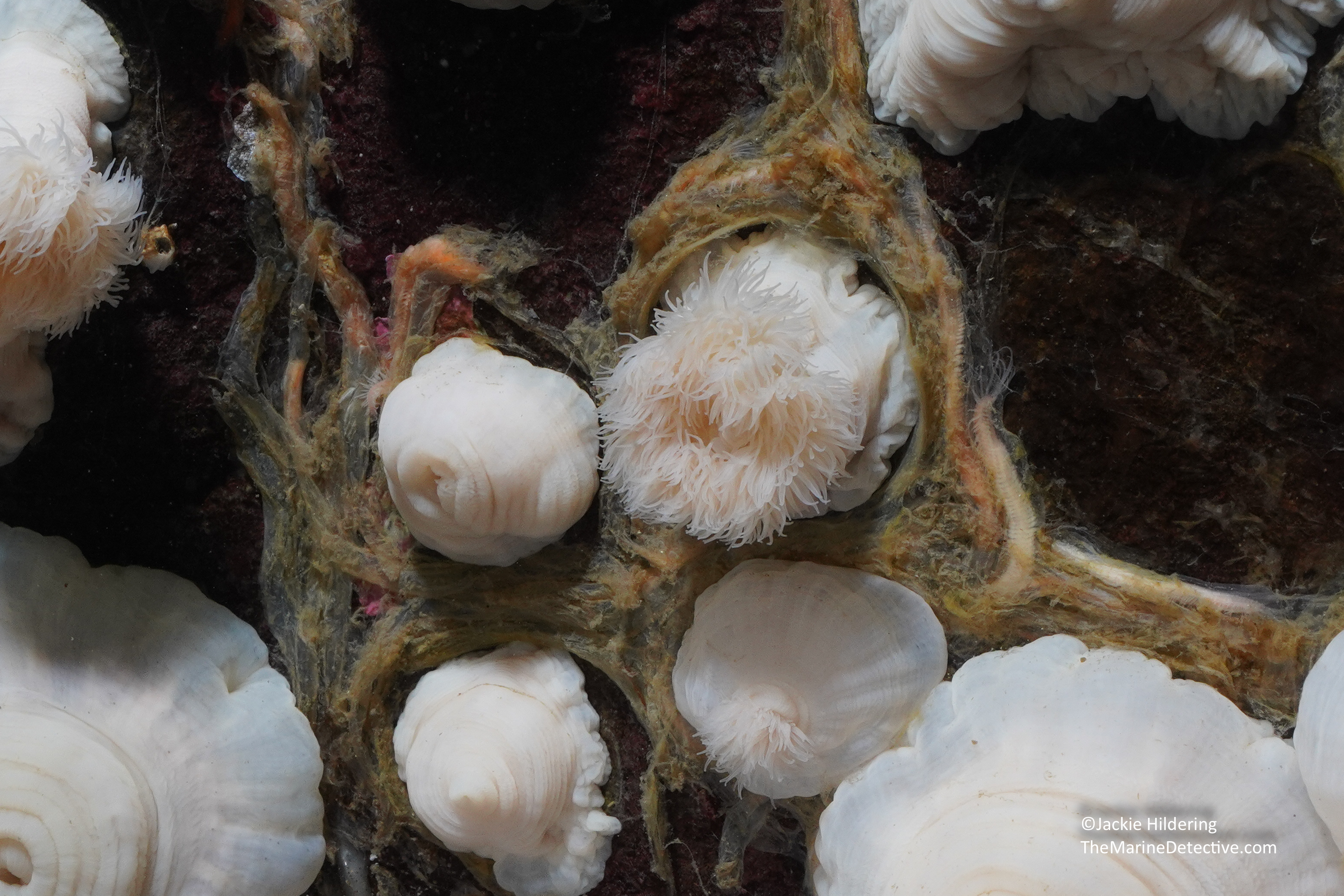
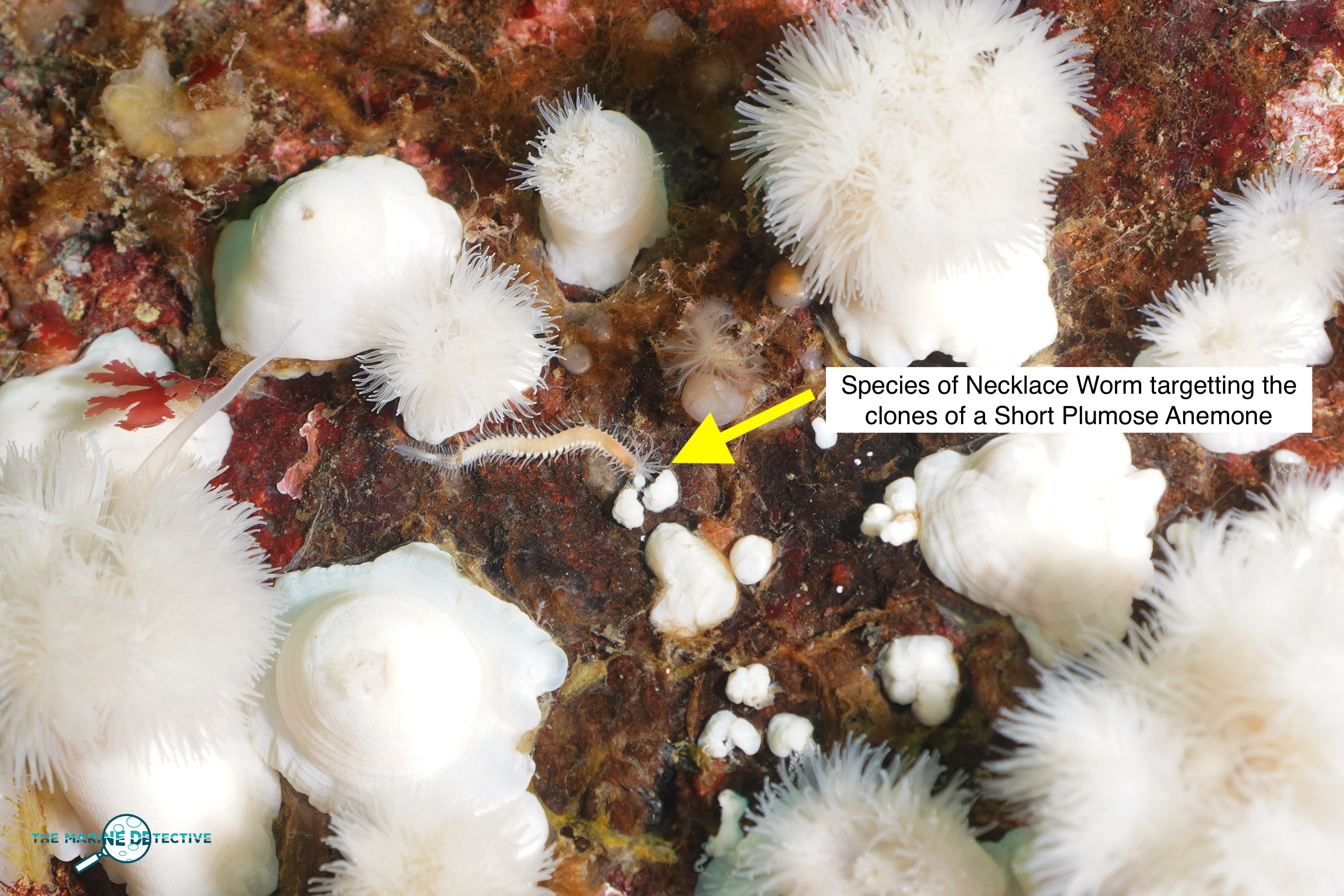
– YES I do believe this species of necklace-worm is biting into the Short Plumose Anemones. See below for abundant photos from today.

Some Short Plumose Anemones using their acontia. See those little white strands?


I will of course provide updates as I learn more via the researchers and other divers / underwater photographers. As always, I hope it is a source of wonder for you to learn more about these species, their adaptations and interactions, AND how much we humans still have to learn about the natural world around us. 🙂


All photos below are from March 6, 2022.

Taking a bite? Also looks like this anemone is about to undergo “pedal laceration” to reproduce asexually.
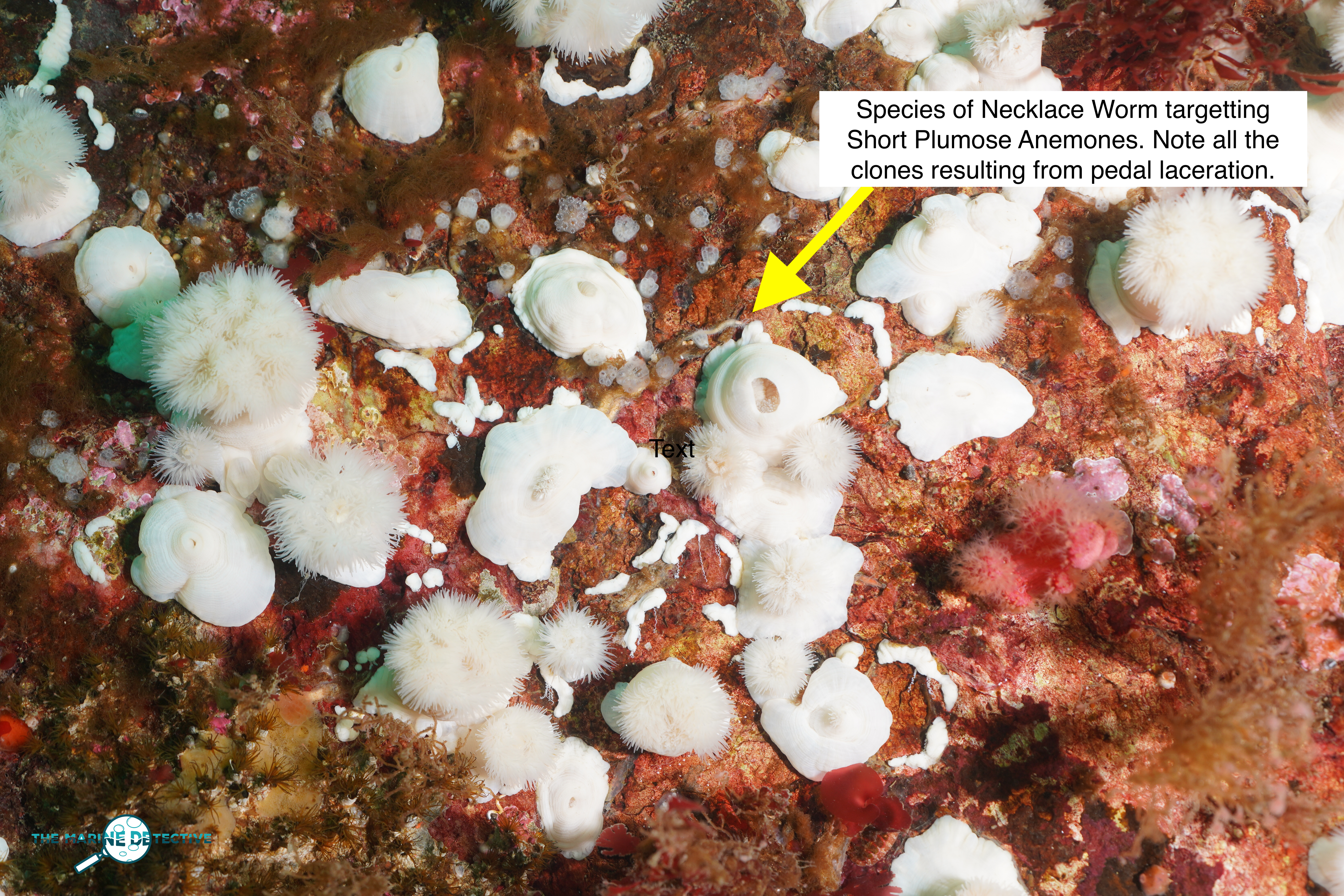
Here too it looks like some of the anemones are in the process of pedal laceration = form of asexual reproduction.

Below, you can contrast the same spot after 22 days. There has been a lot of change but again, I do not know how much the anemones would move around and/or dislodge in the absence of the worms. Oh no, is this now going to be my life? In addition to trying to document individual Humpback Wales and Tiger Rockfish, now I am going to try to document individual Short Plumose Anemones?! Probably.

My additional photos below are from March 19 2023, providing further documentation of Necklace Worm species #2 targeting the Short Plumose Anemones and possibly stimulating pedal laceration and acontial defense.

Wishing You Wild

My final words for 2021. Squeezed out of my heart, head and hands.
I need this for myself, to focus on what matters.
As always, I hope it has value to you too.

Wishing you health 
And the heart 
To help those 
Slowed along the way 

Wishing you weather 
That does not 
Flood, burn
Nor twist

Wishing you strength 
To see
Truth and fact 
And what is not 

Wishing you endurance 
To run the race
Dodging pitfalls positioned
For disappearance into despair

Wishing you balance
Not to flirt with vertigo 
But to right yourself 
When you fall (because you will fall)

Wishing you love 
That mirrors back 
The good of
Who you are  

Wishing you joy 
Laughter that fills 
And makes your
Belly shake 

Wishing you wonder 
That stops you 
In your tracks 
And you are small again 

Wishing you silence 
Amid stridency
Buy, buy, buy 
Never enough (always too much)

Wishing you vision 
To know the way 
To what matters
Now, always

Wishing you wild 
For if there is wild
There is all 
Of the above 


Happy New Year dear community. 💙

Photo: Member of the G Clan of Northern Residents (threatened population).
Taken in Kwakwaka’wakw Territory, NE Vancouver Island, with telephoto lens and cropped
©Jackie Hildering, The Marine Detective.

#OceanVoice
#OceanInspiration 
#MoreOfWhatMatters #LessOfWhatDoesNot

Canada – Proposed Ban on Single-Use Plastics

Today, December 30th, the Canadian Government announced the comment period for proposed Regulations on single use plastics. Canadians have an opportunity to comment to March 5, 2022.

At the end of this blog, I include the email from Environment and Climate Change Canada (ECCC) that announced the proposed Regulations. I have bundled all the content here because it is not easy to access all the detail via that email. Below I also include a sample letter of possible feedback on these proposed Regulations.

In having read the documents referenced in the email from ECCC , even though I believe I am well aware of the problem of plastic pollution, I was stunned at some of the numbers. As an indicator of our plastic use / addiction in Canada, in 2019 alone an estimated 15,593 MILLION single-use checkout bags were used. The cost of those bags was estimated at $410 million.

Not reflected in that number are the further costs of “convenience” and disconnect from understanding the impacts of our consumer behaviour on our own well-being.
These include:

  • Energy and raw materials to manufacture, transport and dispose of plastics;
  • Resulting climate changing emissions;
  • Impacts to the food web when plastics slowly break down and attract toxins;
  • Further impacts to animals from ingestion and entanglement; and
  • Additional ecosystem changes resulting from the transport of organisms on drifting plastics i.e. invasive species and transport of potential pathogens.

    I believe we may need this jolt of awareness. It appears many of us have not recovered from the early stages of the pandemic to realize that, with the exception of masks, further equipment used by first responders and possibly cleaning wipes, we do not need to revert to the use of so many disposables. We can use our to-go mugs, shopping bags, etc.

    We are all empowered to reduce demand for single-use plastics and impact the systemic change that is so necessary.

    Resources to aid feedback on the proposed Regulations:
  • Email from Environment and Climate Change Canada

December 30, 2021

Greetings,

On December 25, 2021, the proposed Single-Use Plastics Prohibition Regulations were published in the Canada Gazette, Part I initiating a 70-day public comment period ending on March 5, 2022. During this period, stakeholders and partners are invited to submit comments to Environment and Climate Change Canada on the proposed Regulations, the accompanying Regulatory Impact Analysis Statement, as well as the draft Guidance for Selecting Alternatives.

The proposed Regulations would prohibit the manufacture, import and sale of six categories of single-use plastic items (checkout bags, cutlery, foodservice ware made from or containing problematic plastics, ring carriers [think six-pack holders], stir sticks, and straws), with certain exceptions for straws. 

The feedback received on the proposed Integrated Management Approach to Plastic Products has been considered in the development of the proposed Regulations. A What We Heard Report summarizes this feedback.

The draft Guidance for Selecting Alternatives to the Single-Use Plastics in the Proposed Single-Use Plastics Prohibition Regulations has been developed to help businesses and other organizations make decisions on alternative products or systems that prevent pollution and help Canada transition to a circular economy.

We invite you to review the proposed Regulations, the accompanying Regulatory Impact Analysis Statement, as well as the draft Guidance for Selecting Alternatives and to provide your feedback, no later than March 5, 2022, to the following email address: plastiques-plastics@ec.gc.ca.

Feedback should include the following for each specific comment:

1.       the section of the proposed Regulations, Regulatory Impact Analysis Statement, or draft Guidance for Selecting Alternatives to which the comment relates

e.g., 5(1)(a)(i) of the regulatory text; “Select Canadian Market Characteristics” section of the Regulatory Impact Analysis Statement;“Considerations for Alternative Single-use Plastics” section of the draft Guidance for Selecting Alternatives;

2.       the comment itself; and

3.       any supporting information or rationale.

All written feedback received during the comment period will be considered in the development of the final Regulations and Regulatory Impact Analysis Statement, which will be published in the Canada Gazette, Part II. Feedback will also inform the finalization of the Guidance for Selecting Alternatives.

Environment and Climate Change Canada is available to provide further information and clarification on the requirements of the proposed Regulations to affected businesses or organizations, via virtual meetings or webinars.

Should you have any questions on this consultation process, or if you do not wish to receive future updates about the proposed Regulations please contact us at plastiques-plastics@ec.gc.ca.

It’s a Really Good Time to Be . . .

Yesterday, we found two Sunflower Stars!

See the juvenile here to the right of my buddy Natasha? There, right beside the mating Yellow-Rimmed Nudibranchs. This Sunflower Star was in just 5 metres of water.

Today’s two Sunflower Stars are the first I have seen in twelve hours underwater over the last three months and believe me, I have been looking. I only saw one before that. They are such a rarity now. Will these two survive? I have seen waves of juveniles before and then they disappear. Their plight appears to be linked to climate change.

Hope? With action . . . yes, there is shining hope.

Without action . . . no.

Please hang in there. Please read on.

I have been struggling too, looking for escape / reprieve from global realities as another “atmospheric river” is forecast to fall on parts of our province. It is so tempting to want to hide especially if we see the problems we are facing as disparate. They are not.

I have had to remind myself of the common solutions so that I see a way forward that is not guided by the faintness of blind hope; paralyzed by fear and overwhelm; and / or obfuscated by the din of values and voices that serve the few for a brief time.

Common solutions include: to know, live and share the GAINS that come from using LESS (fossil fuels, dangerous chemicals, disposables, less consumerism generally); to speak for truth and science and to have compassion for those who cannot; to exercise our power as voters and consumers to serve future generations; and to care and act on the knowledge of connection to others – across time, cultures, distance, and species.

In short, it’s a really good time to be a good human. 💙

I had to dig for these words for myself. As always, may they serve you too.


Photos: November 21 in Kwakwaka’wakw Territory near Port Hardy at a site where I have been monitoring sea star since 2013, ©Jackie Hildering.

The same juvenile Sunflower Star a few minutes earlier. Notice the fish? There’s a Painted Greenling on the left and a Blackeye Goby on the right.

For those who are not yet aware, I include the reality of Sea Star Wasting Disease (SSWD) below. A link to a summary of the research and where to report sightings is in my blog at this link.

The other Sunflower Star we saw yesterday.

Since 2013, more than 20 species of sea star have been impacted by SSWD from Mexico to Alaska. There is local variation in intensity of the disease and which species are impacted. It is one of the largest wildlife die-off events in recorded history. Sea stars contort, have lesions, shed arms, and become piles of decay.

Currently, some species of sea star appear to have recovered while others remain very heavily impacted. Sunflower Stars (Pycnopodia helianthoides) have been devastated and were added to the International Union for Conservation of Nature (IUCN) list as Critically Endangered. There are current efforts to have Sunflower Stars assessed by the Committee on the Status of Endangered Wildlife in Canada (COSEWIC) with hopes that they receive protection under Canada’s Species at Risk Act.

There is NOT scientific consensus about the cause. Current hypotheses focus on (i) a virus and (ii) low oxygen at the surface of the sea star’s skin maintained due to bacteria. What is consistent in is that changing environmental conditions appear to allow the pathogen (be it bacteria or viruses) to have a greater impact.

The best current source for a summary of the research is Hamilton et al (August, 2021). From that source: ” . . . outbreak severity may stem from an interaction between disease severity and warmer waters” and “Though we lack a mechanistic understanding of whether temperature or climate change triggered the SSWD outbreak, this study adds to existing evidence that the speed and severity of SSWD are greater in warmer waters”.

What I believe to be the reality off the coast of British Columbia is that there are refuges of Sunflower Stars at depth where it is colder. They spawn with some young then settling in the shallows where they may succumb to the pathogen if stressed by warmer water.

Close up on the second Sunflower Star. This one was at about 20 metres depth.