Last updated: 2025-12-31 In a complex time, it made me smile today to receive two ID requests from the same area of the same thing.
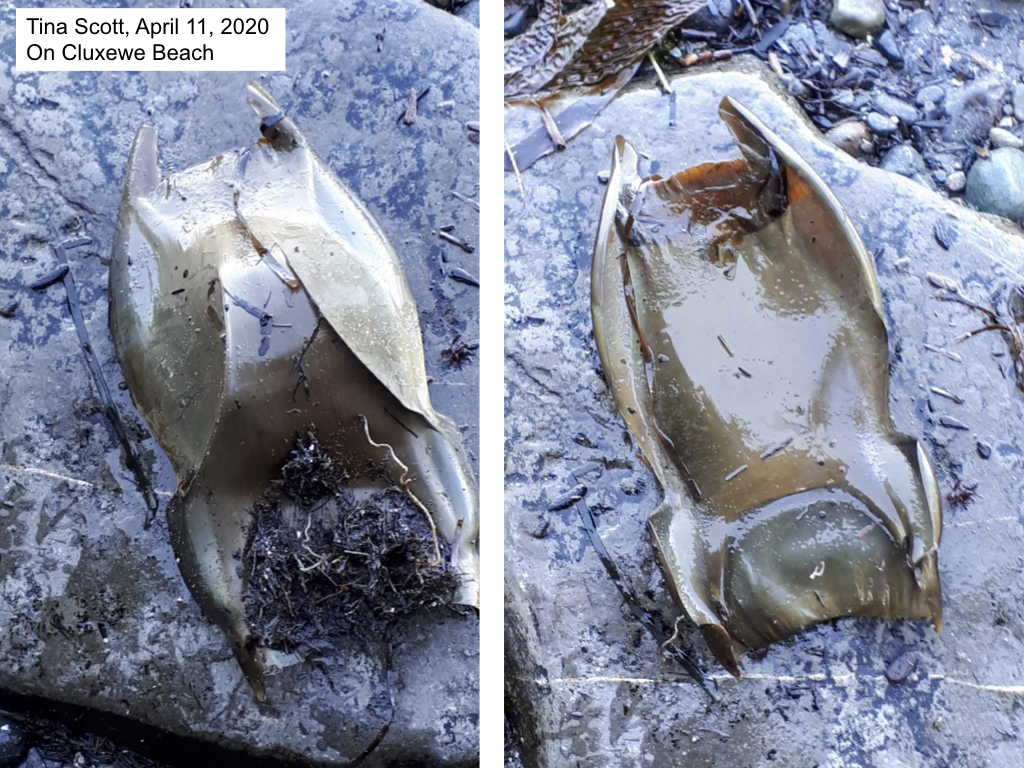
This . . . .
And this . . .
I’ve got your attention don’t I? (Insert cheeky smile here).
These are the egg cases of the Big Skate (Beringraja binoculata) and there are babies growing inside. Such egg cases are known as “mermaids’ purses”. But, as cleverly commented by a friend, these “purses” are so big for this species they should be called “mermaids’ carry-on bags” (Thanks for that Erin Johns Gless).
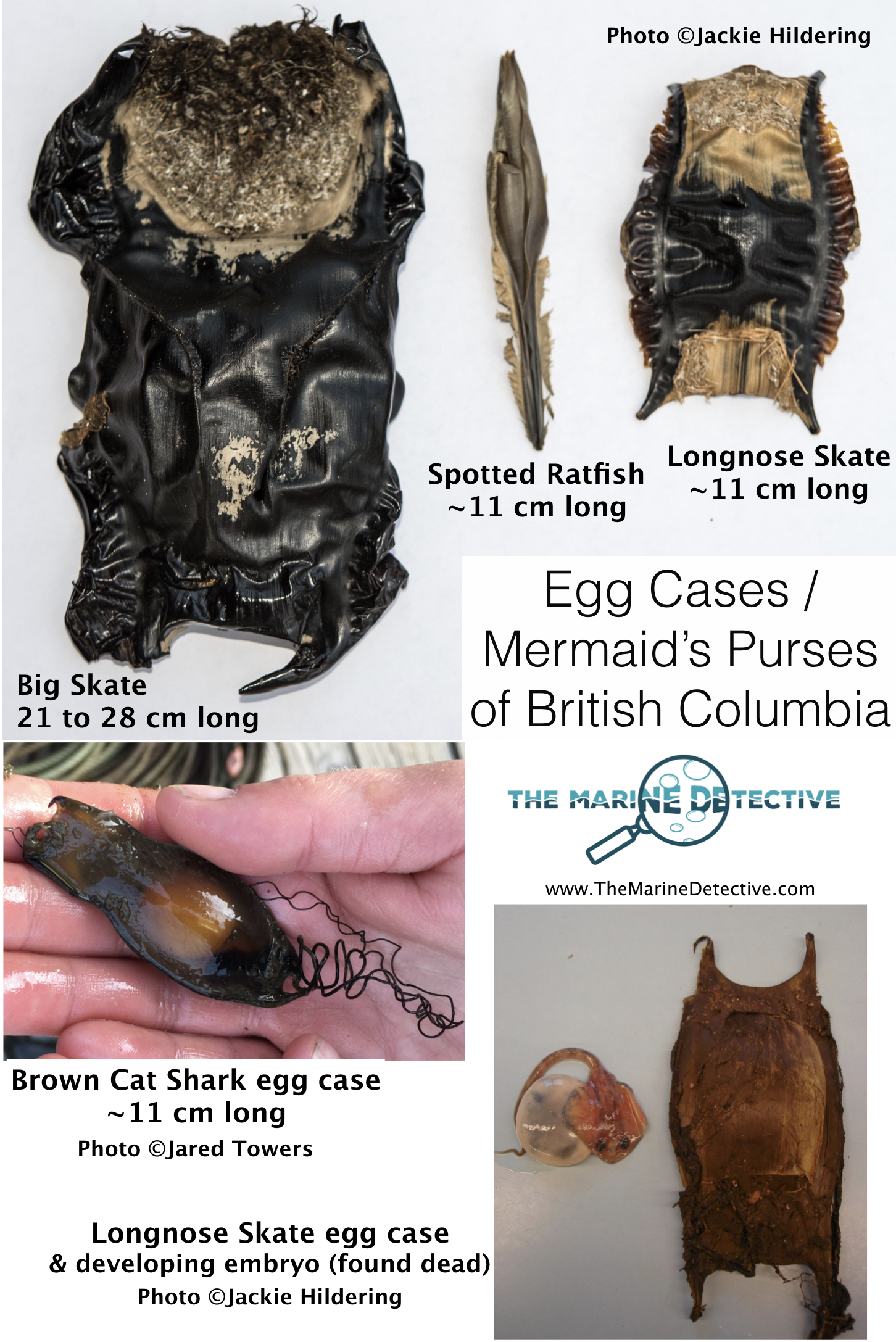
My compilation below shows the various mermaids’ purses you can find on our coast.
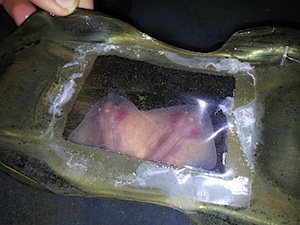
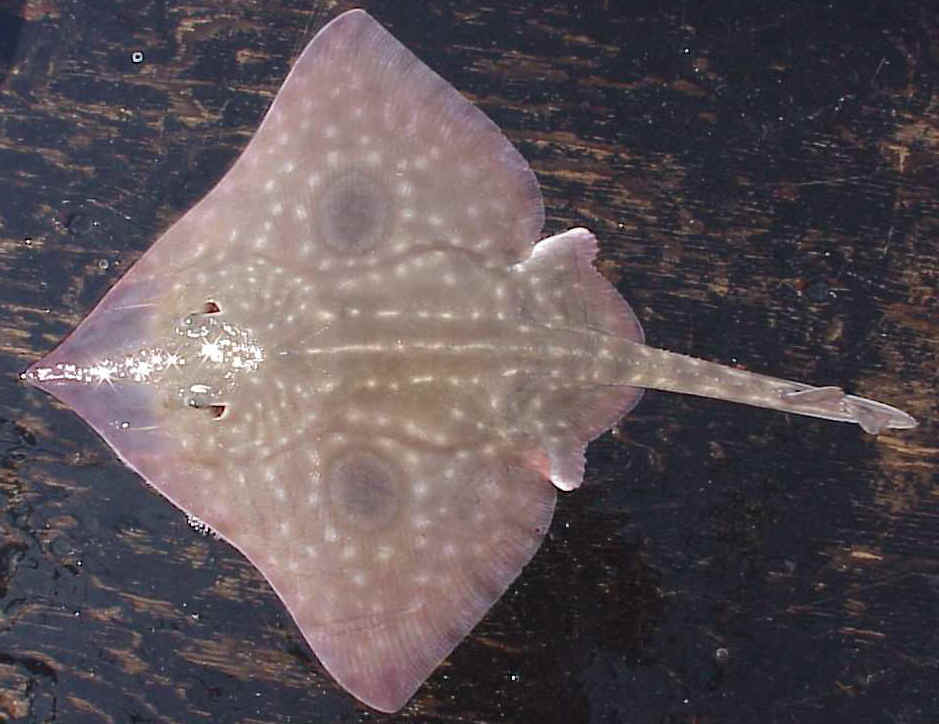
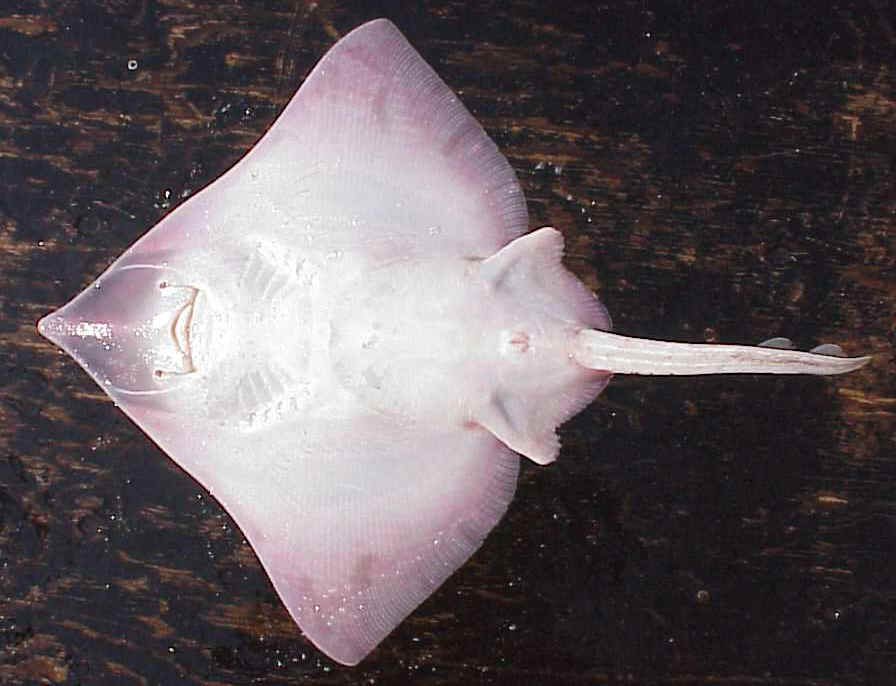
The Big Skate is unique in that it can have more than one embryo growing inside each egg case. Up to a maximum of 7 embryos have been reported but more often it is 3 or 4 per egg case. Jared reported that he could feel movement in the case before he put it back in the ocean. Each embryo has its own yolk sac providing the nutrition for growth. See above for what the embryo of a Longnose Skate (different species) attached to a yolk sac.
Two Big Skate embryos developing inside an egg case. A “window” has been cut into the egg case to allow development to be observed. Photo Kelcie Chiquillo.
You can imagine that it should not be common to find fresh egg cases floating or washed up on the beach. That would not offer the best chance of survival for the babies. The various egg cases of rays, skates and sharks are “designed” to hopefully hook onto substrate / remain on the ocean bottom.
What is also so interesting about the reproduction of the Big Skate specifically is that research (Jang, 2019) supports that the embryos in one case can have different fathers (multiple paternity). Say what? Yep, research conducted on Big Skates in captivity have found that the females can store sperm for up to 3 months and then fertilize the eggs prior to laying the egg cases (they are oviparous).
And how long will the babies grow inside the egg case? For this species, it is around 9 months. At that time, they will “hatch” by releasing an enzyme that breaks down the binding of the case. They swim away and that’s when we more often find the egg cases, when they have done their job and are dried up on the beach.
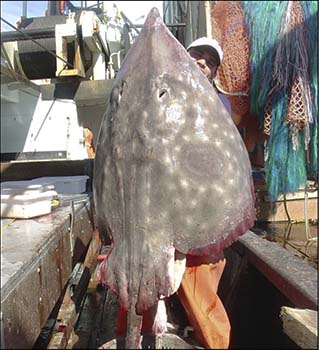
The babies in the cases that Jared and Tina found today could survive to become up to 2.44 metres long (more commonly around 180 cm long). It’s big alright – the biggest skate species in North American waters.
Related blog: “Sharks Among Us – The Brown Cat Shark” providing detail on how the Brown Cat Shark embryos can take up to TWO YEARS to hatch from the egg case.
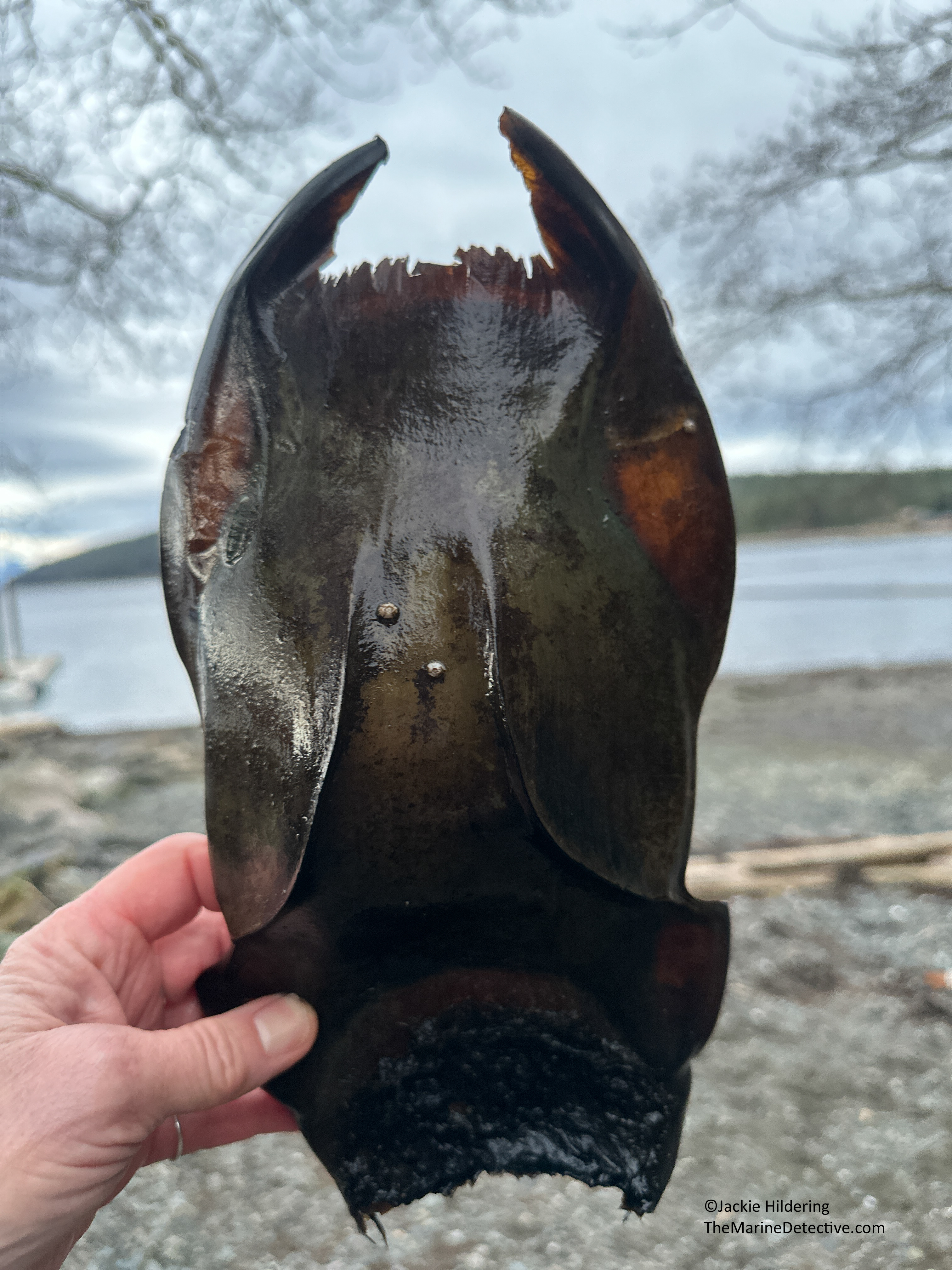
Big Skate egg case found while diving 2025-12-30, Mitchell Bay, Malcolm Island. The young had already hatched out (if they had not, I would not be holding it 🙂). I also chose to return it to the ocean (a chiton and barnacles were living on it).
Last updated: May 3, 2026 The information below is about 3 species of headshield sea slug (Order Cephalaspidea) that have similar egg masses. All three also have a very thin internal shell (bubble shell).
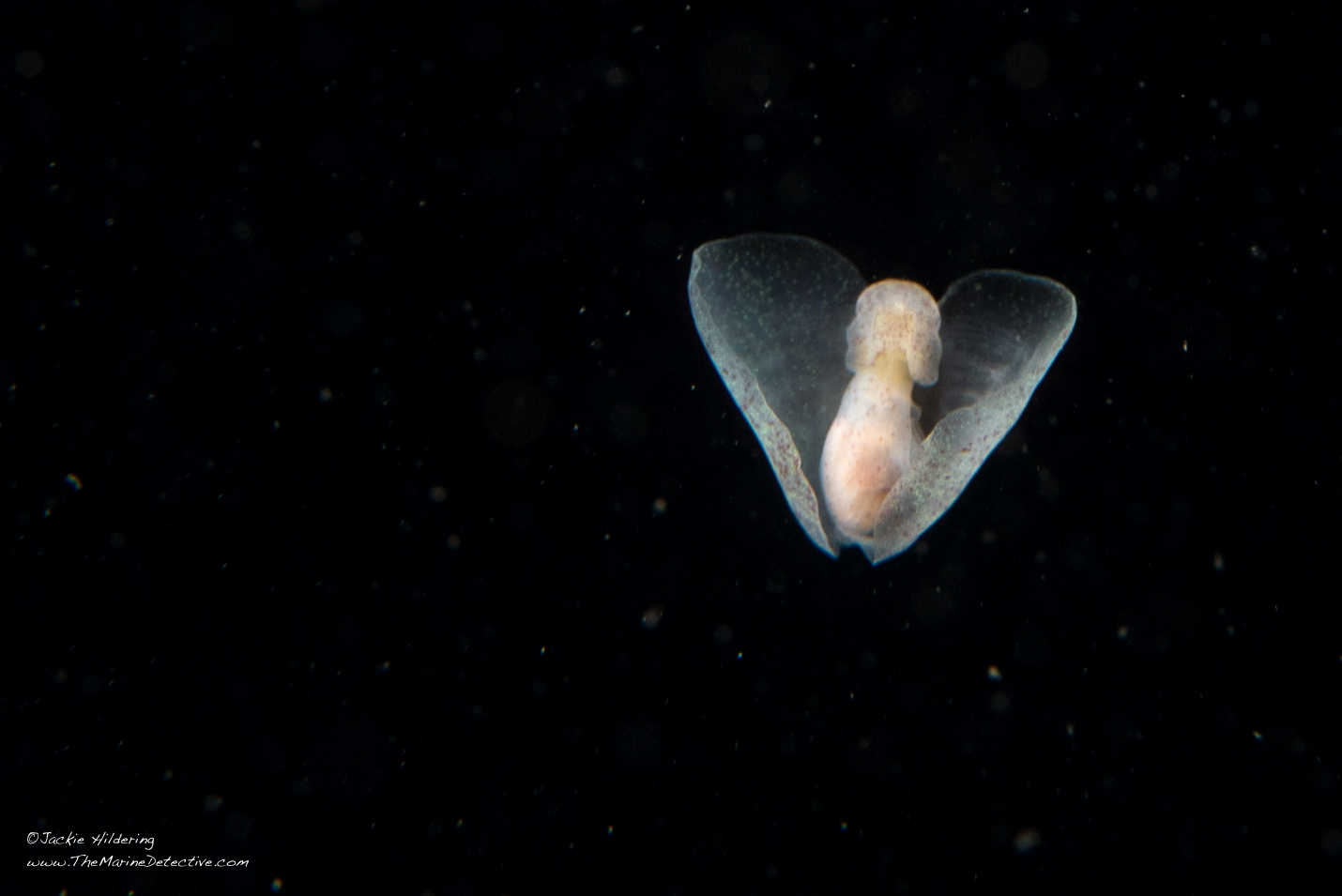
Here’s a species that deserves the descriptor “Great” without doubt – the GREAT Winged Sea Slug.
I will never forget the first time I saw one of these tiny sea slugs “flying” underwater. My brain came close to exploding. I did not know of their existence prior to one flapping past my mask.
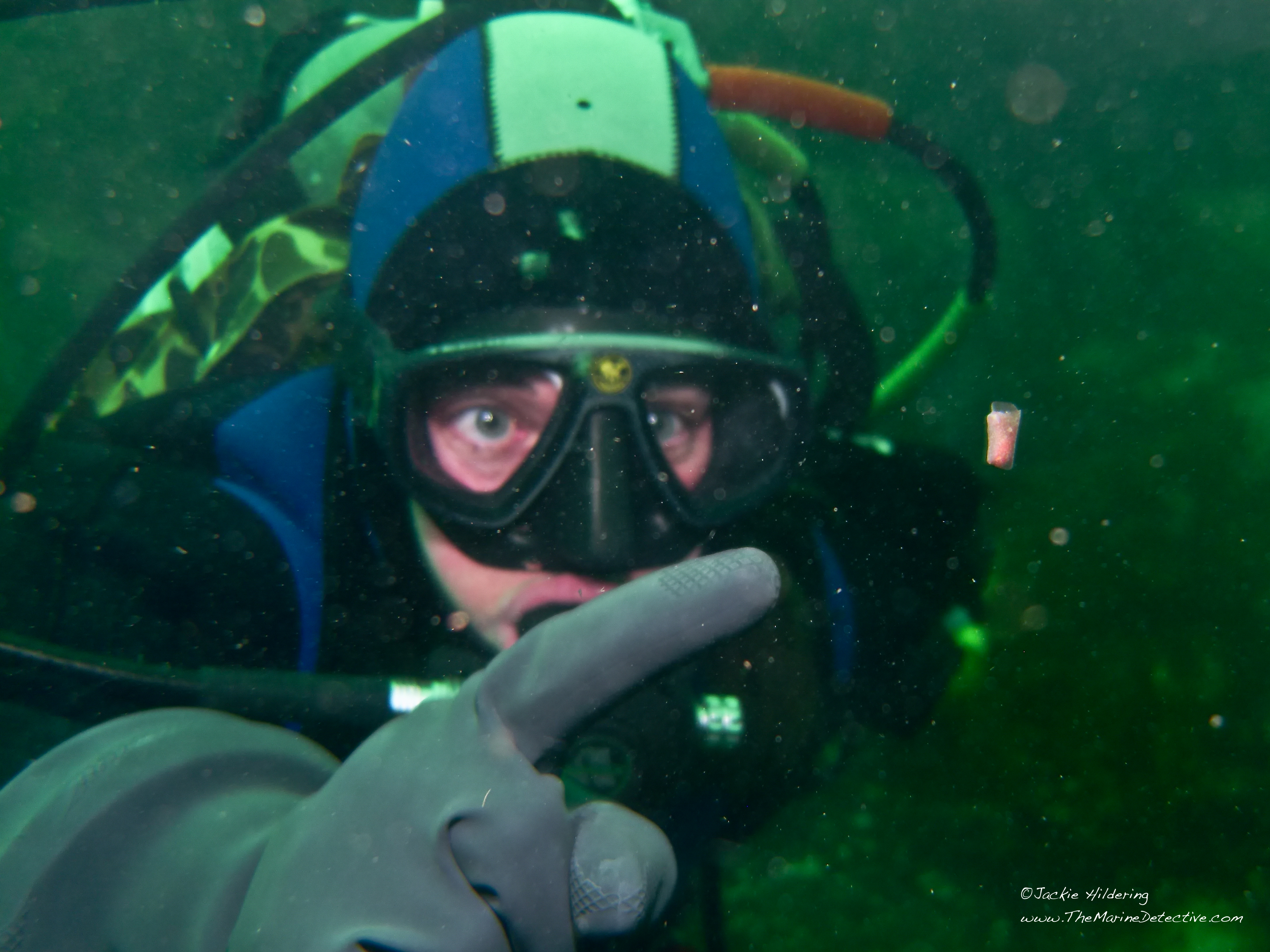
Dive buddy Natasha Dickinson pointing at a Great Winged Sea Slug.
Gastropteron pacificum is usually no bigger than your thumbnail. Maximum length is ~2 cm long and with “wingspan” to 4 cm. The species is also referenced as the Pacific Wingfoot Snail and the Pacific Batwing Sea Slug. But, as mentioned, I prefer the reference to their greatness.
Just marvel at how they can propel themselves, as captured in this video.
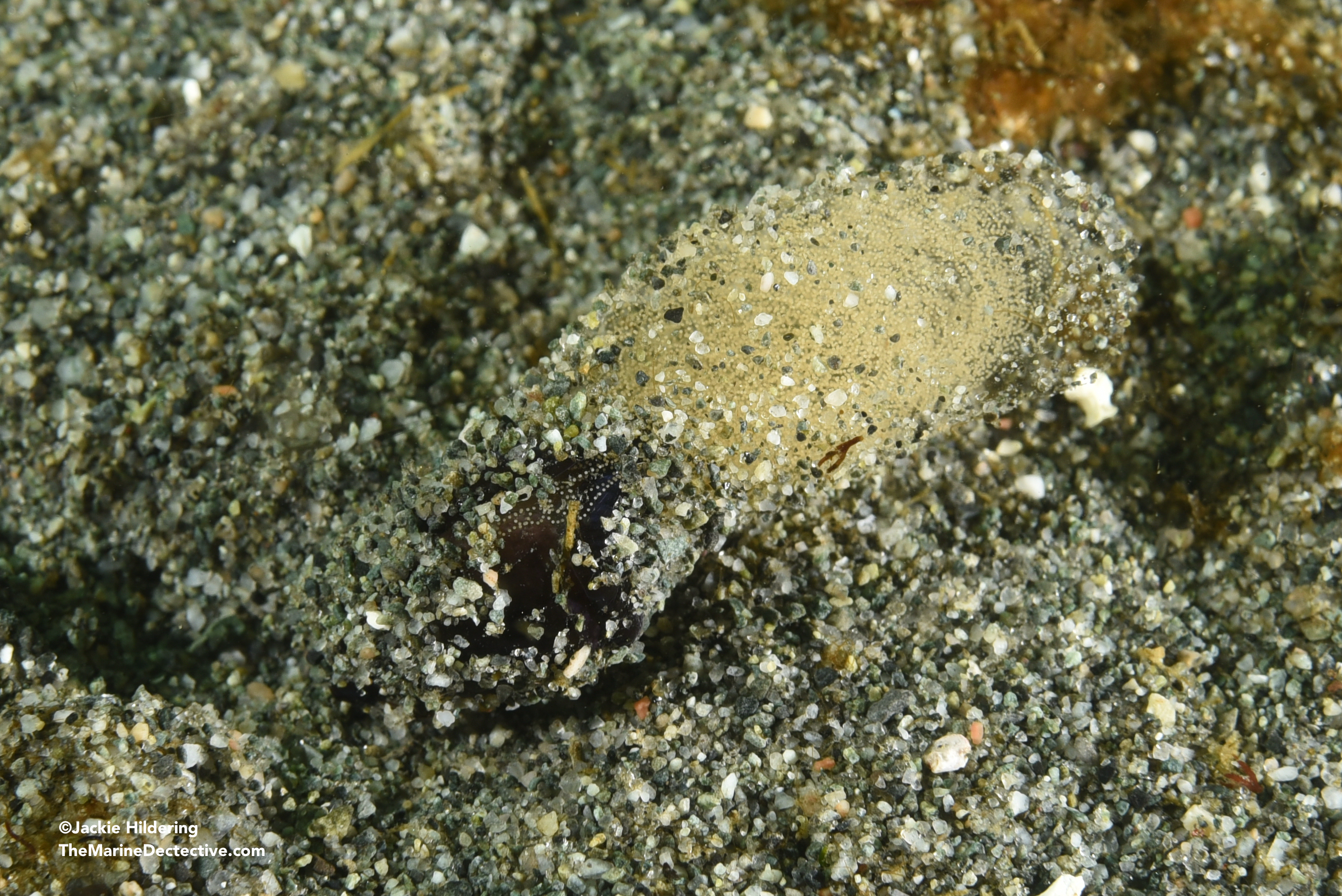
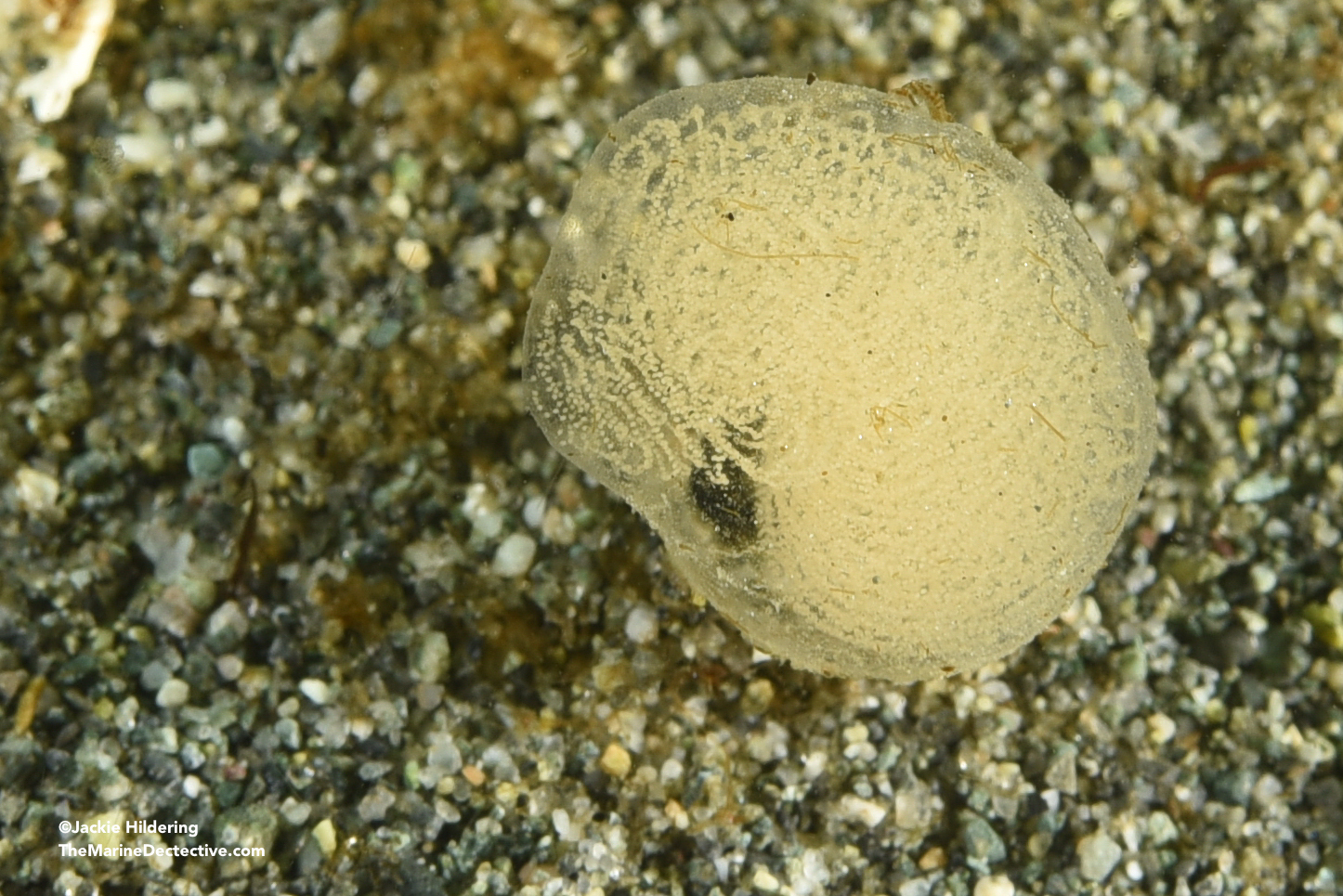
I will ALSO never forget the first time I saw them spawning, so many of them on the sandy ocean floor, their egg masses expanding to be bigger than they are.
I try to document this every year, looking in areas with sand in from late March into May. I have found them, and their eggs, as shallow as 2m depth.
And sure enough, on March 31st, there they were again. They are gathering to mate!
March 31, 2020 – “Beach Camp” near Port McNeill at only about 3m depth.
The photos below show you what the peak of the spawn looks like. Photos are from May 26th, 2019. Just look at the number of them! How do they find one another? How many eggs in an egg mass? So many questions!
I bet you also want to know how it can be that their masses of fertilized eggs are bigger than the sea slugs themselves. I presume the masses must expand with seawater but . . . I do not know.
As is the case for most terrestrial and sea slugs, Great Winged Sea Slugs are simultaneous hermaphrodites whereby both parents become inseminated and lay eggs. It’s a great strategy to maximize chances of reproductive success when finding a mate is particularly challenging and your babies hatch into the planktonic soup of the ocean.
Among my many wonderings about this species is: Why have I never seen Great Winged Sea Slugs swimming during the time they are aggregating to mate? I learned from research by Claudia Mills in Friday Harbour (published in 1994), that only sexually mature animals swim AND that they were only observed doing so between September and February i.e. not while mating.
Why swim? In may work well to escape annoying divers and/or bottom feeding fish like Ratfish. The timing suggests that it allows for population dispersal – spreading out for food and/or mates. You would think that the fact that hatch as plankton would spread them out enough. Also, HOW do they then assemble in numbers like this? Is it possible that these sea slugs smell one another’s scent trails even in the ocean?
You can see faint trails here.
Please know that this species IS a sea slug but it is NOT a nudibranch. Great Winged Sea Slugs don’t have naked gills and adults do have an internal shell when adults. Great Winged Sea Slugs belong to the group of sea slugs known as “bubble shells” of the order “Cephalaspidea”. You can even see the bubble shell in some of these images. Ronald Shimek creatively described these sea slugs as having “an internal shell that looks quite like a soap bubble and is about as durable.”
The wing-like structures are called parapodia. When the sea slug is not swimming, these “wings” wrap around the body forming a water-filled cavity. See what looks like a siphon? Part of the “head-shied” folds into a siphon directing water into the cavity. There’s also an exhalant siphon.
The photo above is from the first time I ever noted this species. I was able to follow one as it drifted to the bottom and then saw the siphon appear. This added to the sensation that my brain was going to explode with awe. I shared the photos with experts and learned that, at that time (2007) it was not known what any members of the family feed upon. This added to my appreciation / understanding of how little is known about marine species that are even common and in the shallows. Bill Rudman responded with “I suspect they may feed on small flatworms or other invertebrate with no hard parts – but that is just a guess.” Apparently Gastopteron are known to feed on detritus and diatoms but it a laboratory setting, To my knowledge, there has not been confirmation of the diet of the species when in the wild.
More about the eggs via Jan Kocian: ” Anne Hurst (1967) described the egg masses and veligers of Gastropteron pacificum. She considered the egg mass to be of “Type C,” that is, “in the form of an ovoid or globular jelly bag attached by a jelly string. Ths is common amongst cephalaspideans” (Hurst, 1967: 256). The egg mass of G. pacificum “is almost globular and of clear jelly. It contains widely separated rounded capsules containing spherical pink eggs. The smooth-walled capsules each have a short string-like protrusion from one point on their surfaces and this does not appear to be attached elsewhere. As the eggs develop to form a ball of cells, the pink colour becomes concentrated and at one side of it is a group of yellowish cells, the whole being surrounded by a narrow layer of greenish cells” (Hurst, 1967: 268) . . . Egg capsule dimensions range from 181-220 µ, and the animals take 14-15 days to hatch.”
Regarding diet, when I asked Bill Rudman of the Sea Slug Forum in 2007 what this species fed on, the answer was: ” . .. Gastropteron is one of the largest species in the family. At present we have no idea what any species feeds on, so this species might be easier than many to catch feeding. Can you put it on your ‘to do’ list? It would be very interesting to know. I know of no identifiable stomach contents being reported so I suspect they may feed on small flatworms or other invertebrate with no hard parts – but that is just a guess.”
I hope, dear reader, that these words and images offer an additional chance to get lost in the natural world for a little bit. It offers me such comfort to see the steady flow of the natural world around me – from the courting of song birds, to the emergence of plants, and the mating of sea slugs.
Know that, right below the surface, there’s a world or greatness . . . where slugs fly.
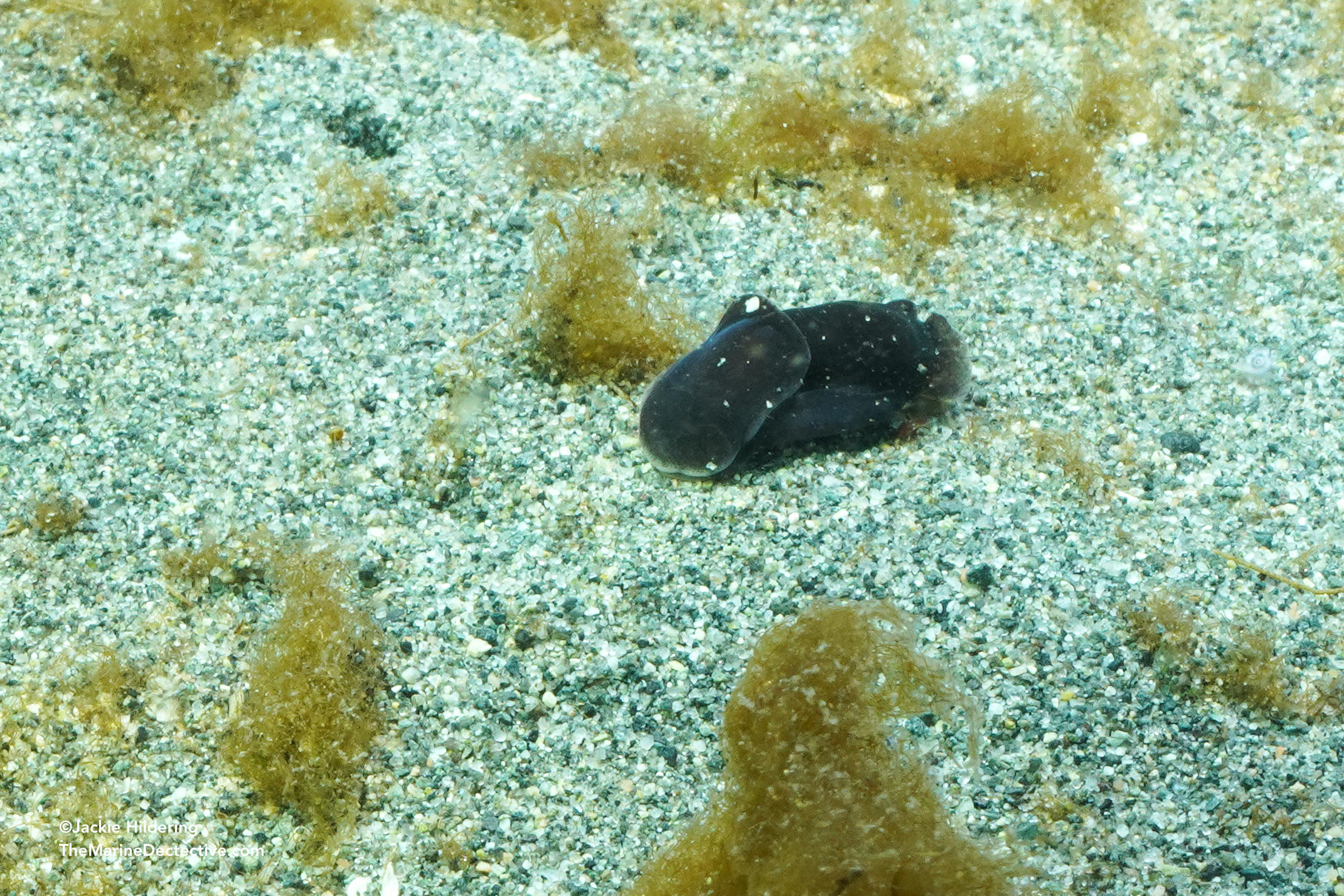
Note that if you see similar egg masses in the intertidal zone,I believe they are more likely to be from one of two other sea slug species that are also headshield sea slugs (order Cephalaspidea) – Albatross Aglaja or Spotted Aglaja. See below.
Albatross Aglaja
Melanochlamys diomedea to 1.5 cm long.
So often under the sand. Known to feed on nematode worms and kinorhyncha, aka mud dragons (Source: Zamora-Silva and Malaquiasm, 2016). The former common name of this species was the Diomedes’ Aglaja.
Albatross Aglaja laying eggs. You can get a sense of how small it is relative to the size of the grains of sand.
Albatross Aglajas crawling through the sand in the shallows.
Albatross Aglaja laying egg mass – you can just see a little bit of the sea slug in the centre of the egg mass.
Yeah! One above the surface whereby you can see the “headshield”,
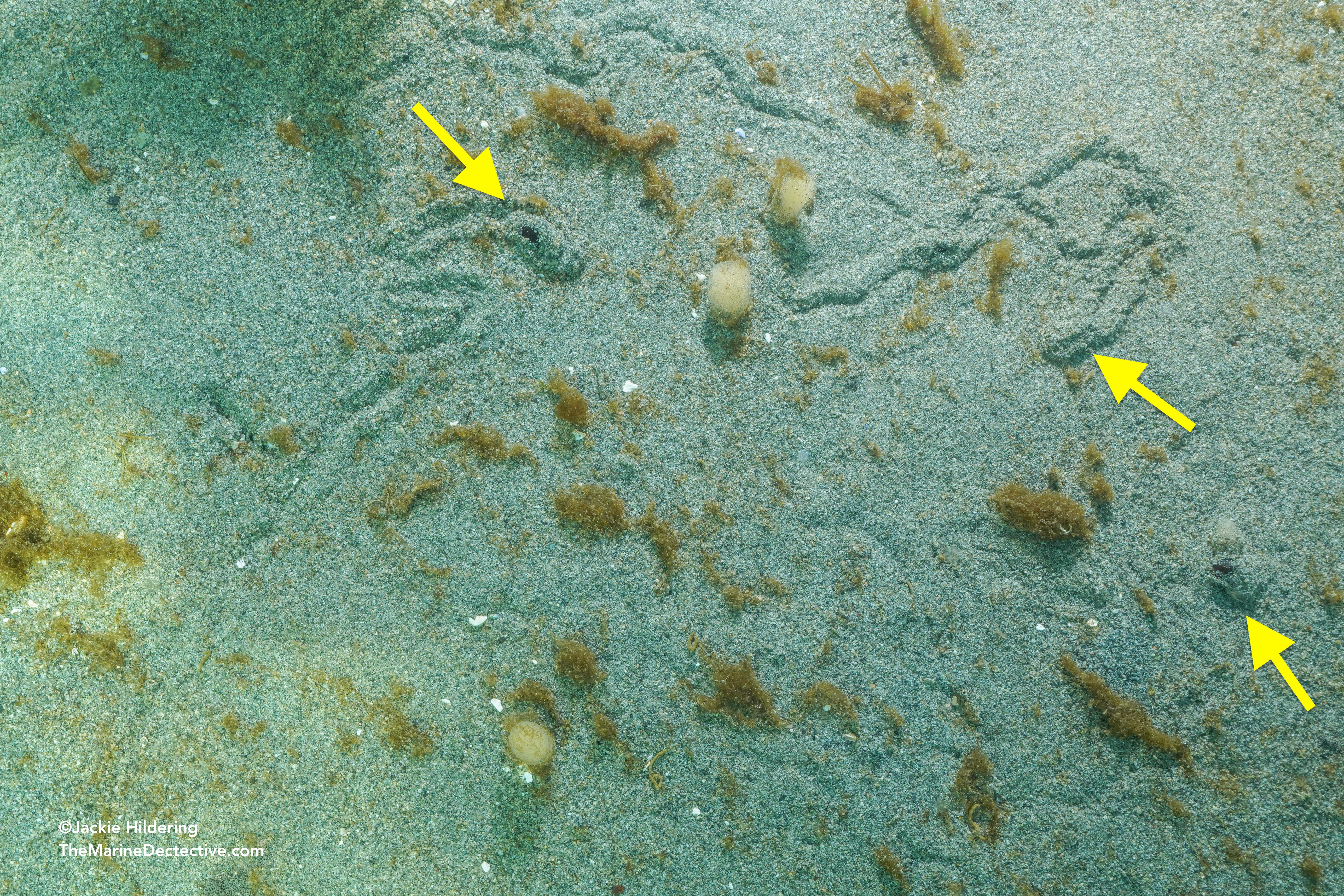
See the tracks that help you find the Albatross Aglajas? Arrows indicate where three of them are amid their egg masses.
The species has been found in Norway which was not part of its known range. Malaquias et al, 2025 put forward that: “The exact origin of the specimens remains unclear but the absence of records from the northwestern Atlantic coasts of Canada and USA, combined with the increase in ship traffic across the Canadian Arctic support the hypothesis that a European population was introduced via shipping routes connecting the northeastern Pacific through the Arctic Northwest Passage.”
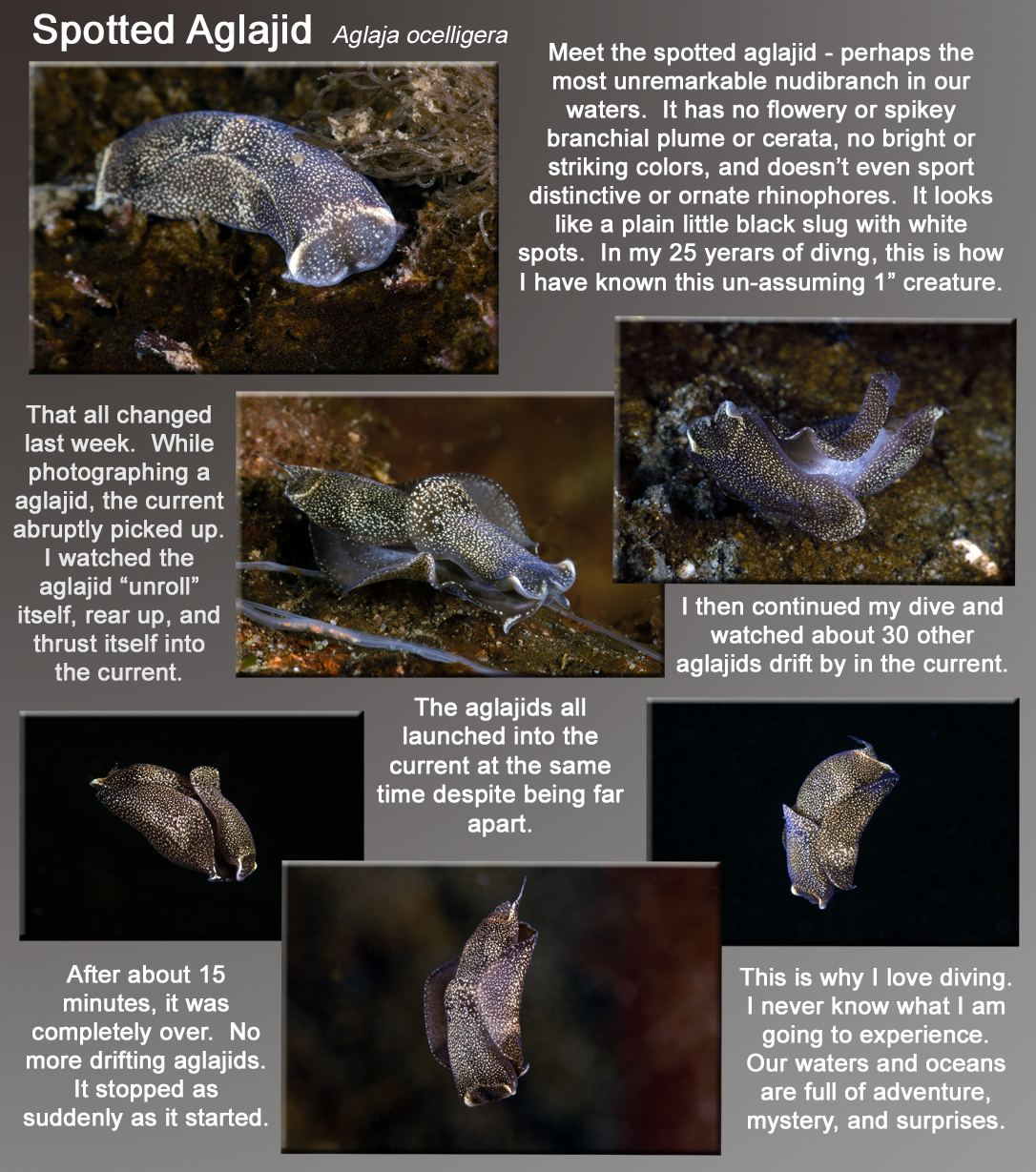
Usually also under the sand. Said to feed on other bubble shell sea slugs, which may include the Albatross Aglaja. Both the Spotted Aglaja and Albatross Aglaja do not have a radula (rasping tongue) whereby they are said to suck in their prey whole.
A rare good look at a Spotted Aglajid since they are usually burrowed in sand. Notice how one tail is longer than the other.
Two Spotted Aglajids above the sand, presumed one is following the other’s scent trail to get together to mate.
A Spotted Aglajid laying eggs! “Aglajids lay their eggs in the most interesting way. They release the egg stream around their rotating body, creating a coil or tube-like mass. They then dive into the sediment placing an anchor so the eggs, above, won’t wash away.” Source: Dave Behrens.
Rudman, W.B., 2007 (Mar 23). Comment on Benthic behaviour Gastropteron pacificum by Jackie Hildering. [Message in] Sea Slug Forum. Australian Museum, Sydney. Available from http://www.seaslugforum.net/find/19738
My attempt at summarizing the cassification of the group to which sea slugs belong. Last updated 2020-04-17. Source: World Register of Marine Species.
Regarding the photo below: The Opalescent Nudibranch is a nudibranch. Nudibranchs DO have external gills (hence “nudi” = naked and “branch” = gills). Adults do NOT have an internal shell. The Great Winged Sea Slug is a “bubble shell” sea slug (Cephalaspidea). They do NOT have naked gills and adults DO have an internal shell. There! Now don’t you feel better knowing that: (1) Not all sea slugs have naked gills and hence not all sea slugs are nudibranchs; (2) However, all nudibranchs are sea slugs.
That’s not usually a good conversation starter is it?
But, read on. It’s worth it! If you are fascinated by adaptations and the interconnectedness of species . . . even when it involves parasites.
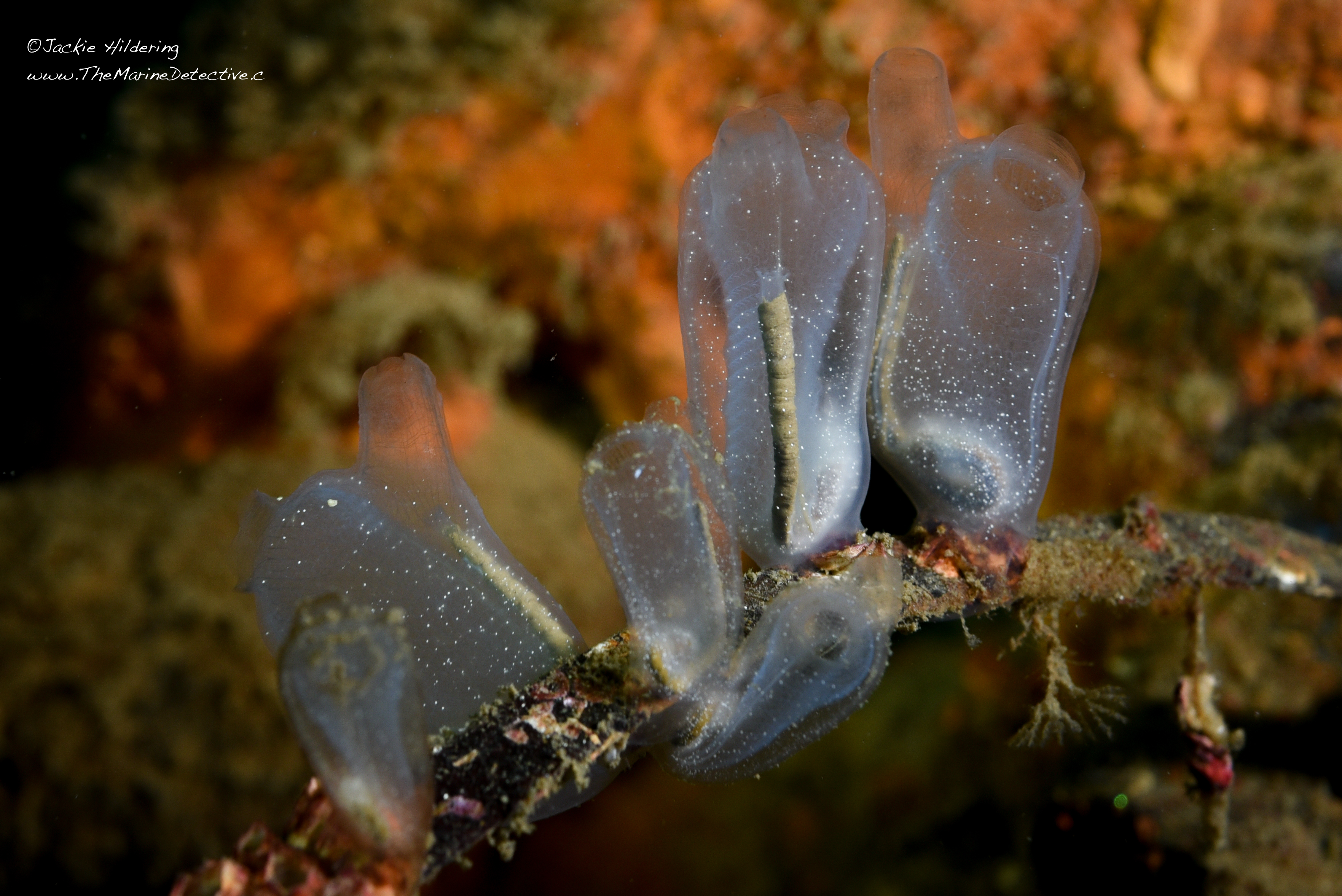
These are Transparent Tunicates (aka Transparent Sea Squirts). They are not parasites. They are highly evolved animals with a primitive backbone. They take in food particles through one siphon in their strong “tunic” and expel waste through the other siphon. See the siphons?
The dark you see here is the waste inside their rectums. Yep, they are filter feeders and clearly take in some sand too. What’s this then about parasites?
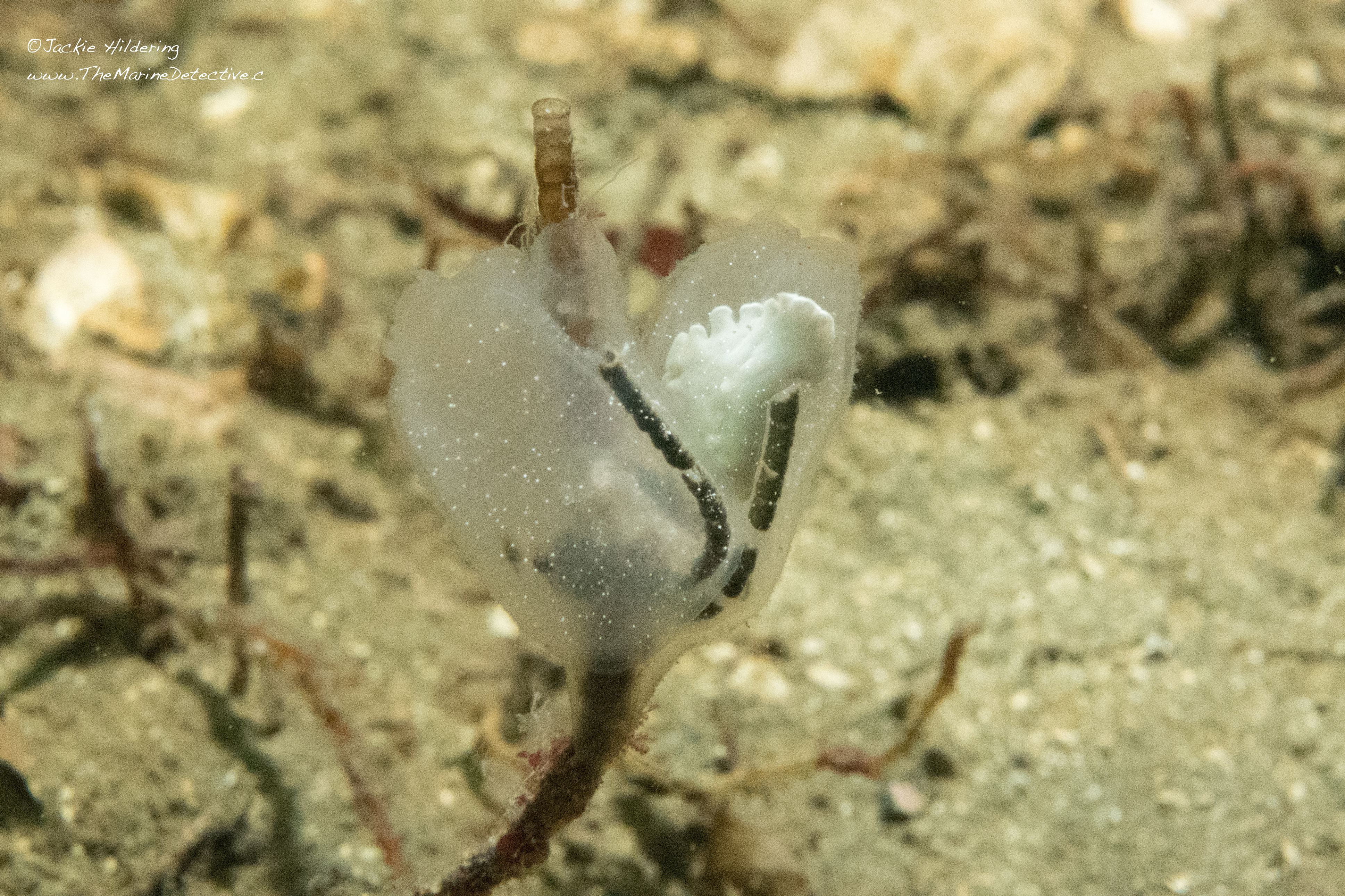
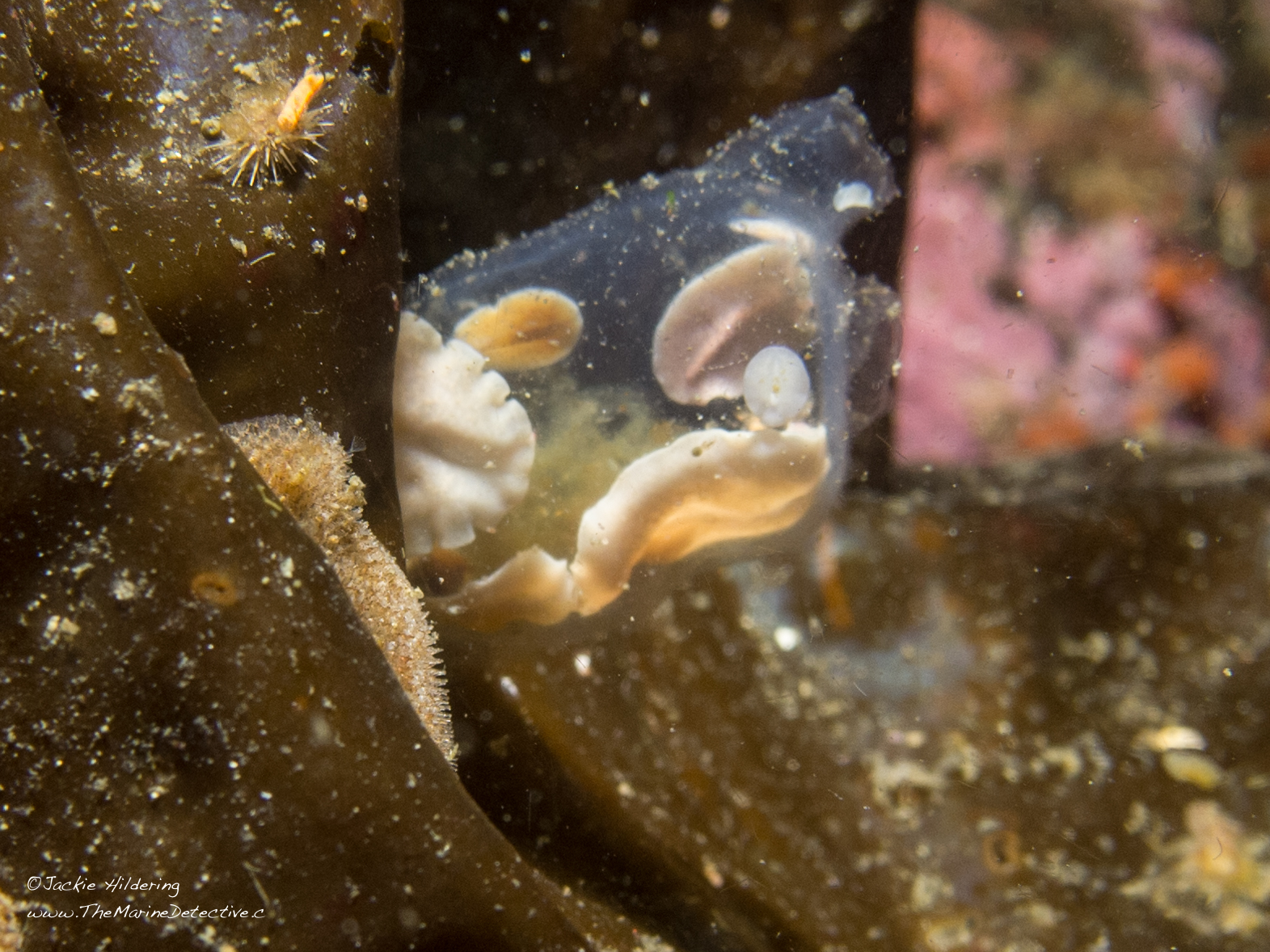
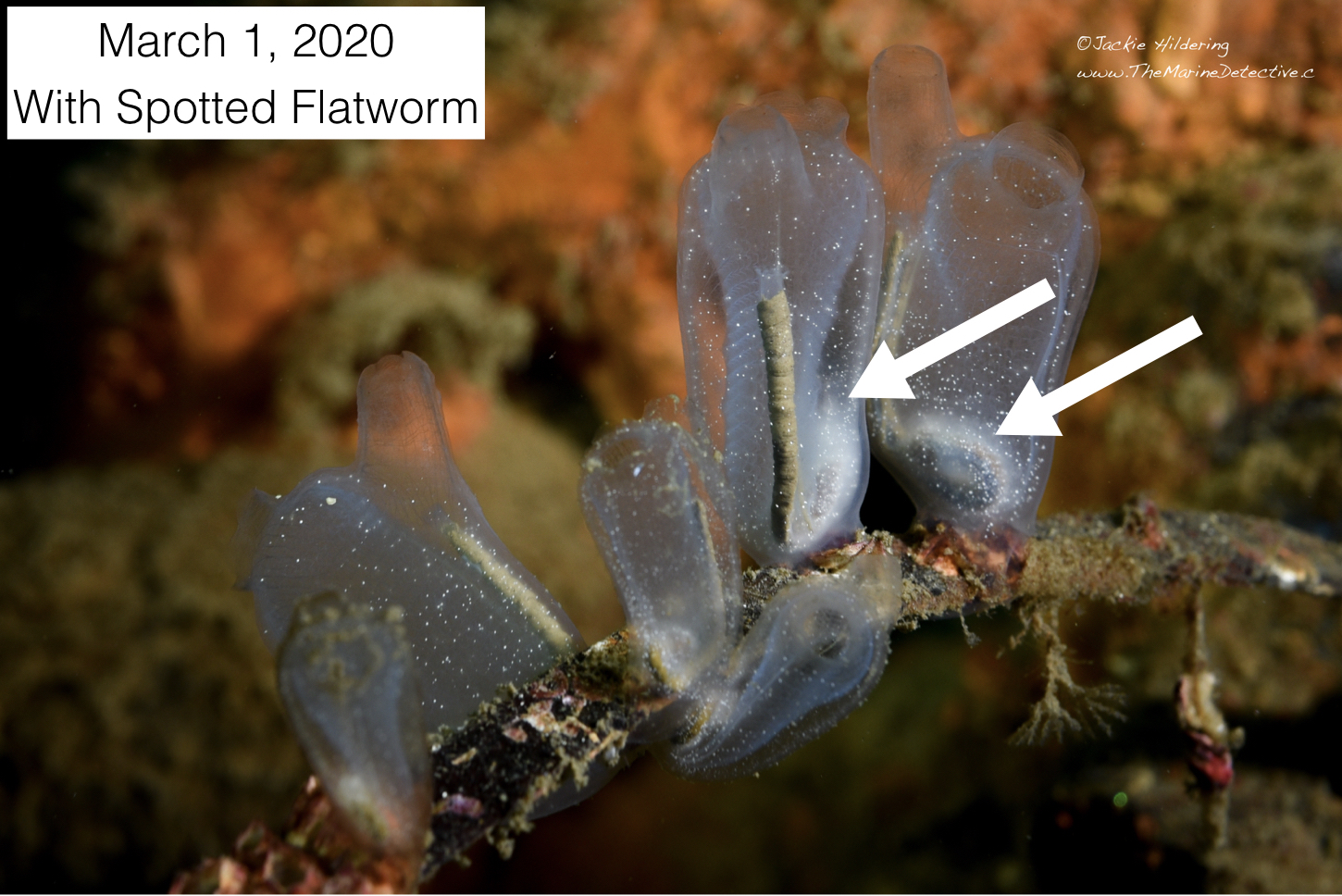
This species gets invaded by a wicked parasite (as opposed to all those gentle and meek parasites out there) . . . the Spotted Flatworm! This species of flatworm curls up, sneaks in through the tunicate’s branchial siphon, unrolls, eats the tunicate’s internal organs over 3 to 7 days and then moves on, leaving behind the empty tunic.
They are species specific parasites, apparently specializing in invading Transparent Tunicates. The following photos clearly show you the Spotted Flatworm presence there and the tunicates are now mere shells of their former selves.
All the internal organs are gone in the heavily invested individual in the photo below.
In having the privilege of learning even from individual animals by diving the same areas frequently. I recently saw the progression for individual Transparent Tunicates and the Spotted Flatworms that had invested them. The following photo is from March 1st, 2020. I’ve now added arrows to show the parasites.
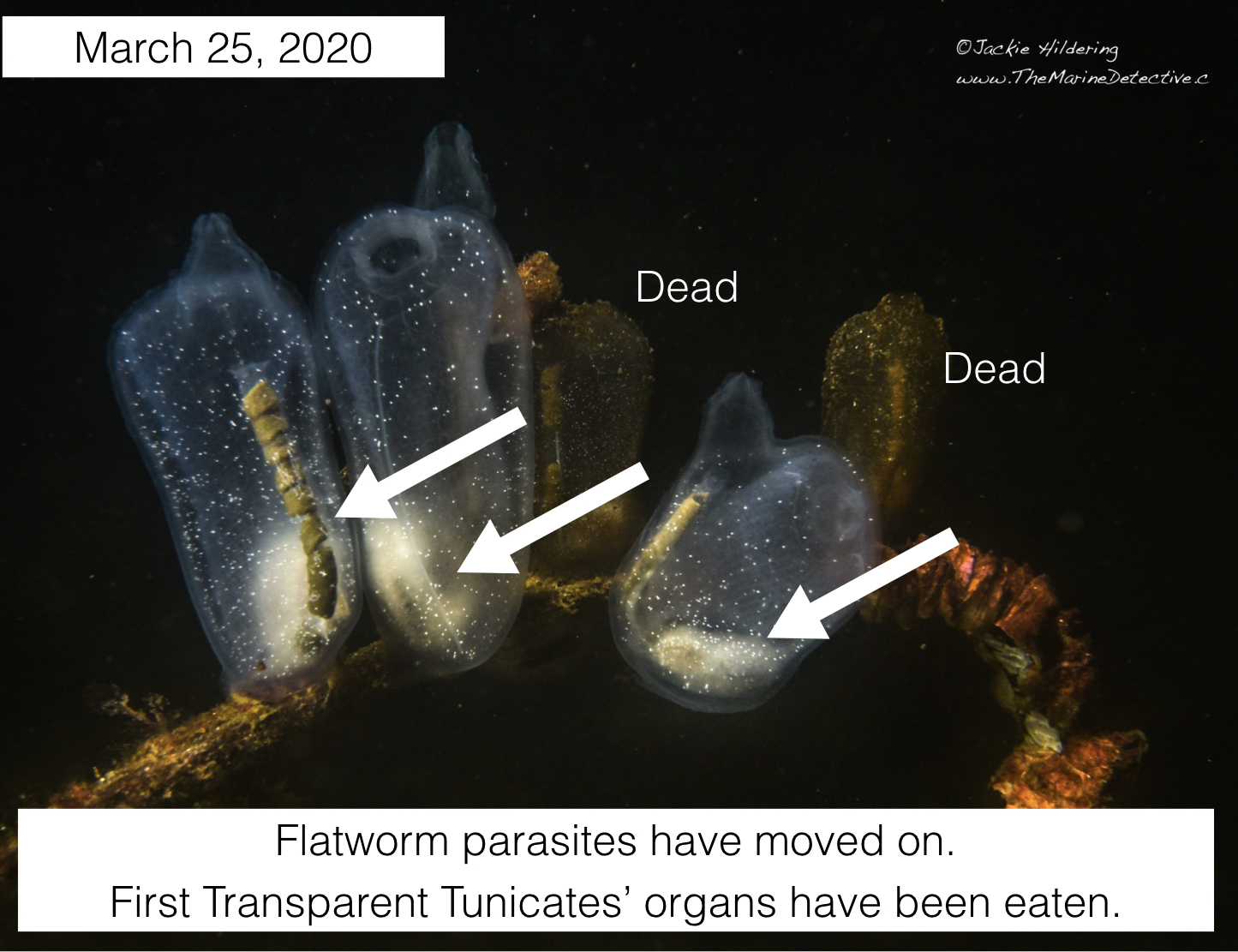
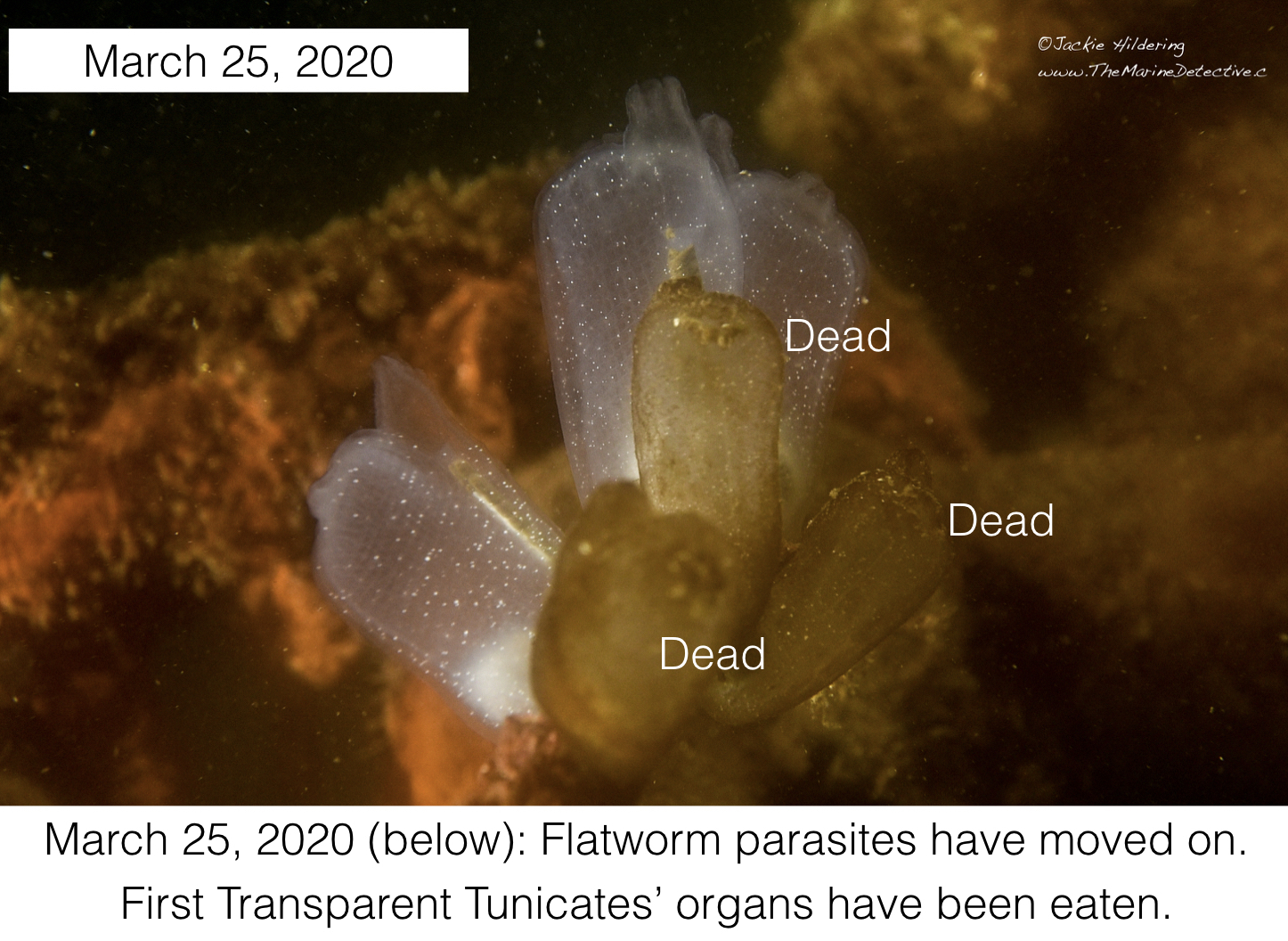
The following two photos show you reality 24 days later. The originally invested Transparent Tunicates are dead and the Spotted Flatworms have moved into their neighbours.
Below is another perspective on the same individuals.
I truly hope that in these times where our own species is facing extreme challenges, that this information still creates awe, connection and respect for the lives of others. Maybe it’s more important than ever.
Wishing you health, resilience, and strength of community.
Transparent Tunicate = Corella willmeriana to 7.5 cm.
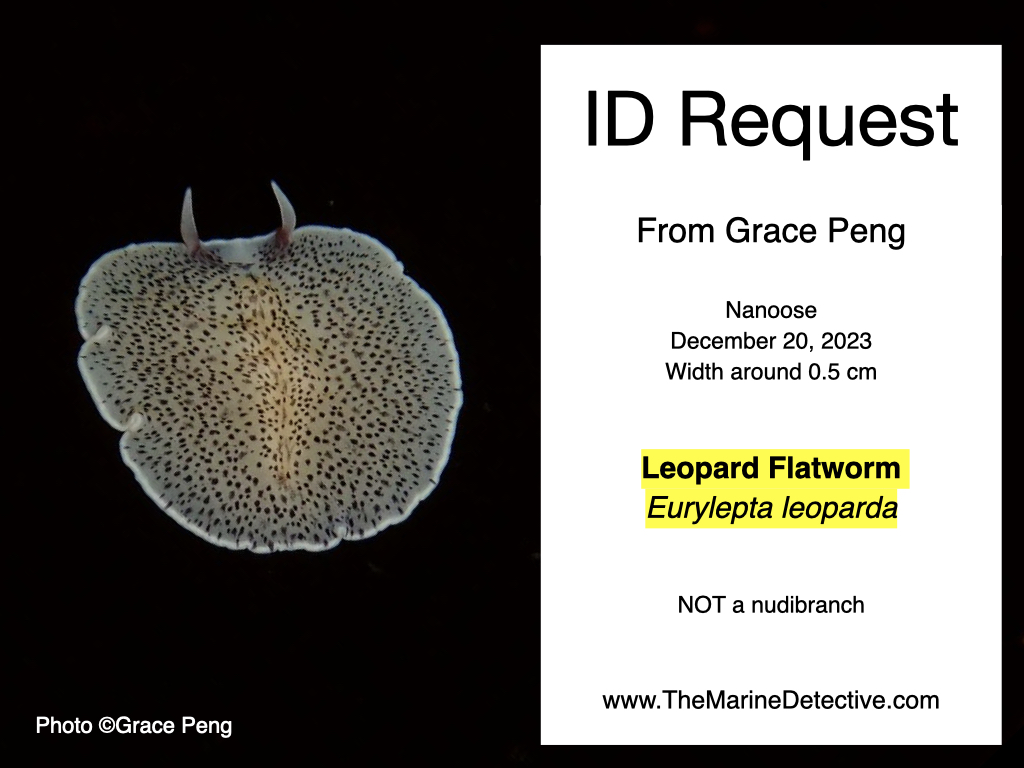
Spotted Flatworm = Eurylepta leoparda to 2.5 m.
___________________
Photo showing what a Spotted Flatworm looks like when not in a Transparent Tunicate.
Last update: August 2025.
Three disclaimers before sharing one of the most valuable lessons I have learned from whales.
1) For the purposes of this blog, I am referencing the world’s biggest dolphin as both “Orca” and “Killer Whales”. Please know that “Orcinus orca” only camouflages our branding and past misunderstanding of the species as it roughly translates into “demon of the underworld”. Clearly the species did not name itself.
2) When referencing being a “killer” female it is as per this definition: Killer: adjective slang: highly effective; superior; cool; awesome; really badass. I do NOT want to playing into jokes about female rage, especially for those women going through menopause.
3) If you think you’ve read or heard similar content from me before, you’re right. I reference this lesson many times including in presentations and a blog from 2010. I am reviving it because this lesson is of even more value to me being older and because of the current “state” of the world.
Now here goes . . .
The most valuable lessons I have learned about being female, I have learned from Killer Whales / Orca. For example, it is through my knowledge of these highly cultured whales that I know Nature’s plan for older females.
Let’s face it, human society does not generally help in this regard. As time etches lines into our interiors and exteriors, society does not tell us we are a-okay! No, the general messaging is about loss, faded youth and endings. Firm up! Dye that hair! Want some Botox baby? We’re sweeping you aside, ‘cause you’re old!
Thank goodness I believe in Mother Nature.
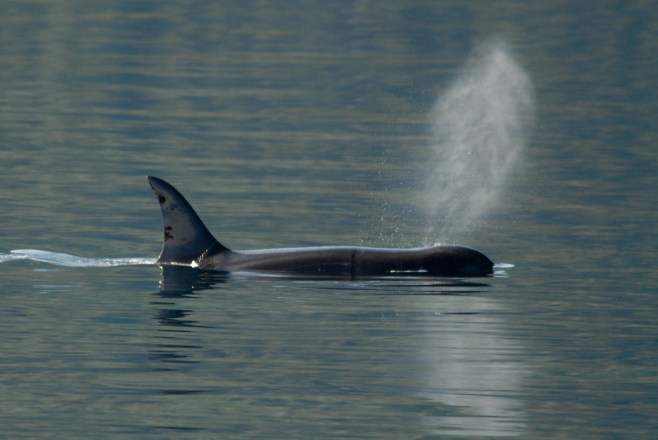
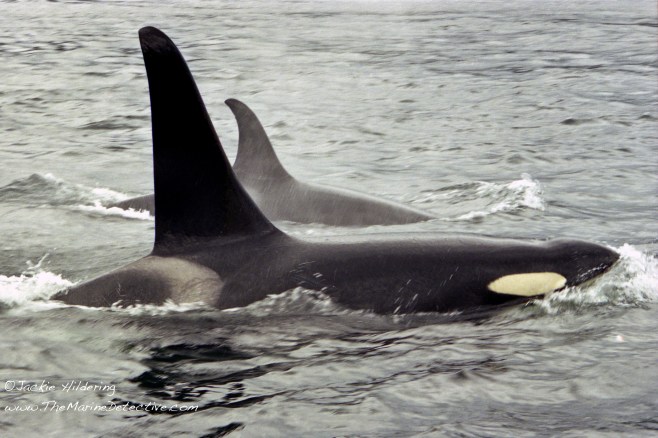
One of my teachers – A12 aka “Scimitar”; born around 1941 and now passed away. She was a Northern Resident (inshore fish-eating) Orca who was the grand dame of the A12 matriline.
As I weather the physiological and psychological changes of age, I know there is purpose in all this. Humans and Killer Whales are among the very few animal species where females go through menopause; where they can live beyond their child-bearing years as “post-reproductive females”.
In the case of Killer Whale females, they can give birth between the ages of around 12 to 40 but can live to at least age 80 (life expectancy is not yet certain since Killer Whales have only been studied as individuals since 1973). Thereby, female Killer Whales may live almost twice as long as they have babies. On the face of it, this appears to violate one of Mama Nature’s great laws. That is: if you’re going to use our food, you better pass on our genes.
But Nature makes sense. Therefore, the role of post-reproductive females must be so valuable that it “justifies” their using the population’s resources.
Science in fact believes that the old female Killer Whales are the teachers and decision-makers. These grandmas, wizened by their years and the lessons of the generations before them, are believed to teach mothering skills; how and where to hunt; and they are known to share food, especially with their eldest son.
These activities would benefit the population by ensuring that the offspring are better able to survive and mate . . . passing on shared genes. Since first posting this blog a decade ago, there has been further science published on this. Please see those sources below.
The role of older, female Killer Whales has been acknowledged in science with the convention being that each family group of Killer Whales is named for the eldest female (e.g. the A12s). Also, the collective name for a family of Killer Whales is “matriline” which loosely translates into “follow your mother”.
Female Killer Whales have taught me that I am not less as I age but rather that there is teaching to be done and leadership to be embraced.
Never in the history of humankind have the females of our species had access to the resources we have now. It’s far from equality BUT imagine, imagine my sisters (and brothers) that if instead of being manipulated by a paradigm that is aimed at making us feel less, we chose to be more. Think of how we could unite against inequality in its many forms.
Instead of absorbing, and perpetuating, disempowering messaging about being older, imagine a world where older women rise into their potential. What a force that would be for the DNA of our kind – not distracted by what is not, but working for what will be.
These years are to be lived . . . as a killer female.
Where once I had rapid access to a brain full of facts, I now have intuition.
Where once I had 20/20 vision, the lenses of my eyes have become far less flexible. But, I see more.
Where once I was rubbed raw by society’s perceptions of success as a woman, I have (largely) found my way.
Where once I fought my body, I have healed into gratitude for its strength and health; the life it lets me live and how it is the manifestation of the DNA of those before me.
Where once I was unlined, I am weathered. The lines are getting deeper and more abundant, revealing that as I age, I laugh more – openly and loudly – and hide my emotions far less.
Where once I felt I had to prove I could do it all alone, a gift of age has been to reach out to younger generations. Their skills and values help me. My skills and values are aimed at being in service to them.
Where once I was constricted by messaging of being “too much” and wanting “too much”, I recognize the power structures and motivations of those wanting to keep others small, so that they may feel big. I know what motivates inequality and injustice. I know. Thereby, I have power; the power to help those who have less.
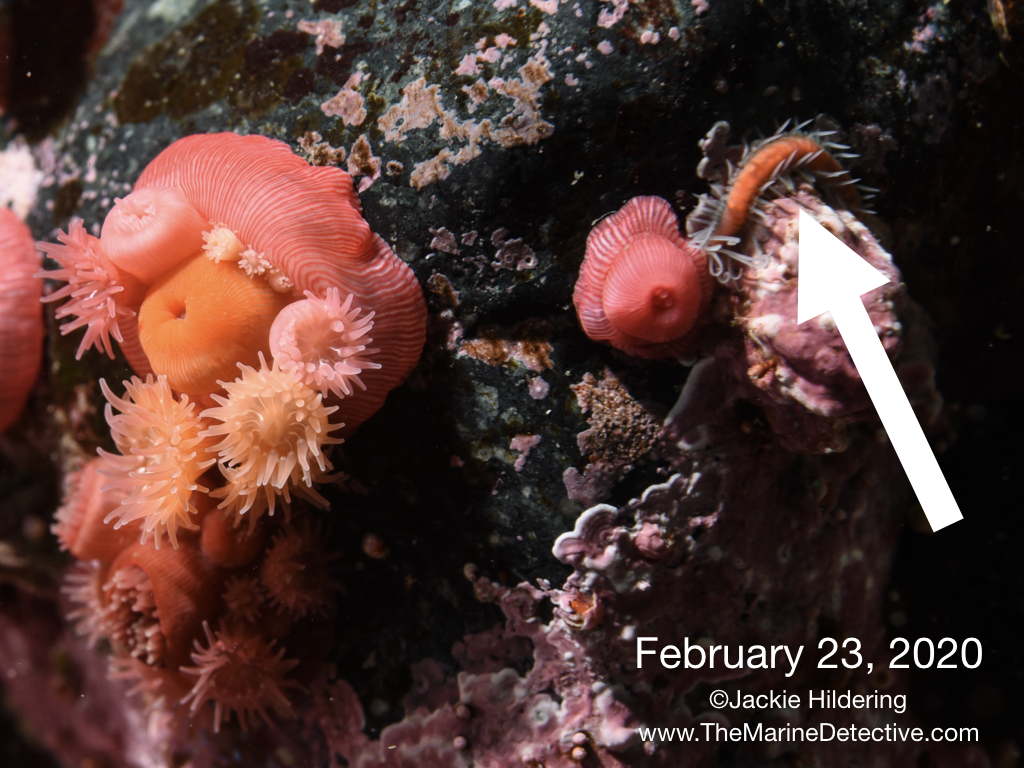
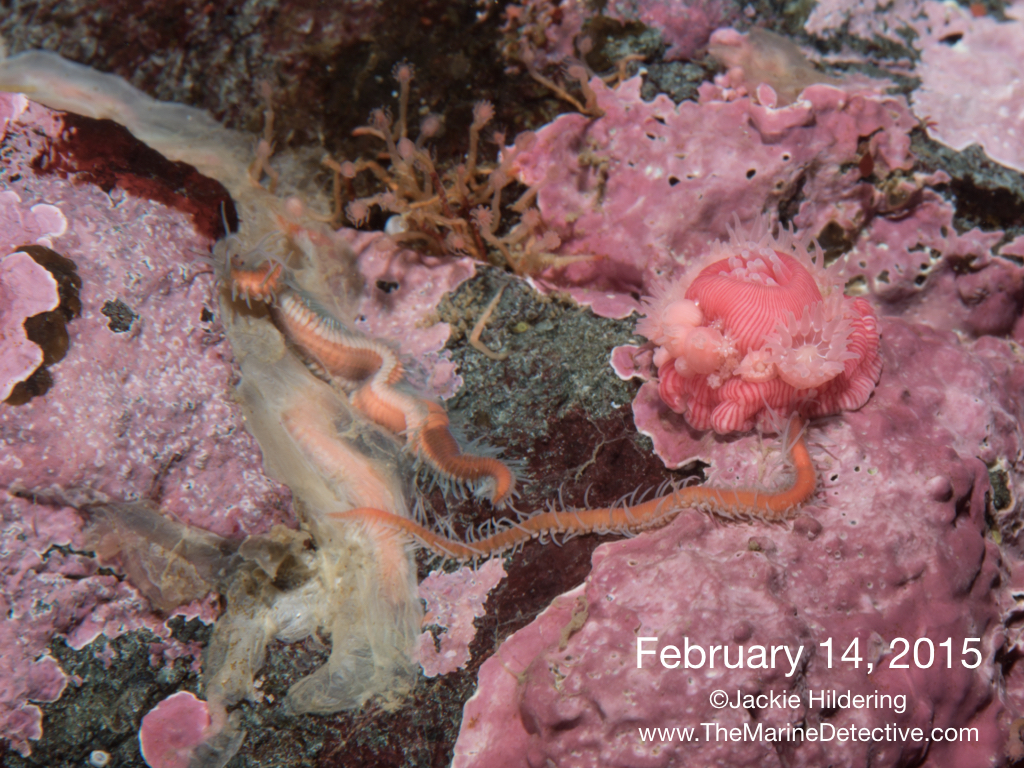
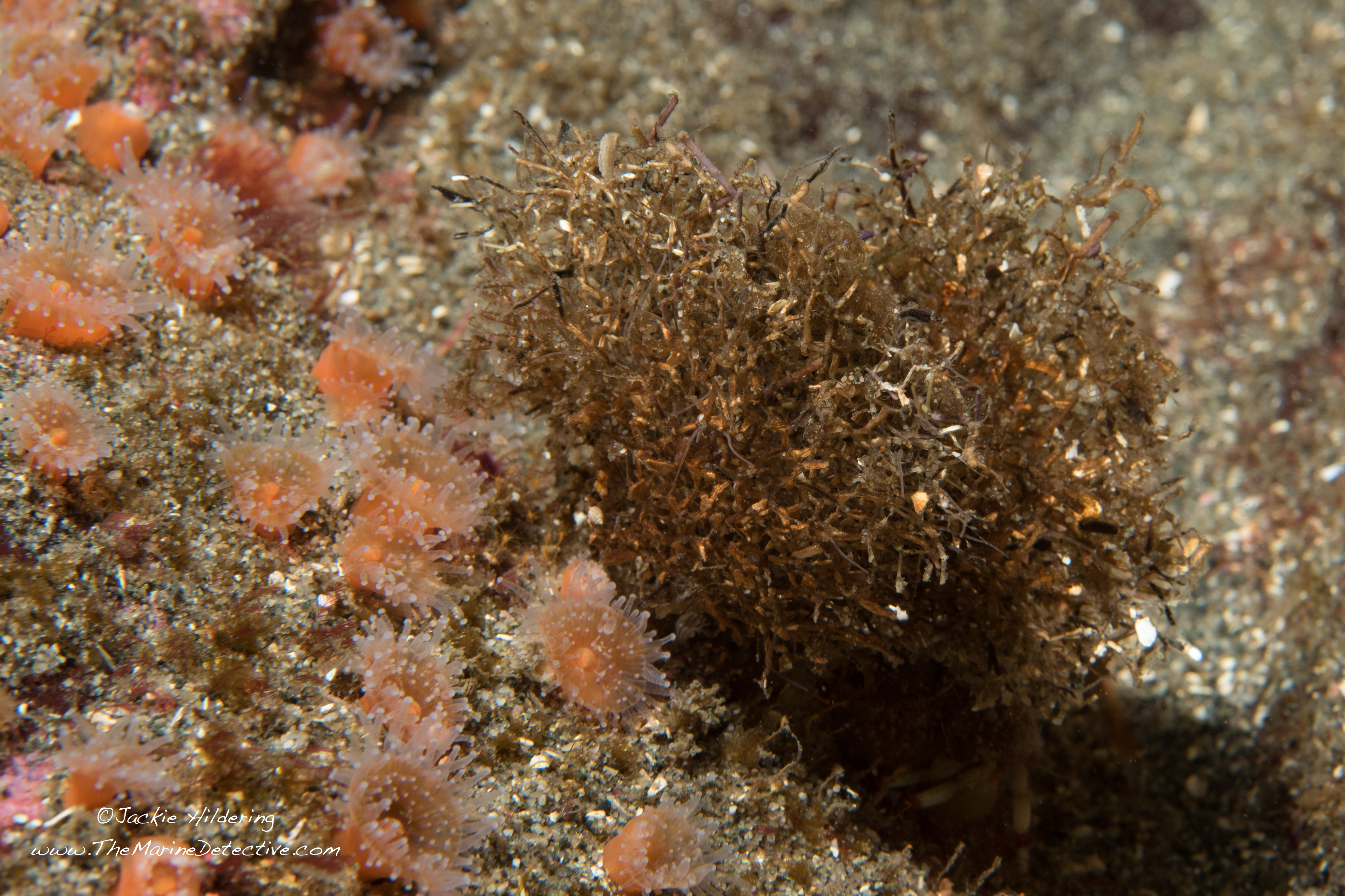
The species of necklace-worm in the following two photos has, to my knowledge, not yet been identified by science. My latest sighting of it was yesterday.
I am sharing the images to illuminate anew how little we know even of species in the shallows.
I have only documented this species 3 times and in each case it has been in less than 8 metres / 25 feet of water. Interestingly, it was near Proliferating Anemones in each case which makes me wonder if the might prey on them. I am perplexed too by the slime encasements evident in the second photo.
I believe it has also only been documented around the Plumper Islands area off NE Vancouver Island.
I have relayed the observations to polychaete worm experts.
To be clear, I did not discover the species.
I have only found individuals of this necklace-worm that has previously been recognized by experts as being an unidentified species.
In Andy Lamb and Bernie Hanby’s “Marine Life of the Pacific Northwest”, it is species AN22. They state: “While diving the Plumper Islands near Port McNeill, BC, we found this mystery necklace-worm. Significant numbers of this small (5 cm / 2 in long) creature were crawling about in the open, completely exposed. Such behaviour would seem to invite predation. Unfortunately, without a specimen . . . accurate identification is not possible. Detailed examination of the palps, teeth, cirri (finger-like projections) and chaetae (bristles) are required for species determination . . . It looks diminutive, but this mysterious worm is actually large compared to most necklace-worms.” Further from their update on KnowBC; “Some interesting observations can be made, however. The tentacular cirri near the head are much longer than their dorsal counterparts in the middle of the body: the latter appear to be shorter than the worm’s body width. It is not clear, though, whether these cirri are annulated (ringed) or smooth. The specimen’s eyes are evident as are some sensory organs located just behind them. Intriguing features are the two faint but obvious transverse structures on each segment that appear to be ciliated (hairy).”
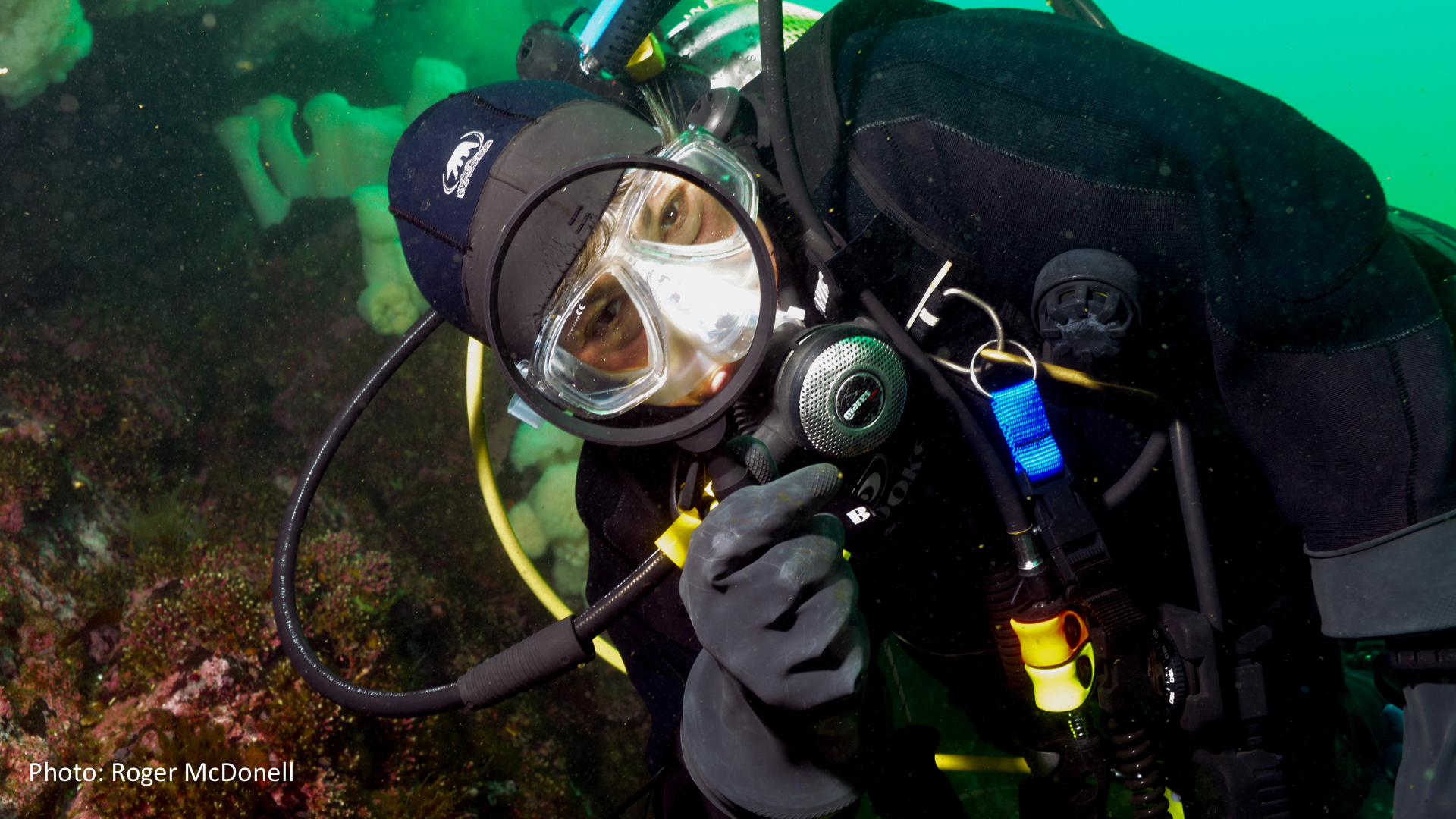
Oh and because truth, humility and self-mockery are virtues I try to stand for, know that I had no idea I had photographed the species yesterday. I only saw it when I was processing my photos of the Proliferating Anemones. There are good reasons I dive with a magnifying glass.
Below, please find photos of just a few of the other species of marine worm that I have photographed around NE Vancouver Island.
I am sharing these to add to the wonder of worms found in the NE Pacific Ocean.
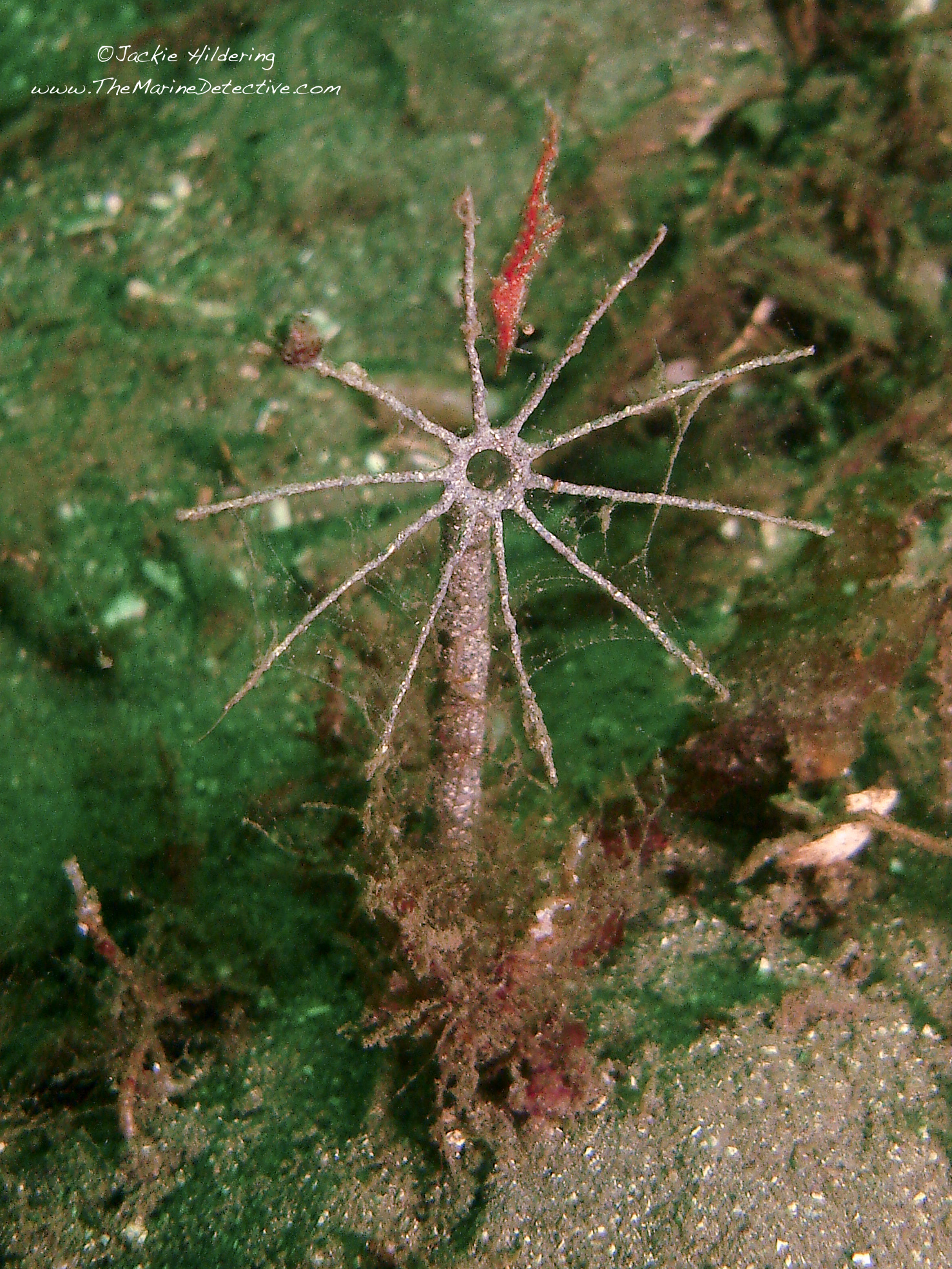
#1 Windmill Bamboo Worm Praxillura maculata to 25 cm long.
This species makes 6 to 12 “vanes”/spokes at the end of its protective tube and then strings a web-like net of mucus between to capture bits of food. After a time, the worm comes OUT of its tube and eats the mucus and food! Yep, it seines for its dinner! See this link for photos by Ronald Schmek of the worm coming out of its tube to harvest dinner.
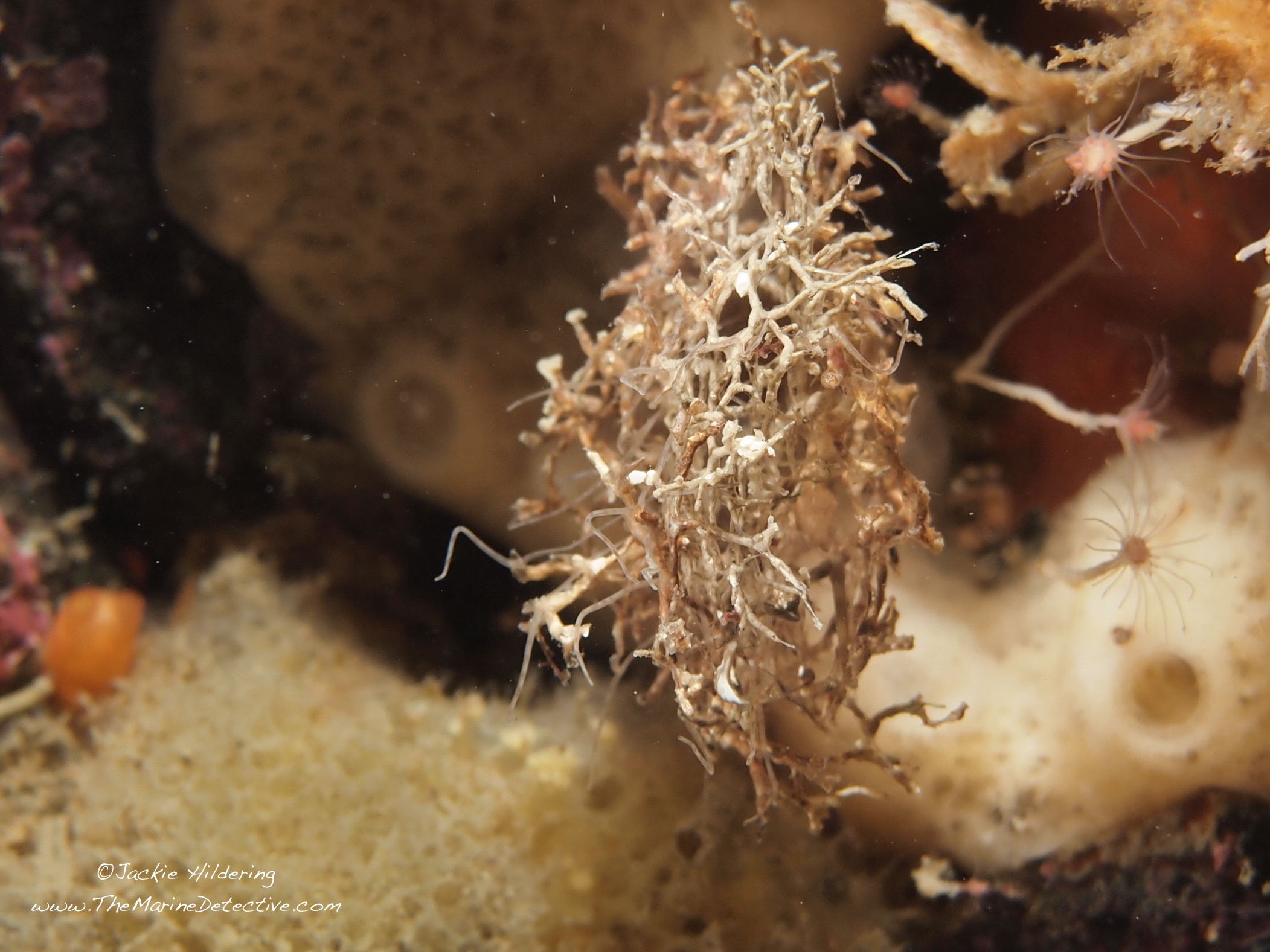
#2 Basket-Top Spaghetti-Worm Pista elongata to 21 cm long
The Basket-Top Spaghetti-Worm builds a tube AND A BASKET from bits of debris and extends its tentacles through the basket to feed. So little is known about it.
From Lamb and Hanby: “The lower part of the tube, where the worm resides, is coated with shell fragments and pebbles. Is the purpose of this extravagant tube solely to camouflage and protect the worm . . . or to increase its access to food? The worm extends its long tentacles through the basket to gather food particles selectively . . . The basket-top may also function as a sieve, filtering out particles brought by currents. Elevating the tube above the rocky substrate may provide the elongate, and tree-like branchia (gills), hidden in the basket, with a good supply of oxygenated water.”
#3 Calcarious Tubeworms
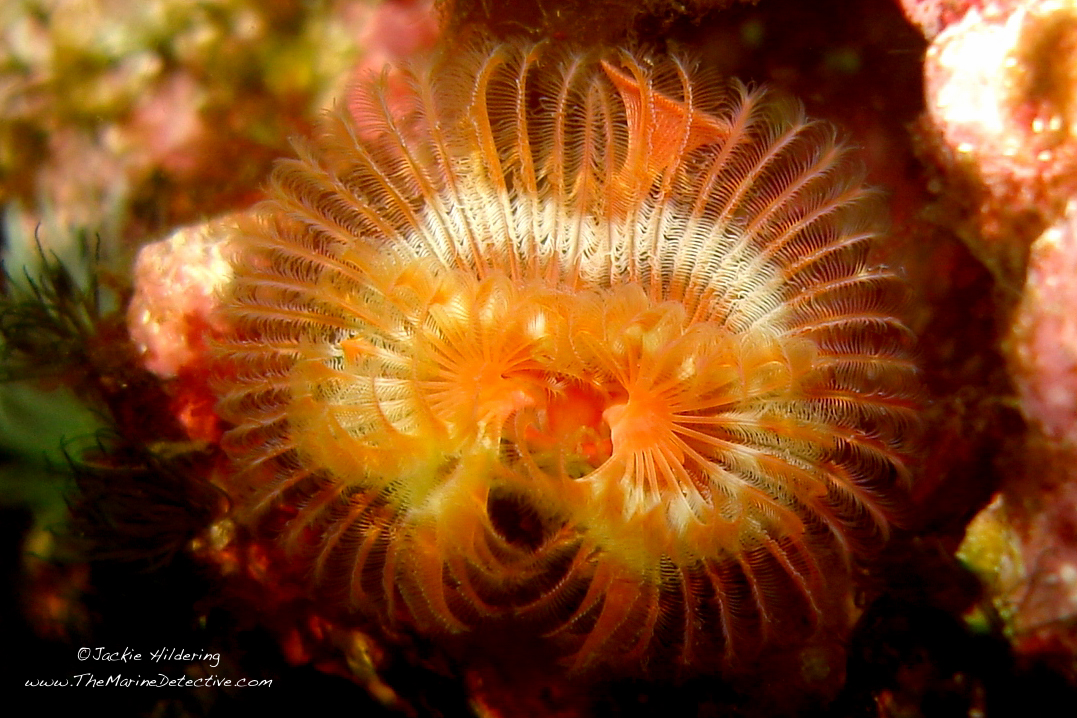
There are a variety of Calcareous Tubeworms species in the NE Pacific Ocean. I believe those in the following photos are “Red-Trumpet Calcareous Tubeworms” (Serpula coumbiana to 6.5 cm long). You’ve probably deduced that with that large surface area, they dust for plankton snacks with their crowns. These structures also allow the animals to respire.
See the trumpet-like structures (which need not be red as the common name suggests)? That is the “operculum”. It functions like a door that pulls closed after the tubeworm retracts. Thereby the worm is further protected in its hard, shell-like tube of a home
I am always thrilled when I succeed in photographing this species since, with any disturbance, the crown Immediately retracts as of result of they eye spots detecting the change in light / shadow.
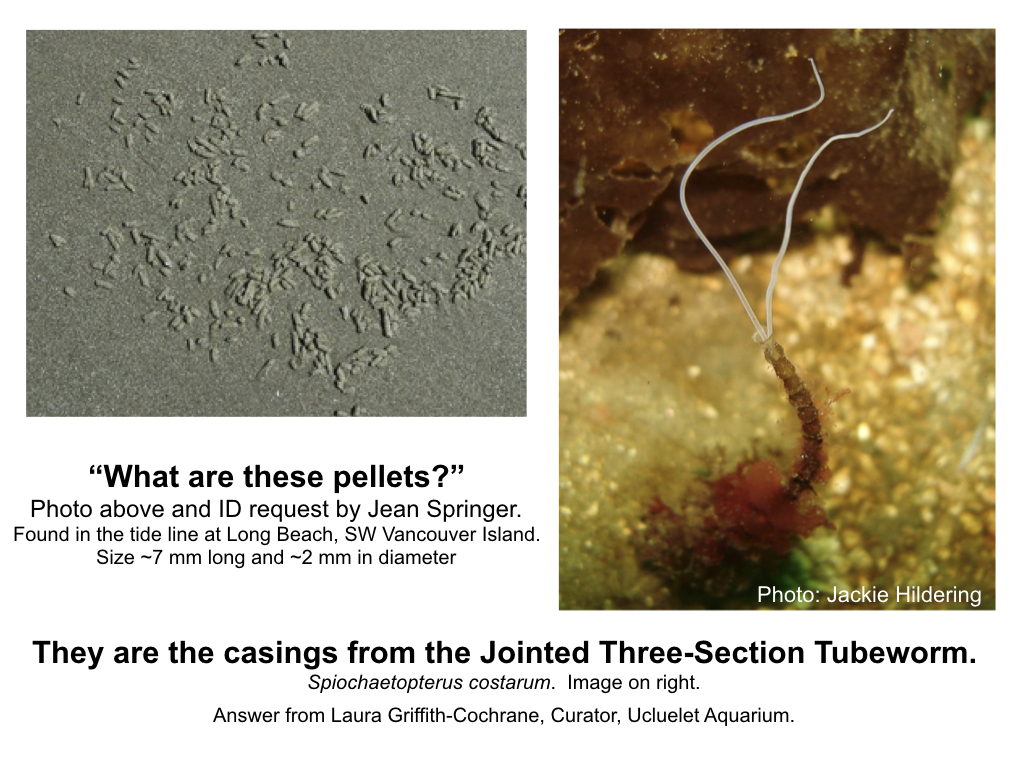
#4 Jointed Three-Section Tubeworm Spiochaetopterus costarum to 48 cm long
Jointed Three-Section Tubworms are filter feeders that create mucus bags inside their bodies through which water is passed due to the beating of cilia. As the water passes through the mucus, plankton and detritus particles are sieved out. The long polyps you see in my first photo below, remove the pellets and keep the opening of the worm clear. Notice how thin the worm is and therefore how spacious the tube it has constructed? The second photo shows you what the pellets look like.
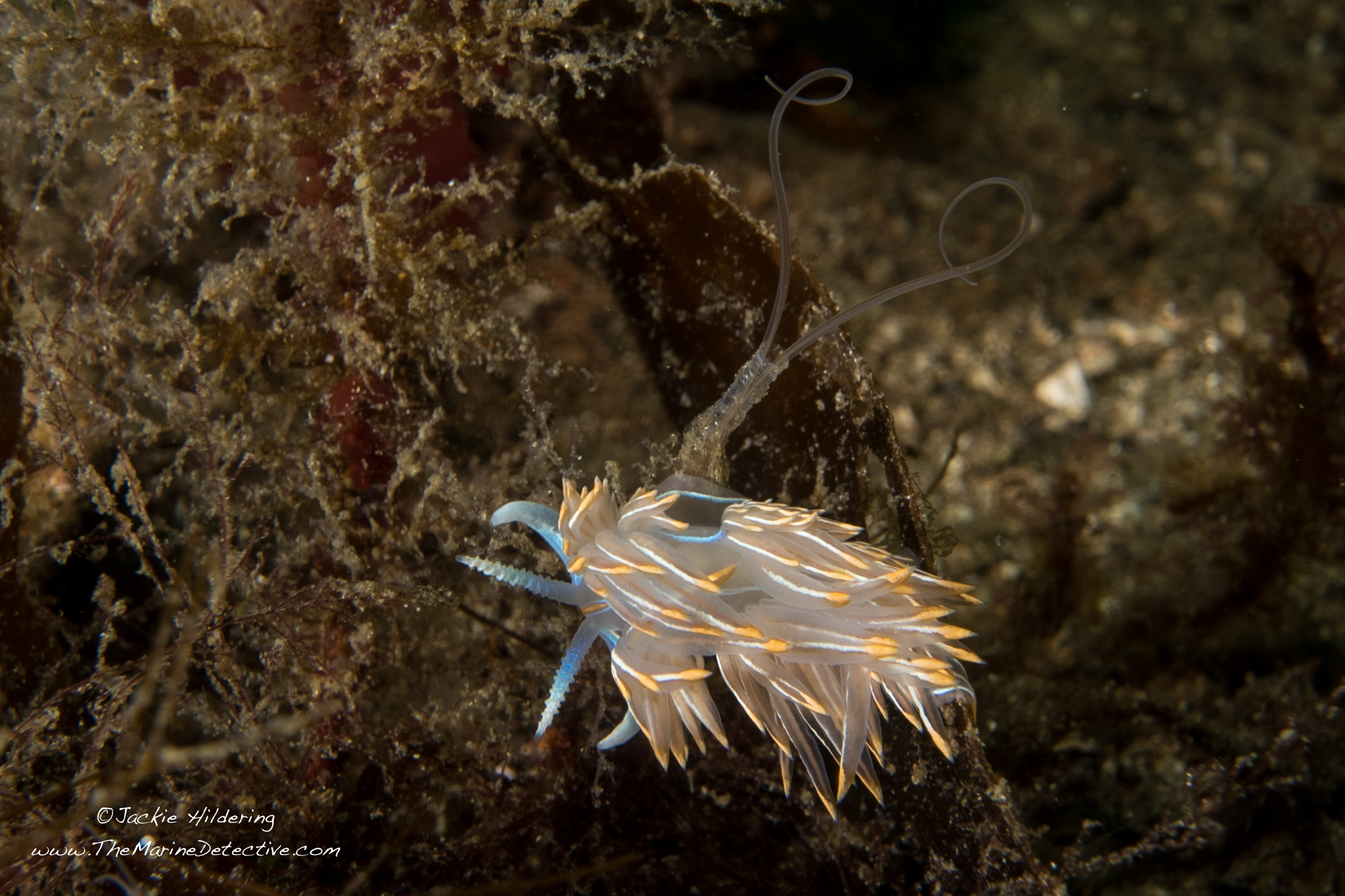
The nudibranch species in the first images is an Opalescent Nudibranch which is likely feeding on a species of hydroid on the outside of the worm’s tube.
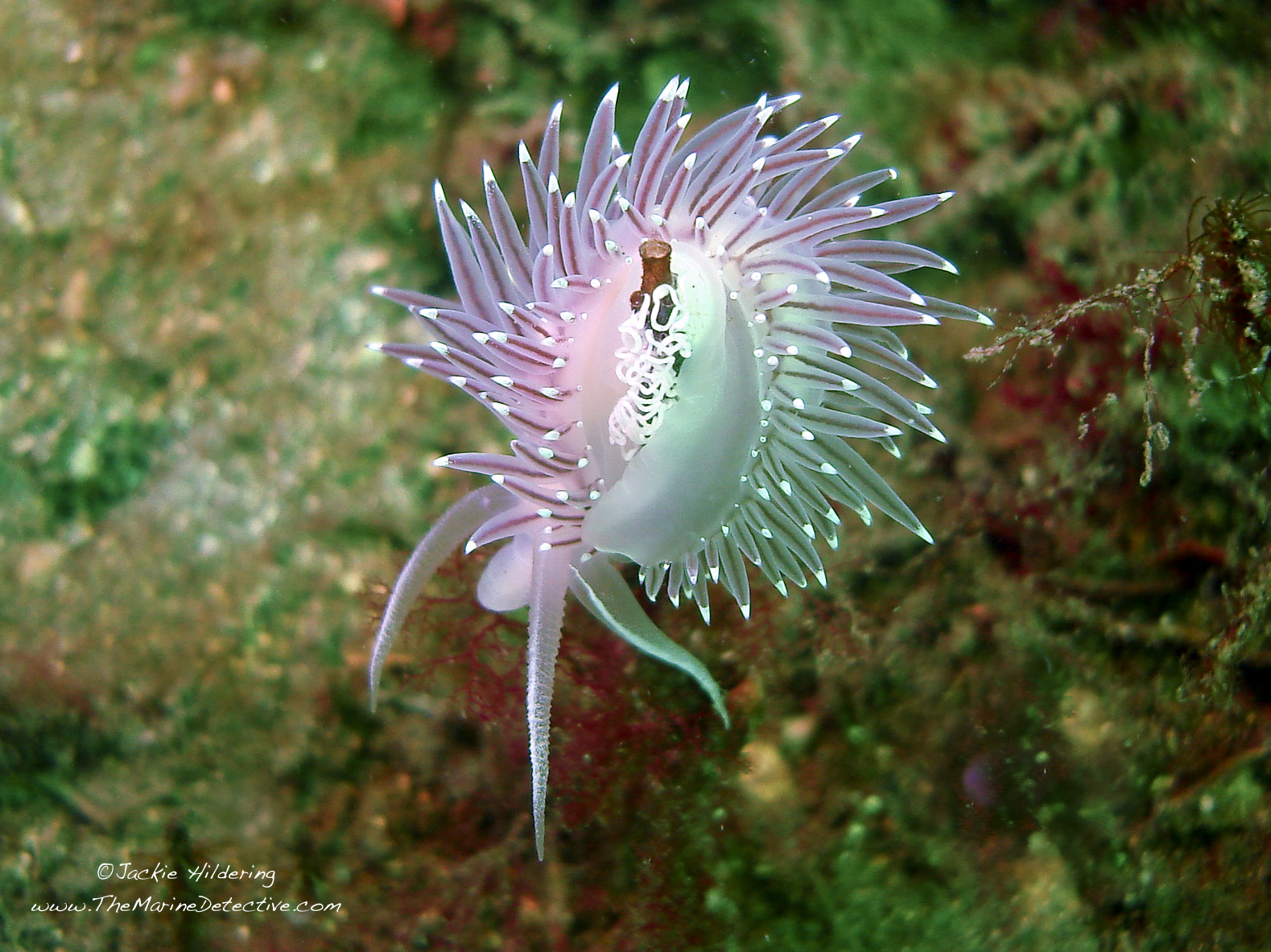
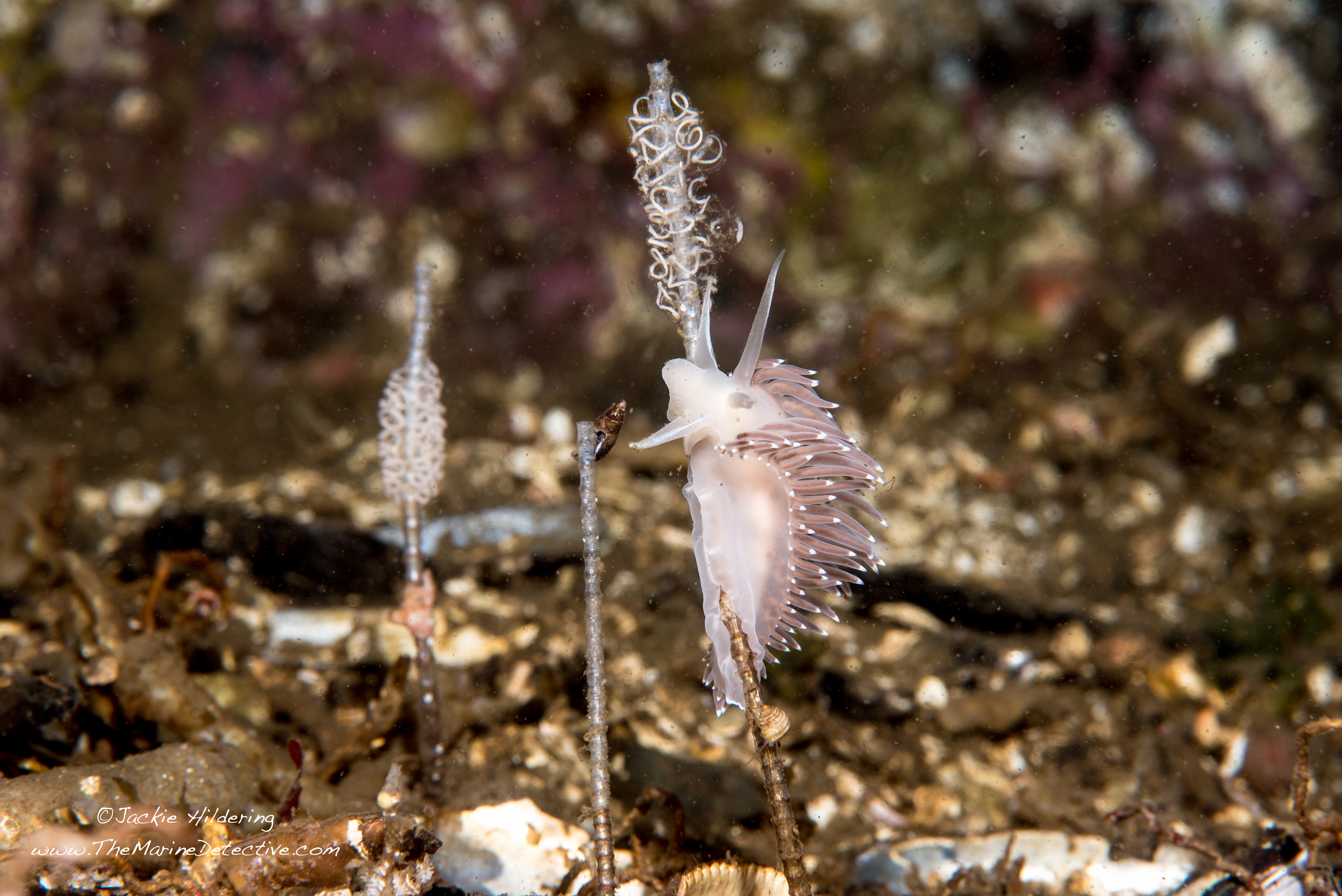
The nudibranch species in the third and fourth photo is Himatina trophina which not only feeds on hydroids on the outside of the tube but also, as you can see, lays its egg ribbons there.
#5 Slime-Tube Feather Duster Worms Myxicola infundibulum to 9 cm long
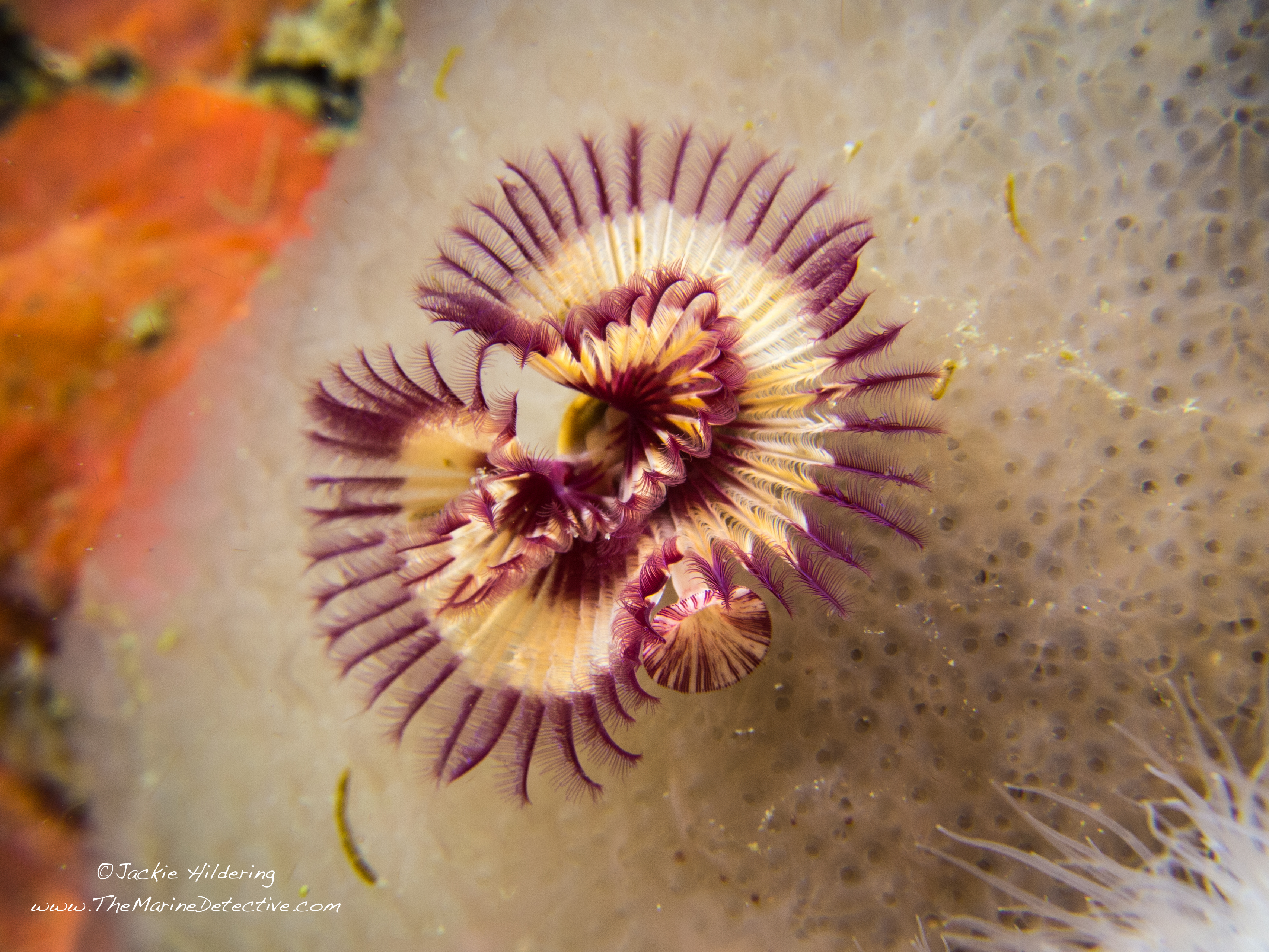
This species can also detect shadow and retreat into their mucus homes with lightning speed. All you then see is the jiggly jello-like top of their tubes. (Yes, it took me a long time to get a photo of them!) Where other marine tube-worms make a parchment or shell-like tube, worms of the Myxicola genus secrete themselves a mucus home. “Myxicola” in fact translates into “living in slime” so don’t name your child that . They suspension feed on plankton and other bits of organic bits with their funnel-like crowns ( = “radioles”).
#6 Feather Duster Tube-Worms
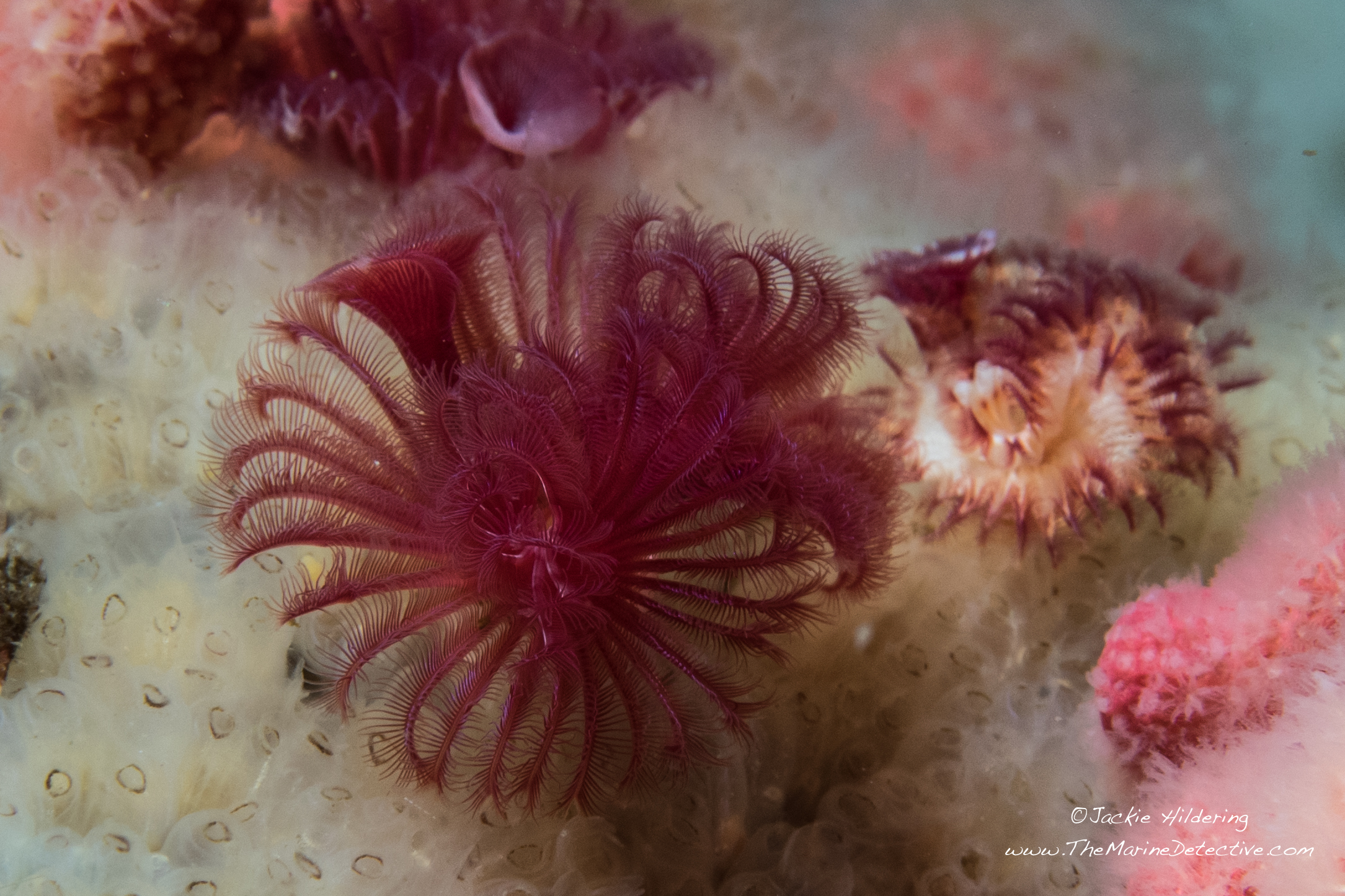
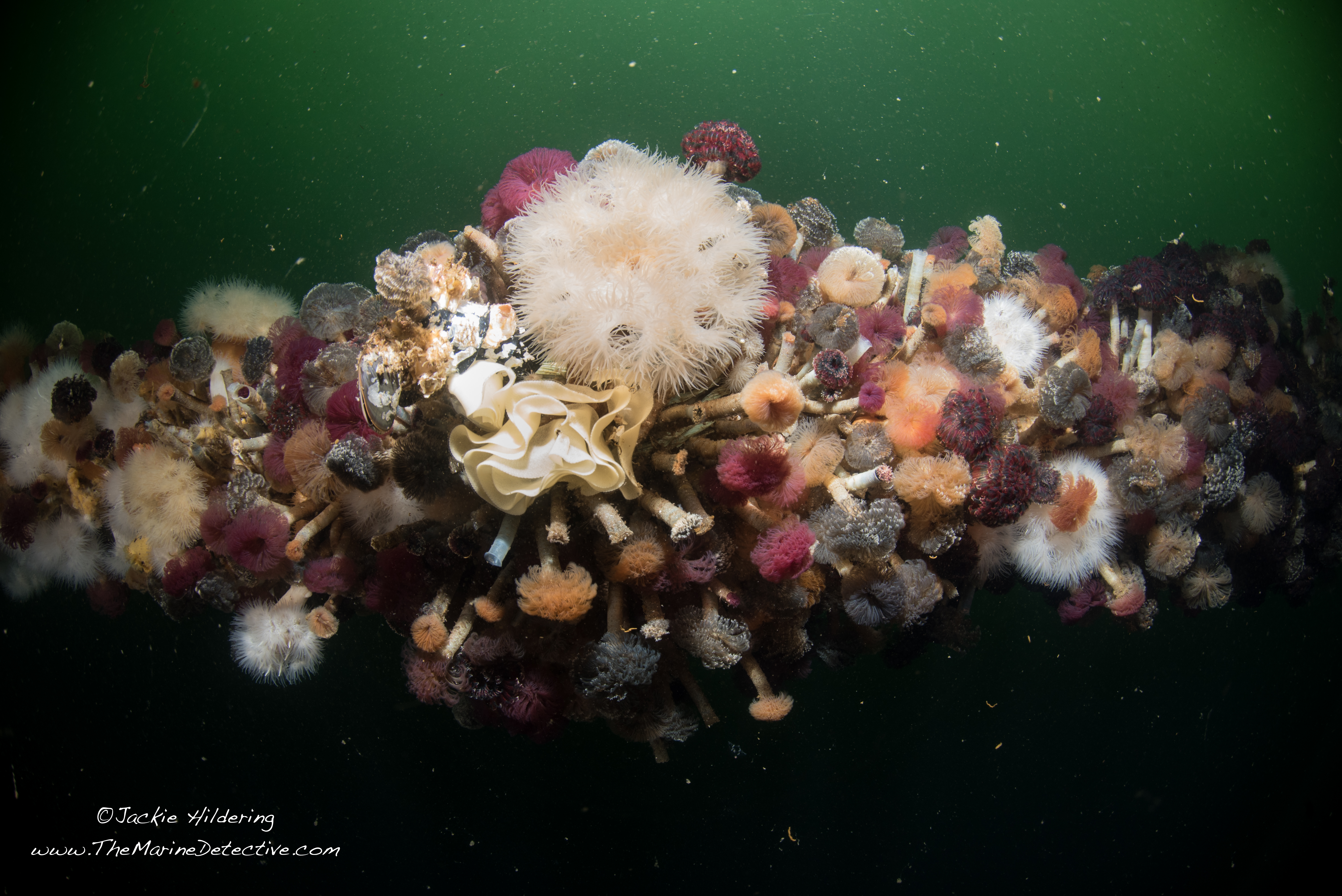
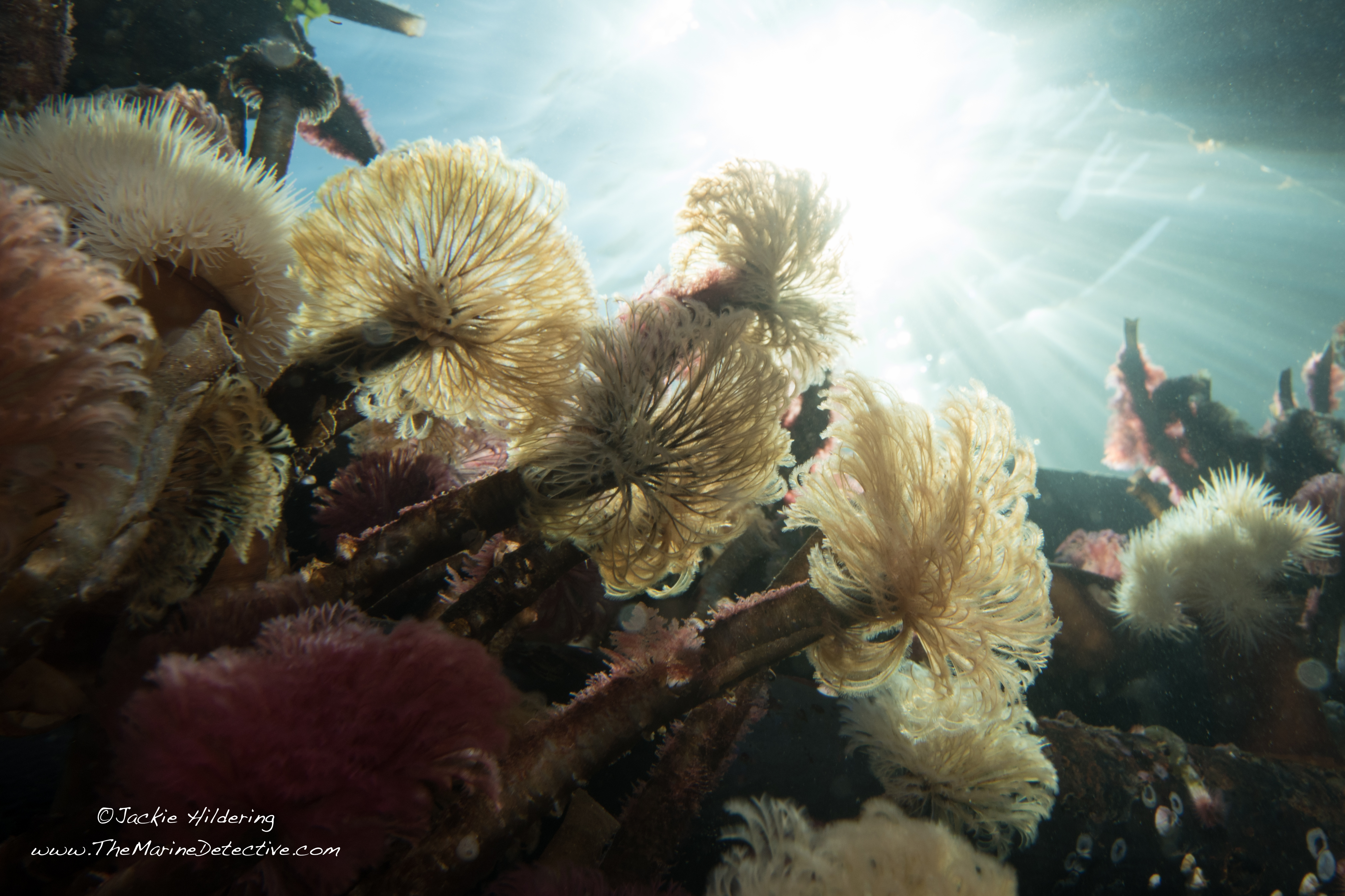
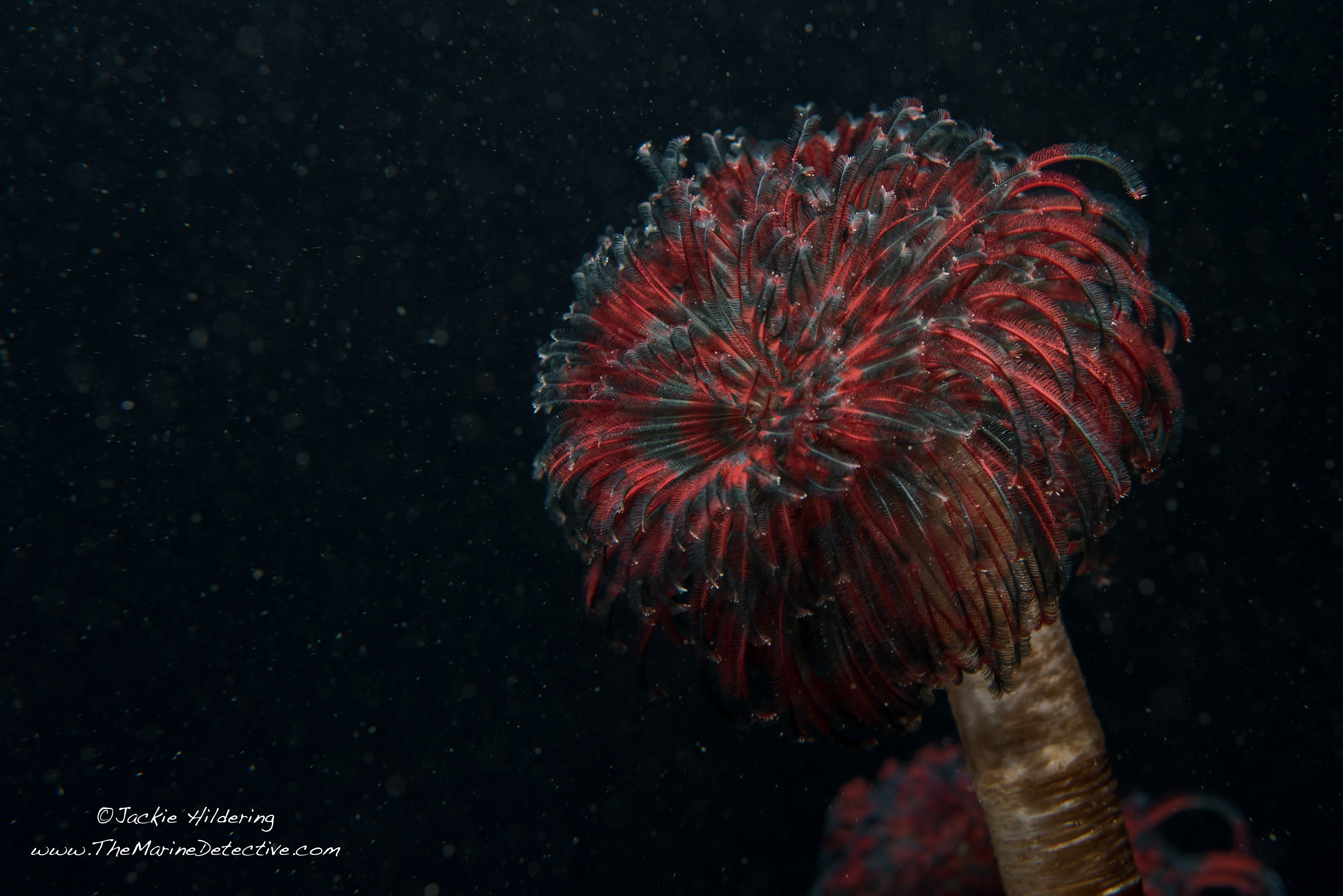
It is very easy to see why these are known as “feather duster” worms. Their crowns have huge surface area to “dust” the ocean for food. They live in parchment tubes and feed on plankton with their bushy crowns.
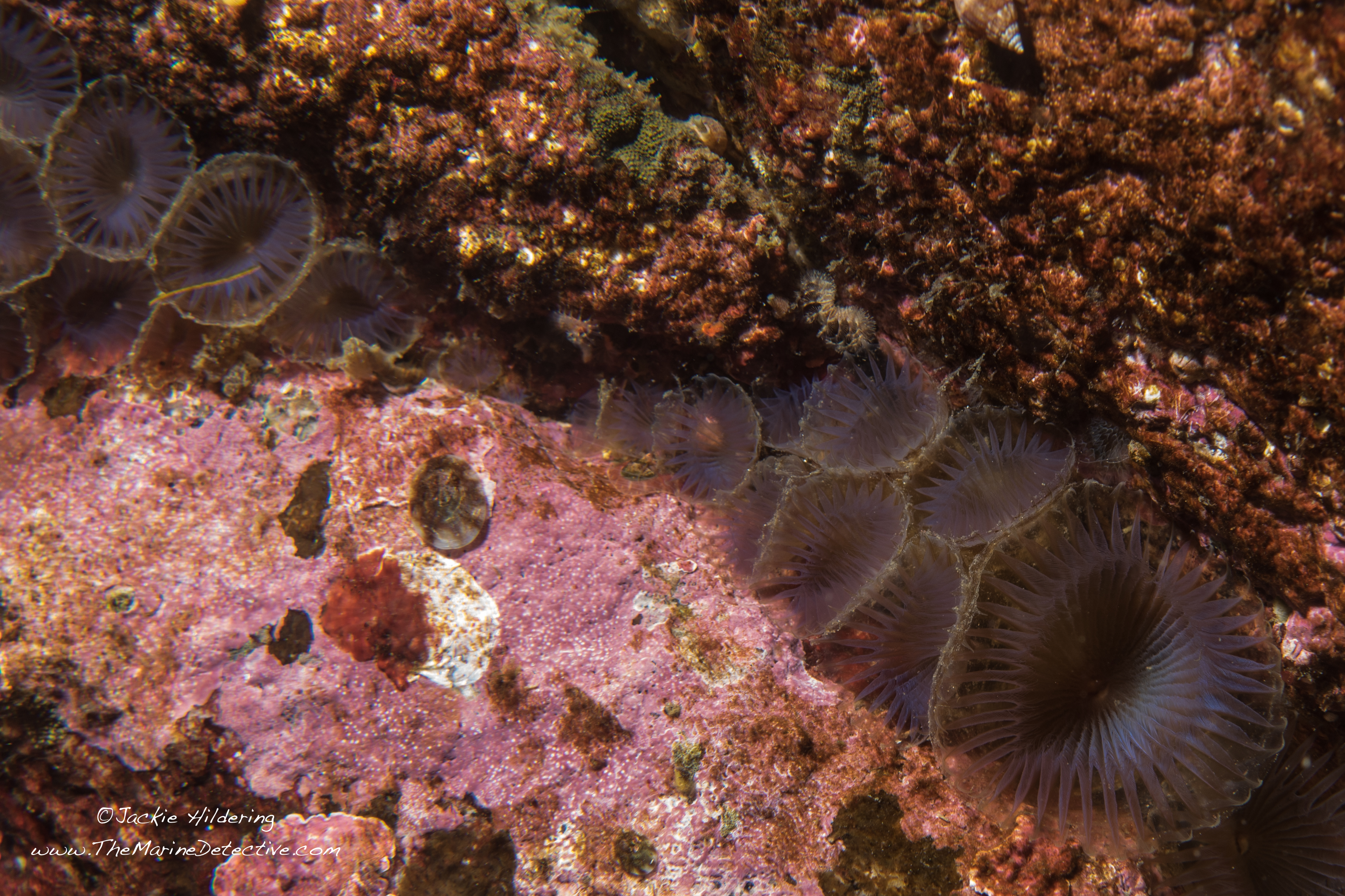
The banded blue and purple ones with the thicker tubes are the Vancouver Feather-Duster (Eudistylia vancouveri to 25 cm long). The pink, grey and tan ones are Split-Branch Feather-Dusters (Schizobranchia insignis to 15.8 cm long).
Vancouver Feather-Duster and Split-Branch Feather-Dusters. See the nudibranch egg mass under the biggest Plumose Anemone? Those are from a Monterey Dorid.
Split-Branch Feather-Dusters (Schizobranchia insignis to 15.8 cm long).
Vancouver Feather-Duster (Eudistylia vancouveri to 25 cm long).
#7 Sea Nymphs / Nereidae Worms
There are more than 20 species of nereida worms in the NE Pacific Ocean and the one that I am asked about most often is the “Giant Pile Worm” (Alitta brandti). It is indeed giant at up to 1.5 long and causes wonder and confusion; even getting misidentified as being an eel instead of a worm.
The video below shows a male spawning at the surface.
While I was diving today, I saw these structures, like large snowflakes drifting out of a crack between two rocks.
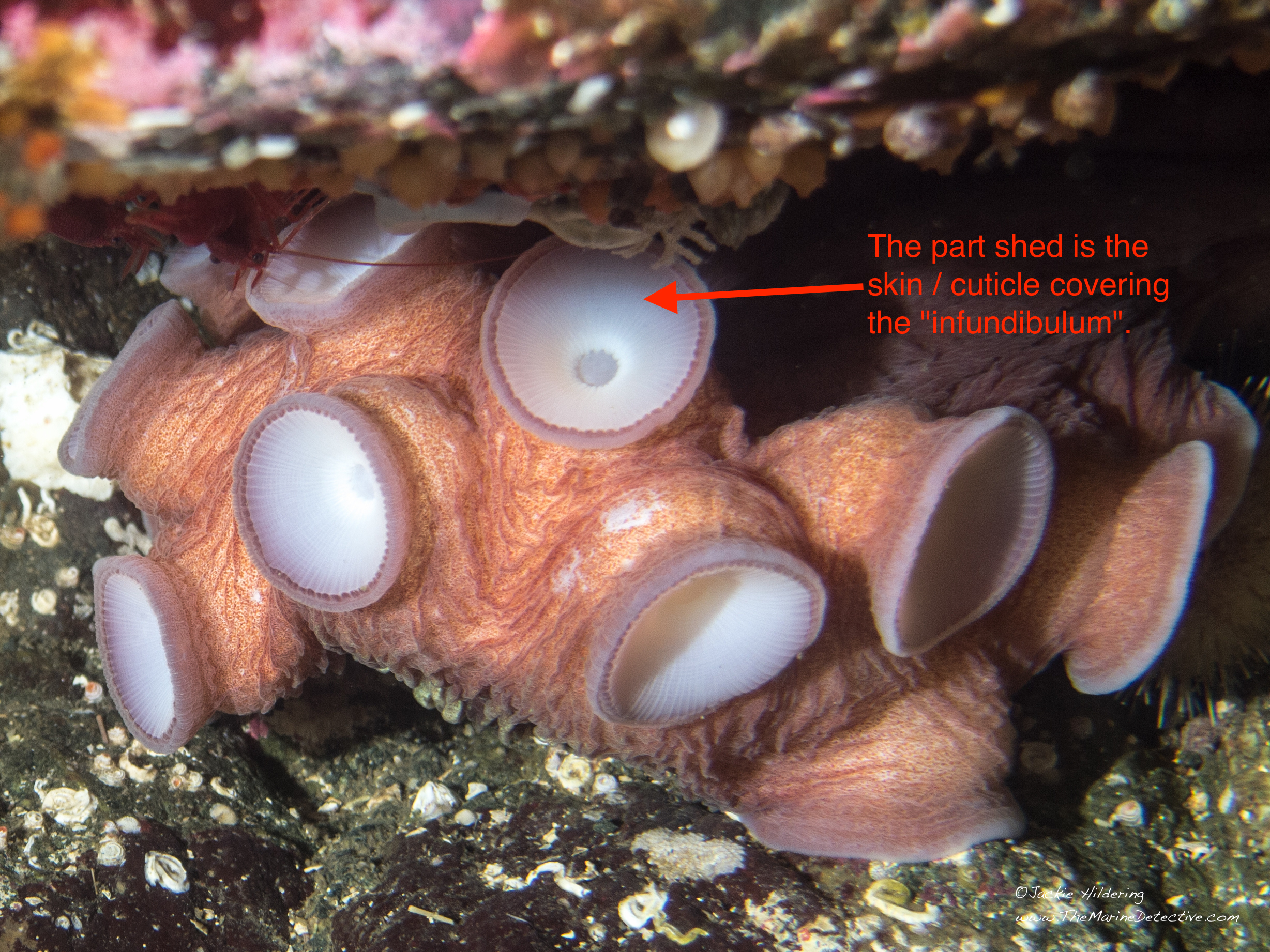
And I knew there had to be a Giant Pacific Octopus there BECAUSE this is the skin at the end of the octopus’ suckers.
Octopuses shed this skin periodically and, possibly, from all their suckers at the same time! The skin grows continuously.
With Giant Pacific Octopuses having about 2,000 suckers (up to ~2,240 in females and 2,140 in males), you can imagine how many of these were drifting out of its den as the octopus exhaled, causing an upward current.
This skin is referenced as the sucker lining or “chitinous cuticle” and you can deduce from the photo below how the skin being shed would be of varying sizes.
I could peer into the crack and see the octopus that was shedding but s/he was too deep into the den to be able to get a photo.
How wonderful it would be to be able to provide you video of an octopus shedding its suckers in the wild. But, not surprising, it is easier to capture this with octopuses in captivity.
Below is a video of a captive Giant Pacific Octopus named Marylyn shedding her sucker linings (Video source: Christie Rajcic, “Octopus Shedding Suckers”).
I hope this adds to your sense of wonder of our marine neighbours. It also provides a whole new association to the words “So long suckers!” 😉
It’s difficult to explain the joy it gives to not have disregarded these little white bits but to know they were a clue to where there was an octopus.
Oh, and if you enjoyed this, you definitely will want to benefit from my life-enhancing blog “How Octopuses Poo“.
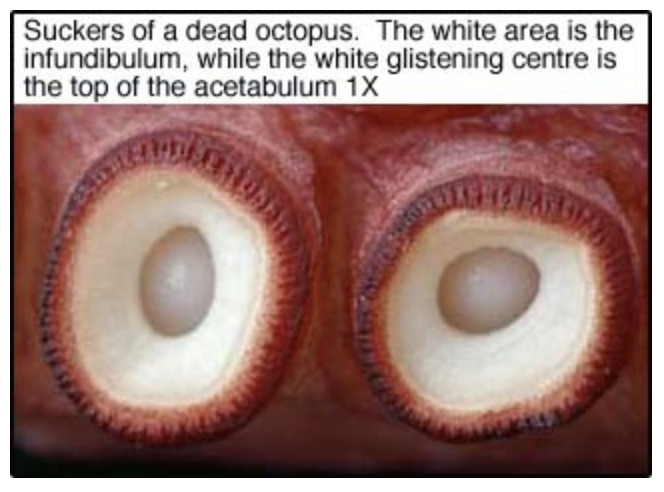
For you super nerds (hello!), the cuticle covers the “infundibulum”. See images below from “A Snail’s Odyssey“.
William M. Kier, Andrew M. Smith, The Structure and Adhesive Mechanism of Octopus Suckers, Integrative and Comparative Biology, Volume 42, Issue 6, December 2002, Pages 1146–1153, https://doi.org/10.1093/icb/42.6.1146













 .
. 



 The Marine Detective